Skip to content

Southern Fried Science

Over 15 years of ocean science and conservation online

  • Home
  • About SFS
  • Authors
  • Support SFS

Category: Science

A scientifically accurate list of the most endangered sharks in the world

Posted on November 2, 2017November 2, 2017 By David Shiffman 5 Comments on A scientifically accurate list of the most endangered sharks in the world
Conservation, Science

One of the most common questions I get during my “ask me anything” sessions on twitter is “which species of sharks are the most endangered?” Whenever I can’t completely answer a question in a single tweet, I like to link to more information from a reliable source.

However, I’ve struggled to easily answer this question with a link, because much of the information out there about this particular question is incomplete, misleading, or just wrong.  Several online lists of the most endangered species of sharks* don’t actually include the most endangered species of sharks. Many of these lists could be re-titled as “the conservation status of some species of sharks I’ve heard of and could easily find pictures of” or “some random information I heard out of context about shark conservation.” Since there isn’t an easily accessible source of accurate information about this important shark science and conservation topic, I’ll make one myself. ( I should note here that I am referring only to true sharks, not to other chondrichthyans, even though other chondrichthyans in many cases face similar or worse threats. )

Read More “A scientifically accurate list of the most endangered sharks in the world” »

Long live sharks and rays!

Posted on October 9, 2017 By Guest Writer
Science

Alastair Harry is a fisheries science practitioner based in Perth, Australia. He assists in implementing ecosystem based fisheries management to support the sustainable use of wild-capture fish resources. He is a generalist and works across multiple areas including stock assessment, bycatch, and threatened species. He also holds an adjunct position at James Cook University and has a specific interest in the conservation and sustainable management of sharks and rays. 

In August I published a review paper entitled Evidence for systemic age underestimation in shark and ray ageing studies. In it I suggest that many sharks and rays live considerably longer than is currently recognised. This increased life expectancy isn’t due to medical advancements or a more nutritious diet (or even better fisheries management), but rather the result of ageing error.

Read More “Long live sharks and rays!” »

Protecting the ocean means lots of rigorous, mundane science.

Posted on August 21, 2017 By Andrew Thaler
Science
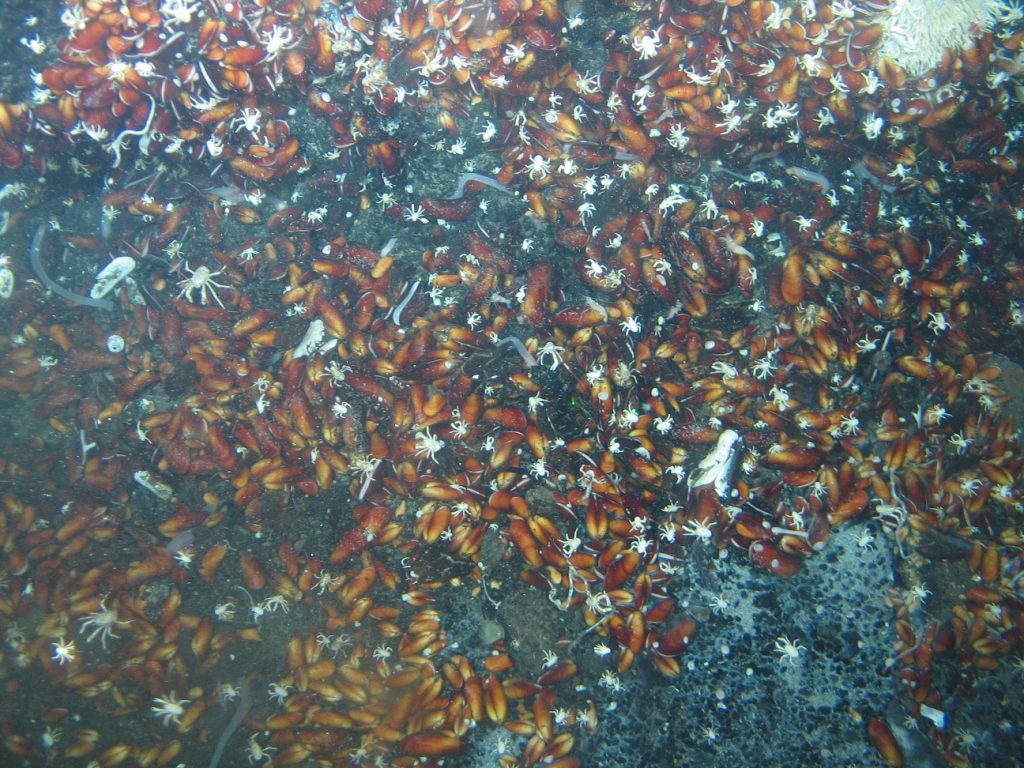
Bathymodiolus manusensis. Photo courtesy Nautilus Minerals.

I have a new paper out today: Population structure of Bathymodiolus manusensis, a deep-sea hydrothermal vent-dependent mussel from Manus Basin, Papua New Guinea.

We sampled two sites in Papua New Guinea where these deep-sea mussels aggregate and looked at their genes to determine if there was any population structure across this relatively small spatial scale (~40 km). We found one homogeneous population. We also looked at representatives from other ocean basins and determined that mussel populations within Manus Basin are younger than those in neighboring basins. This is a pattern we’ve observed in several other studies as well.

This is not, by any stretch, a ground-breaking, paradigm-shifting study. But studies like this, baseline, foundation-building studies, are absolutely essential for conservation biology.

Read More “Protecting the ocean means lots of rigorous, mundane science.” »

Background information on our land-based shark fishing paper

Posted on August 15, 2017August 15, 2017 By David Shiffman 5 Comments on Background information on our land-based shark fishing paper
Science
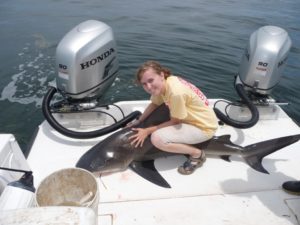
A photo used in this study showing a hammerhead shark taken completely out of the water. As with all photos used in this study, the angler’s privacy has been protecting by blurring out his face.

I have a new paper out on the conservation impacts of recreational shark fishing. The paper is called “fishing practices and representations of shark conservation issues among users of a land-based shark angling online forum,” and it is published in the journal Fisheries Research. If you don’t have institutional library access, you can read a copy of the paper here. The goal of this blog post is to provide background information on the study.

Journalists are free to quote or paraphrase information from this blog post. Additionally, I provide some suggested quotes below, and I am available for interviews about this paper (please contact me at WhySharksMatter at gmail).

Read More “Background information on our land-based shark fishing paper” »

What Google Searches Tell Us About The Ocean… and Us

Posted on May 20, 2017May 22, 2017 By Bluegrass Blue Crab
Open Science, Science

I recently discovered that Google Trends is a thing. Specifically, that they aggregate their search data and make it publicly available. Which is awesome. People Google much more honestly than they interact with others in person, more honestly than they answer surveys, and more honestly than they behave in a world where politics is important. So what people Google is insight into what people are curious about, where online outreach can have the most potential impact, and what is on the top of people’s brains at particular times. It tells us something about regionalisms, and seasonality of thought. I encourage everyone to play around with their data, for work or for play.

Here’s a couple of examples of things you can learn. Let’s start with the basics. Which states, over the last 12 months, have searched for “ocean” the most?


Read More “What Google Searches Tell Us About The Ocean… and Us” »

The Case Against Shark Fin Trade Bans

Posted on May 12, 2017May 12, 2017 By David Shiffman
Conservation, Science
Photo credit: Jessica King, Marine Photobank

The United States Congress is considering a nationwide ban on buying, selling, or trading shark fins. While several of my posts and tweets have briefly discussed my stance on such policies, I’ve never laid out my full argument in one post. Here is why I, as a shark conservation biologist, oppose banning the shark fin trade within the United States.  The short answer is that the US represents a tiny percentage of overall consumers of shark fin, but provide some of the most sustainably caught sharks on Earth, as well as important examples of successful management, to the world. This means that banning the US shark fin trade won’t reduce total shark mortality by very much, but will remove an important example of fins coming from a well-managed fishery while also hurting American fishermen who follow the rules. Also, a focus on these policies promotes the incorrect belief that shark fin soup is the only significant threat to sharks, and that addressing the tiny part of that problem locally represents the end of all threats. For the longer answer, read on. And for the case for shark fin bans, please see this guest post from Oceana scientist Mariah Pfleger.

Read More “The Case Against Shark Fin Trade Bans” »

The Case for Shark Fin Trade Bans

Posted on May 12, 2017May 12, 2017 By Guest Writer
Conservation, Science

Mariah Pfleger is a marine scientist at Oceana, an international marine conservation non-profit, advising both the responsible fishing and sharks campaigns. She graduated from Florida State University in 2012 where she studied coastal sharks and their relatives. In 2016 she earned her Master’s degree from the University of West Florida where she researched both coastal and deep-water sharks and rays. Mariah worked for 3 years as a field assistant, and during her Master’s an additional 3 years as a field manager, on the Gulf of Mexico Shark Pupping and Nursery Program. She has also conducted research using environmental DNA to detect rare and endangered sturgeon. Her twitter handle is @MariahPfleger.

The demand for shark fins is widely recognized as one of the major contributors to shark mortality around the world. However, solutions to decrease this demand are hotly debated, especially in the scientific community. Southern Fried Science and other websites have published opinions that debate the effectiveness of shark fin bans, but as a shark scientist working to implement this policy I would like to present the case for shark fin trade bans.

The conversation is newly relevant with the introduction of the Shark Fin Trade Elimination Act in the Senate on March 30th by Senators Cory Booker (D-NJ) and Shelly Moore-Capito (R-WV) and in the House on March 9th by Representatives Ed Royce (R-CA) and Gregorio Kilili Camacho Sablan (I-MP). If passed, the bill would ban the buying and selling of shark fins in the United States – thereby removing the United States from the global shark fin trade altogether. The bill is championed by Oceana, where I work as the scientist on the sharks campaign.

The demand for fins fuels finning – the act of slicing off a shark’s fins and dumping the body back into the ocean. The United States recognized this practice was a problem and implemented the Shark Finning Prohibition Act of 2000 followed by the  Shark Conservation Act (SCA) in 2010, which required that all sharks must be landed with their fins naturally attached (except for smooth dogfish, which can be landed under a fin-to-carcass ratio). However, according to the National Marine Fisheries Service, the United States is still importing fins from places like Hong Kong, China, New Zealand, the Netherlands, Spain, South Africa and Indonesia, to name a few. Not all of these countries have anti-finning laws, which means that the United States may be, and likely is, purchasing fins from finned sharks. Once in the United States market, there is no way to tell whether a fin came from a finned shark or not. By purchasing these fins, the United States is sustaining the demand for this unsustainable practice.

Read More “The Case for Shark Fin Trade Bans” »

The impact of the March for Science

Posted on April 24, 2017April 25, 2017 By Chris Parsons 1 Comment on The impact of the March for Science
Science

Along with an estimated forty thousand other scientists, I braved the rains to attend the March for science in Washington DC. I went with a bit of trepidation, as I was wondering if anyone would attend, but the staging post at the based of the Washington Monument was absolutely packed.

Donald Trump blamed rain (a brief smattering of drizzle) for poor numbers at his inauguration, but pouring rain and cold did not deter the masses of scientists who attended the March. Although we be derided as “snowflakes” for protesting the current administration, clearly scientists are snowflakes made of Titanium.

Read More “The impact of the March for Science” »

Scientists deploy satellite tags on rarely studied sawsharks for the first time

Posted on March 23, 2017March 23, 2017 By David Shiffman
Science

An Australian research expedition has successfully deployed three satellite telemetry tags on sawsharks for the first time! These rarely-seen sharks have a toothy rostrum similar to a sawfish, but are true sharks while sawfish are rays. Sawshark rostrums also have sensory barbels, unlike the rostrums of sawfish. “This is actually a good example of convergent evolution where two distantly related species have adaptations that have converged to be very similar in looks and (purportedly) function,”said professor Jane Williamson, the head of the Marine Ecology Group at Macquarie University and the leader of this expedition. “Sawsharks probably use their rostrum in a similar manner to sawfish: as a tool for sensing and capturing prey, and possibly for self-defense.”

Read More “Scientists deploy satellite tags on rarely studied sawsharks for the first time” »

Please don’t ride sharks, and other great tips from the new guide to responsible shark diving

Posted on March 12, 2017March 13, 2017 By David Shiffman
Conservation, Science

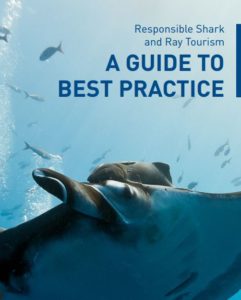
Shark wildlife tourism* is a growing marine industry with big implications for shark conservation. While there are many competing definitions, generally shark wildlife tourism refers to SCUBA dive operators who offer trips that guarantee that you’ll see sharks, often through the use of bait or chum to attract sharks to the divers. This has become a contentious issue in marine science and conservation circles. That’s why last week’s news that  WWF, Project AWARE, and the Manta Trust released the first-ever guide to responsible shark and ray tourism best practices is so welcome. This thorough and well-researched guide guide is designed for dive operators who want to minimize their potential harm to sharks and rays while maximizing the potential conservation benefits of shark wildlife tourism.

Read More “Please don’t ride sharks, and other great tips from the new guide to responsible shark diving” »

Posts pagination

Previous 1 … 12 13 14 … 81 Next

Popular Posts

How close did the world's first deep-sea mining come to the dredging the world's largest cold-water coral reef?How close did the world's first deep-sea mining come to the dredging the world's largest cold-water coral reef?March 17, 2026Andrew Thaler
What Ocean Ramsey does is not shark science or conservation: some brief thoughts on "the Shark Whisperer" documentaryWhat Ocean Ramsey does is not shark science or conservation: some brief thoughts on "the Shark Whisperer" documentaryJuly 2, 2025David Shiffman
That's not a blobfish: Deep Sea Social Media is Flooded by AI SlopThat's not a blobfish: Deep Sea Social Media is Flooded by AI SlopDecember 19, 2025Andrew Thaler
Urea and Shark OsmoregulationUrea and Shark OsmoregulationNovember 15, 2010David Shiffman
Tangier, an Island out of Time.Tangier, an Island out of Time.July 3, 2017Andrew Thaler
Here's what I teach my students about finding jobs in marine biology and conservationHere's what I teach my students about finding jobs in marine biology and conservationApril 10, 2024David Shiffman
Alberta, Canada is the proud owner of the largest man-made pyramid on the planetAlberta, Canada is the proud owner of the largest man-made pyramid on the planetOctober 16, 2012Andrew Thaler
The story of the pride flag made from NASA imagery: Bluesky's most-liked imageThe story of the pride flag made from NASA imagery: Bluesky's most-liked imageSeptember 27, 2024David Shiffman
Here are some ocean conservation technologies that I'm excited aboutHere are some ocean conservation technologies that I'm excited aboutFebruary 19, 2026David Shiffman
America's Second-Largest Estuary is a Lagoon Full of SharksAmerica's Second-Largest Estuary is a Lagoon Full of SharksApril 12, 2018Chuck Bangley
Subscribe to our RSS Feed for updates whenever new articles are published.

We recommend Feedly for RSS management. It's like Google Reader, except it still exists.

Southern Fried Science

  • Home
  • About SFS
  • Authors
  • Support SFS


If you enjoy Southern Fried Science, consider contributing to our Patreon campaign.

Copyright © 2026 Southern Fried Science.

Theme: Oceanly Premium by ScriptsTown