Skip to content

Southern Fried Science

Over 15 years of ocean science and conservation online

  • Home
  • About SFS
  • Authors
  • Support SFS

Category: Science

Sailing by Starlight: the lost art of celestial navigation

Posted on September 27, 2010September 27, 2010 By Andrew Thaler 12 Comments on Sailing by Starlight: the lost art of celestial navigation
Science

This post is a slightly modified transcript of a talk I gave on celestial navigation. As some of you know, I like to build things, and I recently decided to build some classic navigational tools. Of course, in the process of building these instruments, I had to learn how they work. The history of celestial navigation is fascinating and deeply connected to the history of astronomy and mathematics. The original slide show can be found at the bottom of this post. Enjoy!

I’m going to begin with a seemingly simple question, then hopefully give you some basic tools to answer that question. Where are you?

Read More “Sailing by Starlight: the lost art of celestial navigation” »

Compact Fluorescent Lights, Energy, and Mercury

Posted on September 25, 2010September 26, 2010 By Andrew Thaler 38 Comments on Compact Fluorescent Lights, Energy, and Mercury
Conservation, Science

We recieved several responses to Dave’s post this week on the bizarre “Save the Light Bulb” movement. A movement that seeks to ban energy efficient compact fluorescent lights (CFL) and return to the old, energy expensive, incandescent bulbs. The primary critique is that CFL’s contain mercury, and thus, any environmental benefit is negated by mercury exposure when the bulbs break or are thrown out.

Read More “Compact Fluorescent Lights, Energy, and Mercury” »

What species of skate is for dinner? New research challenges elasmobranch fisheries policy

Posted on September 24, 2010December 31, 2011 By David Shiffman 7 Comments on What species of skate is for dinner? New research challenges elasmobranch fisheries policy
Conservation, Science

I write a lot about shark conservation issues, but I rarely focus on their fellow elasmobranchs. Rays and skates have similar life history strategies as sharks, and many species are similarly overfished.  A friend just sent me a cool paper about the conservation of skates, which provides an excellent opportunity to remedy this oversight.

A major issue standing between well-managed elasmobranch fisheries and the mess we find ourselves in today is species identification. Many species look very similar (in some cases, DNA tests are required to tell them apart), which makes recording catch statistics extremely difficult. In fact, United States fishery management policy sometimes focuses on  species complexes (i.e. “Large Coastal Sharks”) of sharks rather than individual species. Species identification is a major issue for skates as well.

Read More “What species of skate is for dinner? New research challenges elasmobranch fisheries policy” »

Vignette from the Anthropology of Knowledge: Cree Hunting

Posted on September 24, 2010September 24, 2010 By Bluegrass Blue Crab
Science

Scientific knowledge comes in many forms, some not explicitly science. Social scientists call this “ways of knowing” – you can think of it as a framework on which you hang the specifics as you learn them. The framework is set up early in life and historically, scientific knowledge was held within a religious ‘way of … Read More “Vignette from the Anthropology of Knowledge: Cree Hunting” »

A global shark conservation challenge from Palau and Micronesia

Posted on September 23, 2010September 22, 2010 By David Shiffman 1 Comment on A global shark conservation challenge from Palau and Micronesia
Conservation, Science

Yesterday afternoon, the Presidents of Honduras and Palau challenged other world leaders to follow their example by protecting sharks. Both nations have banned shark fishing within their territorial waters, and they are encouraging other nations (both rich countries with fishing fleets and poor coastal countries) to do the same. This announcement was timed to coincide with a high-level United Nations meeting to review millennium development and global biodiversity conservation goals.

The two Presidents had this to say:

Read More “A global shark conservation challenge from Palau and Micronesia” »

Chemistry of the Great Big Blue: Sedimentation

Posted on September 21, 2010September 21, 2010 By Bluegrass Blue Crab
Science

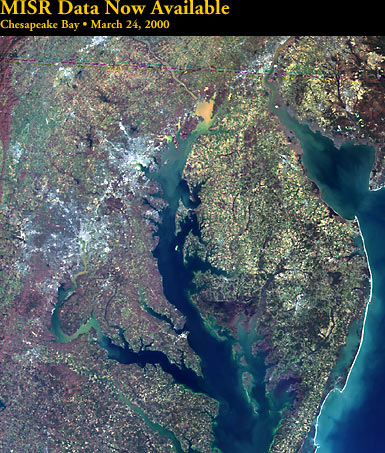
Sedimentation in the Chesapeake - look at the brown toward the headwaters. Found at nasa.gov

Rocks erode, travel down rivers and eventually in the form of small particles, settle in river deltas and estuaries. Even smaller pieces can be carried hundreds of miles into the ocean. It’s all part of the natural process of sedimentation, but like many other natural cycles, this one has been hijacked by human activities. Development, agriculture, channelization of streams, damming and many other practices change the natural course of sediment in the coastal oceans more than the ecosystem can handle.

These changes can either be a drastic increase in sediment runoff from upstream sources or a complete deprivation of naturally occurring deltas. In addition, many pollutants cling to these sediment particles so that changing the location of the sediment also shifts the location of pollution.

Read More “Chemistry of the Great Big Blue: Sedimentation” »

Sharks are not to blame for increases in California Sea Otter deaths

Posted on September 17, 2010September 17, 2010 By David Shiffman
Science

Deaths among California’s sea otter populations have been increasing in the last few years. The last few years have set records for dead otters washing ashore on beaches throughout central California. The real reason for this was recently discovered (and covered earlier today by Andrew here), but I wanted to stress what was NOT responsible. … Read More “Sharks are not to blame for increases in California Sea Otter deaths” »

What’s Killing California’s Sea Otters?

Posted on September 17, 2010September 20, 2010 By Andrew Thaler 8 Comments on What’s Killing California’s Sea Otters?
Conservation, Science

ResearchBlogging.org

Sea Otters are turning up dead in central California. In 2007, 11 sea otters were recovered from Monterrey Bay. Over the last three years, dead otters washing up on beaches has reached a record high?

What could be causing all these otter deaths? Are there new predators in the area? Is there some kind of disease? Could increased otter deaths reflect an increase in otter populations, indicating not otter population decline, but otter population growth? The answer turns out to be even more surprising – freshwater algae.

Here no Otter, Sea no Otter, Speak no Otter

Read More “What’s Killing California’s Sea Otters?” »

Non-Monophyly within Syngnathidae

Posted on September 16, 2010December 6, 2011 By Andrew Thaler 2 Comments on Non-Monophyly within Syngnathidae
Non-Monophyly within Syngnathidae
Science

ResearchBlogging.org

Objective 1: Develop the least publicly accessible title for a blog post about seadragons, mate selection, and evolution

Objective 1 Status: complete

Objective 2: Draw in whatever readers push passed the unwieldy title with an unconventional narrative structure.

Objective 2 Status: complete

Objective 3: Hook the reader with a fascinating, though brief, background on seahorses, seadragons, and pipefish.

Read More “Non-Monophyly within Syngnathidae” »

Innovative Conservation: Shark Attack Survivors Speak About Saving Sharks

Posted on September 15, 2010 By David Shiffman
Conservation, Science

Last Monday, the Pew Environment Group’s Global Shark Conservation Campaign arranged for a brilliant PR stunt – they arranged for survivors of shark attacks to speak about shark conservation outside of the United Nations headquarters in New York. Though very few people are ever bitten by sharks, many fear them, which makes it difficult to … Read More “Innovative Conservation: Shark Attack Survivors Speak About Saving Sharks” »

Posts pagination

Previous 1 … 64 65 66 … 81 Next

Popular Posts

Shark scientists want their research to help save threatened species, but don’t know how. Our new paper can help.Shark scientists want their research to help save threatened species, but don’t know how. Our new paper can help.December 1, 2025David Shiffman
What Ocean Ramsey does is not shark science or conservation: some brief thoughts on "the Shark Whisperer" documentaryWhat Ocean Ramsey does is not shark science or conservation: some brief thoughts on "the Shark Whisperer" documentaryJuly 2, 2025David Shiffman
Norway and Cook Islands put their deep-sea mining plans on pause.Norway and Cook Islands put their deep-sea mining plans on pause.December 3, 2025Andrew Thaler
What is a Sand Shark?What is a Sand Shark?November 12, 2017Chuck Bangley
Mermaids: The New Evidence is a Fake DocumentaryMermaids: The New Evidence is a Fake DocumentaryMay 28, 2013Andrew Thaler
Build a dirt cheap, tough-as-nails field computer in a Pelican caseBuild a dirt cheap, tough-as-nails field computer in a Pelican caseJuly 21, 2015Andrew Thaler
What can the funniest shark memes on the internetz teach us about ocean science and conservation?What can the funniest shark memes on the internetz teach us about ocean science and conservation?November 8, 2013David Shiffman
Breaking News! "Most Comprehensive Estimate of Mortality": Between 63 and 273 Million Sharks Killed Each YearBreaking News! "Most Comprehensive Estimate of Mortality": Between 63 and 273 Million Sharks Killed Each YearMarch 1, 2013David Shiffman
10 fish weirder than the fish in the 10 weirdest fish in the world list10 fish weirder than the fish in the 10 weirdest fish in the world listDecember 18, 2013Guest Writer
Shark of Darkness: Wrath of Submarine is a fake documentaryShark of Darkness: Wrath of Submarine is a fake documentaryAugust 10, 2014Michelle Jewell
Subscribe to our RSS Feed for updates whenever new articles are published.

We recommend Feedly for RSS management. It's like Google Reader, except it still exists.

Southern Fried Science

  • Home
  • About SFS
  • Authors
  • Support SFS


If you enjoy Southern Fried Science, consider contributing to our Patreon campaign.

Copyright © 2025 Southern Fried Science.

Theme: Oceanly Premium by ScriptsTown