Skip to content

Southern Fried Science

Over 15 years of ocean science and conservation online

  • Home
  • About SFS
  • Authors
  • Support SFS

Category: Uncategorized

Education and Experience are Not Mutually Exclusive: Job Market Pet Peeves

Posted on July 22, 2014July 22, 2014 By Bluegrass Blue Crab 2 Comments on Education and Experience are Not Mutually Exclusive: Job Market Pet Peeves
Uncategorized

While looking at positions that allow me to jump off the sinking ship of academia, I’ve seen plenty of rewarding, fun, and excitingly challenging job announcements out there. Most of them require two to five years of experience in the field, and I’ve looked at those, said ‘yep, I qualify’, and turned in the application. I can’t say what happens after, but here’s the type of experience I thought I could safely check off, which met with a surprisingly negative response:

  • communicating complex technical issues to a diverse audience
  • social media and online outreach
  • project management
  • volunteer coordination
  • budget management
  • community engagement
  • mentoring and training employees
  • grant management and program development

When did I learn these tasks? In graduate school. And here’s where I can feel the doors shut on interest in my application. After applying for positions doing any one of the careers listed above, I’ve met the following responses many times:

Read More “Education and Experience are Not Mutually Exclusive: Job Market Pet Peeves” »

Good fish, bad fish: new draft FDA guidance considering mercury exposures

Posted on June 12, 2014June 13, 2014 By Bluegrass Blue Crab 2 Comments on Good fish, bad fish: new draft FDA guidance considering mercury exposures
Uncategorized

After years of scaring pregnant women away from fishy nutrition, the FDA is finally updating its recommendations to encourage them to eat 8-12  ounces of low-mercury fish a week. That’s 2 or 3 meals per week in order to support fetal growth and development. Curious about what fish are low mercury? Stay away from tilefish from the Gulf of Mexico, swordfish, shark, and king mackerel and limit albacore tuna to 6 ounces a week. Better options include “some of the most commonly eaten fish such as shrimp, pollock, salmon, canned light tuna, tilapia, catfish, and cod”. For locally caught fish, you should check with your local authorities. The new recommendations aren’t final – read the draft and write in if you want more information that would help you make safe and healthy seafood choices. Here’s some things you should consider.

Read More “Good fish, bad fish: new draft FDA guidance considering mercury exposures” »

We need a different economic model for supporting conservation work. Here’s my story.

Posted on May 12, 2014May 12, 2014 By Bluegrass Blue Crab 3 Comments on We need a different economic model for supporting conservation work. Here’s my story.
Uncategorized

Many years ago, I was offered a job doing restoration work at a coal company while perusing festival booths in Fairbanks, Alaska. Still wearing my college-aged rose colored glasses, I was skeptical of working for conservation within industry, said thanks-but-no-thanks, and returned to upstate New York to finish my degree. Looking back, I honestly believe I could have enacted more positive change for the earth had I taken that job than I have in the almost decade since.

I recall this story because while at a recent all-volunteer biodiversity festival, a friend asked me ‘why can’t people do all this great work as their paid work?’ A group of us stood around silently for a few minutes, realizing that this question derived of innocent curiosity delved deep into issues of societal values, our current economic system, and conservation philosophy. In short, the answer is that because conservation brings in none of its own revenue, but depends on the tax money or philanthropy of others. When that dries up, no conservation careers are available. And even when they are, a high percentage of time on the job is spent looking for future funding through grants.

Read More “We need a different economic model for supporting conservation work. Here’s my story.” »

24 species of sharks that have killed fewer people than Jack Bauer on 24

Posted on May 6, 2014May 7, 2014 By David Shiffman 6 Comments on 24 species of sharks that have killed fewer people than Jack Bauer on 24
Uncategorized
Promotional photo for "24: Live Another Day" from the 24 Facebook page, https://www.facebook.com/24fox
Promotional photo for “24: Live Another Day” from https://www.facebook.com/24fox

After four long years of being cancelled, Fox finally brought back ’24’ this week! Star Kiefer Sutherland plays Jack Bauer, a counter-terrorism agent and general badass. Jack has had to kill in the line of duty many times. In fact, as of this past Monday’s premiere of “24: Live Another Day,” Jack Bauer has killed 273 people. How does this record stack up to a cause of death that so many people fear, death by shark bite?

Here are 24 species of shark that have killed fewer people than Jack Bauer has killed on ’24,’ according to the International Shark Attack File.  All fatalities reference the time period 1580-2013, and encompass the whole world. Only fatalities where the shark species has been identified are included here

Read More “24 species of sharks that have killed fewer people than Jack Bauer on 24” »

Fun Science Friday – First Female Penis

Posted on April 18, 2014 By Kersey Sturdivant
Uncategorized

Happy Fun Science Friday.

You did not mistakenly read the title, today we bring you the discovery of the first female penis in the animal kingdom.

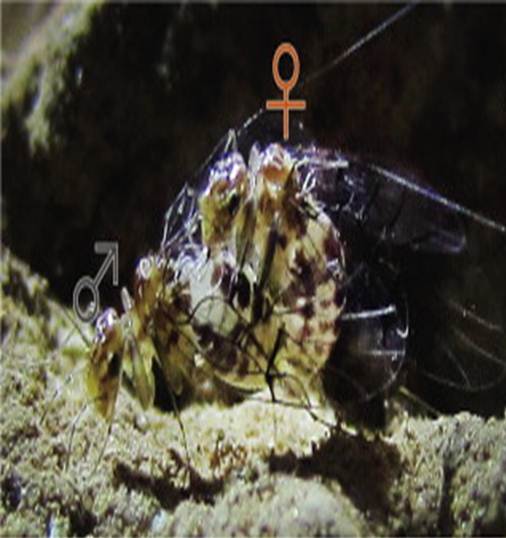
Mating insects of the genus Neotrogla. Photo Credit: Current Biology / Yoshizawa et al.
Mating insects of the genus Neotrogla.
Photo Credit: Current Biology / Yoshizawa et al.

Yoshizawa, from Hokkaido University in Japan, and his team of researchers documented this phenomenon of sexual role reversal in 4 species of rather unassuming insects in Brazil’s Peruaçu River Valley.  When insects of the genus Neotrogla mate, the female mounts the male and penetrates his vagina-like opening with her penis.

Read More “Fun Science Friday – First Female Penis” »

No, we didn’t find the Loch Ness Monster with Apple Maps

Posted on April 18, 2014April 21, 2014 By Andrew Thaler 30 Comments on No, we didn’t find the Loch Ness Monster with Apple Maps
Uncategorized

It’s been a long time since we’ve had a good debunking-random-monster-sighting post. The ready availability of global satellite image databases is a powerful tool for exploration and monitoring but has also led to a boom in pseudoscience “discoveries” by people not familiar with how these images are produced or just willing to suspend disbelief for their pet woo.

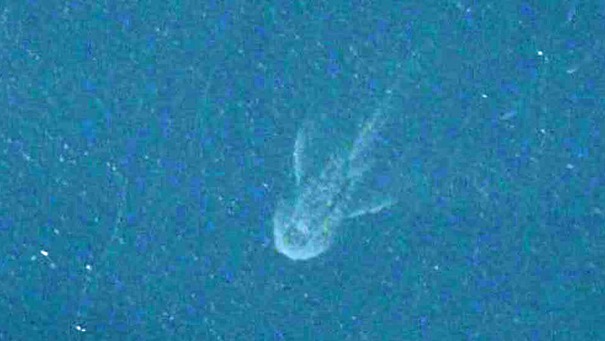
This morning my inbox exploded with articles about the definitive Loch Ness monster sighting. The accompanying image is a low-resolution satellite image of a boat wake, available, apparently, only on Apple Maps. There’s really no deconstruction needed, it’s a boat wake. Compare this image from Loch Ness:

Nessie? No.
Nessie? No.

Read More “No, we didn’t find the Loch Ness Monster with Apple Maps” »

Help the producers of SharkNado 2 support our shark conservation research!

Posted on April 9, 2014 By David Shiffman
Uncategorized

Last fall, I received an e-mail from a representative of one of my favorite companies: the Asylum, the film studio that brought you such cinematic masterpieces as “MegaShark vs. Giant Octopus,” “MegaShark vs. Crocosaurus,” and, of course, “SharkNado.” Following the spectacular success of SharkNado, they were interested in supporting shark science and conservation. After months … Read More “Help the producers of SharkNado 2 support our shark conservation research!” »

Beaufort NOAA Lab Builds Community: It would be a huge loss to say goodbye

Posted on March 27, 2014 By Bluegrass Blue Crab
Conservation, Uncategorized

Hopefully many of our faithful readers have seen the sad announcement that the NOAA lab in Beaufort, NC may be no more. The main reason cited for the potential closure is financial – the cost of maintaining an aging building. Our friends over at the fisheries blog have written a sound debunking of this reasoning, also lamenting the loss of an institution over a century old and hub of fisheries research for the mid-Atlantic. In short, the Beaufort Lab represents a strong history of productive research, recent investment into infrastructure, and a critical part of a much larger marine science community in the region. It’s fair to say that the lab is the founding member and backbone of a marine science consortium  with the Rachel Carson National Estuarine Research Reserves, Duke University, NC State, the University of North Carolina, NC Division of Marine Fisheries, and Carteret Community College.

Beyond the institutions in a list, the Beaufort lab cements a broader community and economy of Carteret County, which is still largely based on fishing. While relations with the universities and state fisheries enforcement can sometimes be strained, NOAA rises above as a voice of reason and glue of collaboration around protecting our marine resources for food, economy, and society. If you believe me, there are steps you should take right now to voice your support for the lab by contacting local Congressional representation – those with the power to stop the closure: Congressman Walter Jones, Senator Kay Hagen, and Senator Richard Burr – and write a public comment to the House Committee currently reviewing the decision. For those who need a little more context and information, read on for some personal testimony demonstrating the value of the Beaufort lab I observed during my dissertation work in the area, which was focused on collaborative fisheries research. In a nutshell, I’ve observed how the Beaufort lab builds relationships between scientists and fishermen and therefore, indirectly, trust in NOAA.

Read More “Beaufort NOAA Lab Builds Community: It would be a huge loss to say goodbye” »

Fun Science Friday – Using the Force to Detect Cancer…. Sorta

Posted on February 28, 2014 By Kersey Sturdivant
Uncategorized

One fish, two fish, red fish, blue fish! What does that have to do with this week’s Southern Fried Science…. nothing! But that quote always makes me laugh.

This week we bring you another crazy break through in science that involves fruit flies and cancer. No, fruit flies do not cause cancer… that we know of. I am probably a little late on this, but the fruit fly, Drosophila melanogaster, is the newest weapon in the fight against cancer. Yes you heard that right, man has turned one of the more annoying creatures into something useful! Useful for humans that is. 😉

Side view of a  a 0.1 x 0.03 inch (2.5 x 0.8 mm) small male fruit fly. Credit: André Karwath
Side view of a a 0.1 x 0.03 inch (2.5 x 0.8 mm) small male fruit fly.
Credit: André Karwath

Read More “Fun Science Friday – Using the Force to Detect Cancer…. Sorta” »

New “Rescue a Reef” citizen science project focuses on coral restoration. You can help!

Posted on February 25, 2014 By David Shiffman
Uncategorized

Coral reefs provide critical habitat to countless unique species of animals and plants. However, many reefs are in trouble, being hammered by climate change, destructive fishing techniques, pollution, disease, and other threats. A coral restoration project at the University of Miami’s (UM) RJ Dunlap Marine Conservation Program aims to rescue Florida’s reefs through coral restoration. The … Read More “New “Rescue a Reef” citizen science project focuses on coral restoration. You can help!” »

Posts pagination

Previous 1 … 31 32 33 … 119 Next

Popular Posts

What Ocean Ramsey does is not shark science or conservation: some brief thoughts on "the Shark Whisperer" documentaryWhat Ocean Ramsey does is not shark science or conservation: some brief thoughts on "the Shark Whisperer" documentaryJuly 2, 2025David Shiffman
Shark of Darkness: Wrath of Submarine is a fake documentaryShark of Darkness: Wrath of Submarine is a fake documentaryAugust 10, 2014Michelle Jewell
What is a Sand Shark?What is a Sand Shark?November 12, 2017Chuck Bangley
Why would a serious scientist agree to participate in a nonsense Shark Week show?Why would a serious scientist agree to participate in a nonsense Shark Week show?July 15, 2025David Shiffman
Save the seals.  Congress is trying to shoot its way to salmon recoverySave the seals.  Congress is trying to shoot its way to salmon recoveryJuly 22, 2026Southern Fried Science
What can the funniest shark memes on the internetz teach us about ocean science and conservation?What can the funniest shark memes on the internetz teach us about ocean science and conservation?November 8, 2013David Shiffman
That's not a blobfish: Deep Sea Social Media is Flooded by AI SlopThat's not a blobfish: Deep Sea Social Media is Flooded by AI SlopDecember 19, 2025Andrew Thaler
I turned my woodshop into a personal solar farm.I turned my woodshop into a personal solar farm.June 21, 2021Andrew Thaler
The most preventable shark attack of all time?The most preventable shark attack of all time?February 19, 2013David Shiffman
Jumping the shark: New study reviews the breaching behavior of sharks and raysJumping the shark: New study reviews the breaching behavior of sharks and raysSeptember 19, 2024David Shiffman
Subscribe to our RSS Feed for updates whenever new articles are published.

We recommend Feedly for RSS management. It's like Google Reader, except it still exists.

Southern Fried Science

  • Home
  • About SFS
  • Authors
  • Support SFS


If you enjoy Southern Fried Science, consider contributing to our Patreon campaign.

Copyright © 2026 Southern Fried Science.

Theme: Oceanly Premium by ScriptsTown