Fog Horn (A Call to Action)
- Hurricane Harvey has passed, but its impacts will continue to be felt for years to come. There’s lots of great organizations to donate to, but in the immediate aftermath,it’s often best to donate to local relief programs that already have a ground team in place, rather than national groups that will take weeks to build up their infrastructure. I’m a fan of the Texas Diaper Bank and Portlight Inclusive Disaster Strategies, both of which serve communities that tend to be particularly vulnerable during natural disasters.
- Gratuitous self promotion! The OpenCTD and Oceanography for Everyone has been selected as a finalist in National Geographic’s Chasing Genius Challenge! Please help me win the People’s Choice award by voting for the OpenCTD. Visit http://www.natgeochasinggenius.com/video/776, create or sign into your Chasing Genius account, and click the yellow star to vote on my video. Thank you!
Flotsam (what we’re obsessed with right now)
- It will take months, if not years, to fully understand the impacts of Hurricane Harvey, which already looks to be the costliest storm in US history. These drone videos give you some idea of the sheer scale of the damage. The Washington Post has an interactive map to help visualize what the equivalent deluge would look like around the world: What the Harvey deluge would look like where you live.
Jetsam (what we’re enjoying from around the web)
- They’re Bryozoans. Every scientists who was questioned immediately identified them as Bryozoans. Terrifying blob creature that looks like a BRAIN discovered in a spooky lake called ‘The Lost Lagoon’.
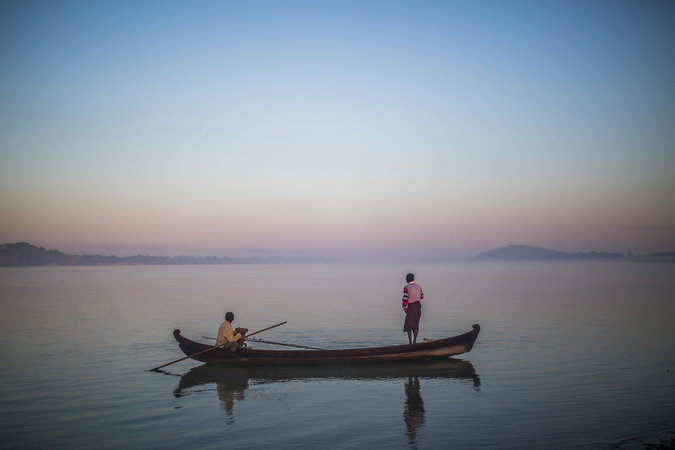
- This is a really neat story: In a Fragile Partnership, Dolphins Help Catch Fish in Myanmar.
- More Harvey damage that we haven’t even begun to assess: Toxic waste sites flooded in Houston area.
- These two pieces of a larger ocean puzzle seem related: 3% of the World’s Endangered Right Whales Died This Summer, Mostly in Canada’s Unprotected Waters and in Canada, Proposed Amendment Could Actually Protect Marine Protected Areas.
- A Washington State Aquaculture Farm Failed, Releasing Atlantic Salmon Into the Pacific. Now What?
- The Vaquita continues is long, slow, decline. Activists blame Mexican government for near-loss of porpoise.
- At least one heartwarming nature story in the wake of Hurricane Harvey. The Bats, the Bridge and Hurricane Harvey.
- Researchers deliberately heated up a slice of the Antarctic sea bed to see how ecosystems responded: Artificial warming trial reveals striking sea-floor changes
- Of course they did. Oil company tells two different climate change stories: One to scientists and one to the public.
- Great ocean outreach from the good folks at oceanbites: As far as the eye can(‘t) see: climate change may impact vision.
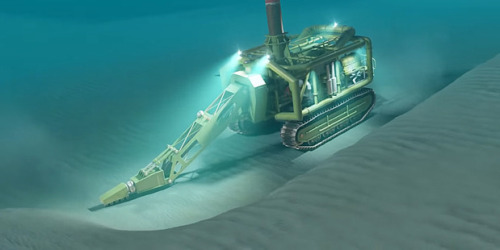
- Iron sands are one of the great, under-reported frontiers of seabed mining. Five parties appeal NZ seabed mining decision.
- It’s not marine science and conservation, but Grandpa Thaler is also making the news for his work on the history of the Mason-Dixon line: The men who drew the Mason-Dixon Line.
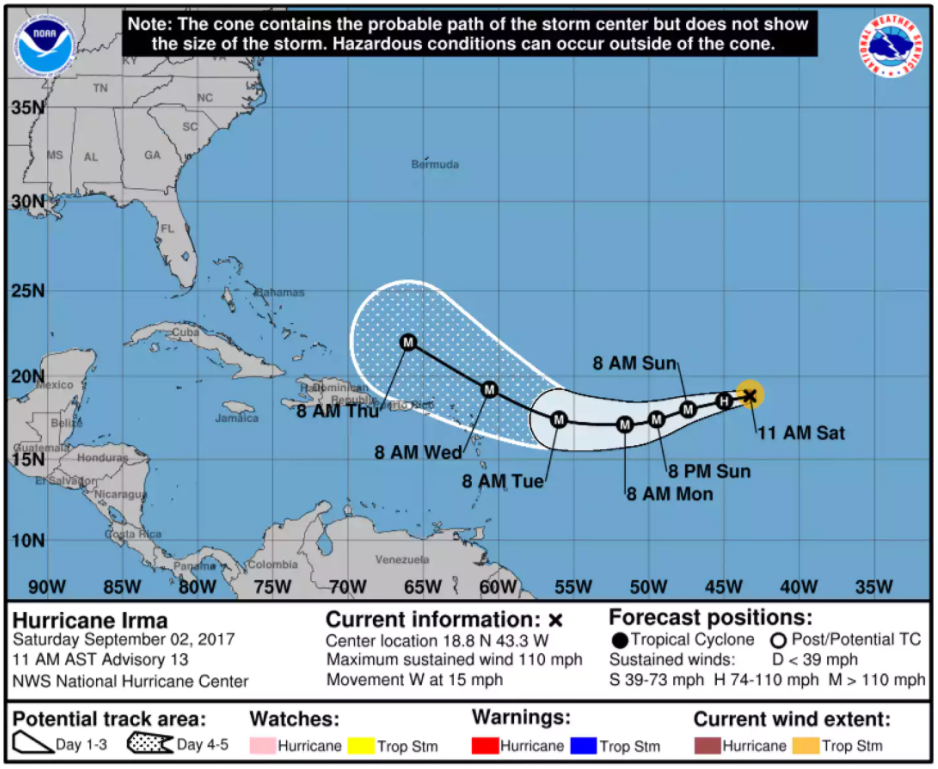
- Hurricane Irma is coming.
Lagan (what we’re reading from the peer-reviewed literature)
- Davies and friends (2017) Large marine protected areas represent biodiversity now and under climate change. DOI: 10.1038/s41598-017-08758-5.
- Lauretta and Penchaszadeh (2017) Gigantic oocytes in the deep sea black coral Dendrobathypathes grandis (Antipatharia) from the Mar del Plata submarine canyon area (southwestern Atlantic). DOI: 10.1016/j.dsr.2017.08.011.
- Shalli (2017) The role of local taboos in the management of marine fisheries resources in Tanzania. DOI: 10.1016/j.marpol.2017.08.017.
And a great new paper from Southern Fried Science author Chris Parsons, Deep Sea News’s own Rick MacPherson, and the legendary godfather of the Mariana Trench Marine National Monument, Angelo Villagomez:
- Parsons and friends (2017) Marine “Conservation”: You Keep Using That Word But I Don’t Think It Means What You Think It Means. DOI: 10.3389/fmars.2017.00299.
Shipping News (academic and ocean policy wonkery)
- Why men don’t believe the data on gender bias in Science. Seriously, dudes, get it together. There’s actual studies on this stuff. Read them.
- I now have a personal rule that I don’t travel to extremely non-central conferences unless the conference is actually about that place. Large general marine conservation conferences held in Hawaii, I’m looking at you: Expensive academic conferences give us old ideas and no new faces.
- The Looming Decline of the Public Research University.
- Government grants are public documents, but this is not particularly professional behavior: These Scientists Got To See Their Competitors’ Research Through Public Records Requests.
Driftwood (what we’re reading on dead trees)
School’s back in session! What textbooks are you excited about this year?
- Data Analysis Methods in Physical Oceanography by Richard E. Thomson and William J. Emery.
- Sea-Level Science: Understanding Tides, Surges, Tsunamis and Mean Sea-Level Changes by David Pugh and Philip Woodworth.
- Atmosphere, Ocean and Climate Dynamics: An Introductory Text by John Marshall and R. Alan Plumb.
Derelicts (favorites from the deep archive)
Feel free to share your own Foghorns, Flotsam, Jetsam, Lagan, Shipping News, Driftwood, and Derelicts in the comments below. If you enjoy Southern Fried Science, consider contributing to my Patreon campaign to help us keep the servers humming and support other innovative ocean science and conservation initiatives.