Skip to content

Southern Fried Science

Over 15 years of ocean science and conservation online

  • Home
  • About SFS
  • Authors
  • Support SFS

Recent Posts

humpback whale in Antarctica
The evolution of the International Whaling Commission – from  whaling quotas to whale conservation
June 10, 2026
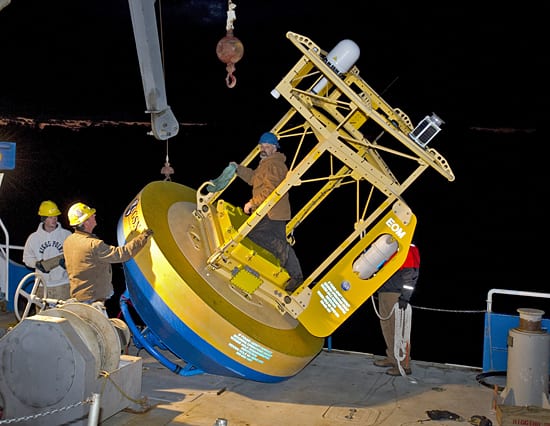
Isn’t ironic, don’t you think: dismantling the Ocean Observatories Initiative on World Oceans Day
June 9, 2026
“Why Sustainable Seafood Matters” is now available for preorder! Here’s what it’s about, and why I decided to write it.
June 8, 2026
Here’s how to join my IMCC8 symposium, “Ocean Science Communication: What’s New and What’s Next?”
April 22, 2026
Deep Sea Mining Symposium Announcement
April 21, 2026
Join Me at Upwell: A Wave of Ocean Justice — Our Fourth Year!
March 24, 2026

Thank you notes from DonorsChoose Science Bloggers Challenge teachers

Posted on March 21, 2013 By David Shiffman 1 Comment on Thank you notes from DonorsChoose Science Bloggers Challenge teachers
Uncategorized

davesquareOverall

Last fall, we invited you to support ocean science education in classrooms around the country as part of the DonorsChoose Science Bloggers for Students Challenge. In total, 347 donors to the 2012 Science Bloggers for Students Challenge raised over $29,711 and helped 26,955 students! Team Ocean and Geobloggers, which Southern Fried Science was proudly a part of, raised the most money: $6,894! Team Scientopia Bloggers was a close second with $6,876 raised, and no other team raised over $4,000.

Within Team Ocean and Geobloggers, Southern Fried Science readers raised the 2nd most money, $1,603, and helped 1,903 students! 15 of the projects we supported were fully funded. I’ve been receiving thank-you notes from teachers, along with photos of students utilizing the completed projects. I’d like to share some of  them with you.

Read More “Thank you notes from DonorsChoose Science Bloggers Challenge teachers” »

Watch these giant deep-sea isopods go about their day

Posted on March 20, 2013March 20, 2013 By Andrew Thaler 1 Comment on Watch these giant deep-sea isopods go about their day
Science

headshot-thalerSMALLYou know the good stuff is going to keep rolling in from my research cruise to Mid-Cayman Spreading Center. At the end of JC82, we had the opportunity to join a bolt-on cruise to explore the seabed around Montserrat. During a biological survey of the surrounding abyssal plain, we twice stumbled on a giant deep-sea isopods hanging out on the sea floor, doing their isopod thing. This was my first opportunity to observe a giant deep-sea isopod (Bathynomus giganteus*) alive and in the wild. My previous experiences have been limited to well preserved specimens.

Giant isopod behavior is not something that falls within my expertise. Like Craig McClain at Deep Sea News, I’m fascinated by the evolution of their large body size and how a relatively abundant population of such giants can be supported in the food limited deep benthos. But giant isopods are not common in my study area and what little I know of their behavior comes from the very few videos available, mostly of them scavenging on baited camera traps. So I was pretty surprised when the ROV Isis came across this delightful giant maintaining its burrow.

httpv://youtu.be/5B2uT_Vp-UY

This isn’t the first time Bathynomus burrowing has been observed; the behavior is actually fairly well documented (at least, well-documented for deep-sea species). But as fascinating as watching a 20+ centimeter-long roly-poly digging it’s hole 800 meters deep on the seafloor near one of the most active volcanoes in the Caribbean is, what we found next was even more amazing:

Read More “Watch these giant deep-sea isopods go about their day” »

Was CITES COP16 a game-changer for online outreach at wildlife management meetings?

Posted on March 18, 2013 By David Shiffman 5 Comments on Was CITES COP16 a game-changer for online outreach at wildlife management meetings?
Conservation, Science

davesquareCITES logo

As 16th Conference of the Parties of the Convention of International Trade in Endangered Species (CITES COP16, pronounced sight-eze) comes to a close, I’d like to reflect on something that made this meeting unlike almost any other wildlife conservation and management meeting in history. Yes, history was made as delegates voted to list commercially exploited shark species for the first time, and history was made when manta rays became the first shark or ray species  to be listed under CITES the first time they were proposed, and that’s all fantastic news. However, what I believe made CITES COP16 a game-changer for wildlife conservation and management was the large-scale inclusion of online outreach by both attendees and organizers. For the first time ever, interested members of the public from all over the world could follow along (and to some degree, participate) in real time.

Read More “Was CITES COP16 a game-changer for online outreach at wildlife management meetings?” »

Debate and celebration from CITES: A Storify of #CITES4sharks tweets

Posted on March 14, 2013March 14, 2013 By David Shiffman 1 Comment on Debate and celebration from CITES: A Storify of #CITES4sharks tweets
Conservation

davesquare

The 16th Conference of the Parties of CITES (Convention on International Trade of Endangered Species has been truly historic in terms of shark and ray protections. I’ve created a Storify featuring some highlights of the ongoing twitter conversation, organized by proposal. The tweets include links to fact sheets and scientific research about the species up for protections, as well as original content such as summaries of arguments made by delegates for and against CITES protections. Tweets come from experts in attendance at CITES, and those following along from around the world (including me). For those of you who didn’t follow along live, or if you did and want to relive the experience, check it out! Warning- there are a LOT of tweets.

Read More “Debate and celebration from CITES: A Storify of #CITES4sharks tweets” »

Who are “The Lucky Ones”?

Posted on March 13, 2013 By Andrew Thaler
Popular Culture

We interrupt our regularly scheduled marine science and conservation discussions and frequent Aquaman adulation to bring you this important announcement: “My legs creak as I climb the stairs to our meeting room. I lean against the wall to steady myself. I could have taken the elevator, saved myself the pain, but I need to heal. … Read More “Who are “The Lucky Ones”?” »

Aquaman is back!

Posted on March 12, 2013March 12, 2013 By Andrew Thaler 2 Comments on Aquaman is back!
Popular Culture

headshot-thalerSMALLLong-time readers know that I am a dedicated fan of the one true king of Atlantis, Arthur Curry–Aquaman. Since his reboot in DC Comic’s New 52 series, Aquaman has risen above the Justice League pantheon, casually crushing his critics with humor, style, and pure, aquatic power. My original plan was to review the marine science in Aquaman, but, since the Trench, our hero has spent relatively little time in the sea. We can forgive that. Between protecting his old gang, the Others, from arch-nemesis Black Manta, and saving the surface dwellers while reclaiming his crown in Throne of Atlantis, Mr. Curry has been quite busy.

Now, with Aquaman #17, it looks like things are about to change.

littleaqua
“I won’t fail you again.” Aquaman #17. DC Comics.

So, this is pretty much my all time favorite piece of comic book art. I love that so many invertebrates get starring roles–colossal squid, octopuses, crustaceans of all sorts. I love that whales are relegated to the background, dolphins are barely more than shadows, and elasmobranchs other than sharks are prominently featured. Artists Paul Pelletier and Art Thebert did a fantastic job creating an ocean biodiversity tableau that shuns the Wyland-esque tropes characteristic of the genre. This is a tough, gritty Aquaman. His ocean is not all sunsets and dolphins.

This also settles the longstanding debate about Aquaman’s telepathy. Aquaman talks to fish. Whether they talk back is a different story.

Read More “Aquaman is back!” »

A guide to following shark conservation proposals at CITES on twitter

Posted on March 5, 2013 By David Shiffman
Conservation, Science

davesquare

CITES logoRight now, delegates from 178 countries are meeting in Bangkok, Thailand to discuss a variety of conservation proposals. At the 16th CITES Conference of the Parties, among many other worthy topics, delegates will be debating a record-number of shark and ray proposals. These include iconic species like hammerhead sharks (3 species) and manta rays (2 species), as well as oceanic whitetip sharks, porbeagle sharks, and three species of freshwater stingray.

In addition to a record-number of shark and ray proposals, this year’s Conference of the Parties also has a record-number of attendees live-tweeting the meeting.Those of you who follow me on twitter know that I’ve been re-tweeting lots of information about CITES and these shark conservation proposals. In case you want to get the information directly from the source, I’ve prepared a guide to following along with the meeting on twitter.

1) Follow #CITES . Though this hashtag isn’t exclusively focused on sharks (and isn’t exclusively in English), there’s a lot of good information being shared.

2) Follow #Cites4Sharks . Also use this hashtag if you’re sharing any relevant links or information.

3) Follow the 13 accounts I’ve highlighted below (and let me know in the comments if you have suggestions for any accounts I should add to the list):

Read More “A guide to following shark conservation proposals at CITES on twitter” »

ScienceOnline Oceans: The planning wiki is now open, and other important updates.

Posted on March 4, 2013October 27, 2013 By David Shiffman

davesquare

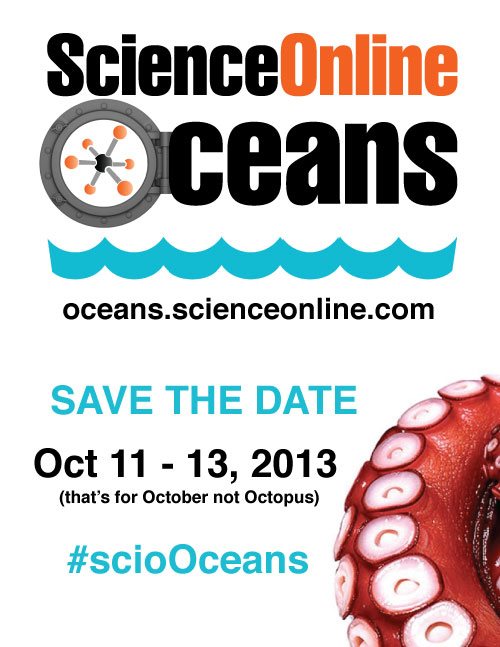
sciooceansI have a few important updates to share about ScienceOnline Oceans! For those of you who haven’t yet heard, ScienceOnline Oceans is a conference (affiliated with the NC-based ScienceOnline) that will explore how marine scientists and conservationists can use the internet for collaboration, education and outreach. The meeting will take place October 11-13th at the University of Miami (Miami, FL), and will include an expert panel discussion on current ocean conservation issues, a day of conference-style programming, and a day of field trips allowing attendees to explore south Florida’s marine environment. Scientists who want to learn more about collaboration and outreach applications of the internet are welcome, as are science communicators who want to learn more about ocean issues.

1) The Planning Wiki is now online, and will be until April 1st! If you have an idea for a session, now is the time to submit it!  For those of you new to the ScienceOnline community, theplanning wiki can be thought of as similar to a traditional conference submission page, but there are three important differences:1) everyone can see what everyone else has submitted, 2) anyone can add to what anyone else has written (including questions, suggestions, etc.), and 3) the person who proposes a session can, but does not have to, actually run that session- you can simply suggest a topic that you’d like to see discussed and ask people to volunteer to run it (and you can also volunteer to help run sessions that others have suggested).

We are offering four kinds of sessions at ScienceOnline Oceans. Skills workshops (taught by a hands-on leader to help people learn a skill), panel discussions (3-4 experts on a topic sharing their expertise, possibly including time for audience questions at the end), directed discussions (led by 1 or 2 discussions leaders, primarily consisting of the audience asking questions of the discussion leaders), and facilitated conversations (unconference-style discussions, essentially discussions between audience members facilitated by 1 or 2 moderators, which can be a follow-up to a panel discussion or directed discussion). Here is the link to the planning wiki.

Read More “ScienceOnline Oceans: The planning wiki is now open, and other important updates.” »

Breaking News! “Most Comprehensive Estimate of Mortality”: Between 63 and 273 Million Sharks Killed Each Year

Posted on March 1, 2013March 1, 2013 By David Shiffman 10 Comments on Breaking News! “Most Comprehensive Estimate of Mortality”: Between 63 and 273 Million Sharks Killed Each Year
Conservation, Science

davesquare

A new study* has estimated that the total number of sharks killed by fisheries each year is between 63 and 273 million, with a average of approximately 100 million.In an interview, lead author Dr. Boris Worm explains the importance of this estimate:

“This is by far the most comprehensive estimate of shark mortality yet,” he said,  “because we consider all sources of mortality, from direct fishing, finning, and discard mortality. the estimate was derived by crunching numbers from almost 100 publications on the catches and mortality of sharks.”

Of all the numbers this team crunched, the most important thing to consider is whether the exploitation rate is greater than the rebound rate. In other words, is this level of exploitation more than the populations can recover from? Though many estimates and approximations went into calculating these figures, it seems quite clear that sharks are being harvested at an unsustainable rate.

Read More “Breaking News! “Most Comprehensive Estimate of Mortality”: Between 63 and 273 Million Sharks Killed Each Year” »

Return from the Cayman Abyss: cruise post-mortem and some thoughts on media coverage

Posted on March 1, 2013 By Andrew Thaler 3 Comments on Return from the Cayman Abyss: cruise post-mortem and some thoughts on media coverage
Science

AndrewThumbAt 7 AM EST on Monday, February 25, the ROV Isis rose from the depths of the Cayman Abyss, bringing to a close the 82nd cruise of the RRS James Cook. During JC82, we explored two recently discovered hydrothermal vents fields in the Cayman Trough: Von Damm, named for the late marine geochemist Karen Von Damm, and Beebe, named for the 20th century explorer William Beebe. By any measure, JC82 was a massive success. The samples and videos we’ll bring back will provide ecologists, geologists, and chemists with new insights into fundamental ocean systems for years. The images alone, some beautiful, some heart-breaking, have already inspired.

bacteriamatssmall
Eyeless shrimp, dancing anemones, and a garden of filamentous bacteria. I’m a pretty good writer, and I can’t even begin to describe how beautiful this is. Photo Credit: NERC

Since I last updated the blog on our adventures exploring the Cayman Trough, we’ve had a steady stream media coverage, most of which has been excellent, some of which has been… strange. It’s been fascinating watching the articles come out, seeing what different media outlets consider the story, and, most important to me, getting a chance to share our adventure with a wide audience. Now that the #DeepestVents cruise is officially over (and we’re in transit to yet another, equally exciting bolt on cruise to investigate submerged lava flows off the island of Montserrat), I thought it would be a good opportunity to reflect on the cruise, the story, and how the media shaped it.

Read More “Return from the Cayman Abyss: cruise post-mortem and some thoughts on media coverage” »

Posts pagination

Previous 1 … 131 132 133 … 273 Next

Popular Posts

The story of the pride flag made from NASA imagery: Bluesky's most-liked imageThe story of the pride flag made from NASA imagery: Bluesky's most-liked imageSeptember 27, 2024David Shiffman
"Why Sustainable Seafood Matters" is now available for preorder! Here's what it's about, and why I decided to write it."Why Sustainable Seafood Matters" is now available for preorder! Here's what it's about, and why I decided to write it.June 8, 2026David Shiffman
Tackling the least important debate in deep-sea mining: the desultory hyphenTackling the least important debate in deep-sea mining: the desultory hyphenJune 8, 2026Andrew Thaler
The evolution of the International Whaling Commission – from  whaling quotas to whale conservationThe evolution of the International Whaling Commission – from  whaling quotas to whale conservationJune 10, 2026Chris Parsons
What Ocean Ramsey does is not shark science or conservation: some brief thoughts on "the Shark Whisperer" documentaryWhat Ocean Ramsey does is not shark science or conservation: some brief thoughts on "the Shark Whisperer" documentaryJuly 2, 2025David Shiffman
Deep-sea Mining, Domestic Cats, Star Trek, and Ocean Exploration: Andrew's mid-year podcast round-up.Deep-sea Mining, Domestic Cats, Star Trek, and Ocean Exploration: Andrew's mid-year podcast round-up.June 6, 2026Andrew Thaler
Isn’t ironic, don’t you think: dismantling the Ocean Observatories Initiative on World Oceans DayIsn’t ironic, don’t you think: dismantling the Ocean Observatories Initiative on World Oceans DayJune 9, 2026Southern Fried Science
Shark of Darkness: Wrath of Submarine is a fake documentaryShark of Darkness: Wrath of Submarine is a fake documentaryAugust 10, 2014Michelle Jewell
What is a Sand Shark?What is a Sand Shark?November 12, 2017Chuck Bangley
That's not a blobfish: Deep Sea Social Media is Flooded by AI SlopThat's not a blobfish: Deep Sea Social Media is Flooded by AI SlopDecember 19, 2025Andrew Thaler

squishy

Subscribe to our RSS Feed for updates whenever new articles are published.

We recommend Feedly for RSS management. It's like Google Reader, except it still exists.

Southern Fried Science

  • Home
  • About SFS
  • Authors
  • Support SFS


If you enjoy Southern Fried Science, consider contributing to our Patreon campaign.

Copyright © 2026 Southern Fried Science.

Theme: Oceanly Premium by ScriptsTown