Skip to content

Southern Fried Science

Over 15 years of ocean science and conservation online

  • Home
  • About SFS
  • Authors
  • Support SFS

Recent Posts

humpback whale in Antarctica
The evolution of the International Whaling Commission – from  whaling quotas to whale conservation
June 10, 2026
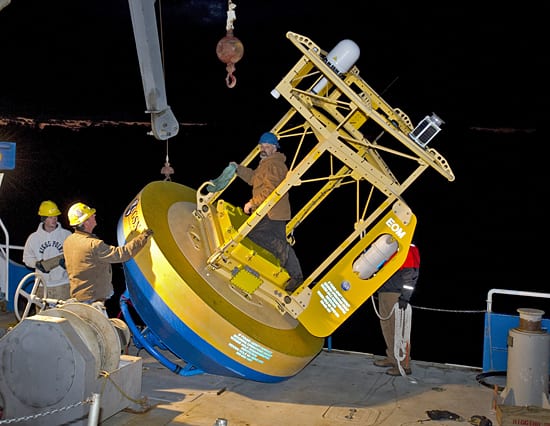
Isn’t ironic, don’t you think: dismantling the Ocean Observatories Initiative on World Oceans Day
June 9, 2026
“Why Sustainable Seafood Matters” is now available for preorder! Here’s what it’s about, and why I decided to write it.
June 8, 2026
Here’s how to join my IMCC8 symposium, “Ocean Science Communication: What’s New and What’s Next?”
April 22, 2026
Deep Sea Mining Symposium Announcement
April 21, 2026
Join Me at Upwell: A Wave of Ocean Justice — Our Fourth Year!
March 24, 2026

An interview with Kool Kid Kreyola of “Me and My Shark Fin”

Posted on January 14, 2013 By David Shiffman 1 Comment on An interview with Kool Kid Kreyola of “Me and My Shark Fin”
Uncategorized

davesquareLast summer, shark conservation got an interesting new voice. Kool Kid Kreyola, a California-based painter and musician, took the ocean twitterverse by storm with “Me and My Shark Fin”. This video, a clever parody of Jay Z and Beyonce’s “Bonnie and Clyde” , told the story of shark fin soup… from the perspective of a shark.

Kreyola agreed to participate in an interview with me. If you have any follow-up questions, please post them in the comments section below, and I’ll make sure that he sees them.

Read More “An interview with Kool Kid Kreyola of “Me and My Shark Fin”” »

This Week in the Deep

Posted on January 12, 2013January 25, 2013 By Andrew Thaler
Science

New and noteworthy publications in deep-sea science for the week of January 7, 2013.

Deep Sea Research Part 1: Oceanographic Research Papers: Discovery of a new hydrothermal vent based on an underwater, high-resolution geophysical survey


A new hydrothermal vent site in the Southern Mariana Trough has been discovered using acoustic and magnetic surveys conducted by the Japan Agency for Marine–Earth Science and Technology’s (JAMSTEC) autonomous underwater vehicle (AUV) Urashima. The high-resolution magnetic survey, part of near-bottom geophysical mapping around a previously known hydrothermal vent site, the Pika site, during YK09-08 cruise in June-July 2009, found that a clear magnetization low extends ~500 m north from the Pika site. Acoustic signals, suggesting hydrothermal plumes, and 10 m-scale chimney-like topographic highs were detected within this low magnetization zone by a 120 kHz side-scan sonar and a 400 kHz multibeam echo sounder. In order to confirm the seafloor sources of the geophysical signals, seafloor observations were carried out using the deep-sea manned submersible Shinkai 6500 during the YK 10-10 cruise in August 2010. These discovered a new hydrothermal vent site (12°55.30′N, 143°38.89′E; at a depth of 2922 m), which we have named the Urashima site. This hydrothermal vent site covers an area of approximately 300 m x 300 m and consists of black and clear smoker chimneys, brownish-colored shimmering chimneys, and inactive chimneys. All of the fluids sampled from the Urashima and Pika sites have chlorinity greater than local ambient seawater, suggesting subseafloor phase separation or leaching from rocks in the hydrothermal reaction zone. End-member compositions of the Urashima and Pika fluids suggest that fluids from two different sources feed the two sites, even though are located on the same knoll and separated by only ~500 m. We demonstrate that investigations on hydrothermal vent sites located in close proximity to one another can provide important insights into subseafloor hydrothermal fluid flow, and also that, while such hydrothermal sites are difficult to detect by conventional plume survey methods, high-resolution underwater geophysical surveys provide an effective means.


Read More “This Week in the Deep” »

Surviving Grad School: A Practical Guide to an Impractical Lifestyle

Posted on January 10, 2013January 10, 2013 By Andrew Thaler 1 Comment on Surviving Grad School: A Practical Guide to an Impractical Lifestyle
Science

Ah, graduate school. For approximately 5 years you will live awash in the intellectual stimulation that comes with the pursuit of knowledge. You will learn more than you ever have before. Now at the forefront of the human data engine, you are not just being taught, but pushing the limits of human understanding imperceptibly, but significantly, … Read More “Surviving Grad School: A Practical Guide to an Impractical Lifestyle” »

Submit your short ocean-themed movie to the Beneath The Waves Film Festival

Posted on January 8, 2013 By David Shiffman

The Beneath The Waves Film Festival is accepting submissions for the 2013 event. Now in it’s fourth year, Beneath the Waves encourages dialogue and networking between documentary filmmakers, conservationists, and scientists. As in past years, the film festival is associated with the Benthic Ecology conference, which is taking place March 20th-23rd in Savannah, Georgia. There will … Read More “Submit your short ocean-themed movie to the Beneath The Waves Film Festival” »

Arduino Project Log: Getting Started with a Digital Compass

Posted on January 7, 2013January 10, 2013 By Andrew Thaler 2 Comments on Arduino Project Log: Getting Started with a Digital Compass
The Open CTD Project

Andrew ThumbAs I mentioned during the last Blue Pints episode, this year I’m going to be attempting to build a low-cost open source CTD for basic oceanographic measurements. This is in addition to my ongoing work with the OpenROV. I have a pretty solid electronics background, but in order to accomplish this goal, I also need to learn how to program microcontrollers, something that I’ve never done before. For the next several months I’m going to tackle various small Arduino project to get comfortable with the fundamentals. I’ll be working out of Environmental Monitoring with Arduino: Building Simple Devices to Collect Data About the World Around Us and Arduino Projects to Save the World, both of which feature beginner to advanced projects based around environmental monitoring and data collection, as well as Programming Arduino Getting Started with Sketches for as a basic programming primer.

For my first project, I wanted to start with something that could eventually be implemented with the OpenROV–a magnetometer to provide compass headings while navigating the robot. As a first step, I wanted to learn how to program the Arduino board to calculate compass headings from a magnetometer and develop some sort of rough visual readout of that heading.

Read More “Arduino Project Log: Getting Started with a Digital Compass” »

Bluefin Tuna and the Tsukiji Fish Auction: caution in drawing conclusions from record breaking prices

Posted on January 5, 2013January 6, 2013 By Andrew Thaler 1 Comment on Bluefin Tuna and the Tsukiji Fish Auction: caution in drawing conclusions from record breaking prices
Uncategorized

Andrew ThumbToday marks the first Tsukiji fish market tuna auction of 2013, and, as in the previous two years, the first fish sold broke all previous records. In 2011, the record breaking tuna sold for $396,000. Last year, we tipped the scales at $736,000. Early this morning, the record breaking bluefin tuna blew the previous records out of the water, fetching a whopping $1,800,000 at the auction block, making this 488-lb tuna the most expensive fish ever purchased.

Over the next few weeks, I’m certain that we’ll see this number presented as an argument against bluefin tuna fishing, as an example of an industry out-of-control, and as a symbol of how ruthlessly we’ll hunt the last few members of a species to put on our dinner plates. These issues are reflected in the tuna market, but I want to urge caution in drawing too many conclusions from this record breaking number.

Read More “Bluefin Tuna and the Tsukiji Fish Auction: caution in drawing conclusions from record breaking prices” »

This Week in the Deep

Posted on January 5, 2013January 25, 2013 By Andrew Thaler
Science

New and noteworthy publications in deep-sea science for the week of December 31st, 2012.

PLoS One: How Deep-Sea Wood Falls Sustain Chemosynthetic Life

Large organic food falls to the deep sea – such as whale carcasses and wood logs – are known to serve as stepping stones for the dispersal of highly adapted chemosynthetic organisms inhabiting hot vents and cold seeps. Here we investigated the biogeochemical and microbiological processes leading to the development of sulfidic niches by deploying wood colonization experiments at a depth of 1690 m in the Eastern Mediterranean for one year. Wood-boring bivalves of the genus Xylophaga played a key role in the degradation of the wood logs, facilitating the development of anoxic zones and anaerobic microbial processes such as sulfate reduction. Fauna and bacteria associated with the wood included types reported from other deep-sea habitats including chemosynthetic ecosystems, confirming the potential role of large organic food falls as biodiversity hot spots and stepping stones for vent and seep communities. Specific bacterial communities developed on and around the wood falls within one year and were distinct from freshly submerged wood and background sediments. These included sulfate-reducing and cellulolytic bacterial taxa, which are likely to play an important role in the utilization of wood by chemosynthetic life and other deep-sea animals

Read More “This Week in the Deep” »

The ten best and worst events in shark fisheries management of 2012

Posted on January 4, 2013October 27, 2013 By Guest Writer 1 Comment on The ten best and worst events in shark fisheries management of 2012
Conservation, Science

Sonja FordhamPresident, Shark Advocates International
Sonja Fordham
President, Shark Advocates International

SAISonja Fordham founded Shark Advocates International as a project of The Ocean Foundation in 2010 based on her two decades of shark conservation experience at  Ocean Conservancy.  She is Deputy Chair of the IUCN Shark Specialist Group and Conservation Committee Chair for the American Elasmobranch Society, has co-authored numerous publications on shark fisheries management, and serves on most of the U.S. federal and state government advisory panels relevant to sharks and rays.  Her awards include the U.S. Department of Commerce Environmental Hero Award, the Peter Benchley Shark Conservation Award, and the IUCN Harry Messel Award for Conservation Leadership.


The last twelve months added up to another exciting year in shark and ray conservation policy.  We certainly saw and should herald a lot of great progress in 2012.  I think it’s also important to acknowledge what went wrong so we know where we stand and how best to move forward.  I’ve taken a look back and compiled a top ten list of what I see as the best and worst events in shark fisheries management for 2012, based on my work at Shark Advocates International.  I’m starting with the low points, but keep reading!  It ends on a high note.

Read More “The ten best and worst events in shark fisheries management of 2012” »

Watch Blue Pints Episode 5: 2012 in review, what’s in store for 2013

Posted on January 4, 2013October 27, 2013 By Andrew Thaler
Uncategorized

httpv://www.youtube.com/watch?v=3vuOrHXkMuk&feature=plcp

Join us tonight at 7 for the first 2013 edition of Blue Pints!

Posted on January 3, 2013October 27, 2013 By Andrew Thaler
Uncategorized

We’re kicking off the new year by reviving our popular Google+ Hangout — Blue Pints! Join us tonight (Thursday, January 3) at 7 for a casual conversation about marine science and conservation. On this episode, we’ll be reflecting on our favorite moments from 2012 and giving you a peak at what we have planned for … Read More “Join us tonight at 7 for the first 2013 edition of Blue Pints!” »

Posts pagination

Previous 1 … 134 135 136 … 273 Next

Popular Posts

The story of the pride flag made from NASA imagery: Bluesky's most-liked imageThe story of the pride flag made from NASA imagery: Bluesky's most-liked imageSeptember 27, 2024David Shiffman
"Why Sustainable Seafood Matters" is now available for preorder! Here's what it's about, and why I decided to write it."Why Sustainable Seafood Matters" is now available for preorder! Here's what it's about, and why I decided to write it.June 8, 2026David Shiffman
Tackling the least important debate in deep-sea mining: the desultory hyphenTackling the least important debate in deep-sea mining: the desultory hyphenJune 8, 2026Andrew Thaler
The evolution of the International Whaling Commission – from  whaling quotas to whale conservationThe evolution of the International Whaling Commission – from  whaling quotas to whale conservationJune 10, 2026Chris Parsons
What Ocean Ramsey does is not shark science or conservation: some brief thoughts on "the Shark Whisperer" documentaryWhat Ocean Ramsey does is not shark science or conservation: some brief thoughts on "the Shark Whisperer" documentaryJuly 2, 2025David Shiffman
Deep-sea Mining, Domestic Cats, Star Trek, and Ocean Exploration: Andrew's mid-year podcast round-up.Deep-sea Mining, Domestic Cats, Star Trek, and Ocean Exploration: Andrew's mid-year podcast round-up.June 6, 2026Andrew Thaler
Isn’t ironic, don’t you think: dismantling the Ocean Observatories Initiative on World Oceans DayIsn’t ironic, don’t you think: dismantling the Ocean Observatories Initiative on World Oceans DayJune 9, 2026Southern Fried Science
Shark of Darkness: Wrath of Submarine is a fake documentaryShark of Darkness: Wrath of Submarine is a fake documentaryAugust 10, 2014Michelle Jewell
What is a Sand Shark?What is a Sand Shark?November 12, 2017Chuck Bangley
That's not a blobfish: Deep Sea Social Media is Flooded by AI SlopThat's not a blobfish: Deep Sea Social Media is Flooded by AI SlopDecember 19, 2025Andrew Thaler

squishy

Subscribe to our RSS Feed for updates whenever new articles are published.

We recommend Feedly for RSS management. It's like Google Reader, except it still exists.

Southern Fried Science

  • Home
  • About SFS
  • Authors
  • Support SFS


If you enjoy Southern Fried Science, consider contributing to our Patreon campaign.

Copyright © 2026 Southern Fried Science.

Theme: Oceanly Premium by ScriptsTown