

Skip to content

Southern Fried Science

Over 15 years of ocean science and conservation online

  • Home
  • About SFS
  • Authors
  • Support SFS

Recent Posts

The conservation impacts of recreational fishing
August 25, 2026
How to help protect the deep sea in the Marianas and American Samoa today
August 20, 2026
Trump Administration Advances Mariana Trench Offshore Mineral Leasing Process
August 19, 2026
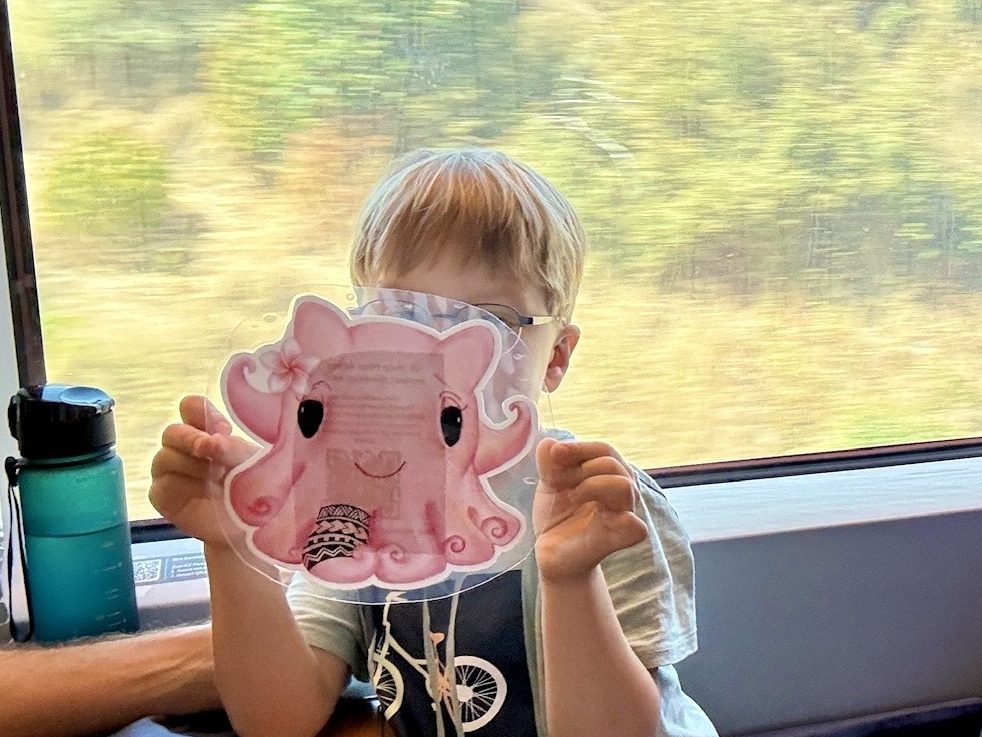
small boy holding Miss Abyss Dumbo Octopus
Please Help This Little Dumbo Octopus Travel Across America
August 3, 2026
Isn’t ironic, don’t you think: dismantling the Ocean Observatories Initiative on World Oceans Day
June 9, 2026
My Journey Into Researching Historical Erasure on Public Lands
July 31, 2026

Why a California great white shark scientist opposes CA Endangered Species Act protections

Posted on February 22, 2013October 27, 2013 By Guest Writer 15 Comments on Why a California great white shark scientist opposes CA Endangered Species Act protections
Why a California great white shark scientist opposes CA Endangered Species Act protections
Conservation, Science

csulb shark labChris Lowe -CSULBDr. Chris Lowe is a Professor of Marine Biology at California State University Long Beach, and is Director of the  CSULB Shark Lab. He has studied  California’s great white sharks for more than 10 years, and has written more than 75 peer-reviewed scientific publications. Dr. Lowe also serves on the Board of Directors for the American Elasmobranch Society, the world’s largest professional organization of shark scientists. The following guest post was also submitted as a public comment to the California Department of Fish and Wildlife.


Comments for consideration on the petition to list white shark as threatened or endangered species:

I am a Professor of Marine Biology and the Director of the CSULB Shark Lab at California State University Long Beach and have been conducting State and Federally permitted white shark research in California since 2002. In addition, as a professional and published shark scientist who has studied a variety of shark species around the world, including white sharks in California, I would like to take this opportunity to express my personal professional opinion in regards to the petition request and the science behind it.

Read More “Why a California great white shark scientist opposes CA Endangered Species Act protections” »

The most preventable shark attack of all time?

Posted on February 19, 2013February 19, 2013 By David Shiffman 5 Comments on The most preventable shark attack of all time?
The most preventable shark attack of all time?
Science

davesquare

I don’t often cover shark attacks here at Southern Fried Science. They get plenty of news coverage on their own, they’re usually not that relevant from a science and conservation perspective, and they are outside of my expertise and interests. However, some shark attack stories, such as this one, transcend “if it bleeds, it leads” fearmongering journalism and are interesting in their own right.

I’d like to preface this story by saying that shark attacks are extremely rare to begin with (you have a 1 in 5 chance of dying from heart disease and a 1 in 3.8 million chance of being killed by a shark in the United States). If you want to further minimize your chance of being attacked by a shark, most of the few attacks that occur can be prevented by simply swimming close to shore with lots of other people nearby during the day. Even though shark attacks are rare, I still don’t want to minimize the suffering of the few attack victims and their families. With these caveats out of the way, presented below is the fascinating story of what is probably the most preventable shark attack of all time.

Read More “The most preventable shark attack of all time?” »

Update from the Cayman Abyss

Posted on February 15, 2013February 15, 2013 By Andrew Thaler 1 Comment on Update from the Cayman Abyss
Science

Andrew is currently at sea exploring the world’s deepest hydrothermal vents aboard the RRS James Cook. You can follow along with the adventure at the cruise blog–Into the Cayman Abyss–and on twitter using the hashtag #DeepestVents. Below is a cross post of his first entry Confessions of a Benthic Mercenary – It’s all about connectivity.


AndrewThumbModern deep-sea science is built on broad international collaborations. We share resources, expertise, and ship time. These exchanges allow scientists from around the world to benefit from a global research fleet that includes dedicated oceanographic platforms like the RRS James Cook or the RV Atlantis as well as novel vessels-of-opportunity that could include Norwegian container ships, North Carolina ferries, or Papua New Guinea tug boats. There are small differences between the operation of vessels from different nations – new acronyms, different power supplies, and an enduring disagreement regarding what constitutes a proper biscuit (ask a North Carolinian to take you to Bojangles sometime) – but the rhythm of a ship at sea is dictated, above all else, by the ocean.

The international and interconnected network of deep-sea scientists is how I now find myself, as an American, sailing aboard a British ship, in a role that could best be described as a Benthic Mercenary.

Read More “Update from the Cayman Abyss” »

50 Shades of Grey Reef Shark: A Valentine’s Day Special Report on Shark Sex (With Pictures! And Video!)

Posted on February 13, 2013February 13, 2013 By David Shiffman 5 Comments on 50 Shades of Grey Reef Shark: A Valentine’s Day Special Report on Shark Sex (With Pictures! And Video!)
50 Shades of Grey Reef Shark: A Valentine’s Day Special Report on Shark Sex (With Pictures! And Video!)
Science

davesquare

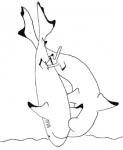
As many of our readers prepare for a romantic evening with their special someone (or a Single’s Awareness Day celebration with friends), I invite you to take a few minutes and learn how our toothy friends in the ocean do it. And by “do it”, I mean “do it”. Here are 10 things you might not have known about shark sex.

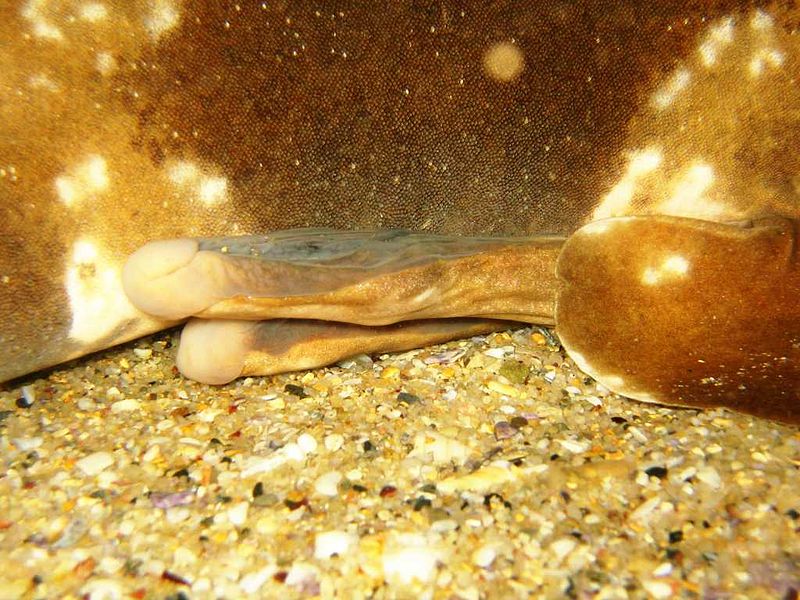
1) Sharks have external reproductive organs. A male shark has reproductive organs called “claspers” (yes, there are two of them), and females have a “cloaca”. As I regularly tell the high school students who join us for shark research trips, even if you don’t have a degree in marine biology, you’ll quickly recognize what you’re looking at.

A closeup of claspers (male reproductive organs) on a spotted Wobbegong shark. Photo credit: Richard Ling, WikiMedia Commons

Read More “50 Shades of Grey Reef Shark: A Valentine’s Day Special Report on Shark Sex (With Pictures! And Video!)” »

Shark DNA Used to Buff Up Aquacultured Fish

Posted on February 10, 2013October 28, 2013 By Chuck Bangley 3 Comments on Shark DNA Used to Buff Up Aquacultured Fish
Uncategorized

It’s not every day that catching up on scientific literature causes you to almost do a spit-take on your laptop screen.  This happened to me recently due to the weird and wild world of aquaculture.  Aquaculture is the practice of growing aquatic animals such as fish and shellfish for the purpose of food, and has been held up as both a savior and destroyer of the marine ecosystem.  To get an idea of what this generally looks like (at least here in the U.S.), Amy has a whole series of posts on aquaculture operations in North Carolina.

As with land-based farming, aquaculturists are motivated to find ways to increase the food value of their stock.  The methods used are varied, from high-protein feed mixes to genetic manipulation.  Recently, farmed salmon genetically-modified to grow larger and faster than their wild conspecifics have been approved for human consumption by the FDA, though not without debate.  This man-made subspecies was created by modifying the already-existing DNA of the fish, but what if it turned out that simply injecting DNA from a different species could improve the growth and protein output of farmed fish?  And what if that foreign DNA came from sharks?

Read More “Shark DNA Used to Buff Up Aquacultured Fish” »

Introducing ScienceOnline: Oceans!

Posted on February 1, 2013October 27, 2013 By David Shiffman 10 Comments on Introducing ScienceOnline: Oceans!

I am thrilled to officially announce Science Online: Oceans, which will take place in Miami this October! ScienceOnline: Oceans is affiliated with the North Carolina based ScienceOnline organization and meeting, and we hope to incorporate much of what makes those meetings so special, but there is one key difference that regular ScienceOnline attendees should be aware of. ScienceOnline: Oceans will focus exclusively on ocean science and conservation (and, of course, how these topics relate to the internet and social media).

scio_oceans

Who can attend? Anyone! Any interested scientist, journalist, student, blogger, communicator, activist, or member of the public is welcome.  Due to logistical limits, we will have to cap total attendance at 200 (previously it was 150), including organizers, presenters, and attendees. Registration will open in March, stay tuned!

Read More “Introducing ScienceOnline: Oceans!” »

What to read while you’re at sea: Southern Fried Science’s favorite ebooks for a multi-month research cruise

Posted on February 1, 2013February 1, 2013 By Andrew Thaler 5 Comments on What to read while you’re at sea: Southern Fried Science’s favorite ebooks for a multi-month research cruise
Uncategorized

AndrewThumbUntil March 9, 2013, I’ll be at sea. I love that phrase. At sea. For this expedition, we’re leaving from Jamaica, returning to Antigua, and spending several days on a research program separate from ours. I have a lot of travel and a little downtime to look forward to. When I started going to sea almost a decade ago, this meant that I carried a couple books and dozens of research papers, and traded them around with the rest of the science team, the crew, and the ship’s library.

Now, thanks to kindles and other e-readers, I can carry entire libraries with me, loading them up with all the books I want to read and stockpiling thousands of research papers. This. Is. Awesome.

So, if you find yourself with a kindle and a long stretch of travel time, consider checking out some of my favorite ebooks. I’ve read  all of these over the last year and they all look great on an e-reader. This reading list should keep you occupied during the quieter moments of your travels.

Read More “What to read while you’re at sea: Southern Fried Science’s favorite ebooks for a multi-month research cruise” »

Inaugural Post: Fishermen Are Not Evil

Posted on January 31, 2013October 28, 2013 By Chuck Bangley 1 Comment on Inaugural Post: Fishermen Are Not Evil
Conservation

Hi everyone.  I’m Chuck and I used to blog primarily over at Ya Like Dags?, where my main focus was on interactions between apex predators (sharks mostly, but I also occasionally dabbled in other large fish and sea mammals) and those other top marine predators, humans.  This was not in the “shark attack” sense, but in the context of fisheries management.  Writing about this subject and living it as part of my research have given me valuable perspective on marine science and conservation that I really didn’t have as a freshly-minted Bachelor of Science.

Unfortunately I see more extreme versions of my old perspective show up in countless blog comments, posts, and tweets by perfectly well-meaning people whose only issue is that they’ve fallen for a simplistic, “us vs. them” attitude towards conservation.  Consumptive uses of the ocean, such as fishing, are inherently evil and must be opposed.  This no-compromise approach sounds cool and may bring in the TV ratings, but is it truly helpful?

Read More “Inaugural Post: Fishermen Are Not Evil” »

Saying goodbye to an old friend: The R/V Cape Hatteras returns home from her final voyage

Posted on January 30, 2013 By Andrew Thaler
Science

At 0930, January 30, 2013, the research vessel Cape Hatteras made her final voyage through the Beaufort Inlet to dock at Pivers Island. The Cape Hatteras served as the flagship of the Duke/University of North Carolina Oceanographic Consortium for 31 years. During that time she logged more than 5000 days at sea over the course … Read More “Saying goodbye to an old friend: The R/V Cape Hatteras returns home from her final voyage” »

Know Your Fishermen as well as your Farmer

Posted on January 30, 2013 By Bluegrass Blue Crab 1 Comment on Know Your Fishermen as well as your Farmer
Science

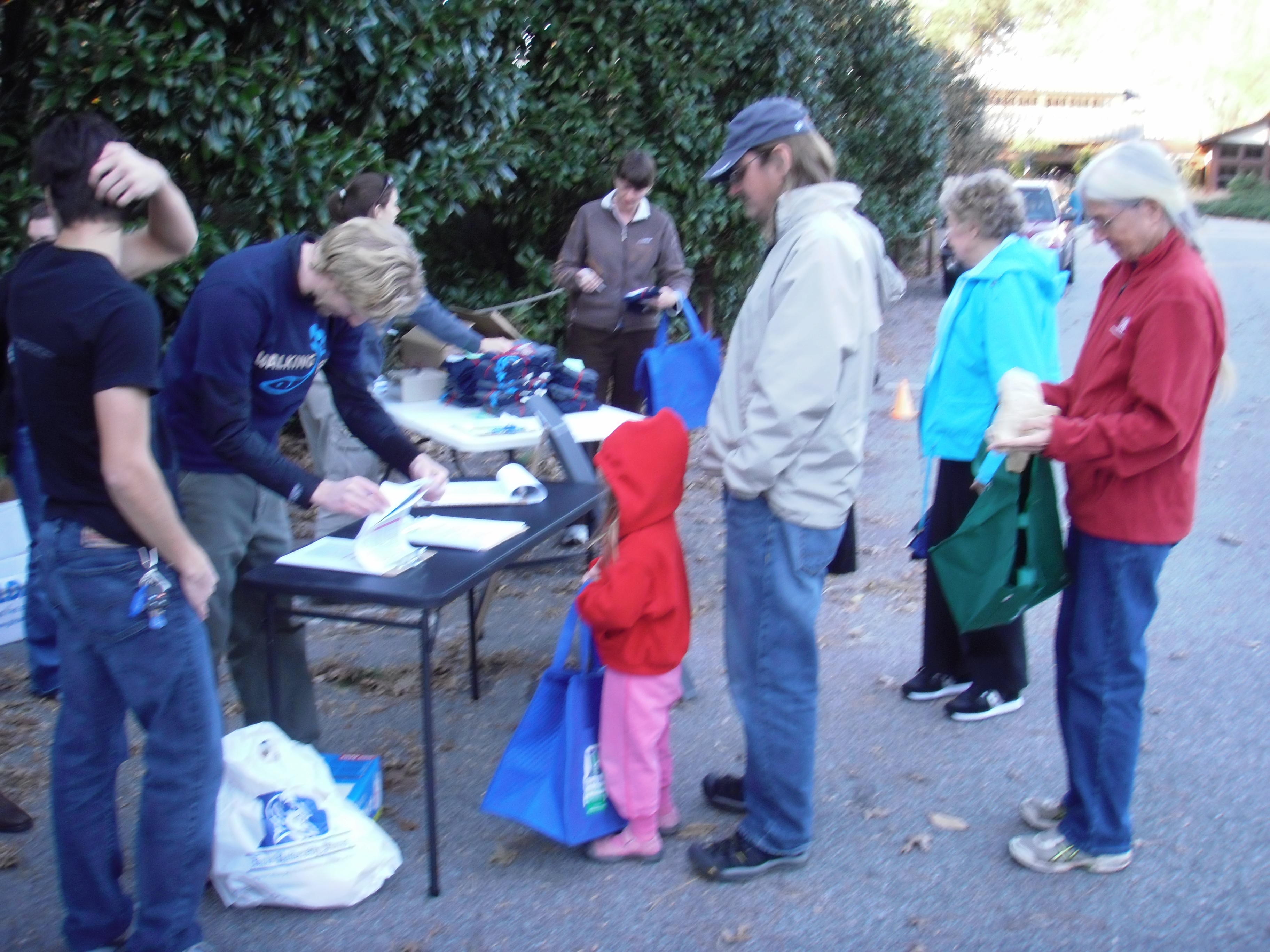
Members of Walking Fish in NC pick up their shar, photo by author
Members of Walking Fish in NC pick up their share, photo by author

amysquareFisheries had their ups and downs in the US in 2012. We’ve all heard the stories of overfishing, but there were also a few glimmers of hope as the New England cod fishery proposed to open previously closed areas, the Chesapeake oysters showed slight recovery, and MSC certification expanded and became more popular. News on the social side of the fishery – the fishermen and their families – is not as prevalent outside the small towns where they live. However, some of the most exciting developments happened on this front, starting with official community supported fisheries declaring themselves here to stay. They held a successful summit in New Hampshire this past July, placing them more in the public eye than ever before.

Read More “Know Your Fishermen as well as your Farmer” »

Posts pagination

Previous 1 … 135 136 137 … 275 Next

Popular Posts

The conservation impacts of recreational fishingThe conservation impacts of recreational fishingAugust 25, 2026David Shiffman
Toxic workplaces: the “tall poppy” problem in conservation and academiaToxic workplaces: the “tall poppy” problem in conservation and academiaAugust 26, 2026Chris Parsons
What Ocean Ramsey does is not shark science or conservation: some brief thoughts on "the Shark Whisperer" documentaryWhat Ocean Ramsey does is not shark science or conservation: some brief thoughts on "the Shark Whisperer" documentaryJuly 2, 2025David Shiffman
What is a Sand Shark?What is a Sand Shark?November 12, 2017Chuck Bangley
Shark of Darkness: Wrath of Submarine is a fake documentaryShark of Darkness: Wrath of Submarine is a fake documentaryAugust 10, 2014Michelle Jewell
That's not a blobfish: Deep Sea Social Media is Flooded by AI SlopThat's not a blobfish: Deep Sea Social Media is Flooded by AI SlopDecember 19, 2025Andrew Thaler
The Trump Administration’s latest attack on the Endangered Species ActThe Trump Administration’s latest attack on the Endangered Species ActAugust 21, 2026Ali Gaster
Please Help This Little Dumbo Octopus Travel Across AmericaPlease Help This Little Dumbo Octopus Travel Across AmericaAugust 3, 2026Angelo Villagomez
Marine Biology Career AdviceMarine Biology Career AdviceMay 30, 2025David Shiffman
I turned my woodshop into a personal solar farm.I turned my woodshop into a personal solar farm.June 21, 2021Andrew Thaler

squishy

Subscribe to our RSS Feed for updates whenever new articles are published.

We recommend Feedly for RSS management. It's like Google Reader, except it still exists.

Southern Fried Science

  • Home
  • About SFS
  • Authors
  • Support SFS


If you enjoy Southern Fried Science, consider contributing to our Patreon campaign.

Copyright © 2026 Southern Fried Science.

Theme: Oceanly Premium by ScriptsTown