

Skip to content

Southern Fried Science

Over 15 years of ocean science and conservation online

  • Home
  • About SFS
  • Authors
  • Support SFS

Recent Posts

humpback whale in Antarctica
The evolution of the International Whaling Commission – from  whaling quotas to whale conservation
June 10, 2026
Isn’t ironic, don’t you think: dismantling the Ocean Observatories Initiative on World Oceans Day
June 9, 2026
“Why Sustainable Seafood Matters” is now available for preorder! Here’s what it’s about, and why I decided to write it.
June 8, 2026
Here’s how to join my IMCC8 symposium, “Ocean Science Communication: What’s New and What’s Next?”
April 22, 2026
Deep Sea Mining Symposium Announcement
April 21, 2026
Join Me at Upwell: A Wave of Ocean Justice — Our Fourth Year!
March 24, 2026

Inaugural Post: Fishermen Are Not Evil

Posted on January 31, 2013October 28, 2013 By Chuck Bangley 1 Comment on Inaugural Post: Fishermen Are Not Evil
Conservation

Hi everyone.  I’m Chuck and I used to blog primarily over at Ya Like Dags?, where my main focus was on interactions between apex predators (sharks mostly, but I also occasionally dabbled in other large fish and sea mammals) and those other top marine predators, humans.  This was not in the “shark attack” sense, but in the context of fisheries management.  Writing about this subject and living it as part of my research have given me valuable perspective on marine science and conservation that I really didn’t have as a freshly-minted Bachelor of Science.

Unfortunately I see more extreme versions of my old perspective show up in countless blog comments, posts, and tweets by perfectly well-meaning people whose only issue is that they’ve fallen for a simplistic, “us vs. them” attitude towards conservation.  Consumptive uses of the ocean, such as fishing, are inherently evil and must be opposed.  This no-compromise approach sounds cool and may bring in the TV ratings, but is it truly helpful?

Read More “Inaugural Post: Fishermen Are Not Evil” »

Saying goodbye to an old friend: The R/V Cape Hatteras returns home from her final voyage

Posted on January 30, 2013 By Andrew Thaler
Science

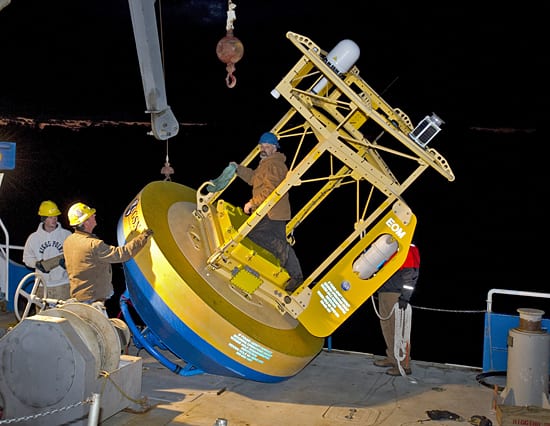
At 0930, January 30, 2013, the research vessel Cape Hatteras made her final voyage through the Beaufort Inlet to dock at Pivers Island. The Cape Hatteras served as the flagship of the Duke/University of North Carolina Oceanographic Consortium for 31 years. During that time she logged more than 5000 days at sea over the course … Read More “Saying goodbye to an old friend: The R/V Cape Hatteras returns home from her final voyage” »

Know Your Fishermen as well as your Farmer

Posted on January 30, 2013 By Bluegrass Blue Crab 1 Comment on Know Your Fishermen as well as your Farmer
Science

Members of Walking Fish in NC pick up their shar, photo by author
Members of Walking Fish in NC pick up their share, photo by author

amysquareFisheries had their ups and downs in the US in 2012. We’ve all heard the stories of overfishing, but there were also a few glimmers of hope as the New England cod fishery proposed to open previously closed areas, the Chesapeake oysters showed slight recovery, and MSC certification expanded and became more popular. News on the social side of the fishery – the fishermen and their families – is not as prevalent outside the small towns where they live. However, some of the most exciting developments happened on this front, starting with official community supported fisheries declaring themselves here to stay. They held a successful summit in New Hampshire this past July, placing them more in the public eye than ever before.

Read More “Know Your Fishermen as well as your Farmer” »

Introducing the Southern Fried Science Class of 2013!

Posted on January 30, 2013January 30, 2013 By Andrew Thaler 2 Comments on Introducing the Southern Fried Science Class of 2013!
Uncategorized

I am thrilled beyond measure to announce that, after 3 years blogging as a trio, we are welcoming four new authors to the ranks of Southern Fried Science. You will, know doubt recognize these familiar faces from around our humble corner of the ocean blogosphere.  The incredible Southern Fried Science Class of 2013 includes: Chuck Bangley Chuck is … Read More “Introducing the Southern Fried Science Class of 2013!” »

Surviving Grad School: What to expect from your stipend

Posted on January 29, 2013January 7, 2020 By Andrew Thaler 10 Comments on Surviving Grad School: What to expect from your stipend
Science

AndrewThumbWelcome to graduate school. If you’re enrolled in a Ph.D. program in the sciences, you should expect to get a stipend. Stipends vary significantly depending on the program and university that you’re enrolled in. Some schools guarantee five years of support, some only guarantee one. Masters programs may or may not provide a stipend. The quality of the stipend is not necessarily a reflection of the quality of your program, but reflect the economic realities of academia.

Often, new students think that any stipend is too good to be true. After all, someone is paying you to go to school! Because of this confusing situation, graduate students may be uncomfortable talking about their stipend or discussing financial issues with their peers and mentors. But that stipend is central to your success as a happy, healthy, successful graduate student for one very simple reason:

Graduate school is a job, and you should expect to be paid for your work.

Read More “Surviving Grad School: What to expect from your stipend” »

More than 100 marine scientists call for protecting the deep sea from trawling. Will you join us?

Posted on January 28, 2013January 28, 2013 By David Shiffman 8 Comments on More than 100 marine scientists call for protecting the deep sea from trawling. Will you join us?
Conservation, Science

davesquare

The least-impacted places in the ocean are mainly in the deep sea, but as fishing technology has improved, even seamounts, sponge gardens and deep-sea coral beds are no longer out of reach of our appetites for seafood. Bottom trawling, which involves dragging a heavy weighted net along the seabed, is so destructive to benthic habitats that it has been compared to clear-cutting a forest.  Bottom gillnetting catches almost anything that swims into them (and isn’t smaller than the mesh size), resulting in enormous levels of bycatch.

A (simplified) schematic of a bottom trawl. This one (on the NOAA vessel Henry Bigelow) is used for scientific sampling, not fishing, but it's the same principle on a smaller scale. Image via Wikimedia Commons
A (simplified) schematic of a bottom trawl. This one (on the NOAA vessel Henry Bigelow) is used for scientific sampling, not fishing, but it’s the same principle on a smaller scale.                  Image via Wikimedia Commons


The deep-sea fishing fleet of the European Union is one of the largest in the world, which is why it was so heartening to see the European Commission call for a phase-out of trawls and bottom gillnets recently. The Marine Conservation Institute, a longtime leader in marine protected areas, has obtained over 100 signatures (including mine) from marine scientists supporting a phase-out of bottom trawls and bottom gillnets by the EU fishing fleet. If you are a scientist who supports this measure, please consider adding your signature. This can be done by e-mailing DeepSeaTrawlPetition@Marine-Conservation.org and including your name, institutional affiliation, degree, title, and full mailing address. Please note that MCI is primarily interested in signatures from the scientific community, and that simply posting a comment on this blog post is not equivalent to signing the petition.However, feel free to post a comment letting us know that you contacted MCI!

mci-logo

The full text of the petition can be seen after the jump:

Read More “More than 100 marine scientists call for protecting the deep sea from trawling. Will you join us?” »

This Week in the Deep

Posted on January 26, 2013January 25, 2013 By Andrew Thaler
Science

New and noteworthy publications in deep-sea science for the week of January 21, 2013.

Geobiology: Did life originate from a global chemical reactor?

Many decades of experimental and theoretical research on the origin of life have yielded important discoveries regarding the chemical and physical conditions under which organic compounds can be synthesized and polymerized. However, such conditions often seem mutually exclusive, because they are rarely encountered in a single environmental setting. As such, no convincing models explain how living cells formed from abiotic constituents. Here, we propose a new approach that considers the origin of life within the global context of the Hadean Earth. We review previous ideas and synthesize them in four central hypotheses: (i) Multiple microenvironments contributed to the building blocks of life, and these niches were not necessarily inhabitable by the first organisms; (ii) Mineral catalysts were the backbone of prebiotic reaction networks that led to modern metabolism; (iii) Multiple local and global transport processes were essential for linking reactions occurring in separate locations; (iv) Global diversity and local selection of reactants and products provided mechanisms for the generation of most of the diverse building blocks necessary for life. We conclude that no single environmental setting can offer enough chemical and physical diversity for life to originate. Instead, any plausible model for the origin of life must acknowledge the geological complexity and diversity of the Hadean Earth. Future research may therefore benefit from identifying further linkages between organic precursors, minerals, and fluids in various environmental contexts.

Read More “This Week in the Deep” »

How to tell if a “shark in flooded city streets after a storm” photo is a fake in 5 easy steps

Posted on January 23, 2013August 28, 2017 By David Shiffman 3 Comments on How to tell if a “shark in flooded city streets after a storm” photo is a fake in 5 easy steps
Popular Culture, Science


The combination of increasing extreme weather and social media has created, if you’ll pardon the pun, a perfect storm for sharing photos that show post-hurricane devastation (both real and fake). Many of them take the form of of a shark swimming through flooded city streets. For better or for worse, I’m known as “the shark guy” among my friends and family, which means that every time one of these pictures pops up, I get it e-mailed to me on the order of 50-100 times.

With the hopes of lightening my inbox and edu-ma-cating our loyal readers, presented below is a simple guide to determine if any given “shark after the storm” photo is fake.

1) Use your vast knowledge of shark biology to determine if a shark that size of that species could possibly be in water that deep.

puertorico

The image above was one of the first “shark after a storm” pictures to go viral. It claimed to show a great white shark swimming through the flooded streets of Puerto Rico after Hurricane Irene in 2011. Take a look at how high the car’s side view mirror is above the water. That means the water level, while more than high enough to be destructive to cars and buildings, is not nearly high enough for a shark of that size to be comfortably swimming in. Also, great white sharks are not typically found in the Caribbean in August.

Read More “How to tell if a “shark in flooded city streets after a storm” photo is a fake in 5 easy steps” »

This Week in the Deep

Posted on January 20, 2013January 28, 2013 By Andrew Thaler
Science

New and noteworthy publications in deep-sea science for the week of January 14, 2013.

Read More “This Week in the Deep” »

Bring the trench to the bench or bring the bench to the trench? The future of deep-sea exploration

Posted on January 15, 2013January 15, 2013 By Andrew Thaler
Science

AndrewThumbNewsweek, in is new and impressive digital format, released a series of articles this week on deep-sea exploration, the challenges of human occupied and remotely-operated vehicles, and the decline in funding for ocean science, particularly in the deep sea. The main article, The Last Dive? Funding for Human Expeditions in the Ocean May Have Run Aground, is a deep, detailed look at the state of deep-sea science, seen through the eyes of Dr. Sylvia Earle and Dr. Robert Ballard, two giants in the ocean community. The follow-up, James Cameron Responds to Robert Ballard on Deep-Sea Exploration, provides insight into the mind of James Cameron, who last year successfully dove the Challenger Deep in his own deep-sea submersible.

Both the articles continue to perpetrate the canard that there is a deep chasm between the human-occupied submersible (HOV) and remotely-operated vehicle (ROV) communities. The reality is that deep-sea scientists use a variety of tools, from mechanical samplers to autonomous robots, to study and understand the deep. The choice comes down to which tool is most efficient, least expensive, and currently available. Absent a sea change, ROV’s will continue to be the workhorses of deep-sea research. And that is a good thing. I sang the praise of my robot underlings the last time this debate breached the public consciousness. I also discussed why basic deep-sea research and training highly skilled ROV pilots is a matter of national security.

Read More “Bring the trench to the bench or bring the bench to the trench? The future of deep-sea exploration” »

Posts pagination

Previous 1 … 133 134 135 … 273 Next

Popular Posts

The story of the pride flag made from NASA imagery: Bluesky's most-liked imageThe story of the pride flag made from NASA imagery: Bluesky's most-liked imageSeptember 27, 2024David Shiffman
"Why Sustainable Seafood Matters" is now available for preorder! Here's what it's about, and why I decided to write it."Why Sustainable Seafood Matters" is now available for preorder! Here's what it's about, and why I decided to write it.June 8, 2026David Shiffman
Tackling the least important debate in deep-sea mining: the desultory hyphenTackling the least important debate in deep-sea mining: the desultory hyphenJune 8, 2026Andrew Thaler
The evolution of the International Whaling Commission – from  whaling quotas to whale conservationThe evolution of the International Whaling Commission – from  whaling quotas to whale conservationJune 10, 2026Chris Parsons
What Ocean Ramsey does is not shark science or conservation: some brief thoughts on "the Shark Whisperer" documentaryWhat Ocean Ramsey does is not shark science or conservation: some brief thoughts on "the Shark Whisperer" documentaryJuly 2, 2025David Shiffman
Deep-sea Mining, Domestic Cats, Star Trek, and Ocean Exploration: Andrew's mid-year podcast round-up.Deep-sea Mining, Domestic Cats, Star Trek, and Ocean Exploration: Andrew's mid-year podcast round-up.June 6, 2026Andrew Thaler
Isn’t ironic, don’t you think: dismantling the Ocean Observatories Initiative on World Oceans DayIsn’t ironic, don’t you think: dismantling the Ocean Observatories Initiative on World Oceans DayJune 9, 2026Southern Fried Science
Shark of Darkness: Wrath of Submarine is a fake documentaryShark of Darkness: Wrath of Submarine is a fake documentaryAugust 10, 2014Michelle Jewell
What is a Sand Shark?What is a Sand Shark?November 12, 2017Chuck Bangley
That's not a blobfish: Deep Sea Social Media is Flooded by AI SlopThat's not a blobfish: Deep Sea Social Media is Flooded by AI SlopDecember 19, 2025Andrew Thaler

squishy

Subscribe to our RSS Feed for updates whenever new articles are published.

We recommend Feedly for RSS management. It's like Google Reader, except it still exists.

Southern Fried Science

  • Home
  • About SFS
  • Authors
  • Support SFS


If you enjoy Southern Fried Science, consider contributing to our Patreon campaign.

Copyright © 2026 Southern Fried Science.

Theme: Oceanly Premium by ScriptsTown