
[View the story “Romney on Ocean Policy” on Storify]

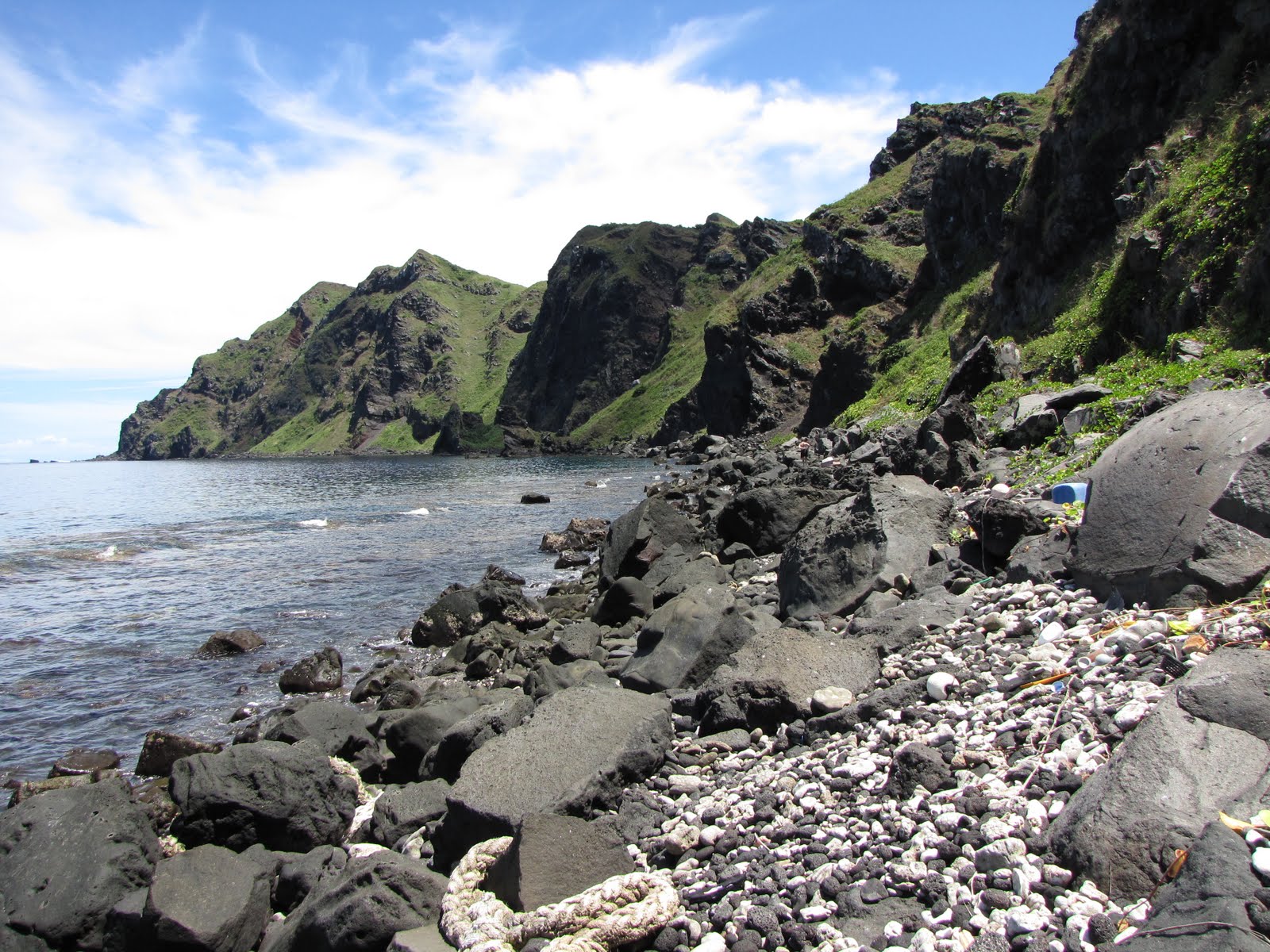
As part of the GCOE-INeT Summer School at Hokkaido University this year I have had the opportunity to use Samani Town as a case study of “the sustainability of coupled human and natural systems”. The small coastal town of roughly 5,500 people is dependent on farming, fishing, forestry, mining, and increasingly tourism. Samani town is one of the oldest towns in Hokkaido Island and kelp fishing just offshore traces its roots back to the Ainu people who first populated the area. While other industries are important to life and economy in Samani, fishing deserves special note both because of the history and the successful local management.
Read More “Potential in Small-Scale Kombu Fishing in Samani Town, Hokkaido, Japan” »
httpv://youtu.be/hNEoyUdXgHc
Read More “Watch Blue Pints Episode 3: Japanese Kelp Fishing and Cryptic Species” »
I know, I know, we’ve been talking politics too much around here, but I couldn’t sit on this one. Earlier this week, the NC House overturned Governor Bev Perdue’s veto of a bill to allow natural gas exploration (hydraulic fracturing, or, colloquially, “fracking”) in North Carolina. The only problem, the veto wasn’t overruled. The News and … Read More “North Carolina Speaker of the House, Thom Tillis, Celebrates Independence Day by saying “Frack You” to Democracy” »
When Dr. Gavin Naylor and his team started a genetic survey of existing shark and ray species, they didn’t expect the results of their project to make international news. Their recent paper (which, at over 250 pages and complete with more than 100 figures, is nothing short of epic), however, is too striking to ignore. The results indicate that there may be as many as 79 previously unrecognized cryptic species of sharks and rays.
A cryptic species is defined as a group that looks almost exactly like another, and may even live in the same region, but is genetically distinct. We’ve known that cryptic species of sharks and rays exist for some time, such as manta rays and scalloped hammerhead sharks, but 79 is a lot; as of the paper’s publication, only 1,221 species of sharks and rays were recognized.
According to Dr. Naylor,
“Organisms become genetically differentiated over time through the cumulative effects of mutation and recombination mediated via drift and selection. When they differentiate in isolation they eventually become so different from the parental stock from which they were derived that they can no longer produce fertile offspring when crossed with them. Some biologists use the point of reproductive inviability as the point at which new species should be recognized….. For practical purposes we recognize “new species” as being genetically or morphologically distinctive from previously recognized forms.”
The study’s methods, though enormous in scope, were relatively basic. According to Dr. Naylor, the study utilized a technique very familiar to geneticists: “standard DNA extraction, PCR, Sanger sequencing, alignment and analysis of a protein coding mitochondrial gene”. To achieve the goals of understanding both evolutionary relationships of sharks and rays and parasite host specificity ( where certain parasites associated only with one species), Dr. Naylor and his team obtained and analyzed samples from as many species as they could. The numbers are impressive- 56 of 57 known families of elasmobranchs were represented among the 4,283 samples from 305 species of sharks and 269 species of batoids. In other words, this study included approximately half of all known elasmobranch species, including many that had never been analyzed genetically before. Since 1986, when the project began, samples have been obtained in more than 50 countries, mostly through the team’s own field work!

A few weeks ago, I went home to Pittsburgh to surprise my mom for Mother’s Day. While there, I had the unenviable task of emptying out my childhood bedroom in preparation for my parents moving to a smaller place. I was apparently a bit of a pack rat growing up- while cleaning the room, I found every birthday card I had received and every test I had taken from elementary school through high school. I also found the results of my 8th grade career aptitude test, taken in 1999.
Based on my skills and interests, the “Career Futures” computer had recommended three potential careers for me: high school science teacher, military officer specializing in intelligence gathering, and marine biologist. Some of you may also know that three years later, my high school guidance counselor half-jokingly recommended that I consider a career as the leader of a cult, but that’s a story for another time.
While taking a break from cleaning out my room, I looked over the full reports for each career choice. The description of the career of a marine biologist was of particular interest, since that’s what I actually ended up doing with my life (I am definitely not secretly working as a military intelligence officer, nothing to see here, move along).
Read More “An 8th grade WhySharksMatter gets career advice” »
A few of my colleagues recently came to me looking for advice on how to get started on twitter. Even for seasoned marine scientists who grew up during the internet revolution, establishing a twitter presence can be a daunting task. When used well, it provides a steady stream of news, commentary, and discussion that can provide broad insight into the current state of marine science and conservation. When used poorly, twitter can become a continuous, unrelenting torrent of irrelevant nonsense, punditry, and manufactured controversy. I put this guide together to provide a foundation for those interested in using twitter to engage with the Ocean Community.
There are several great basic guides on how to get started on twitter, so, rather than reinventing the wheel, here are a few of my favorite resources:
- What is Twitter and Why Scientists Need To Use It
- Twitter: What’s All the Chirping About?
- How to live-tweet a conference: A guide for conference organizers and twitter users
- Your 5-minute, 5-day orientation to twitter
All of these guides have some good advice, but really, the best thing you can to get a feel for twitter is to create a personal account and play around for a week or two. Always start with a personal account. You’re going to make mistakes, faux pas, or perhaps accidentally tweet something that you’d wish you hadn’t. You don’t learn to ride a bike on a Pinarello Dogma 60.1 and you shouldn’t learn to use a new social media tool on an account that will be permenently linked to your online reputation.
Read More “A field guide to ocean science and conservation on twitter” »

If you’ve been following me on twitter, checking out some of my YouTube videos, or reading this blog, you probably have a good sense about how enthusiastic I am about ROV’s and how excited I am about the current wave of cheap, easy to build and maintain, functional ROV’s for outreach, teaching, and recreational exploration. Inexpensive, high quality ROV’s can provide us with previously unheard of access to the ocean.
So I’m really excited that OpenROV, an open source project to develop a robotic submarine that anyone can build and use, has launched their kickstarter page to develop and distribute the OpenROV kit. From the project page:
Read More “A revolution in underwater exploration for everyone: the open source underwater robot” »
Watch Episode 2 here:
httpv://www.youtube.com/watch?v=ijPEW7x93N0
On World Oceans Day, I asked the online marine science and conservation community to tweet their favorite facts about the ocean using the hashtag #OceanFacts . Dozens of people joined the discussion, and more than 300 #OceanFacts were contributed. These tweets cover a variety of topics, from marine invertebrates, fish, sharks, and marine mammals to facts about the ocean itself and conservation policy. The discussion also inspired a great deal of humorous posts, including an entire spinoff #OceanFibs hashtag. Some of my favorite #OceanFacts tweets are saved in the Storify below.