Skip to content

Southern Fried Science

Over 15 years of ocean science and conservation online

  • Home
  • About SFS
  • Authors
  • Support SFS

Recent Posts

humpback whale in Antarctica
The evolution of the International Whaling Commission – from  whaling quotas to whale conservation
June 10, 2026
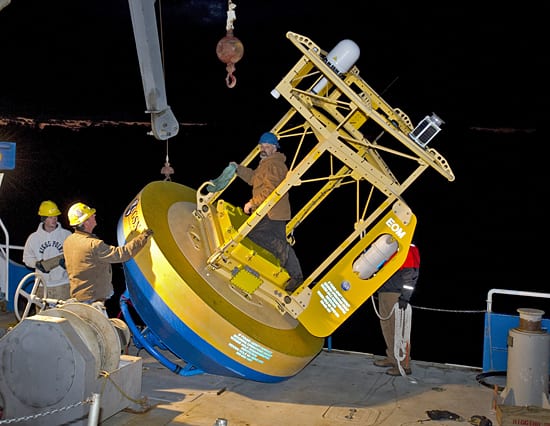
Isn’t ironic, don’t you think: dismantling the Ocean Observatories Initiative on World Oceans Day
June 9, 2026
“Why Sustainable Seafood Matters” is now available for preorder! Here’s what it’s about, and why I decided to write it.
June 8, 2026
Here’s how to join my IMCC8 symposium, “Ocean Science Communication: What’s New and What’s Next?”
April 22, 2026
Deep Sea Mining Symposium Announcement
April 21, 2026
Join Me at Upwell: A Wave of Ocean Justice — Our Fourth Year!
March 24, 2026

Beneath the Broken Ice: Megumi Shimizu on the 2012 LARISSA Campaign to the Antarctic Peninsula

Posted on March 12, 2012 By Guest Writer 1 Comment on Beneath the Broken Ice: Megumi Shimizu on the 2012 LARISSA Campaign to the Antarctic Peninsula
Science

Megumi Shimizu is a graduate student studying microorganisms in marine sediment. She is currently on board the RVIB Nathaniel B. Palmer exploring seafloor communities in a once ice-covered region beneath the Larsen Ice Shelf. Over the next month, she will be updating us from the field.


The RVIB Nathaniel B. Palmer. photo by Megumi Shimizu

I’m a PhD student interested in microorganisms and biogeochemistry of marine sediments; how the metabolisms of microorganisms interacting with the surrounding environment, the chemical components in sediments. Microorganisms in subseafloor are universally important because of its large biomass. It is said 50% of prokaryotes are living under the seafloor. This biomass makes large carbon and nutrients reservoir, which are important in biogeochemical cycle. For example, microorganisms play the role of organic carbon decomposition in sediments, as a result, carbon dioxide and methane are produced. In contrast, carbon dioxide and methane are also consumed by microorganisms called chemolithotrophs and methanotrophs in sediments. Therefore, understanding microorganisms in sediments; who they are, what are they doing, is important to reveal the details of global biogeochemical cycle and accurate estimate of budgets (amount of elements converted to different forms of chemicals for example, amount of carbon dioxide converted into organic carbon by carbon fixation). In addition, how microbial community response to environmental changes such as climate warming is also important in terms of the influence of global elemental cycles.

Read More “Beneath the Broken Ice: Megumi Shimizu on the 2012 LARISSA Campaign to the Antarctic Peninsula” »

The Race to the Bottom Heats Up

Posted on March 8, 2012 By Andrew Thaler
Uncategorized

In which James Cameron makes my week awesome: httpv://www.youtube.com/watch?v=0mBG0LbAoqk&feature=player_embedded Also covered at Deep Sea News and Sea Monster.  

Wolf conservation and negative media portrayals: A panel discussion about “The Grey” with wolf experts

Posted on February 29, 2012February 29, 2012 By David Shiffman 3 Comments on Wolf conservation and negative media portrayals: A panel discussion about “The Grey” with wolf experts
Conservation, Popular Culture

A red wolf. Photo credit: DeLene Beland

The recently-released movie “The Grey” tells the story of a pack of wolves that hunts the survivors of a plane crash. In addition to both being the subject of inaccurate and negative media portrayals, wolves and sharks share many ecological similarities (sharks have been called “the wolves of the sea”). A panel of wolf scientists and conservation experts agreed to answer my questions about these animals and their thoughts on how “The Grey”  might impact their conservation.

Dr. Sylvia Fallon  is a senior scientist with the Natural Resources Defense Council. She has worked for the American Association for the Advancement of Science, the Environmental Protection Agency, and the National Park Service.

DeLene Beland is an independent science writer whose work has been featured by the Charlotte Observer, Earth Magazine, and Wildlife in North Carolina. She blogs at Wild Muse, and  is the author of an upcoming book about wolves in the Eastern United States.

Cristina Eisenberg is a Ph.D. student at Oregon State University. Her dissertation focuses on the ecological effects of the loss of wolves from forest ecosystems.

Read More “Wolf conservation and negative media portrayals: A panel discussion about “The Grey” with wolf experts” »

Three Stories of Shipwrecked Sailors

Posted on February 26, 2012February 26, 2012 By Andrew Thaler
Uncategorized

Last week I flew out to Salt Lake City for the bi-annual Ocean Sciences meeting, bringing together 4300 scientists from around the world to discuss the current state of the ocean and present their latest findings. To mark the occasion and pass the time on a series of long flights, I loaded my kindle with my latest addiction, Amazon singles – short form ebooks, longer than a standard article, but shorter than a full book (and really convenient for an hour layover). In honor of the Oceans meeting, the flavor of the downloaded books was disaster and survival at sea.

Read More “Three Stories of Shipwrecked Sailors” »

Aquaculture in NC: Urban Aquaculture

Posted on February 16, 2012February 13, 2012 By Bluegrass Blue Crab 1 Comment on Aquaculture in NC: Urban Aquaculture
Uncategorized

Not everyone who wants to start an aquaculture farm has the privilege of picking up their family, leaving their job, and moving to a rural area. Note I didn’t say small town – many of the same rules apply to small towns as large cities. I mean at least a few miles from Main St. Not to mention, there’s lots of vacant lots right now in the sluggish real estate market that could be put to good use. That’s exactly what Rob Ellis decided when he opened Astor Farms in Charlotte, his hometown. He grows tilapia in an abandoned DHL warehouse near the Charlotte airport. And he shared his story at the NC Aquaculture Development Conference last week in New Bern, NC.

Read More “Aquaculture in NC: Urban Aquaculture” »

Aquaculture in NC: The Global Connection

Posted on February 15, 2012February 13, 2012 By Bluegrass Blue Crab 1 Comment on Aquaculture in NC: The Global Connection
Uncategorized

“We just sold a much bigger one to Denmark, but couldn’t be this style”, said the trade show representative as if he had traveled to the town next door. Aquaculture has its roots in northern Europe in many ways, mainly through connections to the beginnings of domesticating Atlantic salmon. So many American companies are making good money selling their technology and feed to customers around the world that have already made the step into large-scale aquacultural production.

A few countries in particular made their influence known several times: Denmark, Chile, and Canada. Though these have prominent roles in the global capture fisheries as well, their particular geology gave them a head start on salmon that is expanding over into other types of aquaculture.

Read More “Aquaculture in NC: The Global Connection” »

Aquaculture in NC: Designed Ecosystems

Posted on February 14, 2012February 14, 2012 By Bluegrass Blue Crab
Uncategorized

Lest you think aquaculture is like your childhood fish tank on a larger scale, let me remind you of the plecostomus in that tank. You know, the thing that sat stuck to the back of the tank behind the plant so that the family could never quite find it. Yet somehow, despite the fact that you could swear it never moved and could have been a stone decoration rather than an organism, this little helper kept every surface of that tank sparkly clean. Algae-free glass, gravel, and plants. But what if you have large, outdoor ponds and each mouth to feed costs you money if it doesn’t eventually end up as dinner?

This is exactly when you have to stop thinking of these operations as just a tank of fish. They are nestled in the surrounding ecosystem, full of naturally occuring algae – some good and some bad. For eastern North Carolina, both the wind and the tide might carry in some future algae blooms to your tanks, which are well-stocked with nutrient-rich fish poop to feed it. Instead, as NC Aquaculture Conference speaker DE Brune puts it, you have to think of your tanks and ponds as “designed ecosystems”.

Read More “Aquaculture in NC: Designed Ecosystems” »

Aquaculture in NC: North Carolina Aquaculture Development Conference

Posted on February 13, 2012February 13, 2012 By Bluegrass Blue Crab
Uncategorized

This past Friday on the banks of the Neuse in New Bern, NC, people interested in aquaculture in the region gathered to discuss the future. The group packed the ballroom in the Hilton with scientists, extension agents, interested citizens, and of course – producers. The afternoon before some attendees had the chance to visit farms in the area firsthand, one of which I’ve previously written about (White Rock Fish Farm). Friday held talks on the science, economics, and policies of aquaculture. Saturday morning wrapped up with freshwater and saltwater workshops tackling the details of growing fish. Parallel to the whole event was a trade show exhibiting the myriad food options available, water quality testing technology, cages and nets, greenhouses, and contacts for state programs. Friday night, there was proper celebration of aquaculture in the form of the Aquafood festival showcasing products from around the state. Take home message from the event? I left wanting to put a tank in my small Beaufort yard alongside the goats, chickens, and vegetable garden.

Read More “Aquaculture in NC: North Carolina Aquaculture Development Conference” »

Florida angler catches (and likely kills) Endangered great hammerhead shark

Posted on February 13, 2012February 14, 2012 By David Shiffman 158 Comments on Florida angler catches (and likely kills) Endangered great hammerhead shark
Conservation, Science


Image taken from the South Florida shark fishing club online forum. Photographer undisclosed. I have blocked out the angler's face to protect his identity

Update: The angler who originally caught the shark has responded. Please see below.

On February 5th, while standing on a beach in Miami,  a fisherman caught a 14 foot great hammerhead shark. According to his account, “we had it beached within an hour of hooking it. The fish weighed too much her girth was huge. Just the 2 of us wasn’t enough to get it out of the water….We snapped some pictures with our dying camera, measured it at 170 inches and spent the next hour walking back and forth with HER reviving her…it swam off slow and steady”

While this might appear to be a simple case of catch-and-release recreational fishing, it is not. My lab and I are  supporters of sustainable catch and release fishing.  However, it is important to note that since January 1, 2012, great hammerheads (an IUCN Red List Endangered species) have been a protected species in Florida state waters and have additional legal protections. The Florida code indicates that:

“(1) No person shall harvest, possess, land, purchase, sell, or exchange any or any part of these species:
…(k) Great hammerhead – Sphyrna mokarran.

…(3) “Harvest” means the catching or taking of a marine organism by any means whatsoever, followed by a reduction of such organism to possession. Marine organisms that are caught but immediately returned to the water free, alive, and unharmed are not harvested”

…(5) “Land,” when used in connection with the harvest of marine organisms, means the physical act of bringing the harvested organism ashore”  Florida code section 68B-44  (Emphasis mine)

In this incident, the shark was brought ashore. We can infer from the statement “the fish weighed too much her girth was huge. Just the 2 of us wasn’t enough to get it out of the water” that the fisherman attempted to pull it all the way out of the water, but was unable to do so (an important legal distinction) . Instead, he ended up beaching it, bringing it so far out that it could not move or breathe. The angler did not immediately release the animal. According to the angler’s account, it was measured and photographed prior to the attempt to resuscitate it. The shark was not released alive and unharmed. By the angler’s own admission, it took over an hour of resuscitation before the animal was able to even swim away slowly.

Read More “Florida angler catches (and likely kills) Endangered great hammerhead shark” »

“Sharks create oxygen”: A scientific perspective

Posted on February 10, 2012 By David Shiffman 14 Comments on “Sharks create oxygen”: A scientific perspective
Conservation, Science

I want to apologize to our regular readers for stating something that should be incredibly obvious. Sharks in in no way connected to the global supply of atmospheric oxygen. If every single species of shark went extinct, there would be a variety of negative ecological effects, but a reduction in the global supply of atmospheric oxygen would not be among them. There is not a shred of scientific evidence supporting the idea that the loss of sharks would affect our oxygen supply- not a single scientific paper, not a single technical report. I’ve attended a dozen scientific conferences focusing on marine ecology or shark biology (including three international conferences) and I’ve never seen or heard of anyone presenting or even discussing this. To the best of my knowledge, not a single person who has authored a scientific paper or technical report supports this idea. Despite the complete lack of any kind of credible evidence, and despite many recent blog posts thoroughly debunking it (see here here here here here here and here ), this pseudoscience  just won’t die.

The premise of the sharks and oxygen claim is as follows:

Read More ““Sharks create oxygen”: A scientific perspective” »

Posts pagination

Previous 1 … 146 147 148 … 273 Next

Popular Posts

The story of the pride flag made from NASA imagery: Bluesky's most-liked imageThe story of the pride flag made from NASA imagery: Bluesky's most-liked imageSeptember 27, 2024David Shiffman
"Why Sustainable Seafood Matters" is now available for preorder! Here's what it's about, and why I decided to write it."Why Sustainable Seafood Matters" is now available for preorder! Here's what it's about, and why I decided to write it.June 8, 2026David Shiffman
Tackling the least important debate in deep-sea mining: the desultory hyphenTackling the least important debate in deep-sea mining: the desultory hyphenJune 8, 2026Andrew Thaler
The evolution of the International Whaling Commission – from  whaling quotas to whale conservationThe evolution of the International Whaling Commission – from  whaling quotas to whale conservationJune 10, 2026Chris Parsons
What Ocean Ramsey does is not shark science or conservation: some brief thoughts on "the Shark Whisperer" documentaryWhat Ocean Ramsey does is not shark science or conservation: some brief thoughts on "the Shark Whisperer" documentaryJuly 2, 2025David Shiffman
Deep-sea Mining, Domestic Cats, Star Trek, and Ocean Exploration: Andrew's mid-year podcast round-up.Deep-sea Mining, Domestic Cats, Star Trek, and Ocean Exploration: Andrew's mid-year podcast round-up.June 6, 2026Andrew Thaler
Shark of Darkness: Wrath of Submarine is a fake documentaryShark of Darkness: Wrath of Submarine is a fake documentaryAugust 10, 2014Michelle Jewell
Isn’t ironic, don’t you think: dismantling the Ocean Observatories Initiative on World Oceans DayIsn’t ironic, don’t you think: dismantling the Ocean Observatories Initiative on World Oceans DayJune 9, 2026Southern Fried Science
What is a Sand Shark?What is a Sand Shark?November 12, 2017Chuck Bangley
That's not a blobfish: Deep Sea Social Media is Flooded by AI SlopThat's not a blobfish: Deep Sea Social Media is Flooded by AI SlopDecember 19, 2025Andrew Thaler

squishy

Subscribe to our RSS Feed for updates whenever new articles are published.

We recommend Feedly for RSS management. It's like Google Reader, except it still exists.

Southern Fried Science

  • Home
  • About SFS
  • Authors
  • Support SFS


If you enjoy Southern Fried Science, consider contributing to our Patreon campaign.

Copyright © 2026 Southern Fried Science.

Theme: Oceanly Premium by ScriptsTown