

Skip to content

Southern Fried Science

Over 15 years of ocean science and conservation online

  • Home
  • About SFS
  • Authors
  • Support SFS

Recent Posts

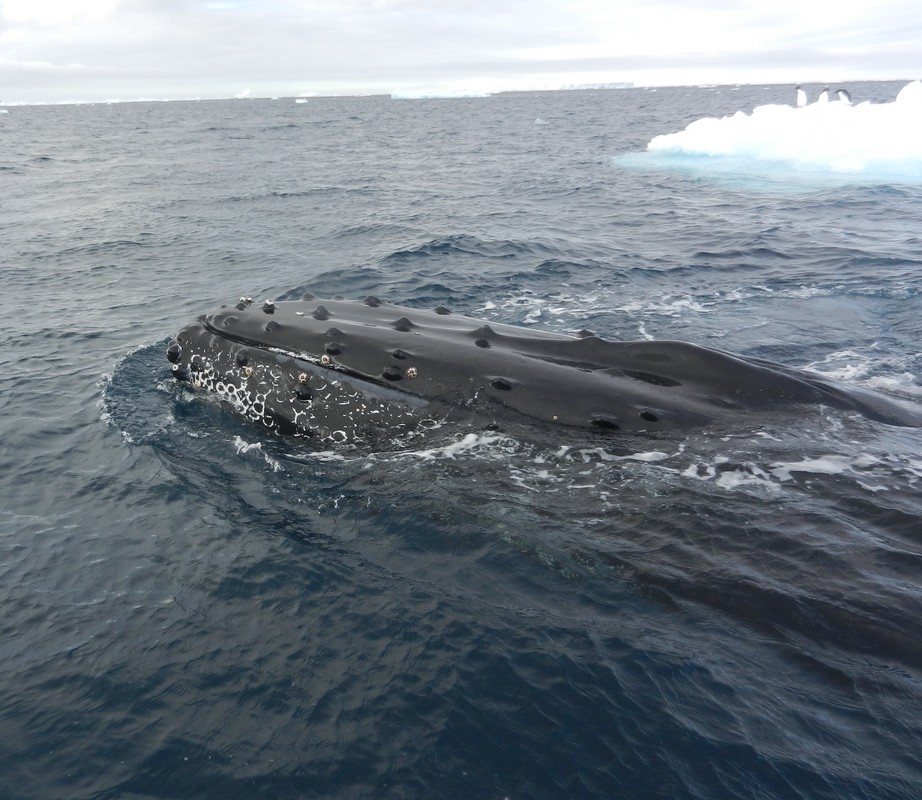
humpback whale in Antarctica
The evolution of the International Whaling Commission – from  whaling quotas to whale conservation
June 10, 2026
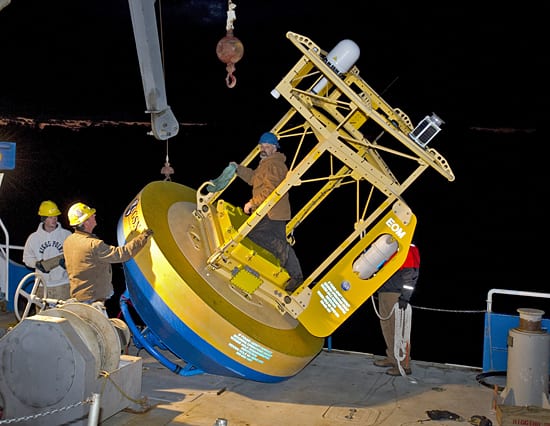
Isn’t ironic, don’t you think: dismantling the Ocean Observatories Initiative on World Oceans Day
June 9, 2026
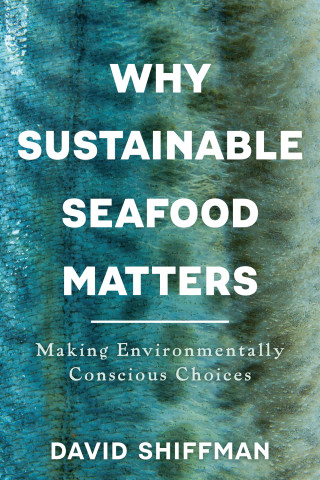
“Why Sustainable Seafood Matters” is now available for preorder! Here’s what it’s about, and why I decided to write it.
June 8, 2026
Here’s how to join my IMCC8 symposium, “Ocean Science Communication: What’s New and What’s Next?”
April 22, 2026
Deep Sea Mining Symposium Announcement
April 21, 2026
Join Me at Upwell: A Wave of Ocean Justice — Our Fourth Year!
March 24, 2026

Does shark conservation result in more shark attacks?

Posted on October 6, 2011October 5, 2011 By David Shiffman 5 Comments on Does shark conservation result in more shark attacks?
Science

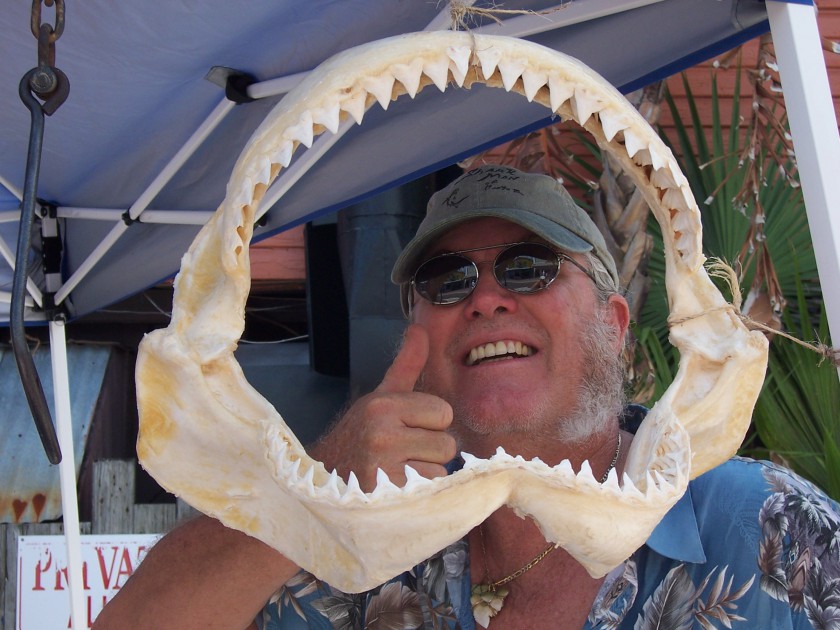
Captain Bill, image from SharkManOfCortez.com

Meet Captain Bill Goldschmitt, an author, blogger, and commercial shark fisherman. Captain Bill is a passionate, opinionated, and influential man in the world of shark conservation and management. Unfortunately, the opinions that he chooses to passionately share are wildly incorrect. Captain Bill is a leading proponent of many ideas that have no basis in reality, including the notion that shark conservation efforts lead to an increased danger for humans from shark attacks.

He repeats this idea often on his blog. In recent months, he has written that the Florida Fish and Wildlife Commission has declared “open season” on Florida bathers by even considering new shark protection efforts, pleaded with Shark Week to focus more on how dangerous sharks are and less on their dwindling numbers and ecological importance, and compared shark conservationists to those who apologize for al-Qaeda terrorists.

Read More “Does shark conservation result in more shark attacks?” »

I *heart* cryptozoology

Posted on October 6, 2011October 6, 2011 By Andrew Thaler 5 Comments on I *heart* cryptozoology
Science

Cryptozoology, the study of animals whose existence is unproven, lies just south of the boundary between science and pseudoscience. Unlike most psuedoscientific movements, which require adherents to suspend disbelief and ignore the realities of physics, chemistry, medicine, and, well, reality, the foundational principals of cryptozoology – that there are remnant populations of thought-to-be-extinct species and that there are still large, charismatic animals that have not yet been discovered – are grounded in ecology. In deep-sea biology, we discover new species all of the time, some of which are far more fantastical than humans can imagine. Some times, we even discover once extinct species. So it is not much of a leap to go from exploratory zoology to cryptozoology.

Read More “I *heart* cryptozoology” »

Deep Fried Sea: Yeti Crabs?

Posted on October 6, 2011October 3, 2011 By Andrew Thaler
Uncategorized

Pseudoscience Redux: Shark Fin propaganda

Posted on October 5, 2011October 3, 2011 By David Shiffman 20 Comments on Pseudoscience Redux: Shark Fin propaganda
Uncategorized

This post was originally published on September 9, 2010 as a part of our first Week of Ocean Pseudoscience. Enjoy!


Last weekend, longtime SFS reader Suzy sent me an interesting question. Suzy is Asian, and though she is a committed conservationist, several members of her family regularly eat shark fin soup. One relative just sent her a copy of a news article entitled “Shark Fin Soup: Eat it without guilt” (available here). Suzy asked me if the information in this article is correct, and how she should respond to her family members.

Though it is a few years old, I had never seen this article, and it’s a little shocking. I don’t know if I’ve ever seen a better example of distorting or ignoring science to promote a political agenda outside of Fox News. In short, Suzy, most of the information in here is either false or intentionally misleading.

Read More “Pseudoscience Redux: Shark Fin propaganda” »

Ethanol additives will destroy your boat, ruin your marriage, and cause California to calve off into the sea

Posted on October 5, 2011October 5, 2011 By Andrew Thaler 5 Comments on Ethanol additives will destroy your boat, ruin your marriage, and cause California to calve off into the sea
Science

A non-ethanol gas station in coastal NC. Price per gallon across the street is $3.45. People are willing to pay a premium for their ethanol fears. Photo by Andrew David Thaler

Ethanol. For many boat owners in coastal North Carolina, it’s a dirty word. Since the mid 2000’s, various federal and state regulations have mandated the addition of up to 10% ethanol in gasoline. The reaction has been a combination of legitimate concern and hyperbolic declarations of doom (ecoterrorist have taken over our government and it’s a vast conspiracy to force you to buy a new car every three years – yes, someone said that too me). The rationale for federal mandates come primarily from the Energy Policy Act (2005), the Renewable Fuel Standard Program (2006), and the Energy Independence and Security Act (2007), while state mandates tend to deal with air quality and the recent appearance of methyl tert-butyl ether (MTBE) in the drinking water (ethanol fulfills the same role as MTBE in gasoline). Renewable resources, energy independence, national security, and clean air and water, it would seem that ethanol has a little something for everyone.

Read More “Ethanol additives will destroy your boat, ruin your marriage, and cause California to calve off into the sea” »

Misunderstood Marine Life # 4 – The healing power of sharks

Posted on October 5, 2011October 5, 2011 By David Shiffman 3 Comments on Misunderstood Marine Life # 4 – The healing power of sharks
Science

Image from WholesaleDietarySupplements.com

Last year, we briefly discussed the myth that sharks don’t get cancer. This myth is easy to disprove, since sharks do, in fact, get cancer. The first cancerous tumor was discovered in a shark over 150 years ago and they have been discovered in more than twenty species. This year, I’m returning to the topic of shark medical myths.

Many parts of sharks have been utilized for their supposed medical benefits. Shark cartilage is sold as an over-the-counter alternative treatment for- you guessed it- cancer. One of the most ridiculous names it’s sold under as “BeneFin”.  According to HowStuffWorks.com, the shark cartilage industry is worth over $25 million a year. The basic idea behind this is that since sharks don’t get cancer, if you eat ground up shark cartilage, your cancer will be treated.

Read More “Misunderstood Marine Life # 4 – The healing power of sharks” »

Pseudoscience Redux: Maximum (un)Sustainable Yield

Posted on October 5, 2011October 4, 2011 By Bluegrass Blue Crab
Science

This post was originally published on September 8, 2010 as a part of our first Week of Ocean Pseudoscience. Enjoy!


In 1954 and 1957 Gordon and Schaefer respectively described the idea of maximum sustainable yield (MSY) – that is, the amount of fish that could be taken by commercial fishing operations to maximize reproduction by the system year after year. Since then, it has been heralded as the mathematical panacea to fisheries management.

Gordon and Schaefer also described the maximum economic yield which threw price relations into the mix.  It describes the point at which the fishers will make the most money, accounting for revenue and their expenses. Note in the graph below the fold that the maximum economic yield (MEY) is below the MSY in terms of effort. Gordon and Schaefer imagined a private manager or government overseer that could calculate the MEY and regulate fisher behavior in order to meet it. The idea was meant to be win-win for the fishers and the fish.

Read More “Pseudoscience Redux: Maximum (un)Sustainable Yield” »

Deep Fried Sea: Scaly Feet

Posted on October 5, 2011October 3, 2011 By Andrew Thaler
Uncategorized

Misunderstood Marine Life # 5 – Lionfish

Posted on October 4, 2011October 4, 2011 By Bluegrass Blue Crab
Science

Thank You Joel Rotunda, ufwildlife.ifas.ufl.edu

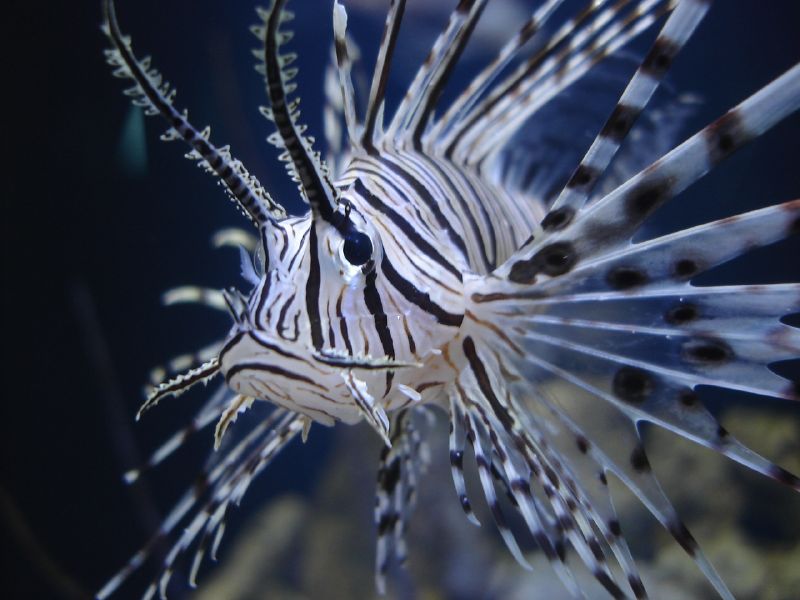
Last time you went to an aquarium, you probably saw a lionfish swimming happily in a tank filled with a bit of coral or rocky bottom, calmly flipping its fins about in the slight current created by the water pump. Now think back to the interpretive sign next to the tank – did it say that the exhibit displayed an invader or an awesome, weird aquarium fish? Depending on which part of the world you’re in, you might get a different answer. Along the east coast of the United States, though, it should say the former. Lionfish have spread from south Florida throughout the Caribbean and up to North Carolina, where they can be found on reef habitat (either natural or manmade via the sinking of ships) at a concentration of 400 fish per square meter. And they eat everything in sight.

Read More “Misunderstood Marine Life # 5 – Lionfish” »

Unraveling the mysteries of Steller’s Sea Ape

Posted on October 4, 2011September 16, 2016 By Andrew Thaler
Science

Last year for our Week of Ocean Pseudoscience, we counted down our top seven marine cryptids. Number seven was the elusive Steller’s Sea Ape, documented only once by renowned naturalist Georg Wilhelm Steller. Even though the Sea Ape has not been seen since, Steller’s deserved reputation as a world class naturalist has kept the Sea Ape story alive. In his journal, he reports that:

During this time we were near land or surrounded by it we saw large numbers of hair seals, sea otters, fur seals, sea lions, and porpoises…. On August 10, we saw a very unusual and unknown sea animal, of which I am going to give a brief account since I observed it for two whole hours. It was about two Russian ells in length, the head was like a dog’s, with pointed, erect ears. From the upper and lower lips on both sides whiskers hung down which made it look almost like a Chinaman, The eyes were large; the body was longish round and thick, tapering gradually towards the tail. The skin seemed thickly covered with hair, of a grey color on the back, but reddish white on the belly; in the water, however, the animal appeared equally reddish and cow colored. The tail was divided into two fins, of which the upper, as in the case of sharks, was twice as large as the lower.

source 

Read More “Unraveling the mysteries of Steller’s Sea Ape” »

Posts pagination

Previous 1 … 158 159 160 … 273 Next

Popular Posts

That's not a blobfish: Deep Sea Social Media is Flooded by AI SlopThat's not a blobfish: Deep Sea Social Media is Flooded by AI SlopDecember 19, 2025Andrew Thaler
What Ocean Ramsey does is not shark science or conservation: some brief thoughts on "the Shark Whisperer" documentaryWhat Ocean Ramsey does is not shark science or conservation: some brief thoughts on "the Shark Whisperer" documentaryJuly 2, 2025David Shiffman
Screaming into the void - Why your scientific paper doesn’t matterScreaming into the void - Why your scientific paper doesn’t matterJune 18, 2026Chris Parsons
The story of the pride flag made from NASA imagery: Bluesky's most-liked imageThe story of the pride flag made from NASA imagery: Bluesky's most-liked imageSeptember 27, 2024David Shiffman
I can serve on your graduate thesis committee. Here’s what you can expect of me, and what I expect in return.I can serve on your graduate thesis committee. Here’s what you can expect of me, and what I expect in return.October 16, 2025David Shiffman
Shark of Darkness: Wrath of Submarine is a fake documentaryShark of Darkness: Wrath of Submarine is a fake documentaryAugust 10, 2014Michelle Jewell
What is a Sand Shark?What is a Sand Shark?November 12, 2017Chuck Bangley
The plague-busting, prairie-dog-vaccinating, ferret-saving droneThe plague-busting, prairie-dog-vaccinating, ferret-saving droneNovember 1, 2016Andrew Thaler
Our favorite sea monsters – Ningen (#4)Our favorite sea monsters – Ningen (#4)September 7, 2010Andrew Thaler
Fun facts and FAQs about Megalodon, Maryland's new (and definitely extinct) official state sharkFun facts and FAQs about Megalodon, Maryland's new (and definitely extinct) official state sharkApril 15, 2026David Shiffman

squishy

Subscribe to our RSS Feed for updates whenever new articles are published.

We recommend Feedly for RSS management. It's like Google Reader, except it still exists.

Southern Fried Science

  • Home
  • About SFS
  • Authors
  • Support SFS


If you enjoy Southern Fried Science, consider contributing to our Patreon campaign.

Copyright © 2026 Southern Fried Science.

Theme: Oceanly Premium by ScriptsTown