
Check out some of the fantastic swag you could win during the Southern Fried Science Readers’ Survey! All of this is stuffed into the rare and highly coveted Science Online 2010 tote bag. In addition, you could win an exclusive DVD of WhySharksMatter’s Four Things Everyone should know about Sharks documentary and every Shark Science … Read More “Win fantastic prizes in our reader survey!” »
Last year, I was extremely critical of a Nicorette commercial that featured a man so distracted by thoughts of cigarettes that he didn’t realize a shark was chewing on his arm. This led to a spirited discussion about where sharks fit in to our popular culture, and resulted in more than a few people calling me overly sensitive. One person called me a member of the “apocalyptic legion of killjoys who battle against fun and innocent symbolism all over the world” (one of my standard comebacks is “I’ve been called worse” but I’m not sure if that’s true in this case).
Snickers recently unveiled a new commercial featuring sharks:
That marine mammals have a rich sonic life has been well understood for several decades. What we didn’t understand until recently is how much we’ve changed the ocean soundscape, and how much we will continue to change the soundscape. Many of our new alternative energy plans involve maritime structures – offshore wind farms, wave energy … Read More “Weekly dose of TED – Peter Tyack: The intriguing sound of marine mammals” »
Beginning today, Dr. Al Dove of Deep Type Flow will be floating somewhere of the coast of Brazil exploring the Abrolhos reef platform. They will be using the Johnson Sea Link, the tragically mothballed US submersible once described as “a shining legacy of deep sea research“, which has been granted a second life under long-term contract with CEPEMAR Environmental Services. Follow along with the adventure at Deep Type Flow or under the twitter hashtag #Abrolhos2011.
Read More “Dive into the mushroom reefs of Brazil with Dr. Al Dove” »
Sunglasses are a critical piece of gear if you plan on spending prolonged periods of time in the sun. Not only do they protect your eyes, but the right pair can help you spot marine-life swimming below the surface or boost your bird-watching prowess. An enormous, multi-billion dollar industry has formed to produce and market the right sunglasses to the right people.
It’s all bullshit.
Read More “SFS Gear Reviews: Protecting your eyes without breaking the bank” »
Although marine fish face many threats, one of the greatest is large-scale modern commercial fishing. Technology makes it all too easy for so-called “factory ships” to remove enormous numbers of fish from the oceans, sometimes with devastating effects on the populations of those fish and their habitat.
Marine conservationists have proposed a variety of policies to protect fish populations around the world. Of these, the concept of the marine protected area (MPA) is arguably the most popular. Though technically a marine protected area is any area of the ocean where human activities are restricted in some way, the best known version is an area where fishing is banned with the goal of letting exploited fish stocks recover.
Read More “Can marine protected areas save the oceans? Under certain circumstances, maybe.” »

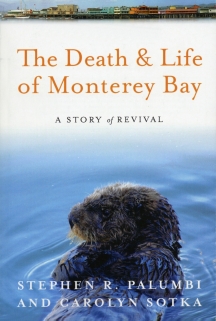
A few weeks ago, Mark Powell at Blogfish posted “Where are conservation success stories?” in which he asks if we have a bias against good news in conservation. Late last year we presented a series of conservation success stories from the IUCN. Whether because we choose to focus only on the doom-and-gloom news stories or because the natural world really is in pretty bad shape, success stories in conservation are few and far between. That is why The Death and Life of Monterey Bay, a new book by Stephen Palumbi and Carolyn Sotka, is so important. Palumbi is a working scientist and director of the Hopkins Marine Station in Monterey Bay and his work has been cited on this blog before. Carolyn Sotka is the project coordinator for COMPASS, an organization that connects scientist to policy makers and journalists.
In The Death and Life of Monterey Bay, Palumbi and Sotka present the history of Monterey Bay, from discovery, to exploitation, to collapse, and ultimately to rebirth. They weave the narratives of many important players, exploring the legacy of a dedicated conservationist who existed before the term was coined, the hunters, fishers, and canneries who found fortune and destruction, the writers and scientists who made Monterey Bay a literary icon, and the Bay itself, which survived by equal parts luck, tenacity, and foresight. The events in the book span hundreds of years, but we can still glean lessons from both the collapse and rebirth of Monterey Bay.
Read More “Lessons from the Death and Life of Monterey Bay” »

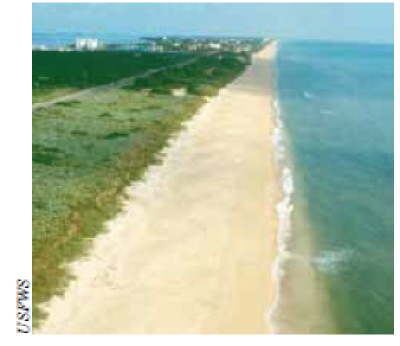
On the east coast of Florida lies a thin, 20 mile long stretch of beach. It looks a great deal like the many other beaches in Florida, but one important difference is immediately clear. It is some of the least developed beachfront real estate in the United States, which is particularly jarring considering that it is close to the city of Melbourne and right off of the major A-1-A highway. Why isn’t this beautiful and accessible stretch of beach covered in hotels and luxury apartments?
An enormous number of signs listing the things you can’t do on this beach also grabs your attention. No ATV’s, horses, dogs, or beach chairs are allowed. Feeding wildlife, including seagulls, is strictly prohibited. Under no circumstances can you build a campfire- not that you’d need to, since the public isn’t allowed on the beach at all after dark.
What is this place?
Read More “Biodiversity Wednesday – Archie Carr National Wildlife Refuge” »

Effective management of any landscape or seascape must attend to context such as unique attributes of the ecosystem, local cultural values and norms, and broader governance constructs. Conservation managers often joke that the best way to incorporate this context is to install a benevolent dictator at the helm. His or her role would be to see the big picture and make decisions based on expected community benefits. Others would call the term benevolent dictator an oxymoron – but there have been some documented cases of such idealistic planning. Sadly, it seems such “high modernism” is not the answer. In his book Seeing Like A State, James Scott documents cases of agricultural land, cityscapes, and whole communities that ended up having unexpected consequences to high modernist rule due to incomplete foresight and incorrect prediction of people’s reactions. He cites these examples as warnings for the modern conservation movement as they choose between philosophies to move forward.
Read More “State of the Field: Modergasm – The flaccid finality of modern erections” »
The time has come for Southern Fried Science to get its report card. At the top of the page there is a link to the Reader Survey. We want to here from you, find out what you like, what you don’t like, and how you think this site could improve. Please take the survey, it … Read More “Take the Southern Fried Science Readers Survey, win fantastic prizes!” »