
Skip to content

Southern Fried Science

Over 15 years of ocean science and conservation online

  • Home
  • About SFS
  • Authors
  • Support SFS

Recent Posts

Here’s how to join my IMCC8 symposium, “Ocean Science Communication: What’s New and What’s Next?”
April 22, 2026
Deep Sea Mining Symposium Announcement
April 21, 2026
Join Me at Upwell: A Wave of Ocean Justice — Our Fourth Year!
March 24, 2026
How close did the world’s first deep-sea mining come to the dredging the world’s largest cold-water coral reef?
March 17, 2026
Here are some ocean conservation technologies that I’m excited about
February 19, 2026
Walking Backwards Into the Future: Applying Indigenous Knowledge to Deep Sea Mining
February 5, 2026

Finding Melville’s Whale: The Quarter-deck (Chapter 36)

Posted on January 11, 2011January 11, 2011 By Andrew Thaler
Uncategorized

Thanks to everyone who stuck around during our blog vacation. Our adventure into Moby Dick continues with chapter 36 – The Quarter-deck. Read along with us and discuss this chapter or the book as a whole in the comments. Visit this page for the complete collection to date: Finding Melville’s Whale. The Quarter-deck Ahab, standing upon … Read More “Finding Melville’s Whale: The Quarter-deck (Chapter 36)” »

State of the Field: Hybridity

Posted on January 11, 2011January 11, 2011 By Bluegrass Blue Crab
Uncategorized

Hybridity refers to any object that crosses a conceptual divide. The term is remarkably general and used to investigate the nature of the divide as well as the form of linkages that make the cross. One of the most famous (and relevant to me) is the separation between nature and culture. While there are many scholars that argue that no such divide exists, modern society still likes to separate the human from the habitat. Examples of important hybrid objects to nature-society relations are elk, water, forests, particular mountains, and really anything natural that has importance to society.

Perhaps the most important reason to know about hybrid objects is to be able to recognize them. Some scholars say that investigation of hybrids is the only way to understand the complicated relation between binaries such as nature and society – an understanding necessary for goals such as conservation. Another distinct benefit is that recognizing the hybrid nature of and object provides the ability to also recognize the many aspects of said object. Reversing this logic, understanding how hybrid objects are constructed and function may allow creation of new, interesting and important objects, often from the deepest parts of the imagination.

Read More “State of the Field: Hybridity” »

Shark Science Monday: Geremy Cliff discusses South Africa’s “shark control” program

Posted on January 10, 2011January 12, 2011 By David Shiffman 2 Comments on Shark Science Monday: Geremy Cliff discusses South Africa’s “shark control” program
Conservation, Science

In this week’s edition of Shark Science Monday, Geremy Cliff of the Kwazulu Natal Sharks Board discusses South Africa’s “shark control” program. If you have a question for Geremy, please leave it as a comment below and I’ll make sure that he receives it.  

Traveling with Samples: the impossible journey

Posted on January 10, 2011January 10, 2011 By Andrew Thaler 1 Comment on Traveling with Samples: the impossible journey
Science

It’s the end of a long a productive field season abroad. You’ve collected, processed, and packed thousands of precious samples. These samples are your life-blood. They will be the foundation of not only your thesis, but dozens of theses to follow, the cornerstone of a long and prosperous scientific career. There’s only one barrier left between you and scientific glory – you have to get those samples home.

Traveling with samples, especially internationally, carries with it a bit of diplomacy, some tact, confidence, and a huge amount of (often undue) stress. Even if you’re completely on the level, there are horror stories about overzealous security guards, irate customs agents, suspicious packages, and the risk of being detained, having a visa revoked, being stuck on the next plane out of the country, or, worst of all, losing your samples. As you pack up your gear and prepare to board your flight home, take a step back and remember the immortal words of Douglas Adams – don’t panic.

Read More “Traveling with Samples: the impossible journey” »

Turtle excluder devices: analysis of resistance to a successful conservation policy

Posted on January 7, 2011December 31, 2011 By David Shiffman 9 Comments on Turtle excluder devices: analysis of resistance to a successful conservation policy
Conservation

Conservation efforts often have an associated tradeoff, and many proposed solutions are shot down because the costs are perceived to be too high. A conservation policy that benefited a charismatic endangered species with very little cost should be popular and enthusiastically adopted. However, even though turtle excluder devices greatly reduce sea turtle mortality and have very low costs, they were vigorously opposed by shrimpers. Though many factors contributed to this opposition to turtle excluder devices, analysis of quotes from newspaper articles reveals that one of the major issues was a failure of the conservation community to educate and communicate with shrimpers.

The problem

Most species of sea turtles are either threatened or endangered. Although they face many threats, a 1990 National Academy of Sciences study reached the conclusion that “drowning in shrimp trawls kills more sea turtles than all other human activities combined”. Trawling consists of dragging a large net behind a boat to catch shrimp. This fishing method has one of the highest bycatch rates of any used today, resulting in over 11 million metric tons of bycatch a year. Sea turtles breathe at the surface, and being trapped underwater in a net can be fatal if they aren’t freed in time. Adult loggerhead turtles can hold their breath for up to 45 minutes, but trawlers often wait up to four hours before hauling in their nets. This resulted in an estimated 48,000 sea turtles caught in trawl nets each year from 1973-1984 in U.S. waters, of which 11,000 died . Gulf of Mexico shrimping was particularly hard on loggerhead and kemp’s ridley sea turtles.

Read More “Turtle excluder devices: analysis of resistance to a successful conservation policy” »

Weekly dose of TED – Stephen Palumbi: Following the mercury trail

Posted on January 7, 2011January 7, 2011 By Andrew Thaler
Conservation, Science

For 2011 we’re going to do a bit more with our Weekly dose of TED series. Instead of just posting a video each week, we’re going to include a short discussion of either the entire talk or a point that could be expanded. The idea that, when it comes to seafood, we may not know … Read More “Weekly dose of TED – Stephen Palumbi: Following the mercury trail” »

Finding Melville’s Whale: The Mast Head (Chapter 35)

Posted on January 6, 2011 By Andrew Thaler
Uncategorized

Thanks to everyone who stuck around during our blog vacation. Our adventure into Moby Dick continues with chapter 35 – The Mast Head. Read along with us and discuss this chapter or the book as a whole in the comments. Visit this page for the complete collection to date: Finding Melville’s Whale. The Mast Head Upon … Read More “Finding Melville’s Whale: The Mast Head (Chapter 35)” »

SFS Gear Reviews: Blundies – the steel-toed shit kickers

Posted on January 6, 2011January 6, 2011 By Andrew Thaler
Uncategorized

I’ll admit it, my original plan never involved buying an expensive pair of steel-toed boots, ever. I’d been using a $25 pair of steel-cap rubber boots forever. In Australia, en route to a research cruise, I was made aware that my current pair were not going to be appropriate for the cruise, so I wandered into Brisbane and bought my first pair of Blundies.

Read More “SFS Gear Reviews: Blundies – the steel-toed shit kickers” »

Blog-cation Shark news roundup

Posted on January 6, 2011December 22, 2010 By David Shiffman
Science

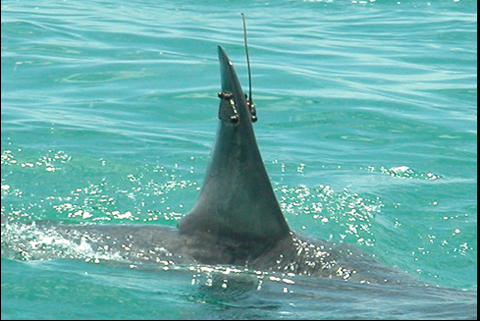
While we were away, a variety of interesting shark news stories were reported. Here are links to some of my favorites.

It’s been an exciting time for shark conservation.

In addition to the Shark Conservation Act passing the Senate,  the Northern Mariana Islands voted to protect sharks in their waters, and the Phillipines will start protecting thresher sharks and manta rays.

The IUCN shark specialist group also came out with a study recommending a complete ban on shark finning in European Union waters.

A Brazilian NGO called the Environmental Justice Institute is suing to stop illegal shark finning in Brazil.

Read More “Blog-cation Shark news roundup” »

Scientists’ Guide to Field Gear

Posted on January 5, 2011December 29, 2010 By Andrew Thaler 6 Comments on Scientists’ Guide to Field Gear
Uncategorized

Field work can be rough. Depending on where your research is located, field seasons may require months of planning, tons of gear, days of travel, and the possiblility that everything may go completely FUBAR at any point. The burden of a successful field season often falls on the shoulders of young graduate students, who may be designing and planning a major research project for the first time. We at Southern Fried Science would like to do a little to help make your field season just a bit easier.

Read More “Scientists’ Guide to Field Gear” »

Posts pagination

Previous 1 … 183 184 185 … 272 Next

Popular Posts

The story of the pride flag made from NASA imagery: Bluesky's most-liked imageThe story of the pride flag made from NASA imagery: Bluesky's most-liked imageSeptember 27, 2024David Shiffman
Playing God - How the ESA "God Squad" just voted for the extinction of a uniquely American whalePlaying God - How the ESA "God Squad" just voted for the extinction of a uniquely American whaleApril 9, 2026Southern Fried Science
What Ocean Ramsey does is not shark science or conservation: some brief thoughts on "the Shark Whisperer" documentaryWhat Ocean Ramsey does is not shark science or conservation: some brief thoughts on "the Shark Whisperer" documentaryJuly 2, 2025David Shiffman
Here's how to join my IMCC8 symposium, "Ocean Science Communication: What's New and What's Next?"Here's how to join my IMCC8 symposium, "Ocean Science Communication: What's New and What's Next?"April 22, 2026David Shiffman
I just told 850 shark scientists a hard truth: We’re not communicating shark conservation correctly.I just told 850 shark scientists a hard truth: We’re not communicating shark conservation correctly.June 1, 2026David Shiffman
Our favorite sea monsters – Ningen (#4)Our favorite sea monsters – Ningen (#4)September 7, 2010Andrew Thaler
Shark of Darkness: Wrath of Submarine is a fake documentaryShark of Darkness: Wrath of Submarine is a fake documentaryAugust 10, 2014Michelle Jewell
Join Me at Upwell: A Wave of Ocean Justice — Our Fourth Year!Join Me at Upwell: A Wave of Ocean Justice — Our Fourth Year!March 24, 2026Angelo Villagomez
That's not a blobfish: Deep Sea Social Media is Flooded by AI SlopThat's not a blobfish: Deep Sea Social Media is Flooded by AI SlopDecember 19, 2025Andrew Thaler
On the clarity of animals: the art and science of clearing and stainingOn the clarity of animals: the art and science of clearing and stainingDecember 17, 2013Guest Writer

squishy

Subscribe to our RSS Feed for updates whenever new articles are published.

We recommend Feedly for RSS management. It's like Google Reader, except it still exists.

Southern Fried Science

  • Home
  • About SFS
  • Authors
  • Support SFS


If you enjoy Southern Fried Science, consider contributing to our Patreon campaign.

Copyright © 2026 Southern Fried Science.

Theme: Oceanly Premium by ScriptsTown