
Chapter 7 of the classic Moby Dick by Herman Melville, summarized in verse. Read along with us and discuss this chapter or the book as a whole in the comments. The Chapel Few are the fishermen who fail to pray on the eve of their voyage. The chapel, built for the whalemen, the wives, and … Read More “Finding Melville’s Whale: Chapter 7 – The Chapel” »
Charlie check out the throne in Southern Fried Scientist’s back. What could that be for?
My favorite real sea monster is the Eurypterid, also known as the Sea Scorpion. These fearsome predators were the largest arthropods ever to live- they could grow to over six feet in length! Eurypterids are believed to have crawled along the seafloor using their pincers to grab trilobites and other prey. Sadly (or fortunately, depending … Read More “Real Monsters – Eurypterids!” »
Now that Ocean of Pseudoscience Week has come to a close, we thought it would be a good time to talk about our favorite real sea monsters – amazing marine creatures that capture the imagination. For mine, we naturally have to take a trip to the deep sea to find Bathynomous, the giant deep-sea isopod. … Read More “Real Monsters – The Giant Isopod” »
Over the last week we’ve explored dozens of maritime mysteries, ocean pseudoscience, and plain old non-sense. Many have been goofy and fun – the green flash, the bloop, Atlantis, the Montauk Monster. Some have been practical – can methane bubbles sink ships, cures for seasickness, chemosynthesis and photosynthesis, sharks and cancer. Others have been thought … Read More “An Ocean of Pseudoscience Week Recap” »
The deep-sea, by virtue of no light, cold temperatures, and high pressures, leaves an environment ripe for evolving some pretty strange critters. One of my personal favorites, mostly because of the crazy teeth it boasts, is the viperfish. To me, the viperfish looks like a dessicated version of some sort of alien. In reality, it’s … Read More “Real Monsters – Viperfish” »
After a week of pseudoscience, Charlie relaxes with some real creatures of the abyss.

The legend of Atlantis, a once-great civilization that sank into the ocean, has captivated humanity’s imagination for over 2,000 years. The earliest mention of Atlantis came from Plato’s Timaeus in 360 B.C., and the idea has spawned countless campfire stories, books, movies, and even one of my favorite TV shows. Plato’s original description mentions an island nation with a mighty military, and claims that the whole island sank after a failed invasion of Athens. Later interpretations of the story have elaborated, giving ancient Atlanteans technology that puts what we have today to shame. Some legends claim that a few Atlanteans escaped the sinking of their city, dispersed around the world, and founded our world’s known ancient civilizations. This fantastical story has wide-ranging implications for human history… but is any of it true?

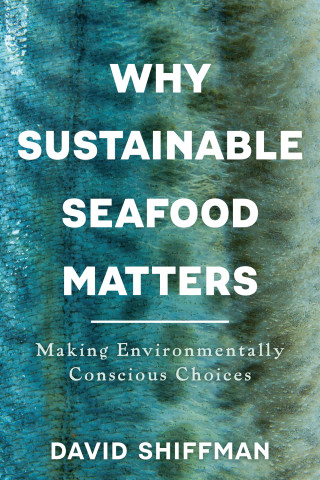
People used to think that the sea’s bounty was infinite. Looking across the vast ocean, it was hard for any single fisherman to believe they could be contributing to the loss of species.
Hugo Grotius, commonly referred to as the founder of natural resources law, described the inexhaustible nature of the ocean:
“The sea is common to all, because it is so limitless that it cannot become a possession of any one, and because it is adapted for the use of all, whether we consider it from the point of view of navigation or of fisheries” (Grotius 1916)
Banker Horses are a breed of horses found on the Outer Banks of North Carolina. These feral horses grace one of our rotating banners. Legend goes that 16th century Spanish Galleons, heavy with treasure, were wrecked off the coast of North Carolina. The horses escaped from the wreck, settled on the Outer Banks, and thrived … Read More “Ocean of Pseudoscience Shorty – Banker Horses and Spanish Galleons” »