
Skip to content

Southern Fried Science

Over 15 years of ocean science and conservation online

  • Home
  • About SFS
  • Authors
  • Support SFS
Latest News
  • Norway and Cook Islands put their deep-sea mining plans on pause

Recent Posts

Here are some ocean conservation technologies that I’m excited about
February 19, 2026
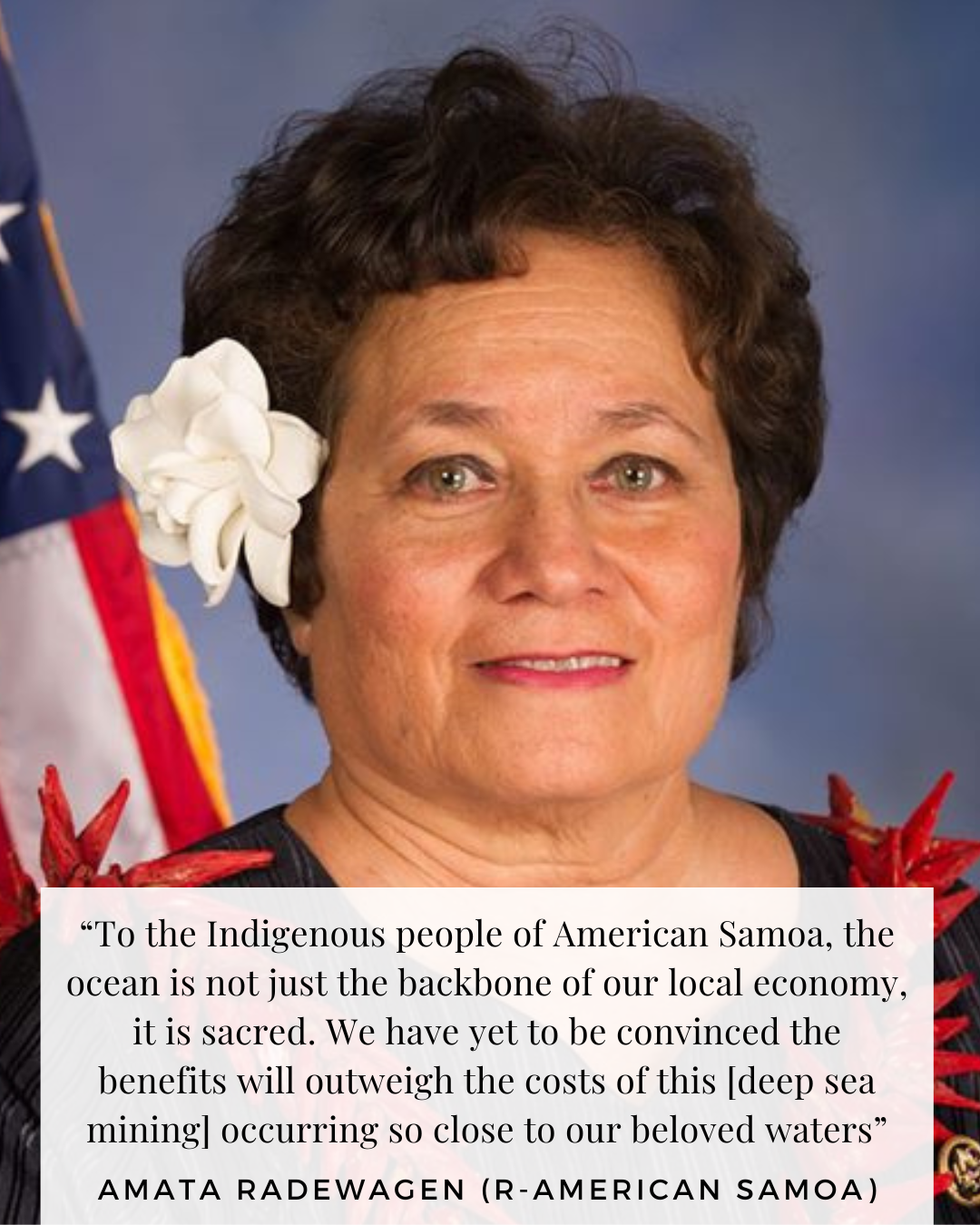
Walking Backwards Into the Future: Applying Indigenous Knowledge to Deep Sea Mining
February 5, 2026
The Urgency Does Not Exist: My statement on Deep-sea Mining to the Subcommittee on Energy and Mineral Resources
January 24, 2026
Bipartisan Concern Expressed Over Deep Sea Mining at Congressional Hearing
January 23, 2026
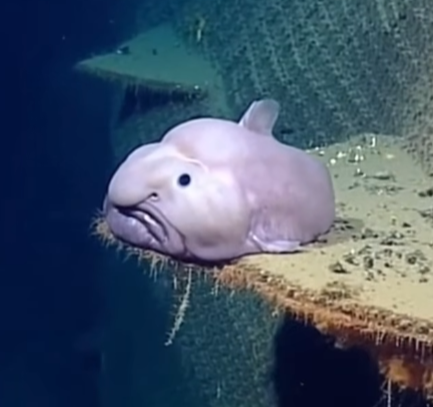
That’s not a blobfish: Deep Sea Social Media is Flooded by AI Slop
December 19, 2025
What we know we don’t know: impacts of deep-sea mining on whales, dolphins, sharks, turtles, and other migratory species.
November 20, 2025

Science and Conservation Media Literacy 101

Posted on February 25, 2020February 25, 2020 By David Shiffman
Uncategorized

Author’s note: This blog post is part of a multi-week assignment for students taking my introduction to marine biology course at Arizona State University, and also part of an exercise in my professional development training workshops on communicating science to the popular press. I am sharing the background information publicly because I believe it’s a topic that is of broad interest.

The internet in general and social media specifically have made it easier than ever before in human history for experts to share information relevant to their area of expertise with the interested public, with journalists, and with policymakers. Unfortunately, these same communications tools have also made it easier than ever before in human history for misinformation to be widely shared. When wrong information goes viral, it can lead to the destruction of democracy and civilization as we know it people believing factually incorrect things about fish.

Therefore, it’s important for anyone and everyone who cares about the future of democracy and civilization as we know it my marine biology students and media training workshop participants to be aware of how to find reliable and accurate news, and how to spot misleading or inaccurate news. If you can do this effectively, you may well save democracy and civilization as we know it do well in my course.

Something need not be actual “fake news,” a term we should consider using less because it’s become politically charged to the point that it’s nearly meaningless and people don’t hear what you actually mean to say, to be inaccurate and problematic. There are many different ways that a news article can be biased, misleading, and/or wrong.

First, I’ll go through some elements of a reliable, accurate science or environment news story. Then I’ll go through red flags of inaccurate, problematic news stories. Throughout, I’ll highlight representative examples. (Students, after reading this you’ll be assigned some articles to look for these elements and red flags in).

Read More “Science and Conservation Media Literacy 101” »

Fun Science FRIEDay – Suspended Animation

Posted on February 21, 2020February 21, 2020 By Kersey Sturdivant
Uncategorized

Scientists (and sci-fi fans) have to varying degrees been discussing the concept of suspended animation for years; the idea that the biological functions of the human body can somehow be put on “pause” for a prescribed period of time while preserving the physiological capabilities. If you’ve ever watched any sci-fi movie depicting interstellar travel you have probably seen some iteration of this concept as a way to get around the plot conundrum of the vastness of space and space travel times, relative to natural human aging and human life span. The basic principle of suspended animation already exists within the natural world, associated with the lethargic state of animals or plants that appear, over a period, to be dead but can then “wake-up” or prevail without suffering any apparent harm. This concept is often termed in different contexts: hibernation, dormancy, or anabiosis (this last terms refers to some aquatic invertebrates and plants in scarcity conditions). It is these real-world examples that likely inspire the human imagination of the possibilities for suspended human animation. The concept of suspended human animation is more commonly viewed through the lens of science fiction (and interstellar travel), however, the shift of this concept from scientific fiction to science reality has a more practical human application.

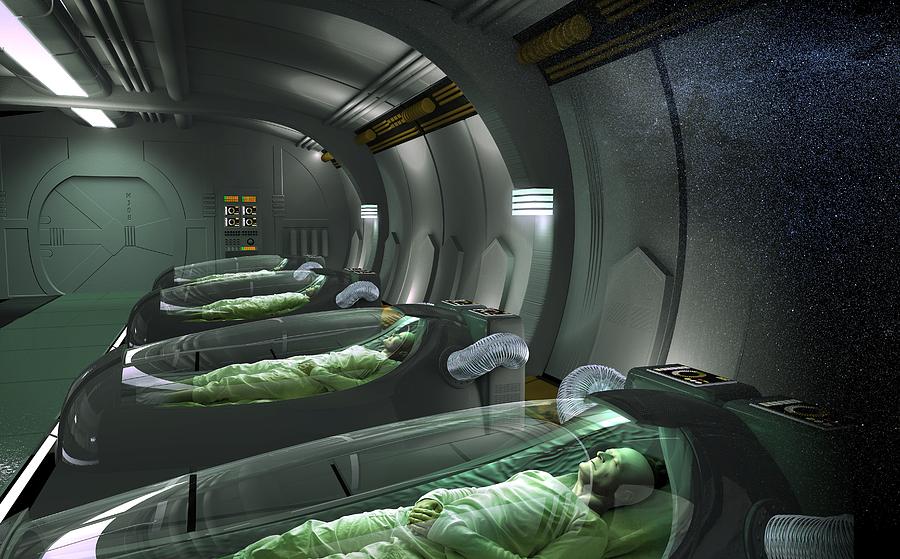
Computer artwork of futuristic humans in suspended animation (Photo credit: Science Photo Library).

Read More “Fun Science FRIEDay – Suspended Animation” »

Come to the geek side of #scicomm: Marine science education by Dungeons & Dragons

Posted on February 18, 2020February 18, 2020 By Chris Parsons
Uncategorized

A couple of years ago, several of the people organizing the International Marine Conservation Congress let slip in their planning discussions that they played Dungeons and Dragons (D&D). There are many of us of a certain age that remember fondly playing in our youth, some of us have kids who are now getting of an age where we can, in turn, teach them how to play, and some were drawn in by the surge in Youtube and podcast shows like the hugely popular “Critical Role” where literally millions of people turn in to watch a bunch of nerds play Dungeons and Dragons … and have fun.

This led to the idea of playing a game at the conference. After more discussion, perhaps helped by a few drinks, the idea was spawned that perhaps we could make this game marine-themed and educational? Maybe even play this game in front of an audience at the conference? Perhaps even record it and share it online…?!

Read More “Come to the geek side of #scicomm: Marine science education by Dungeons & Dragons” »

A decade of failures in Science Communication.

Posted on February 12, 2020February 18, 2020 By Andrew Thaler 4 Comments on A decade of failures in Science Communication.
Blogging

Eleven years is a long life for a science blog. Southern Fried Science was born in 2008, when the main writers were all graduate students. Over the last decade the online landscape has changed. Science Communication changed with it, adapting and evolving to meet an ever-shifting ecosystem. Looking back on the last decade and thinking about the next, it’s becoming easier to see where we went wrong. It’s not quite as easy to determine what we need to correct the course.

This is not a scientific assessment, this is my own personal observations from the last decade of running Southern Fried Science, from teaching Social Media for Environmental Communications for the last 7 years, from working with Upwell, one of the most dynamic and visionary ocean NGOs ever conceived, from helping build and launch multiple online platforms, dozens of novel programs, and hundreds of outreach campaigns, and from spending a lot of time since November 2016 reflecting on what we’ve done wrong.

That Hideous Deficit

Do we really need another 200 words on how bad the deficit model is and why it needs to die?

Apparently, yes.

The basic premise: that science perception and policy is shaped by an information deficit and that if we just make good science education content and spread it, we can combat the spread of misinformation, people will learn, and everything will get better.

It doesn’t work. It never worked. And it ignores the reality that misinformation is manufactured for political and financial gain, with tremendous incentives and, often, far better funding than science outreach campaigns. But beyond that, multiple studies have shown that, when confronted with information that challenges their fundamental world view, people don’t throw out their worldview, they reject the science, creating a more entrenched and intractable audience.

Read More “A decade of failures in Science Communication.” »

Probing the submerged caves of Bermuda with Trident

Posted on January 28, 2020January 28, 2020 By Andrew Thaler
Science
Dr. Blanco-Bercial pilots the Trident ROV in one of Bermuda’s submerged caves.

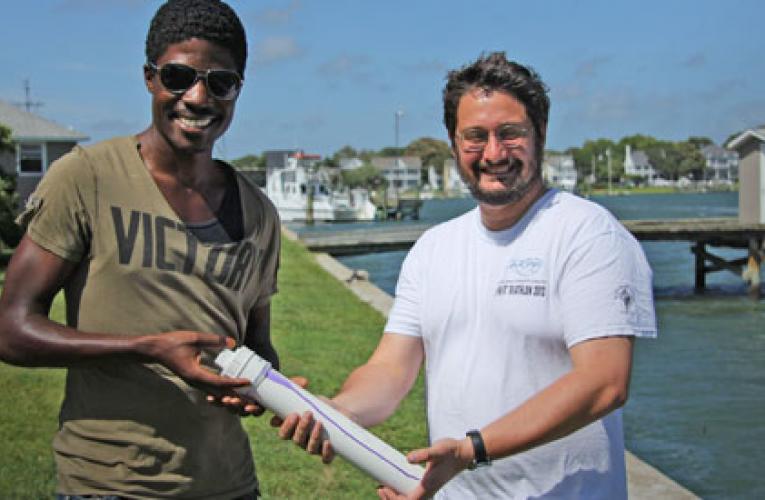
Conservation research in submarine caves is among the clearest and most compelling use-cases for a small observation-class ROV like Trident, which is why, last week, we delivered the very first ROV for Good Sofar Ocean Trident to Dr. Leocadio Blanco-Bercial at the Bermuda Institute of Ocean Sciences to study the hidden biodiversity in Bermuda’s Anchialine Caves.

Dr. Blanco-Bercial is a marine biologist who studies the diversity and evolution in invertebrates, especially those in marine cave ecosystems. Bermuda is home to a network of anchialine caves (caves connected to the sea through underwater passageways) which are home to a diverse array of rare and ancient arthropod lineages, many of which are unique to Bermuda. These species are under threat from land development and other human activities.

“From the science standpoint,” says Dr.  Blanco-Bercial, “the Trident will give us independence from specialized divers availability, and will simplify the logistics associated with the sampling process – the Trident is easy to carry even by a single person – and sampling attachments and other gear is easily transportable by another colleague.”

Read More “Probing the submerged caves of Bermuda with Trident” »

Fun Science FRIEDay – The Emperor of all Maladies

Posted on January 24, 2020January 24, 2020 By Kersey Sturdivant
Uncategorized

The Emperor of all Maladies is how Siddhartha Mukherjee, an Indian-born American physician and oncologist, aptly described cancer. Cancer, this scourge of mankind going back as far as 4,600 years ago when it was identified by the Egyptian physician Imhotep (the first in recorded history). Cancer takes one of the most successful traits of complex eukaryotes, cell division, and weaponizes it in unchecked cellular growth; some even consider cancer to be a more evolved form of cell division. This ailment has plagued humanity, and baffled physicians for centuries as they attempt to tackle the seemingly impossible, discover a cure for cancer.

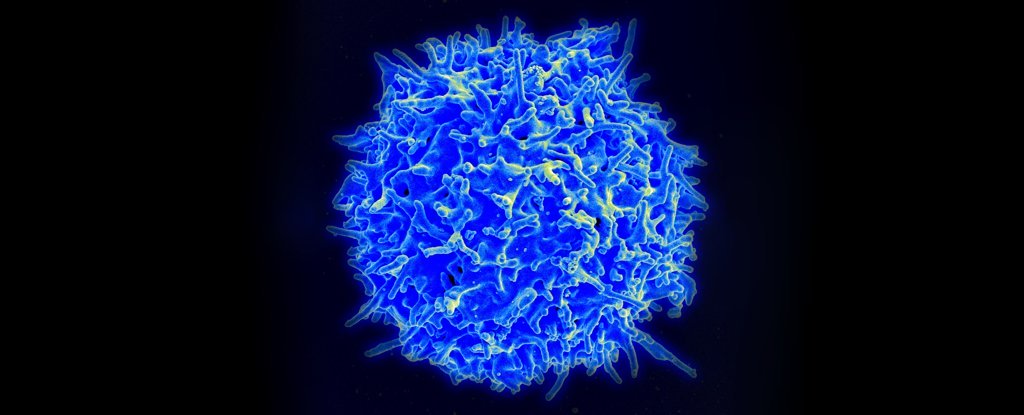
Scanning electron micrograph of a human T cell. (NIAID/Flickr/CC BY 2.0)

Read More “Fun Science FRIEDay – The Emperor of all Maladies” »

What the hell is the DC Metro’s “climate change will increase shark bites” ad talking about? An investigation

Posted on January 14, 2020January 14, 2020 By David Shiffman
Blogging, Climate change

Ever since I moved to Washington, DC last summer, I’ve been fascinated by an ad campaign for the DC Metro. The premise of the campaign is simple: taking public transit reduces your carbon footprint compared with driving yourself. It highlights various negative consequences of climate change, and points out how riding the Metro can help fight them.

Many of these ads highlight well-known consequences of climate change:

Photos by David Shiffman

Others highlight less well-known consequences of climate change, but are still on solid scientific ground:

Photo via DC Metro twitter account

But one ad in particular has been perplexing me for months:

Read More “What the hell is the DC Metro’s “climate change will increase shark bites” ad talking about? An investigation” »

We want to give you an ROV!

Posted on January 13, 2020January 13, 2020 By Andrew Thaler 1 Comment on We want to give you an ROV!
Open Science, Science

If you have access to a small, observation-class remotely operated vehicle to explore the ocean, where would you go? Would you use it to discover something new about marine ecosystems? Would you give students the opportunity to journey beneath the waves and learn about their local waterways? Would you hunt for lost lobster traps, track … Read More “We want to give you an ROV!” »

The next generation of low-cost, open-source oceanographic instruments is here! Meet the OpenCTD rev 2!

Posted on January 7, 2020January 7, 2020 By Andrew Thaler 1 Comment on The next generation of low-cost, open-source oceanographic instruments is here! Meet the OpenCTD rev 2!
Oceanography for Everyone, Open Science, Science
Four generations of OpenCTD. Left to Right: Prototype 2, which went through sea trials in Lake Superior, rev 1, rev 1 in the smaller form factor (this one was deployed in Alaska), and OpenCTD rev 2.

In 2013, Kersey Sturdivant and I embarked upon a quixotic quest to create an open-source CTD — the core tool of all oceanographic research that measures the baseline parameters of salinity, temperature, and depth. We weren’t engineers; neither of us had any formal training in electronics or sensing. And, full confession, we weren’t (and still aren’t) even oceanographers! What we were were post-doc marine ecologists working with tight budgets who saw a desperate need among our peers and colleagues for low-cost alternatives to insurmountably expensive equipment. And we had ties to the growing Maker and DIY electronics movements: Kersey through his work developing Wormcam and me through my involvement with OpenROV. 

We had no idea what we were getting ourselves into. 

The very first OpenCTD prototype.

Seven years and five iterations later, we are releasing the long anticipated OpenCTD rev 2 as well as the comprehensive Construction and Operation Manual! OpenCTD rev 2 builds on over half a decade of iteration and testing, consultation with oceanographers, engineers, developers, and makers around the world, extensive coastal and sea trials, and a series of workshops designed to test and validate the assembly process. 

Read More “The next generation of low-cost, open-source oceanographic instruments is here! Meet the OpenCTD rev 2!” »

Shark Week 2019 reviews and thoughts

Posted on December 24, 2019December 24, 2019 By David Shiffman
Popular Culture, Reviews and Interviews, Science

I wasn’t able to watch live this year, but I DVR-ed all 18 specials and watched them eventually! Here are my reviews, ratings, and thoughts. I did not watch the feature-length movie, which they claim is the first fictional entertainment content they’ve ever produced… causing me to stare in megalodon. Overall, this was not a strong year for science, facts, or diversity (of either sharks or shark researchers).

As a reminder, I grade on the following aspects of a show: is there actual science or natural history educational content / is there made up nonsense, are actual credentialed experts with relevant expertise featured or are they self-proclaimed “shark experts” who say wrong nonsense all the time, what species are featured (with bonus points for species we rarely or never see), and do they feature diverse experts or just the same white men (reminder: my field is more than 50% women)? It’s not a perfect rubric, but it’s better than this actual system for ranking shark news introduced this year in “sharks gone wild 2:”

Rankings appear in no particular order, if you care about the order the shows actually aired in please see this Discovery press release.

Read More “Shark Week 2019 reviews and thoughts” »

Posts pagination

Previous 1 … 25 26 27 … 270 Next

Popular Posts

What Ocean Ramsey does is not shark science or conservation: some brief thoughts on "the Shark Whisperer" documentaryWhat Ocean Ramsey does is not shark science or conservation: some brief thoughts on "the Shark Whisperer" documentaryJuly 2, 2025David Shiffman
That's not a blobfish: Deep Sea Social Media is Flooded by AI SlopThat's not a blobfish: Deep Sea Social Media is Flooded by AI SlopDecember 19, 2025Andrew Thaler
Alberta, Canada is the proud owner of the largest man-made pyramid on the planetAlberta, Canada is the proud owner of the largest man-made pyramid on the planetOctober 16, 2012Andrew Thaler
Shark of Darkness: Wrath of Submarine is a fake documentaryShark of Darkness: Wrath of Submarine is a fake documentaryAugust 10, 2014Michelle Jewell
Florida Senate fails basic biology, accidentally outlaws sex.Florida Senate fails basic biology, accidentally outlaws sex.May 11, 2011Andrew Thaler
The story of the pride flag made from NASA imagery: Bluesky's most-liked imageThe story of the pride flag made from NASA imagery: Bluesky's most-liked imageSeptember 27, 2024David Shiffman
A quick and dirty guide to making custom feeds on BlueskyA quick and dirty guide to making custom feeds on BlueskyFebruary 7, 2024Andrew Thaler
Marine Biology Career AdviceMarine Biology Career AdviceMay 30, 2025David Shiffman
Here's what I teach my students about finding jobs in marine biology and conservationHere's what I teach my students about finding jobs in marine biology and conservationApril 10, 2024David Shiffman
Oarfish: The true tale of the fish we can’t seem to get enough ofOarfish: The true tale of the fish we can’t seem to get enough ofAugust 19, 2015Guest Writer

squishy

Subscribe to our RSS Feed for updates whenever new articles are published.

We recommend Feedly for RSS management. It's like Google Reader, except it still exists.

Southern Fried Science

  • Home
  • About SFS
  • Authors
  • Support SFS


If you enjoy Southern Fried Science, consider contributing to our Patreon campaign.

Copyright © 2026 Southern Fried Science.

Theme: Oceanly Premium by ScriptsTown