

Skip to content

Southern Fried Science

Over 15 years of ocean science and conservation online

  • Home
  • About SFS
  • Authors
  • Support SFS

Recent Posts

small boy holding Miss Abyss Dumbo Octopus
Please Help This Little Dumbo Octopus Travel Across America
August 3, 2026
Isn’t ironic, don’t you think: dismantling the Ocean Observatories Initiative on World Oceans Day
June 9, 2026
My Journey Into Researching Historical Erasure on Public Lands
July 31, 2026
The next OpenCTD is here!
June 22, 2026
humpback whale in Antarctica
The evolution of the International Whaling Commission – from  whaling quotas to whale conservation
June 10, 2026
“Why Sustainable Seafood Matters” is now available for preorder! Here’s what it’s about, and why I decided to write it.
June 8, 2026

Giant penguin colonies and tiny squid: Thursday Afternoon Dredging, March 8th, 2018

Posted on March 8, 2018 By David Shiffman
Uncategorized

Cuttings (short and sweet):  Follow Travis Tai, a graduate student studying climate change and fisheries, on twitter! Thumbnail-sized pygmy squid discovered in Australia. By Shreya Dasgupta, for MongaBay. This octopus is 40,000 times heavier than its mate. By Liz Langley, for National Geographic. Seal poo reveals plastic’s path in the sea. Nature research highlights. Grass is … Read More “Giant penguin colonies and tiny squid: Thursday Afternoon Dredging, March 8th, 2018” »

The hunt for Soviet submarines, a 5-foot-long shipworm, the impossibilities of deep-sea mining, and more! Massive Monday Morning Salvage: March 5, 2018.

Posted on March 5, 2018March 4, 2018 By Andrew Thaler
Weekly Salvage

Foghorn (A Call to Action!)

  • Subscribe to the Chesapeake Bay Journal (it’s free)! The venerable grey lady of the Bay survived the EPA’s attempt to defund them. Consider sending a few dollars to the journal, too. If you’re filing MD taxes this year, you can earmark some of you return to Chesapeake Bay programs.

Flotsam (what we’re obsessed with right now)

  • The secret on the ocean floor: the wild, weird origin of the modern deep-sea mining industry, complete with spies, Soviet submarines, and Howard Hughes. How much is real? How much is emergent from this first fake venture? If you only read one thing about deep-sea mining, read this.

We really misled a lot of people and it’s surprising that the story held together for so long”

source.

  • As biodiversity declines, so does public attention. We need to push back against this trend.
  • After Centuries of Searching, Scientists Finally Find the Mysterious Giant Shipworm Alive!

Read More “The hunt for Soviet submarines, a 5-foot-long shipworm, the impossibilities of deep-sea mining, and more! Massive Monday Morning Salvage: March 5, 2018.” »

Floridian flamingos and fishing in the twilight zone: Thursday Afternoon Dredging, March 1st, 2018

Posted on March 1, 2018 By David Shiffman
Uncategorized

Cuttings (short and sweet):  Follow Kristina Tietjen, a marine conservation biologist working in Kiribati, on twitter! A case for wild flamingos calling Florida their home. By Joann Klein, for the New York Times. The underwater damage left behind by hurricanes. From NPR’s Weekend Edition. Even corals have microbiomes. By Jason Goldman, for Hakai. Life of an albatross. … Read More “Floridian flamingos and fishing in the twilight zone: Thursday Afternoon Dredging, March 1st, 2018” »

Have you heard the good news about shark populations? Shark population increases are cause for #OceanOptimism

Posted on February 28, 2018February 28, 2018 By David Shiffman
Conservation, Science

Did you know that some shark populations have declined due to overfishing? Did you know that some once-declined shark populations have recovered? If you’re like my twitter followers, it’s likely that you’ve heard the bad news, but have not heard the good news.

Why does this matter?
It’s important to share bad news so that people know there’s a problem, and that we need to act to solve that problem. However, it’s also important to share good news so that people know that a problem is solvable! This idea was behind the birth of the #OceanOptimism online outreach campaign.

Read More “Have you heard the good news about shark populations? Shark population increases are cause for #OceanOptimism” »

Intertidal spiders and starfish night vision: Thursday Afternoon Dredging, February 22nd, 2018

Posted on February 22, 2018February 22, 2018 By David Shiffman
Uncategorized

Cuttings (short and sweet):  Follow Jessica Meeuwig, the Director of the UWA Centre for Marine Futures, on twitter. Check out #WowScienceFact, a science communication hashtag game that I started!  Ocean tides could have driven ancient fish to walk. By Alexandra Witze, for Nature News. Spoils (long reads and deep dives): Webs under water: the bizarre lives … Read More “Intertidal spiders and starfish night vision: Thursday Afternoon Dredging, February 22nd, 2018” »

Open Science in Africa, defend the ADA, the value of the outdoors, Minke whale rides, and more! Monday Morning Salvage: February 19, 2018.

Posted on February 19, 2018February 19, 2018 By Andrew Thaler
Weekly Salvage

Foghorn (A Call to Action!)

  • Sign up for AfricaOSH: The Africa Open Science Hardware Gathering and meet some of the most incredible, innovative technologists in the world!
  • Remember when the disability community put their bodies on the line to defend the Affordable Care Act? Remember the videos of people in wheelchairs being handcuffed outside Mitch McConnell’s office? Last week, the House voted to gut the Americans with Disabilities Act. There’s no bill in the Senate yet, but the time to mobilize is now. Call your Senators and defend the ADA.

Flotsam (what we’re obsessed with right now)

  • In the annuals of obvious thing that still need to be said: protecting wild places is better for Americans and better for the economy than strip mining them. Outdoor Recreation Is a Bigger Economic Booster Than Mining.
  • The Cousteau Society shares a great little clip of all the great Cousteau tech.

Read More “Open Science in Africa, defend the ADA, the value of the outdoors, Minke whale rides, and more! Monday Morning Salvage: February 19, 2018.” »

A precautionary approach to health and safety while using awesome, awesome laser cutters in the home.

Posted on February 15, 2018March 11, 2018 By Andrew Thaler
Uncategorized

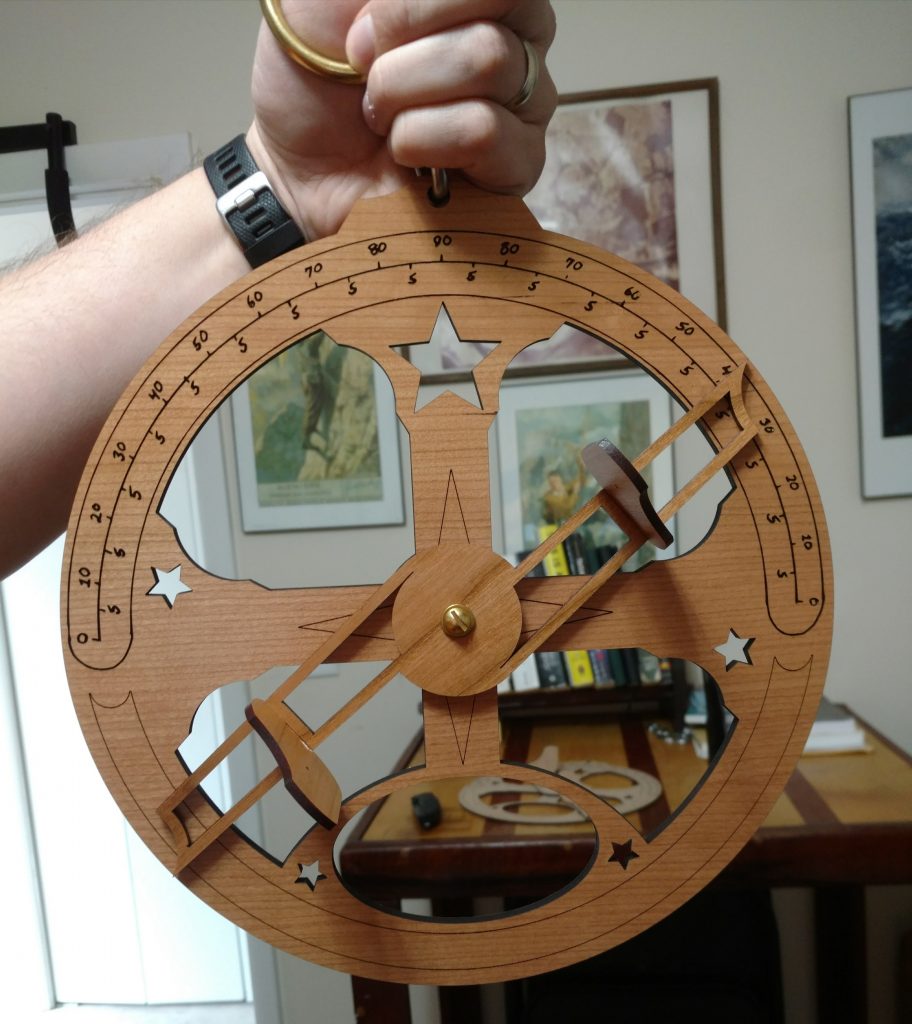
Holy Mola, Laser Cutters! If you follow me on Instagram, you’ve probably seem some pretty cool projects coming out of my freshly arrived Glowforge laser cutter.

But laser cutters are not all sunshine and cool, wooden hinges. Laser cutters were, until very recently, the domain of industrial fabrication shops with extensive safety systems. As a new generation of low(er) cost, hobby and household cutters enter the market, we need to step back an think critically about the potential health and safety impacts of these incredible machines.

Like I did with 3D printers a few years back, I’m taking a deep dive into the hazards of laser cutters in the home and how to avoid them.

First, the issues of least concern (not because they aren’t bad, just that they’re far less likely to occur).

Fire. Lots of materials can catch fire, including, to no one’s surprise, wood. A fire safety plan will go a long way, but you can avoid ruining your laser cutter by being aware of what materials frequently catch fire. ABS, HDPE, polystyrene and polypropylene, and anything with poor thermal properties is going to ignite rather than cut cleanly. And then you’re going to have a bad day.

Beam escape. If your machine is not well taken care of and well shielded, there’s a small chance the wrong materials or loose connections can result in a beam escape, which can injure the user, bystanders, pets, or anything else that gets in the laser’s path. Most hobby grade lasers have good safety features to prevent this (although cheap knock-off machines are starting to hit the markets that may not be up to par), but monitoring you equipment and keeping it properly maintained will go a long way to avoiding this.

But those aren’t the biggest concerns. Th biggest concern with laser cutters is the byproduct that happens every time you cut, no mater what. That’s right, I’m talking about:

Fumes! 

This is the big one and the issue that I’m most concerned about. Laser cutters haven’t really left industrial settings until now, so we don’t have very good data on chronic exposures of laser cutting fumes, especially on young children and pregnant people. What we do know is that the fumes produced by laser cutter depend heavily on the materials you choose to cut.

All materials will produce fumes when cut, which is why it’s essential that your set-up is well-ventilated. Most hobby cutters have a vent port that you can connect to a dryer vent or to the outside. I actually don’t recommend using a dryer vent. In all the rental houses I’ve lived in, not one has ever had the dryer properly vented, and hooking up to your dryer port might mean that you’re just venting into the crawlspace or the wall, rather than out of you house. Go for the window. There’s no hard and fast rule for how much ventilation you need, other than as much as possible. For 3D printers we recommended that your ventilation system moves 3 times as much air as the volume of the room per hour. For laser cutters, it should probably be more.

Everything you cut is going to release volatile organic compounds (VOCs), which is why ventilation is essential. For things like hardwoods and paper products, the VOCs released are comparable to a woodburning stove, frying too much bacon, or sitting around a campfire (though sitting around a campfire will give you a much higher dose). Prolonged exposure can cause respiratory problems and asthma. More complex materials like plywoods and plastics can have some pretty nasty compounds, so you want to make absolutely sure you know what’s going into your laser cutter, be aware of what materials should never, ever go into you household cutter, and always ventilate, ventilate, ventilate.

Read More “A precautionary approach to health and safety while using awesome, awesome laser cutters in the home.” »

Walking fish and microbe warfare: Thursday Afternoon Dredging, February 15, 2018

Posted on February 15, 2018 By David Shiffman
Uncategorized

Cuttings (short and sweet):  Follow Katelyn Heman, a marine conservation biologist working at the Georgia Aquarium, on twitter! What this walking fish can teach us about evolution. By Sarah Gibbens, for National Geographic Fish forego sleep thanks to this molecule in their brain. From Nature’s Animal Behavior news. Microplastics pollute even the most remote parts of … Read More “Walking fish and microbe warfare: Thursday Afternoon Dredging, February 15, 2018” »

Dear Shark Man, do open ocean sharks use nursery areas?

Posted on February 14, 2018February 14, 2018 By David Shiffman
Uncategorized

Welcome to  Dear Shark Man, an advice column inspired by a ridiculous e-mail I received. You can send your questions to me via twitter (@WhySharksMatter) or e-mail (WhySharksMatter at gmail).


Dear Shark Man,

I know that sharks that live close to the coast sometimes use “nursery areas” when they are young. Do open ocean sharks also use nursery areas?
Sincerely,
Nosey in North Carolina 

Read More “Dear Shark Man, do open ocean sharks use nursery areas?” »

Conservation has a Trolley Problem

Posted on February 13, 2018February 13, 2018 By Andrew Thaler
Conservation

A train screams down the tracks. Dead ahead, a pile of of giant pandas frolic, inexplicably, through a bamboo stand growing through the rails. But wait! There’s a switch. Pulling it will divert the train onto another track, where a tank containing one of the last 30 vaquita will surely be crushed. Do you pull the lever, dooming the vaquita, or hold the line, flattening the frolicking pandas? Do you stammer indecisively, wondering how you ended up in this situation as you careen, inexorably, into into an increasingly unavoidable outcome?

What if, rather than the conductor’s seat, you’re at the helm of a conservation organization? What if the train wasn’t a hundred tons of steel and steam, but the relentless press of public will, funding, and focus upon which it is your duty to shape and direct into action?

What if conservation has a Trolley Problem?

Ah the Trolley Problem, the thought experiment turned pop-philosophy darling whose use and misuse is, at best, an annoyance to every ethicist I know. Regrettably, I do them no favors here.

Read More “Conservation has a Trolley Problem” »

Posts pagination

Previous 1 … 49 50 51 … 274 Next

Popular Posts

What Ocean Ramsey does is not shark science or conservation: some brief thoughts on "the Shark Whisperer" documentaryWhat Ocean Ramsey does is not shark science or conservation: some brief thoughts on "the Shark Whisperer" documentaryJuly 2, 2025David Shiffman
What is a Sand Shark?What is a Sand Shark?November 12, 2017Chuck Bangley
Jumping the shark: New study reviews the breaching behavior of sharks and raysJumping the shark: New study reviews the breaching behavior of sharks and raysSeptember 19, 2024David Shiffman
Zombie ideas in conservation: trophy hunting and conservationZombie ideas in conservation: trophy hunting and conservationAugust 6, 2026Ali Gaster
Shark of Darkness: Wrath of Submarine is a fake documentaryShark of Darkness: Wrath of Submarine is a fake documentaryAugust 10, 2014Michelle Jewell
Is Academic Publishing is breaking conservation science?Is Academic Publishing is breaking conservation science?August 10, 2026Chris Parsons
That's not a blobfish: Deep Sea Social Media is Flooded by AI SlopThat's not a blobfish: Deep Sea Social Media is Flooded by AI SlopDecember 19, 2025Andrew Thaler
Considering writing a popular science book? Here's my adviceConsidering writing a popular science book? Here's my adviceJuly 7, 2025David Shiffman
Emergency room conservation: why waiting for the Endangered Species Act to save a species is a fiscal disasterEmergency room conservation: why waiting for the Endangered Species Act to save a species is a fiscal disasterAugust 11, 2026Ali Gaster
How the Bluespotted Ribbontail Stingray got its SpotsHow the Bluespotted Ribbontail Stingray got its SpotsMarch 28, 2024David Shiffman

squishy

Subscribe to our RSS Feed for updates whenever new articles are published.

We recommend Feedly for RSS management. It's like Google Reader, except it still exists.

Southern Fried Science

  • Home
  • About SFS
  • Authors
  • Support SFS


If you enjoy Southern Fried Science, consider contributing to our Patreon campaign.

Copyright © 2026 Southern Fried Science.

Theme: Oceanly Premium by ScriptsTown