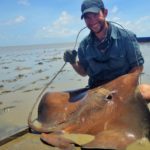
 Matt Kolmann is a PhD candidate whose research program is at the interface of evolution, comparative anatomy, and biomechanics. He completed his Master’s degree at Florida State University with Dr. Dean Grubbs on the feeding biomechanics and fisheries ecology of cownose rays, a purported pest on commercial shellfish. During this process he developed a love of field work, and since then has collected rays and other fishes on expeditions across South and Central America with the Royal Ontario Museum. His PhD research investigates the evolution of biodiversity using South American freshwater stingrays as a model system. The number of different feeding niches these stingrays occupy is astounding, and Matt is using gene-sequencing, comparative phylogenetic methods, and biomechanical modeling to characterize the evolutionary processes underlying this biodiversity. From June 8th through the end of Shark Week, he will be raising funds to delve more deeply into the evolution of feeding behavior in freshwater rays – specifically investigating whether freshwater rays ‘chew’ tough prey like insects in a manner comparable to mammals. Follow him on twitter!
What role does our food have in explaining where we live, what we look like, and how we behave? I study how properties of prey – material, structural, and ecological – shape the evolution of predators. Specifically, I am interested in how animals adapt to novel foods and diets that pose unique challenges: prey that are tough, stiff, hard, or just generally robust. I approach these questions at the macroevolutionary (how species are related) level; biodiversity lends insight into engineering and synthetic design based on an understanding of how animals evolve using similar organic principles.


 One-hundred-fifty meters hardly seems like anything at all.