
Skip to content

Southern Fried Science

Over 15 years of ocean science and conservation online

  • Home
  • About SFS
  • Authors
  • Support SFS

Recent Posts

small boy holding Miss Abyss Dumbo Octopus
Please Help This Little Dumbo Octopus Travel Across America
August 3, 2026
Isn’t ironic, don’t you think: dismantling the Ocean Observatories Initiative on World Oceans Day
June 9, 2026
My Journey Into Researching Historical Erasure on Public Lands
July 31, 2026
The next OpenCTD is here!
June 22, 2026
humpback whale in Antarctica
The evolution of the International Whaling Commission – from  whaling quotas to whale conservation
June 10, 2026
“Why Sustainable Seafood Matters” is now available for preorder! Here’s what it’s about, and why I decided to write it.
June 8, 2026

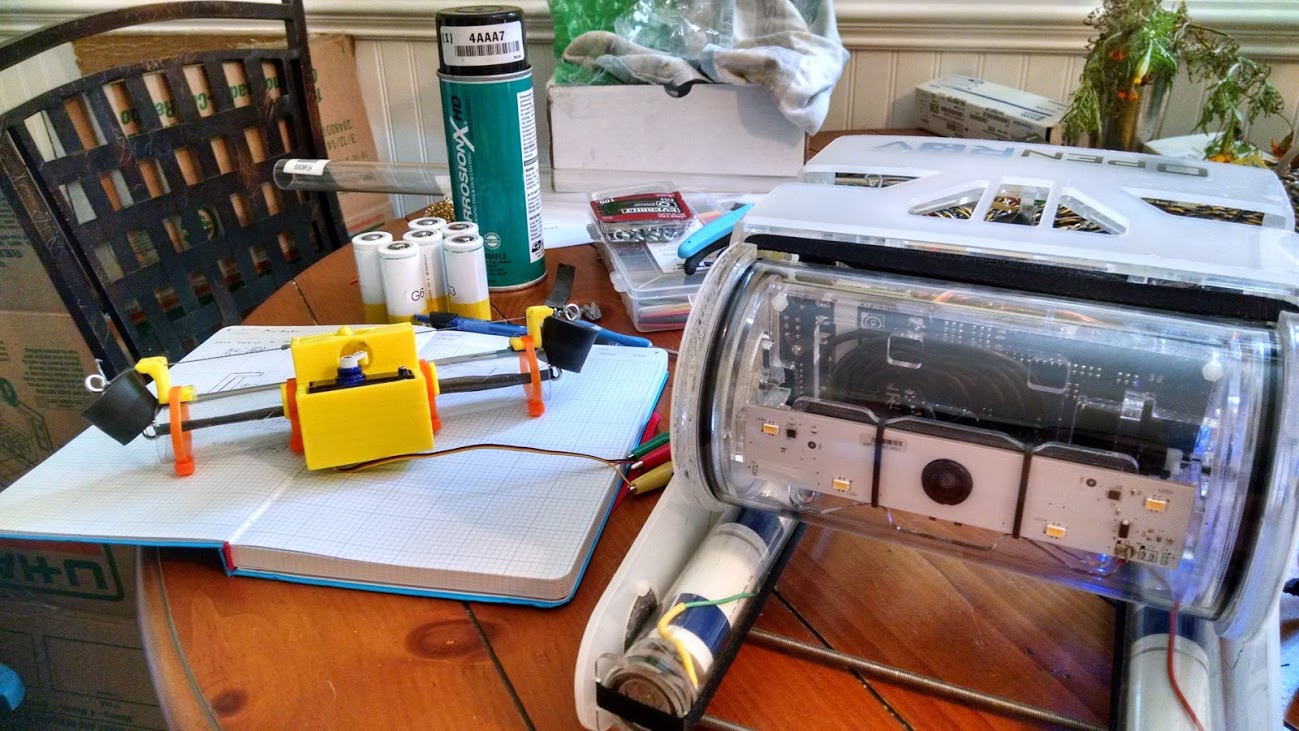
Up your underwater robot skills with OpenROV Dive Debriefs

Posted on July 10, 2015July 10, 2015 By Andrew Thaler
Uncategorized

Over the last few months, I’ve been putting together short tutorial videos on how to pilot an OpenROV or other MicroROV. The forth installment, Seagrass: Friend or Foe, just went up, so now ia a good time to take a look back at the playlists. Enjoy!

https://www.youtube.com/watch?v=6MSVjoqItXw

Read More “Up your underwater robot skills with OpenROV Dive Debriefs” »

Crowdfunded shark research: Protect coastal shark migrations

Posted on July 9, 2015 By Guest Writer
Science

272_BK_20140402_U_ChirstopherLangBryan Keller just graduated with his M.Sc. from Coastal Carolina University. For his thesis, he investigated the effect of familiarity on the social preferences of lemon sharks while researching at the Bimini Biological Field Station. Bryan and his team showed that lemon sharks do indeed prefer familiar individuals. Imagine this: You have two classes of kindergarten students that remained separated for one school year, and at the end of the year, the classes are mixed. More often than not, students would choose ‘friends’ based upon whom they are most familiar with, in this case that would be their classmates. Lemon sharks are the same way, they showed a preference for their ‘classmates’.

Offshore wind farms offer countless benefits, but will there be environmental costs? To help answer the looming question, we will tag a population of bonnethead sharks in South Carolina.  The tags will communicate with acoustic receivers, and when the sharks swim close enough to the receiver, its presence will be documented. By using a series of receivers, we will be able to determine where a shark spends most of its time. After we know where the bonnetheads are spending their time, we will be able to conduct laboratory trials to determine if the introduction of offshore wind farms can displace the shark from this area. Recent work in SC showed that bonnetheads returned to the same estuary each year and from this, we know that the sharks aren’t randomly distributed throughout the environment. What if they can’t get back to the habitat they occupy every year? If offshore wind farms disrupt the marine ecosystem and prohibit sharks from returning, then there could be serious repercussions.

Read More “Crowdfunded shark research: Protect coastal shark migrations” »

Women who live every week like Shark Week

Posted on July 8, 2015 By Guest Writer
Science

ACynthia Wigren co-founded the Atlantic White Shark Conservancy and the Gills Club. She holds a Bachelor of Science in Wildlife Management and a Masters in Business Administration. She is an avid traveller and a scuba diver with a deep appreciation for wildlife on land and sea. Her underwater experiences with whale sharks, great hammerheads, nurse sharks, and great white sharks led her to leave the corporate world and establish a non-profit to support shark research and education programs.

This year, Shark Week has promised us more science and no fake documentaries (thank you Rich Ross!), but their ‘Finbassabor’ line-up leads me to believe that the majority of researchers featured will be men, once again.  As long as Shark Week ditches mockumentarties for real science does it matter which researchers it features? With 42 million people tuning in during the week, I believe it does.

Read More “Women who live every week like Shark Week” »

A Playlist for Shark Week

Posted on July 7, 2015 By Guest Writer
Science

Rachel193Rachel Pendergrass is a writer, performer and science communicator in Atlanta, Georgia. She is the assistant director of the Dragon Con Science Track, a program contributor for the Atlanta Science Festival, and producer/host of a monthly science variety show called Solve for X. When she’s not sciencing, you can find her performing as a storyteller, making nerdy sketch comedy videos with Dragon Con TV, enthusiastically ranting about sharks, or working on her sommelier skills by drinking fancy wine. Find her on Twitter at @sharkespearean. 

Shark Week started on Sunday. This week long celebration of all things elasmobranch (Okay, let’s be honest, mostly Great White sharks and very little else) has inspired artists, comedy shows, and even possibly Super Bowl halftime shows!

httpv://www.youtube.com/watch?v=WmcWZ2Bzoho

Shark Week has also inspired more than a few musicians to show their love for fintastic festivities through song. Even Billy Idol got in on the Shark Week song action!

httpv://youtu.be/mhzXk3e9d7g

Here are the top 12 picks for your Shark Week playlist.


Read More “A Playlist for Shark Week” »

Print your own Mighty Megalodon Tooth for #SharkWeek (or #JacquesWeek)

Posted on July 7, 2015 By Andrew Thaler
Education

IMG_20150407_155333306Carcharocles megalodon is the largest shark that ever lived. It roamed the oceans from 15 to 2.5 million years ago. Its teeth can be found at fossil beds around the world, but especially in Yorktown and Pungo River formations in the coastal Eastern United States. Megalodon teeth are incredibly useful teaching tools, allowing educators to convey just how massive these animals were and open up discussions about evolution, extinction, and ecology while instilling a sense of wonder.

Now you can print your own piece of prehistory with this 3D printable Megalodon tooth!

Read More “Print your own Mighty Megalodon Tooth for #SharkWeek (or #JacquesWeek)” »

Everything’s bigger in Texas, even shark research!

Posted on July 6, 2015June 9, 2016 By Guest Writer
Science

DavisJonathan Davis is a marine biologist, shark researcher, and Fish and Wildlife Tech for the Texas Parks and Wildlife Department based out of Sabine Lake, Texas.  He has researched elasmobranchs for over 10 years all around the world from New Zealand to Australia and along the U.S. coast from Massachusetts to Texas.  Currently, he is continuing research as part of his PhD along the Texas coast focusing on bull shark ecology.  In addition to research, Jonathan does outreach to inform the general public about sharks and inspire interest rather than fear to promote conservation rather than destruction. 

This year marks the 27th Shark Week.  For the past 27 years, Discovery Channel has had the unrivaled and incomparable attention of the world for one week in regards to all things ‘shark’.  These 27 years have brought out the best in shark science in the beginning but have sadly declined by bringing out the worst in fear-mongering and sensationalist misinformation more recently.  As a shark scientist who grew up watching Shark Week for the science the last several years have been disheartening to say the least.  The science seemed to all but disappear and replaced by completely inaccurate information, scary attacks that never happened, and an epidemic of Megalodon sized proportions.  Not to mention the fact that my lifelong dream of being on Shark Week was fulfilled only to have my research superimposed into a show about a ridiculous mythical shark #VoodooShark.  In the midst of all these years of Shark Week, real shark science has been increasing and advancing.  Sharks are an integral part of our ecosystems but many are endangered and in need of conservation.  This is why shark scientists work in the background to learn as much as possible about these creatures that spark such awe and interest worldwide, not to feed fear-mongering and sensationalist desires of money hungry producers.  With that being said, it would behoove all of us to utilize the unparalleled platform that is Shark Week to spread correct information and promote shark conservation.

Read More “Everything’s bigger in Texas, even shark research!” »

Need a #SharkWeek Alternative? Watch classic Cousteau documentaries with us for #JacquesWeek

Posted on July 6, 2015July 9, 2015 By Andrew Thaler
Blogging

Last night, I was in the mood for some Cousteau. The classics from the Undersea World, Odyssey, River Expeditions, and  host of other long running series, still hold up as some of the best ocean documentaries of all time. So I picked a few of my favorites, pulled some people together online, and called it #JacquesWeek, an alternative to Shark Week for those who either don’t get the Discovery Channel or just want something different.

“The sea, once it casts its spell, holds one in its net of wonder forever.”

Jacques Yves Cousteau

I’ll be honest, I’m burned out on Shark Week. After several years of intense livetweeting, post-show debunking, and high-level critique (look for my and Shiffman’s paper on best practices for responding to fake mass media documentaries in Ocean and Coastal Management later this year), I find that I just don’t have much more to say. Some shows will be good. Some shows will be great. Some shows will be bad.

Jacques Cousteau has never let me down. Sure, sometimes the science is off (pretty much everything in Blind Prophets of Easter Island is incorrect, for example), but that’s because the Calypso crew was working at the boundaries of human knowledge, and their work comes off earnest, heartfelt, and compassionate. And so full of wonder. Much of what Cousteau’s team did was done for the very first time.

Read More “Need a #SharkWeek Alternative? Watch classic Cousteau documentaries with us for #JacquesWeek” »

8 ways to tell if Shark Week has really improved this year

Posted on July 3, 2015 By David Shiffman 1 Comment on 8 ways to tell if Shark Week has really improved this year
Uncategorized

sharkThe 27th Shark Week starts this Sunday, July 5th. It’s no secret that I’ve been very critical of Shark Week content in the recent past. However, Discovery has made a public commitment to do better this year, and everything I’ve seen suggests that they really mean it. But what exactly does “better” mean? Here are eight specific things to look out for while you watch Shark Week this year.

1) Are there any totally fake documentaries? Like, 100% fake, as in the events that take place in those documentaries did not occur at all, and everyone in the show is an actor, and all the images and videos are computer generated? It’s worth noting that the new Discovery President has specifically promised not to do this anymore.  

Prediction: There will be no totally fake documentaries in 2015.  Woo hoo! Keep an eye out for “Super Predator,”though.  Some folks (incorrectly) claimed that the actual events it describes were proof that megalodon was still alive.

Read More “8 ways to tell if Shark Week has really improved this year” »

Does Shark Week portrayal of sharks matter?

Posted on June 29, 2015July 3, 2015 By David Shiffman 6 Comments on Does Shark Week portrayal of sharks matter?
Blogging, Popular Culture, Science

sharkI’ve been critical of factual inaccuracy and fearmongering on Shark Week documentaries for years. But how big of a problem is this, and how do we know? I asked some of the authors of three recent scientific studies*  to summarize the evidence.

Many species of sharks are in desperate need of conservation. Twenty-four percent of all known species of sharks, skates and rays are considered Threatened with extinction by the IUCN Red List. Using a variety of different methods, scientists have documented rapid and severe population declines in many species of sharks all over the world.

Conservation requires public support. In a participatory democracy, new policies and regulations require some public support to pass. It’s easy to get public support to conserve cute and cuddly animals, but ugly animals need protection too. So do animals that scare people, like sharks.

Read More “Does Shark Week portrayal of sharks matter?” »

Lionfishing, Green Crabbing, and Carp Dunking: Southern Fried Science Book Club, week 3

Posted on June 22, 2015 By Andrew Thaler 2 Comments on Lionfishing, Green Crabbing, and Carp Dunking: Southern Fried Science Book Club, week 3
Blogging

First off, let me just say, that invasive Asian Carp really do jump out of the water and whack people in the face.

httpv://www.youtube.com/watch?v=qfG4vsJ5_xI

Of all the chapters we’ve read so far, these three were the first that really made me want to try eating invasive species. Maybe it’s because I’m an ocean person, but those fish sounded delicious.

The lionfish chapter was especially intriguing, since I spent a lot of time on the southern tip of Eleuthera during 2001, though I don’t recall ever seeing a single lionfish. I do remember lionfish from the coast of North Carolina, where they’ve taken hold and now completely dominate the local shipwrecks. Lionfish are a nightmare. They have no predators in Atlantic waters. They are extremely fecund. They are voracious generalists, happy to eat anything that fits in their mouths. Most worrying, they can’t be fished via conventional means. Lionfish don’t take the bait, they have to be speared, but they also occur at depths of greater then 200 meters, well beyond any recreation SCUBA or freediving limits.

Read More “Lionfishing, Green Crabbing, and Carp Dunking: Southern Fried Science Book Club, week 3” »

Posts pagination

Previous 1 … 92 93 94 … 275 Next

Popular Posts

What Ocean Ramsey does is not shark science or conservation: some brief thoughts on "the Shark Whisperer" documentaryWhat Ocean Ramsey does is not shark science or conservation: some brief thoughts on "the Shark Whisperer" documentaryJuly 2, 2025David Shiffman
Zombie ideas in conservation: trophy hunting and conservationZombie ideas in conservation: trophy hunting and conservationAugust 6, 2026Ali Gaster
What is a Sand Shark?What is a Sand Shark?November 12, 2017Chuck Bangley
Shark of Darkness: Wrath of Submarine is a fake documentaryShark of Darkness: Wrath of Submarine is a fake documentaryAugust 10, 2014Michelle Jewell
Is Academic Publishing is breaking conservation science?Is Academic Publishing is breaking conservation science?August 10, 2026Chris Parsons
How the Bluespotted Ribbontail Stingray got its SpotsHow the Bluespotted Ribbontail Stingray got its SpotsMarch 28, 2024David Shiffman
Considering writing a popular science book? Here's my adviceConsidering writing a popular science book? Here's my adviceJuly 7, 2025David Shiffman
Emergency room conservation: why waiting for the Endangered Species Act to save a species is a fiscal disasterEmergency room conservation: why waiting for the Endangered Species Act to save a species is a fiscal disasterAugust 11, 2026Ali Gaster
That's not a blobfish: Deep Sea Social Media is Flooded by AI SlopThat's not a blobfish: Deep Sea Social Media is Flooded by AI SlopDecember 19, 2025Andrew Thaler
Ten very bad, no good things the latest Trump Administration has done to the oceansTen very bad, no good things the latest Trump Administration has done to the oceansAugust 14, 2026Ali Gaster

squishy

Subscribe to our RSS Feed for updates whenever new articles are published.

We recommend Feedly for RSS management. It's like Google Reader, except it still exists.

Southern Fried Science

  • Home
  • About SFS
  • Authors
  • Support SFS


If you enjoy Southern Fried Science, consider contributing to our Patreon campaign.

Copyright © 2026 Southern Fried Science.

Theme: Oceanly Premium by ScriptsTown