Skip to content

Southern Fried Science

Over 15 years of ocean science and conservation online

  • Home
  • About SFS
  • Authors
  • Support SFS

Tag: climate change

Monday Morning Salvage: December 12, 2016

Posted on December 12, 2016December 11, 2016 By Andrew Thaler
Weekly Salvage

Flotsam (what we’re obsessed with right now)

  • Mr. Trashwheel, who has the best social media game in town. How can anyone compete with a garbage-eating floating waterwheel who’s Reddit AMA is this on point?

  • You can read more about Mr. Trashwheel and the awesome, new, Prof. Trashwheel here: ‘Professor Trash Wheel’ makes its debut in Canton.
Read More “Monday Morning Salvage: December 12, 2016” »

Fun Science FRIEDay – Water to Wine? Close, CO2 to Alcohol (ethanol)

Posted on December 2, 2016 By Kersey Sturdivant
Open Science, Science

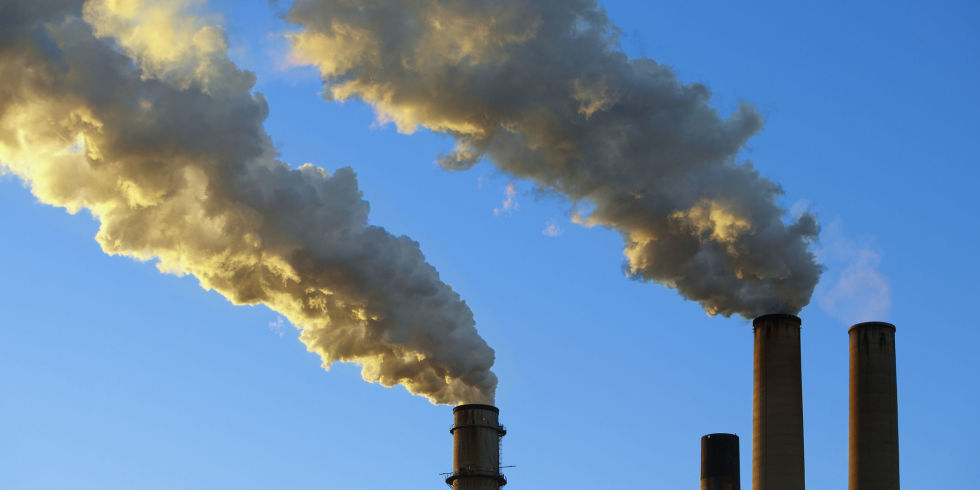
Science brings us many wonderful things (honestly if you enjoy the benefits of the modern era, go out and hug a scientist). One of humanities age old desires is the ability to convert something invaluable, or a nuisance, into something desirable. The old midas touch if you will. Recently some scientist stumbled onto the process of converting CO2, a primary culprit of anthropogenic climate change, into alcohol… though not the kind you drink, the kind that humanity could use as fuel.

(Photo credit: Getty + Space Images)

Producing fuel from CO2 is huge because it lets us take a nuisance compound, and converts it into a productive one. This was accomplished by scientists at Oak Ridge National Laboratory in Tennessee by using common materials (copper and carbon), but arranging them with nanotechnology. The researchers were attempting to find a series of chemical reactions that could turn CO2 into a useful fuel, such as ethanol. They figured they would go from CO2 to methanol, and then work out the logistics of going from methanol to ethanol, when they realized the first step in their process managed to do it all by itself. Science for the win!

Read More “Fun Science FRIEDay – Water to Wine? Close, CO2 to Alcohol (ethanol)” »

Everything you need to know about working in conservation you can learn from Game of Thrones

Posted on August 9, 2016August 9, 2016 By Guest Writer 1 Comment on Everything you need to know about working in conservation you can learn from Game of Thrones
Academic life, Conservation

Learned scholars and respected leaders of society warn that a major environmental change is coming and everyone should prepare. However, heads of state, politicians and wealthy oligarchs argue and bicker, more interested in riches and power than the imminent threat. Some realize that the oncoming change will be accompanied by a host of problems, to which no one has given the necessary consideration. Those who understand the situation try to set up systems to protect against this threat but are constantly having to argue with, and even fight, their own allies. In the end, just as some progress is being made, one of the champions of these vital preparations is stabbed through the heart by his closest colleagues, who stage a coup instead of dealing with the oncoming threat.

Sound familiar? It is of course the plot of Game of Thrones, but could also be a history of most conservation issues, whether it be the threat of DDT, ozone depletion, biodiversity loss or climate change.

Read More “Everything you need to know about working in conservation you can learn from Game of Thrones” »

Polar bear feast on seabird eggs is reason we can’t have nice things

Posted on September 29, 2015 By Michelle Jewell
Conservation

Several images circulate on the internet that capture the plight of rapid Arctic climate change, a phenomenon known as Arctic amplification.  This image, for me, is the most alarming:

Read More “Polar bear feast on seabird eggs is reason we can’t have nice things” »

To dyke, or not to dyke: A debate coming to a town near you

Posted on January 23, 2015 By Michelle Jewell
#DrownYourTown, Conservation

Finally, President Obama’s state of the union called out Congress’s problem with climate change. Their denial is merely a symptom of overall scientific ignorance, a simply medieval issue that has temporarily stalled many great nations’ progress throughout history. Yet, President Obama’s points about climate change and it’s relevance to the nation gives one hope that there is a small smoldering ember of collaborative-driven leadership buried under piles of Benghazi reports, and it couldn’t come a moment too soon. The USA has stalled its scientific and technological growth at a key time in global history and is already generations behind the modern world in technological advancements to protect its people against a rising threat – the ocean.

Let me present you with a case study. I live in Zeeland in the Netherlands, and this area is protected by the world-famous Oosterschelde surge barrier; a 9km system of dams, movable concrete slabs, and artificial islands.  The Oosterschelde is one of many ocean barriers strategically placed along the Dutch coast and has been deemed one of the Seven Wonders of the Modern World by the American Society of Civil Engineers.  During storm events, the Oosterschelde’s massive concrete slabs shut and cut off Zeeland’s waterways from the surge of the North Sea.

By Nils van der Burg from Madrid, Spain (IMG_7446) [CC BY-SA 2.0 (http://creativecommons.org/licenses/by-sa/2.0)], via Wikimedia Commons
The Oosterschelde Delta Works – 9km long: By Nils van der Burg from Madrid, Spain (IMG_7446) [CC BY-SA 2.0 (http://creativecommons.org/licenses/by-sa/2.0)], via Wikimedia Commons

Read More “To dyke, or not to dyke: A debate coming to a town near you” »

Unhappy feet – why we need more than a day of penguin awareness

Posted on January 22, 2015February 13, 2015 By Chris Parsons 1 Comment on Unhappy feet – why we need more than a day of penguin awareness
Conservation, Science

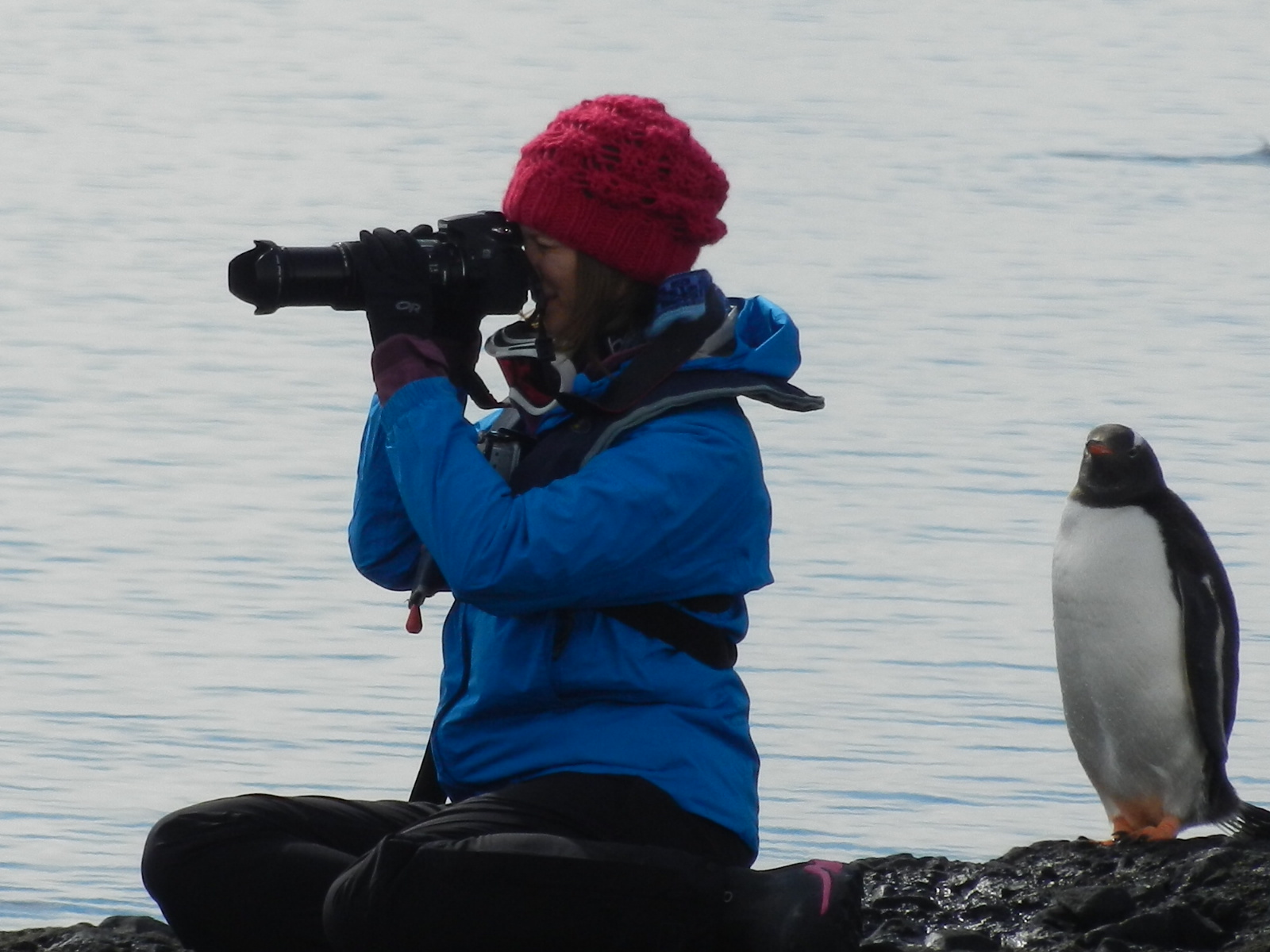
A couple of days ago (20th January) was penguin awareness day1. But do we really need to be more aware of penguins?  Well, actually yes.

RSCN8435

 Photo by Chris Parsons

 We conducted a study a couple of years ago  (pdf also available) to look at public awareness of penguins (using university students as a sample) and found that nearly half (43%) of those questioned though that  penguins were protected under the US Endangered Species Act (ESA) and were thus listed as  “endangered.” At the time only one penguin was listed on the ESA (the Galapagos penguin, Spheniscus mendiculus). The IUCN currently classifies five species of penguin as “endangered” 2 and six as “vulnerable” 3. The biggest threat to penguins generally is, unsurprisingly, climate change. The chicks of Magellanic penguins (S. magellanicus) in Argentina have experienced increasing mortality because of increasing numbers and severity of storms, and will continue to experience mortality as these further increase, in addition to additional mortality  from increasing rainfall and temperatures. Changing patterns of sea ice cover are impacting Adelie penguin (Pygoscelis adeliae) foraging at Ross Island, Antarctica. In various locations in the Antarctic Penninsula in particular, Adelie colonies are expected to be impacted by warming temperatures and changes in sea ice with perhaps as many as 75% of colonies decreasing or declining. Although in some locales, melting ice has increased potential Adelie habitat.  Chinstrap colonies have been reported to be in decline as well, despite this being a more open water species, that was previously being thought of as potential benefactors from melting sea ice – penguin nest occupation on Deception Island declined by more than third between 2002/2003 and 2009/10. These chinstrap penguins are likely being impacted by declining krill stocks, as will their  Adelie penguin cousins, in addition to ice loss which so affects this latter species. Overall, across the Antarctic Pennisula, there has been a decline in both Adelie and chinstrap penguin numbers.

Read More “Unhappy feet – why we need more than a day of penguin awareness” »

Here lies American science

Posted on November 28, 2014December 1, 2014 By Guest Writer
Blogging

wrightAndrew Wright is a British marine biologist that has been working on the science-policy boundary around the world for over a decade. His experiences have led him to champion a better communication of science to policy makers and the lay public. His research has included a population viability analysis for the vaquita, sperm whales bioacoustics and the impacts of noise on various marine mammals. Andrew is currently working on several projects, most relating to investigating either sleeping behaviour or chronic stress in wild cetaceans. He is also spearheading efforts to bring more marketing techniques into conservation outreach.


As most of you know by now, on November 12th, the European Space Agency (ESA) landed a probe (Philae) on the surface of a comet (67P/Churyumov–Gerasimenko) as part of the Rosetta mission. However, perhaps some of you are unaware that NASA cut a strikingly similar mission (Comet Rendezvous Asteroid Flyby) due to budget constraints. NASA basically had to choose between two missions and picked the other one (the Cassini-Huygens mission to Saturn). That forgotten mission was scheduled to touch-down on the comet Kopff in 2001, and its cancellation left the ESA to grab first prize for a soft-landing on a comet.

Read More “Here lies American science” »

Global is Personal: 4 Lessons About Climate Change Outreach from #DrownYourTown

Posted on February 3, 2014February 3, 2014 By Andrew Thaler
#DrownYourTown, Science

Almost four months ago, I sat down at my computer with a puzzle to solve: is there an easy way to model sea level rise without using expensive GIS programs. I found that solution in Google Earth and, after a few days of experimenting and tweeking, #DrownYourTown was born.

1 meter of sea level rise would make for a very soggy superbowl.

#DrownYourTown is a tool for exploring sea level rise through real-time, interactive, GIS modeling. Anyone can submit a request via twitter or tumblr and receive a custom, 3D model of sea level rise anywhere in the world. The system allows users to produce dramatic visuals of both plausible and implausible climate change scenarios. The project is ongoing, with user generated content, an active tumblog, and a vibrant twitter community centered around the hashtag. I am constantly exploring new ways to reach a broader audience. Currently, #DrownYourTown is on a virtual road trip, visiting a new coastal state each day, and cruising through towns after 5 meters of sea level rise.

#DrownYourTown has been an exciting and sometimes humbling journey. Here are four lessons about climate change outreach I learned from drowning your town.

Read More “Global is Personal: 4 Lessons About Climate Change Outreach from #DrownYourTown” »

Abnormal is the New Normal: Shifting Baselines, Polar Vortices, and Climate Change

Posted on January 24, 2014January 24, 2014 By Andrew Thaler 1 Comment on Abnormal is the New Normal: Shifting Baselines, Polar Vortices, and Climate Change
Science

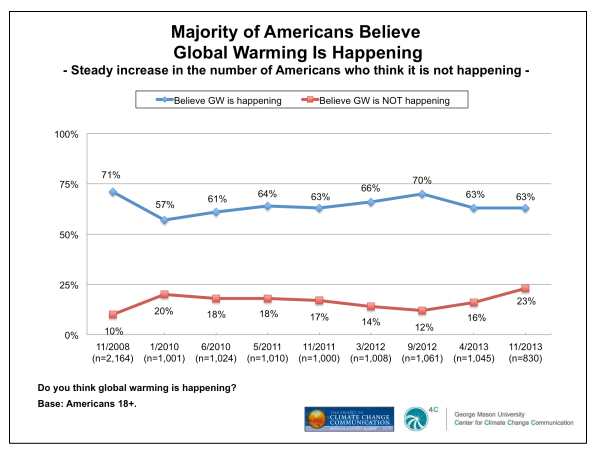
The Polar Vortex, a mass of cold air usually centered around points within the Arctic Circle, made a visit south for the second time in 2014. The Vortex brings freezing weather, snow, and ice to regions that are unaccustomed to such extreme conditions. It also brings with it a new spate of “so much for global warming” talking-points, fresh on the heals of a recent report revealing that Climate Change Denial is at an all time high.

CCD

Unfortunately for the climate change denial industry, Polar Vortices are well-understood atmospheric phenomena. They were documented as early as 1853 as currents of cold air that essentially circle the poles. High-altitude observations in the 1950’s revealed the occurrence of sudden stratospheric warming (SSW) in the Arctic Polar Vortex. These SSW’s can cause a the vortex to weaken or reverse directions, allowing it to drift off axis or split into several smaller vortices. When weakened vortices contact the jet stream, cold arctic air is forced south, resulting in anomalously cold temperatures.

The obvious next question is: Is the weakened polar vortex caused by climate change?

Read More “Abnormal is the New Normal: Shifting Baselines, Polar Vortices, and Climate Change” »

A scientist writes science fiction – thoughts on self-publishing my first novel

Posted on December 16, 2013December 17, 2013 By Andrew Thaler 1 Comment on A scientist writes science fiction – thoughts on self-publishing my first novel
Popular Culture

Early this month, I completed and self-published my first science fiction novel through Amazon’s Kindle Direct publishing service (and, a few days later, as a paperback through Createspace). The ideas for the book were conceived over a long week in August, while vacationing with my parents at a rental house in St. Michaels, Maryland. Wandering through the low-lying eastern shore towns started me thinking about the kinds of stories we would tell hundreds of years from now. Thus, the central conceit of Fleet — that it was not a tale of environmental devastation but of people living their lives in a post-sea-level-rise world — surfaced.

Writing Fleet was a marathon. All told, from the first day that I started outlining characters and deciding what the central story of Fleet — uncovering a human disaster caused by desperation and betrayal, then buried at sea — to the day I hit publish on the Amazon server, Fleet took a little over 3 and a half months, during which time I was also moving across the country, finishing several scientific manuscripts, and looking for a job.

Having now had a few weeks to decompress, I think it’s a good time to reflect on the book, what I tried to accomplish, and where it goes from here.

Read More “A scientist writes science fiction – thoughts on self-publishing my first novel” »

Posts pagination

Previous 1 … 8 9 10 … 12 Next

Popular Posts

What Ocean Ramsey does is not shark science or conservation: some brief thoughts on "the Shark Whisperer" documentaryWhat Ocean Ramsey does is not shark science or conservation: some brief thoughts on "the Shark Whisperer" documentaryJuly 2, 2025David Shiffman
Alberta, Canada is the proud owner of the largest man-made pyramid on the planetAlberta, Canada is the proud owner of the largest man-made pyramid on the planetOctober 16, 2012Andrew Thaler
That's not a blobfish: Deep Sea Social Media is Flooded by AI SlopThat's not a blobfish: Deep Sea Social Media is Flooded by AI SlopDecember 19, 2025Andrew Thaler
Shark of Darkness: Wrath of Submarine is a fake documentaryShark of Darkness: Wrath of Submarine is a fake documentaryAugust 10, 2014Michelle Jewell
The story of the pride flag made from NASA imagery: Bluesky's most-liked imageThe story of the pride flag made from NASA imagery: Bluesky's most-liked imageSeptember 27, 2024David Shiffman
Here are some ocean conservation technologies that I'm excited aboutHere are some ocean conservation technologies that I'm excited aboutFebruary 19, 2026David Shiffman
Oarfish: The true tale of the fish we can’t seem to get enough ofOarfish: The true tale of the fish we can’t seem to get enough ofAugust 19, 2015Guest Writer
Here's what I teach my students about finding jobs in marine biology and conservationHere's what I teach my students about finding jobs in marine biology and conservationApril 10, 2024David Shiffman
A quick and dirty guide to making custom feeds on BlueskyA quick and dirty guide to making custom feeds on BlueskyFebruary 7, 2024Andrew Thaler
Florida Senate fails basic biology, accidentally outlaws sex.Florida Senate fails basic biology, accidentally outlaws sex.May 11, 2011Andrew Thaler
Subscribe to our RSS Feed for updates whenever new articles are published.

We recommend Feedly for RSS management. It's like Google Reader, except it still exists.

Southern Fried Science

  • Home
  • About SFS
  • Authors
  • Support SFS


If you enjoy Southern Fried Science, consider contributing to our Patreon campaign.

Copyright © 2026 Southern Fried Science.

Theme: Oceanly Premium by ScriptsTown