Skip to content

Southern Fried Science

Over 15 years of ocean science and conservation online

  • Home
  • About SFS
  • Authors
  • Support SFS

Tag: deep sea

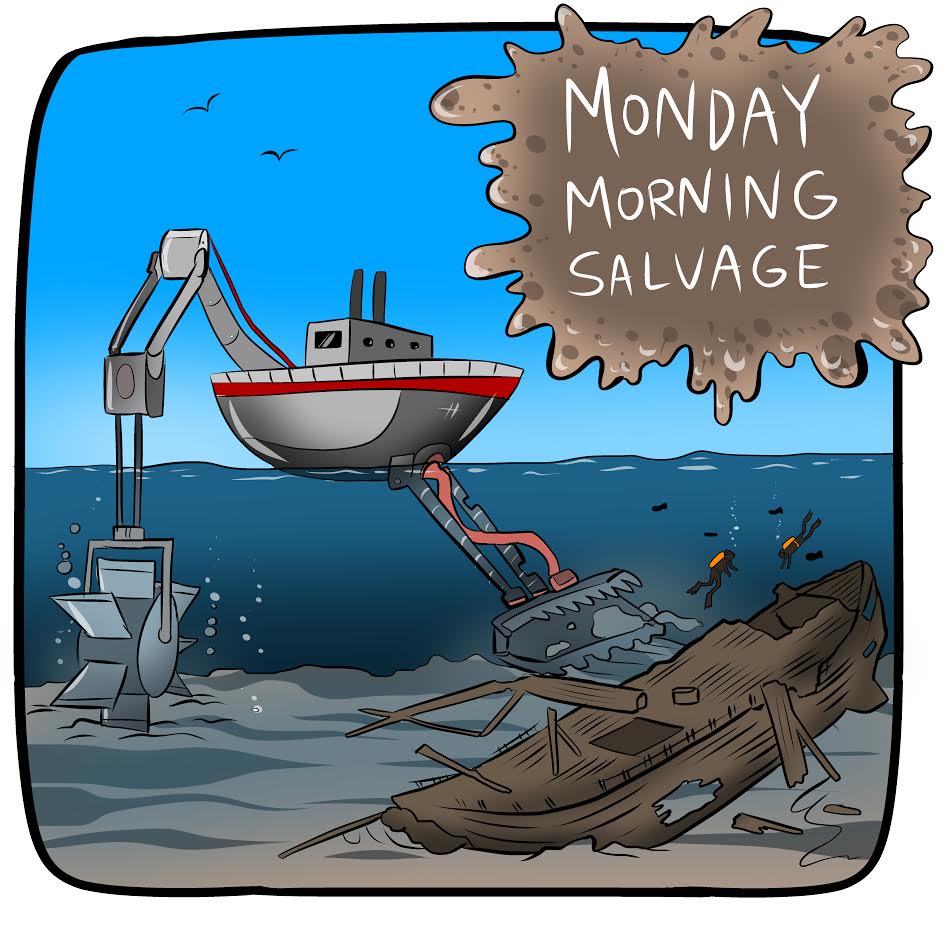
What does your sandwich cost, rare species in the deep, dong worms, and more! Monday Morning Salvage: June 26, 2017

Posted on June 26, 2017June 26, 2017 By Andrew Thaler
Weekly Salvage

Flotsam (what we’re obsessed with right now)

  • NPR did a great breakdown on the full carbon cost of one sandwich.
  • Public Lab was born from the desperate need for unconflicted data during the Deepwater Horizon disaster. Since then, they’ve grown into a global movement for citizen science. They just relaunched their world-changing balloon mapping kit on Kickstarter. Get yours now!

Read More “What does your sandwich cost, rare species in the deep, dong worms, and more! Monday Morning Salvage: June 26, 2017” »

Cuttlefish camouflage, climate change, ShellBorgs, and more! Monday Morning Salvage: June 19, 2017.

Posted on June 19, 2017 By Andrew Thaler
Weekly Salvage

Flotsam (what we’re obsessed with right now)

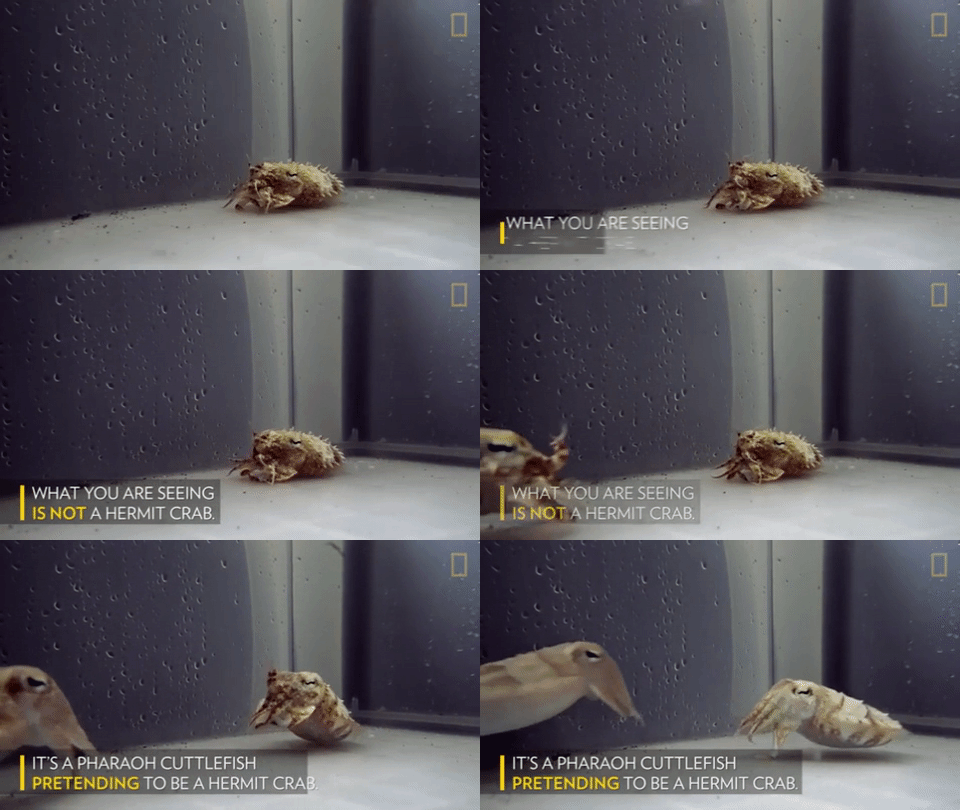
  • This cuttlefish:

  • Thanks to Nik Hubbard for bringing it to our attention.

Read More “Cuttlefish camouflage, climate change, ShellBorgs, and more! Monday Morning Salvage: June 19, 2017.” »

Terraforming Mars on Earth, giant larvaceans, conservation jobs, and more! Monday Morning Salvage: May 8, 2017

Posted on May 8, 2017May 8, 2017 By Andrew Thaler
Weekly Salvage

Fog Horn (A Call to Action)

  • The time to save the EPA is now! The EPA is seeking public input on the new administrations approach to environmental regulations. They are required to seek public input. They are required to respond to public input. Go tell them how you feel. Public comments close May 15. Here’s the docket with instructions on how to comment: Evaluation of Existing Regulations. We’ve even prepared a script for you.

Flotsam (what we’re obsessed with right now)

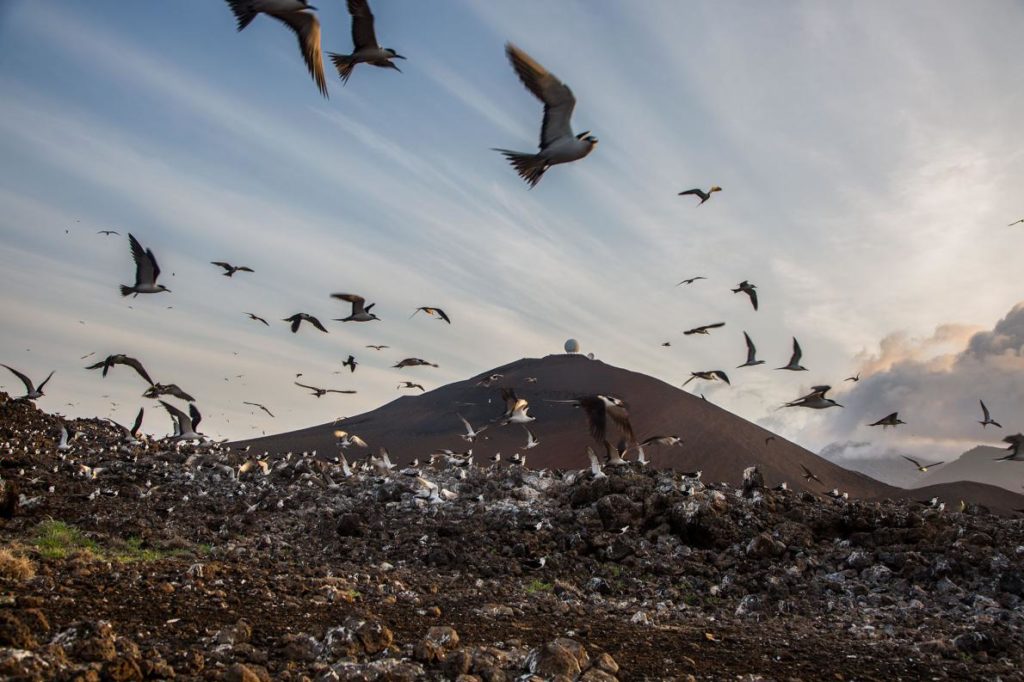
  •  On a tiny island in the middle of the Atlantic, a terraforming project a century-and-a-half in the making is underway. A 150-year-old experiment on the remote Ascension Island may help us green Mars. Can it also help us save Earth?
Seabirds on Ascension Island. Photo by Clare Fieseler.
  • It also happens to be longtime friend of Southern Fried Science Clare Fieseler’s first major story for National Geographic, so go follow her on twitter.

Jetsam (what we’re enjoying from around the web)

  • Women have a crucial—yet often overlooked—role in fisheries. The Invisible Fishing Fleet by Ilima Loomis at Hakai Magazine.
  • “What do you do when you’re a graduate student and you’ve been sexually assaulted by the PI of a very exciting paleoanthropological site?” An incredibly powerful piece by Holly Dunsworth: In case this helps you: This happened to me while I was trying to become a paleoanthropologist.
  • The general theme of this site appears to be ‘humans are terrible, robots are awesome’. Staying on brand: In a first, deep sea robots get a close look at giant larvaceans, a key player in the biological carbon pump.
  • Deep-sea mining is really heating up. Locals threaten armed campaign against PNG seabed mine.
  • In the Pacific Northwest, the diligence of citizen scientists is shedding light on the lives, and deaths, of seabirds. Drawing Meaning from Death, One Seabird at a Time by Larry Pynn at Hakai.
  • This is a pretty great demonstration of how statistics can be used to mislead: Generating Datasets with Varied Appearance and Identical Statistics through Simulated Annealing.

Read More “Terraforming Mars on Earth, giant larvaceans, conservation jobs, and more! Monday Morning Salvage: May 8, 2017” »

Monday Morning Salvage: March 13, 2017

Posted on March 13, 2017 By Andrew Thaler
Weekly Salvage

Flotsam (what we’re obsessed with right now)

  • This Great White Shark, who definitely just poo-ed all over some unsuspecting SCUBA divers.
  • Watch a Great White Shark Shit All Over a Group of Cage Divers. 

Jetsam (what we’re enjoying from around the web)

Read More “Monday Morning Salvage: March 13, 2017” »

Monday Morning Salvage: January 9, 2017

Posted on January 9, 2017January 9, 2017 By Andrew Thaler
Weekly Salvage

Flotsam (what we’re obsessed with right now)

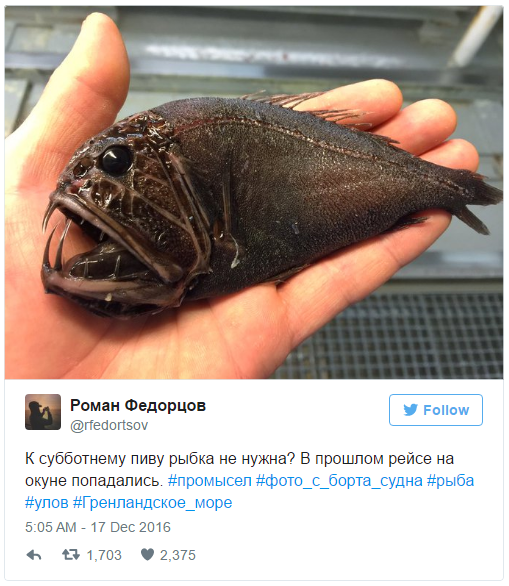
  • Roman Fedorsov, a Russian fisherman who posts all the weirdest bycatch from deep-sea trawls to his twitter account.

Jetsam (what we’re enjoying from around the web)

Read More “Monday Morning Salvage: January 9, 2017” »

Founder effects in a deep-sea invasive: Easter Limpets

Posted on January 1, 2016January 2, 2016 By Andrew Thaler
Uncategorized

On January 1, 2016, the Southern Fried Science central server began uploading blog posts apparently circa 2041. Due to a related corruption of the contemporary database, we are, at this time, unable to remove these Field Notes from the Future or prevent the uploading of additional posts. Please enjoy this glimpse into the ocean future while we attempt to rectify the situation.


Global Norming marches into the deep sea. We’ve been watching with concern the gradual shift towards the normalization of species distribution due to the widespread introduction of marine invasives. Thanks to a general lack human habitation on the seafloor, the deep sea has remained largely exempt from this phenomenon. It takes a lot of technanthropic migration to normalize an ecosystem.

In the past, scientists have observed small numbers of deep-sea species transported into new biogeographic regions on the backs of research submersibles and industrial equipment, hinting at the potential for deep-sea invasion. Thankfully proactive mitigation measures have mostly prevented large scale deep-sea invasions. Range expansion due to climate change is generally considered to be the greater threat to deep-sea ecosystem stability.

In a recent paper, Plough and friends (2040) identify a large-scale species invasion at hydrothermal vents in the Caribbean. Lepetodrilus johnsonii, a limpet species common at hydrothermal vents around the equatorial extent of the East Pacific Rise have established themselves at vent fields around the Mid-Cayman Spreading Center, just south of the Cayman Islands. As the Pacific and Caribbean are separated by continents, it is unlikely that this invasion happened without human assistance.

Using next-generation Yotta+ environmental holome sequencing, Plough and friends were able to trace the invasion to a relatively small founder population, at most 23 individuals, which we’re likely transported sometime in the last 6 years.

Read More “Founder effects in a deep-sea invasive: Easter Limpets” »

Fun Science FRIEDay – Evolution, what’s it good for?

Posted on February 20, 2015February 19, 2015 By Kersey Sturdivant
Science, Uncategorized

It is widely accepted that the world around us is changing, and as a result the organisms that exist adapt with that change or are resigned to the fossil record. Evolution, it’s a fact of life… or is it? UCLA paleobiologist J. William Schopf, and colleagues,  have discovered an organism that has remained relatively unchanged over a 2.3 billion year period. Meh, who needs evolution? These bacteria were discovered in the muddy sediments of the deep sea and represent the greatest lack of evolution ever seen!

1871 editorial cartoon depicting Charles Darwin as an ape. (Photo credit: Unknown artist in 1871 from The Hornet newspaper - no longer in publication)
1871 editorial cartoon depicting Charles Darwin as an ape. (Photo credit: Unknown artist in 1871 from The Hornet newspaper – no longer in publication)

Read More “Fun Science FRIEDay – Evolution, what’s it good for?” »

TGIF: 250+ videos from the deep sea for you to enjoy

Posted on October 4, 2013October 27, 2013 By Andrew Thaler

InDEEP and the Deep-Ocean Stewardship Initiative have compiled a massive database of more than 250 online videos featuring ecology, biology, oceanography, and conservation of the deep ocean: Deep-sea Online Videos. There’s a ton of videos in there to explore (especially if you find yourself with an abundance of shutdown related free time). Here’s just one … Read More “TGIF: 250+ videos from the deep sea for you to enjoy” »

Watch Blue Pints Episode 5: 2012 in review, what’s in store for 2013

Posted on January 4, 2013October 27, 2013 By Andrew Thaler
Uncategorized

httpv://www.youtube.com/watch?v=3vuOrHXkMuk&feature=plcp

Return of the Science of Aquaman: Welcome to the Trench

Posted on September 13, 2012September 14, 2012 By Andrew Thaler 2 Comments on Return of the Science of Aquaman: Welcome to the Trench
Popular Culture, Science

Seriously, is no one else bothered by the fact that his trident has five points? Aquaman: The Trench. From DC Comics.

After reducing Aquaman to a hypothermic, hyposmotic, constantly famished, case study in psychological trauma, I figure that I owe the king of Atlantis a second chance. After all, Aquaman was and still remains the most interesting hero in the DC universe. A generous fan sent me a copy of Aquaman Volume 1: The Trench, arguing that the New 52 version of everybody’s favorite aquatic hero is even more compelling than previous incarnations, with a stronger backstory, powers that make sense, and plenty of humor.

Last time I paid the hapless mariner a visit, many readers interpreted my incisive criticism of the science behind Aquaman as evidence that I had it out for our scale-clad hero. Since you all know that I’m going to take the misguided marine science in this volume to task, let’s start with all of the good stuff in this reimagination of DC’s oft-mocked champion.

The central conceit of New 52 Aquaman is that the comic book world has the same perception of Arthur Curry that we do–a hero with oddly specific and mostly useless powers that talks to fish. In addition, the citizens of the DC Universe believe that Atlantis is a fairy tale, so Aquaman’s kingly status is meaningless to the surface dwellers. The hybrid of a human father and Atlantean mother, Aquaman feels out of place in Atlantis and chooses to return to the surface with his wife, Mera. Comparing himself to his lighthouse-keeper father, he explains that even though he loves the sea, someone must protect the shore.

Read More “Return of the Science of Aquaman: Welcome to the Trench” »

Posts pagination

Previous 1 2 3 4 Next

Popular Posts

What Ocean Ramsey does is not shark science or conservation: some brief thoughts on "the Shark Whisperer" documentaryWhat Ocean Ramsey does is not shark science or conservation: some brief thoughts on "the Shark Whisperer" documentaryJuly 2, 2025David Shiffman
I can serve on your graduate thesis committee. Here’s what you can expect of me, and what I expect in return.I can serve on your graduate thesis committee. Here’s what you can expect of me, and what I expect in return.October 16, 2025David Shiffman
Build a dirt cheap, tough-as-nails field computer in a Pelican caseBuild a dirt cheap, tough-as-nails field computer in a Pelican caseJuly 21, 2015Andrew Thaler
Shark of Darkness: Wrath of Submarine is a fake documentaryShark of Darkness: Wrath of Submarine is a fake documentaryAugust 10, 2014Michelle Jewell
Blackfish: the Science Behind the MovieBlackfish: the Science Behind the MovieSeptember 18, 2013Chris Parsons
I turned my woodshop into a personal solar farm.I turned my woodshop into a personal solar farm.June 21, 2021Andrew Thaler
What can the funniest shark memes on the internetz teach us about ocean science and conservation?What can the funniest shark memes on the internetz teach us about ocean science and conservation?November 8, 2013David Shiffman
I spent 50 days working out in Virtual Reality and everything went better than expected.I spent 50 days working out in Virtual Reality and everything went better than expected.May 16, 2019Andrew Thaler
Norway and Cook Islands put their deep-sea mining plans on pause.Norway and Cook Islands put their deep-sea mining plans on pause.December 3, 2025Andrew Thaler
"Twitter sucks now and all the cool kids are moving to Bluesky:" Our new survey shows that scientists no longer find Twitter professionally useful or pleasant"Twitter sucks now and all the cool kids are moving to Bluesky:" Our new survey shows that scientists no longer find Twitter professionally useful or pleasantAugust 19, 2025David Shiffman
Subscribe to our RSS Feed for updates whenever new articles are published.

We recommend Feedly for RSS management. It's like Google Reader, except it still exists.

Southern Fried Science

  • Home
  • About SFS
  • Authors
  • Support SFS


If you enjoy Southern Fried Science, consider contributing to our Patreon campaign.

Copyright © 2025 Southern Fried Science.

Theme: Oceanly Premium by ScriptsTown