
Skip to content

Southern Fried Science

Over 15 years of ocean science and conservation online

  • Home
  • About SFS
  • Authors
  • Support SFS

Author: Andrew Thaler

Marine science and conservation. Deep-sea ecology. Population genetics. Underwater robots. Open-source instrumentation. The deep sea is Earth's last great wilderness.

One Mining Code to Rule Them All: The poison pill at the heart of the Deep-Sea Mining negotiations.

Posted on July 19, 2023January 4, 2024 By Andrew Thaler
One Mining Code to Rule Them All: The poison pill at the heart of the Deep-Sea Mining negotiations.
Featured, Science

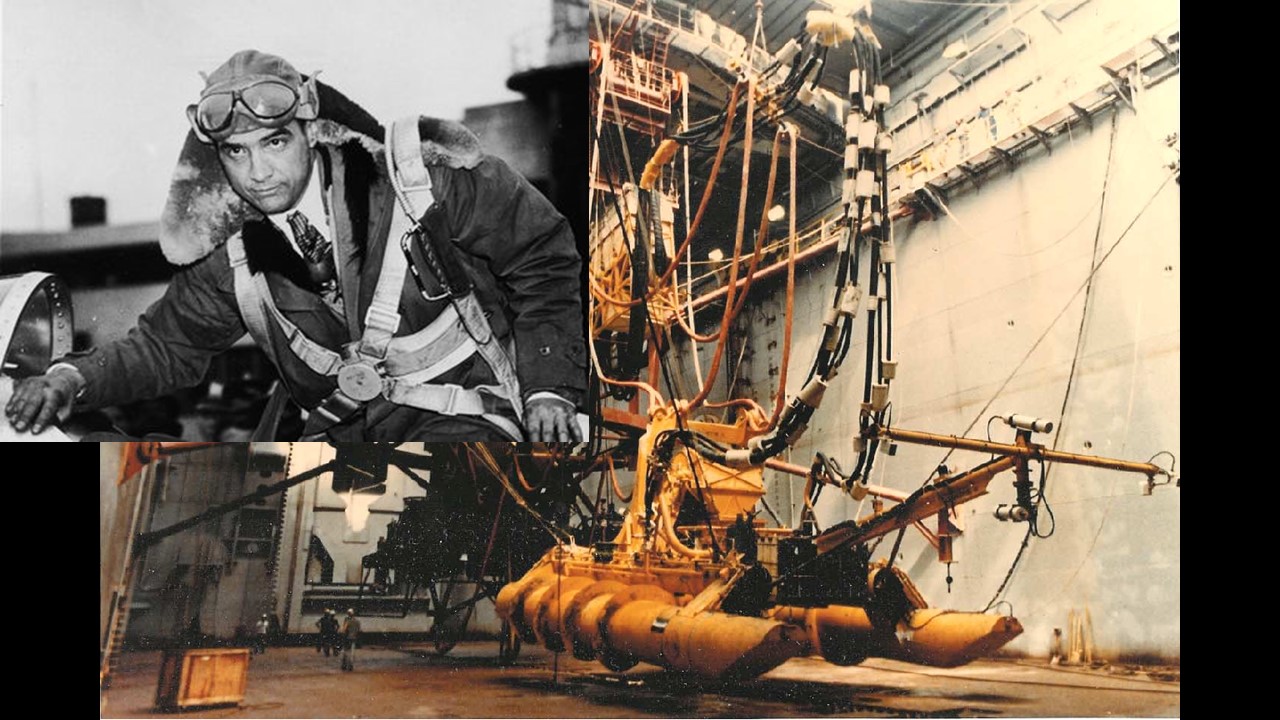
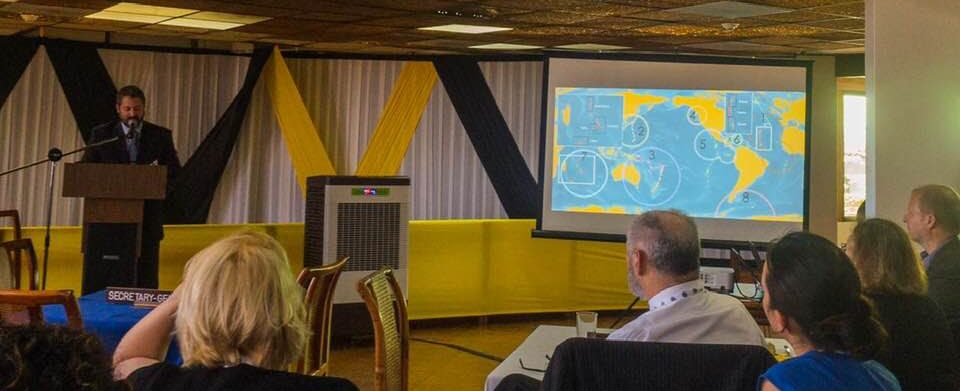
The International Seabed Authority is once again gathered in Kingston, Jamaica to continue negotiations on a set of rules and regulations to govern seafloor mining in the high seas, beyond any nation’s borders. At stake is access to vast fields of polymetallic nodules spread across the abyssal plains. These nodules are rich in nickel and … Read More “One Mining Code to Rule Them All: The poison pill at the heart of the Deep-Sea Mining negotiations.” »

A decade after #DrownYourTown, I’m still making sea level rise personal.

Posted on May 25, 2023 By Andrew Thaler
Climate change

Ten years ago, I launched a strange little project called Drown Your Town. The premise behind Drown Your Town was simple: I created a little macro in Google Maps that allowed you to superimpose a floodwater layer on top of 3D renders of communities. It was a quick and dirty way to demonstrate sea level rise in an era where those kinds of bespoke models were hard to generate. With #DrownYourTown, anyone, anywhere could simulate sea level rise in their own back yard.

It wasn’t originally going to be an outreach tool. I was writing a science fiction novel about life in a post-climate change world and needed an easy way to visualize places in the stories might look like. The book is still available, on Amazon, along with two other novellas that I wrote, though I warn you, none of them are very good (in my defense, it was the high water mark for self-publishing ebooks and I was still trying to figuring out what my post-academic career would be).

We pushed out the app, launched a successful tumblr page where folks could request sea level rise models, initiated what remains to this day my most successful Twitter campaign of all time, and spent the next year helping people visualize sea level rise in their communities.

We learned a lot about climate change outreach from DrownYourTown.

Read More “A decade after #DrownYourTown, I’m still making sea level rise personal.” »
Five Experiment ocean campaigns that need your support.

Posted on April 24, 2023 By Andrew Thaler
Academic life

Hi, it’s me, Andrew. And right now I’m crowdfunding an effort to develop an environmental baseline for microplastics in the deep sea using a historic sample archive. You can read more about it here: We need to know more about microplastics in the deep sea. What is Experiment? Experiment is a crowdfunding platform that connects … Read More “Five Experiment ocean campaigns that need your support.” »

No, the deep-sea mining debate is not “gone”

Posted on April 20, 2023 By Andrew Thaler 2 Comments on No, the deep-sea mining debate is not “gone”
No, the deep-sea mining debate is not “gone”
Science

Earlier this month, Mining.com published an article on the next steps in the development of deep-sea mining which featured a pretty surprising statement from the CEO of The Metals Company:

“People think we are debating if this (deep sea mining) should happen or not, and that’s gone. It’s happening.”

Gerard Barron/Mining.com

One of the interesting things about deep-sea mining is that most of the people involved in the industry are environmentally motivated: the folks leading the charge for deep-sea mining and the folks urging caution have much more shared environmental values than coverage of the deep-sea mining negotiations would suggest. Which is why this quote caught me off-guard. Though an unapologetic proponent for the potential of deep-sea mining, Barron is usually much more diplomatic in his media statements. To declare that the debate is done seems reckless.

The deep-sea mining debate is most certainly not “gone”. It is, at the moment, more fiercely discussed that at any previous point in the industry’s 50 year history. While mining contractors have overcome significant political and technological hurdles to reach a point where they are on the cusp of the first commercial trials, the call for a moratorium on the development of the industry has more support, both within the International Seabed Authority, and without, than ever before. The invocation of the 2-year-trigger in 2021 jumpstarted the debate and forced the ISA to meet a deadline for finalization of the Mining Code, the legal structure that will determine when and how mining will proceed in the high seas.

Read More “No, the deep-sea mining debate is not “gone”” »

We need to know more about microplastics in the deep sea.

Posted on March 28, 2023March 28, 2023 By Andrew Thaler
Science

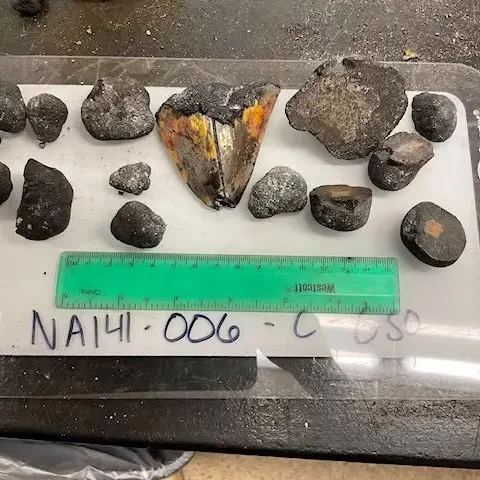
Establishing a baseline for microplastic accumulation in deep-sea animals using an historical sample archive: https://experiment.com/projects/establishing-a-baseline-for-microplastic-accumulation-in-deep-sea-animals-using-an-historical-sample-archive Most of the plastic that enters our oceans in unaccounted for. While large, charismatic macroplastics float on or just beneath the surface, making for dramatic scenes of vast swaths of garbage littering the sea, the bulk of the plastic in … Read More “We need to know more about microplastics in the deep sea.” »

A wild week for the future of the ocean

Posted on March 24, 2023 By Andrew Thaler
Uncategorized

Biden unveils an Ocean Climate Action Plan

President Biden unveiled the nation’s first climate action plan specifically targeting ocean health. The Ocean Climate Action Plan advance several key climate initiatives, including providing 40% of federal investment benefits relating to climate change to disadvantaged communities; producing 30 gigawatts of energy from offshore wind by 2030; conserving at least 30% of U.S. lands and waters by 2030; and achieving zero emissions from international shipping no later than 2050. It’s a huge step forward and possibly one of the most consequential pieces of ocean policy since the Guano Islands Act.

Biden also announced plans to expand the Pacific Remote Islands Marine Monument, this would dramatically increase the proportion of protected oceans in US waters and get us closer to the 30 by 30 goal. The call also includes potentially renaming the Monument and several of the islands to recognize the history and heritage of Pacific islanders rather than the legacy of imperialism and colonization.

No word yet on the expansion of the Marianas Trench Marine National Monument.

Read More “A wild week for the future of the ocean” »

What does the high seas biodiversity treaty means for the future of deep-sea mining?

Posted on March 17, 2023March 18, 2023 By Andrew Thaler
What does the high seas biodiversity treaty means for the future of deep-sea mining?
Uncategorized

This month, delegations from around the world agreed upon a treaty to protect biodiversity beyond national jurisdiction — ocean life beyond the limit of any country’s borders. The High Seas Treaty represents the culmination of over 2 decades of debate and negotiation. Once adopted, it establishes a framework for the protection and equitable sharing of marine genetic resources — animals and their DNA; promotes the implementation of marine protected areas in the high seas; and creates a scientific and technical body to review environmental impact assessments for ocean activities beyond borders.

While this treaty is a monumental achievement for protecting the common heritage of humankind, it still leaves several loopholes for ocean exploitation. Chief among them is the exemption of deep-sea mining from the final regulations.

Read More “What does the high seas biodiversity treaty means for the future of deep-sea mining?” »

Woodworking off the grid: upgrades to my DIY solar workshop

Posted on February 17, 2023January 8, 2024 By Andrew Thaler
Built to Last

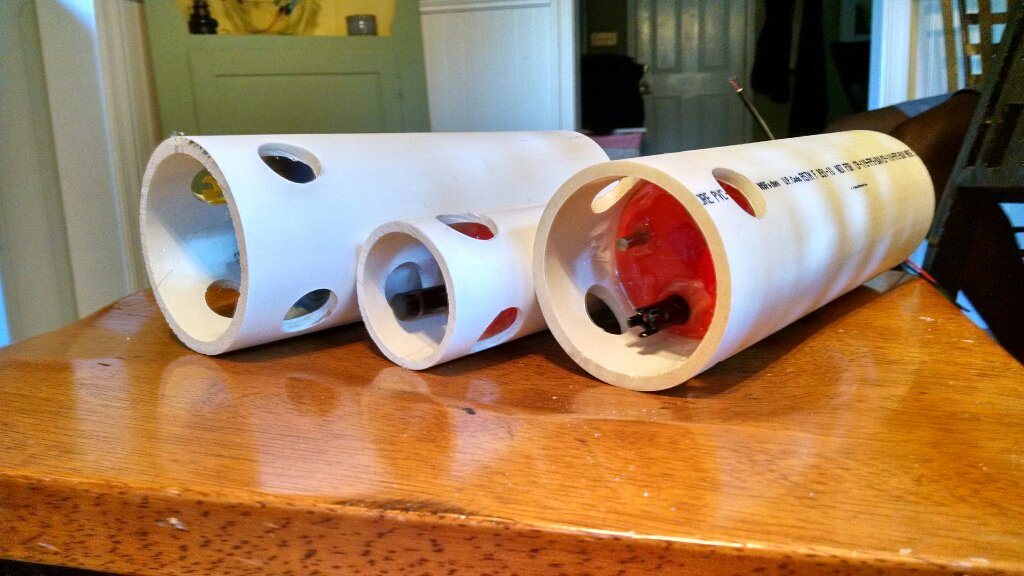
Two years ago, I set out on a little mission: to build an off-grid solar array that would power my woodshop. This array needed to charge all my cordless batteries, but also drive my table saw, miter saw, circular saw, and the big router on my slab flattening jig. But there was a catch. The entire system could cost no more than one American Recovery Act stimulus check. 

That first build can be found here: I turned my woodshop into a personal solar farm.

It worked. I beat the heck out of that set up and, other than in the dead of winter when it was too cold for the battery, it could handle most everything I threw at it, pretty well. It wasn’t perfect, and it had some issues with overdrawing, but the safety stops I put in place ensured that when I did push it too hard, it shut itself down rather than compromising components. There were limits, though, as I added bigger tools like a bench planer and started hogging through much tougher stock, I began to run into more and more issues. 

So here we are, 2 years later, with all the upgrades and modifications that I made to my off-grid workshop to keep things running hard. 

Read More “Woodworking off the grid: upgrades to my DIY solar workshop” »

The Last of Us zombie fungus has nothing on the brain-eating, sex-changing, Sacculina barnacle.

Posted on January 23, 2023January 24, 2023 By Andrew Thaler
The Last of Us zombie fungus has nothing on the brain-eating, sex-changing, Sacculina barnacle.
Science

In the Last of Us, the most gruesome live-action adaptation of a video game about people being turned into fungus since 1993’s Super Mario Bros, a mutated species of Cordyceps destroys society by converting humans into mindless, sporulating mushroom people.

Cordyceps, a fungus that most commonly parasitizes ants, is real. It really does hijack its host’s nervous system, alter its behavior, and turn it into a spore-producing zombie. The outcome is strangely beautiful.

Though the current darling of gritty, realistic, science-based zombie fiction, Cordyceps is such a lightweight in the world of brain-breaking parasites that tech bros brew it into their adaptogenic coffee.

If you want to meet a truly unsettling zombie-making parasite, allow me to introduce you to Sacculina.

Sacculina is a genus of barnacle that parasitizes crabs. While most parasitic barnacles are perfectly happy growing on the carapace of a crab, Sacculina takes this partnership to the extreme.

Female Sacculina larvae drift through the ocean, until they encounter a crab. The larva then settles on the crab and searches for a joint in the crab’s carapace. Once it finds a gap in the arthropod’s armor, it transforms into a kentrogon, a specialized phase of the barnacle life cycle that possess a stylet–an organic syringe-like structure–which allows Sacculina to inject itself into the crab, and not much else. At this point, the hard shell attached to the crab’s carapace falls off and the barnacle continues to grown within its host.

It gets so much weirder from here.

Read More “The Last of Us zombie fungus has nothing on the brain-eating, sex-changing, Sacculina barnacle.” »

It’s science fiction, until it isn’t.

Posted on January 17, 2023 By Andrew Thaler
It’s science fiction, until it isn’t.
Conservation

This piece originally appeared in the farewell issue of the Deep-sea Mining Observer.

Four years ago, I took over the Deep-sea Mining Observer from my predecessor, Arlo Hemphill. Conceived by the Pew Charitable Trust in 2016, The DSM Observer was created to be an online trade journal for the emerging industry as the International Seabed Authority navigated through the creation of an Exploitation Code for Seabed Minerals in the Area. Originally envisioned to run for two years, we continued to cover and report on critical developments into 2022.

After six years, the Deep-sea Mining Observer is coming to close.

During my tenure here, I tried to capture the full breadth of issues surrounding deep-sea mining. We covered the first species to be IUCN Red Listed due to the potential threat of mining. We examined the rise and fall of Nautilus Minerals. We reported the launch of the Patania II nodule collector test vehicle. We investigated how bioprospecting, often put forward as an industry in potential conflict with deep-sea mining, works in practice. We explored the complex political and geologic history of the Rio Grande Rise. We looked at how new technologies may change the financial landscape for seabed mining. We tracked a semi-mysterious cache of polymetallic nodules from the CCZ offered for sale. And we looked at how other industries intersect with deep-sea mining.

Read More “It’s science fiction, until it isn’t.” »

Posts pagination

Previous 1 … 11 12 13 … 149 Next

Popular Posts

What you read on Southern Fried Science in JanuaryWhat you read on Southern Fried Science in JanuaryJanuary 31, 2024Andrew Thaler
Welcome stumblers, reddit-ers, and neatorama readersMay 24, 2010Andrew Thaler
You probably don't want to work for me: What you read on Southern Fried Science in AprilYou probably don't want to work for me: What you read on Southern Fried Science in AprilApril 30, 2024Andrew Thaler
What Ocean Ramsey does is not shark science or conservation: some brief thoughts on "the Shark Whisperer" documentaryWhat Ocean Ramsey does is not shark science or conservation: some brief thoughts on "the Shark Whisperer" documentaryJuly 2, 2025David Shiffman
That's not a blobfish: Deep Sea Social Media is Flooded by AI SlopThat's not a blobfish: Deep Sea Social Media is Flooded by AI SlopDecember 19, 2025Andrew Thaler
What is a Sand Shark?What is a Sand Shark?November 12, 2017Chuck Bangley
Shark scientists want their research to help save threatened species, but don’t know how. Our new paper can help.Shark scientists want their research to help save threatened species, but don’t know how. Our new paper can help.December 1, 2025David Shiffman
Urea and Shark OsmoregulationUrea and Shark OsmoregulationNovember 15, 2010David Shiffman
Marine Biology Career AdviceMarine Biology Career AdviceMay 30, 2025David Shiffman
Need a #SharkWeek Alternative? Watch classic Cousteau documentaries with us for #JacquesWeekJuly 6, 2015Andrew Thaler
Subscribe to our RSS Feed for updates whenever new articles are published.

We recommend Feedly for RSS management. It's like Google Reader, except it still exists.

Southern Fried Science

  • Home
  • About SFS
  • Authors
  • Support SFS


If you enjoy Southern Fried Science, consider contributing to our Patreon campaign.

Copyright © 2026 Southern Fried Science.

Theme: Oceanly Premium by ScriptsTown