Skip to content

Southern Fried Science

Over 15 years of ocean science and conservation online

  • Home
  • About SFS
  • Authors
  • Support SFS

Author: Andrew Thaler

Marine science and conservation. Deep-sea ecology. Population genetics. Underwater robots. Open-source instrumentation. The deep sea is Earth's last great wilderness.

A selection of space nerdery from your favorite ocean blog.

Posted on March 25, 2016March 25, 2016 By Andrew Thaler
Blogging, Popular Culture

coverTitanThis Monday I launched A Crack in the Sky above Titan, a science fiction adventure framed around the seemingly simple question: What is it like to sail across the methane seas of Titan?

While Southern Fried Science is all about ocean science and conservation, we do make the occasional foray into space. From celestial navigation on Mars, do diving robots on Europa, to exploring other (fictional) worlds to learn something about our own, we haven’t shied away from the ‘other’ final frontier. So, in honor of A Crack in the Sky above Titan (available now on Amazon*) here is a selection of our favorite space nerdery from Southern Fried Science.

(Note: Some of these are from our month of ocean science fiction. While the framing for these pieces is fictional, the science itself is sound)

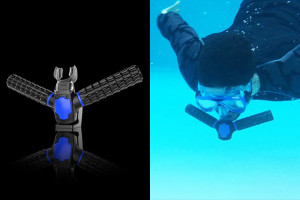
The Extraterrestrial Ocean: Could OpenROV Trident explore the seas of Europa?

Our planet is an ocean, and it is almost entirely unexplored. OpenROV, and their new Trident underwater drone is one of many tools that will help change that by democratizing exploration, conservation, and ocean science. We are poised atop the crest of a wave that may change how humans interact with the ocean as profoundly as the invention of the aqualung.

Earth is not the only body in our solar system that hosts an ocean. As we (slowly) venture out into the stars, could OpenROV Trident dive in extraterrestrial seas?

Read More “A selection of space nerdery from your favorite ocean blog.” »

On Naming Boats, or why we love Boaty McBoatface.

Posted on March 23, 2016March 23, 2016 By Andrew Thaler 1 Comment on On Naming Boats, or why we love Boaty McBoatface.
Uncategorized

My first personal research vessel, a 20′ runabout with a huge staging area, was name ‘Black Smoker‘. It was an homage to the hydrothermal vents I study (via a much larger vessel), but also a reference to the nasty old Force 125 outboard, that burned oil like it had just driven the Seleucid Empire from the Temple Mount. My second boat, was small, but lighter, faster, and much more aggressive. I sailed it in some seriously marginal seas. I named it ‘Iffy’.

The French named two different research vessels ‘Pourquoi Pas?’ (literally “Why not?”) which, in addition to being hilarious, is also the answer to the question: Why did you name your ship Pourquoi Pas? The University of Wisconsin-Madison has been studying  Lake Mendota for over 6 years via the research platform ‘David Buoy’. And though the Celtic Explorer was given a strong and noble name, an engine incident on one fateful cruise led many in the Irish research community to informally rechristen it the Celtic Exploder (true story: I once reviewed a proposal that referred to it as the Exploder, throughout).

Giving a research vessel a silly name is a deep and abiding tradition within the marine research community. And, frankly, even if a vessel has a Very Serious Name (TM), the crew is still going to call it something else.

I think Boaty McBoatface is a perfectly good name for a ship, and I agree with Craig McClain that it is a great science outreach opportunity. Did you know the U launched Sikuliag last year? Or that the British christened the Discovery in 2013? No? Well I bet you know about Boaty McBoatface. 

Read More “On Naming Boats, or why we love Boaty McBoatface.” »

What is it like to sail across Titan’s methane seas?

Posted on March 21, 2016March 20, 2016 By Andrew Thaler
Blogging, Popular Culture

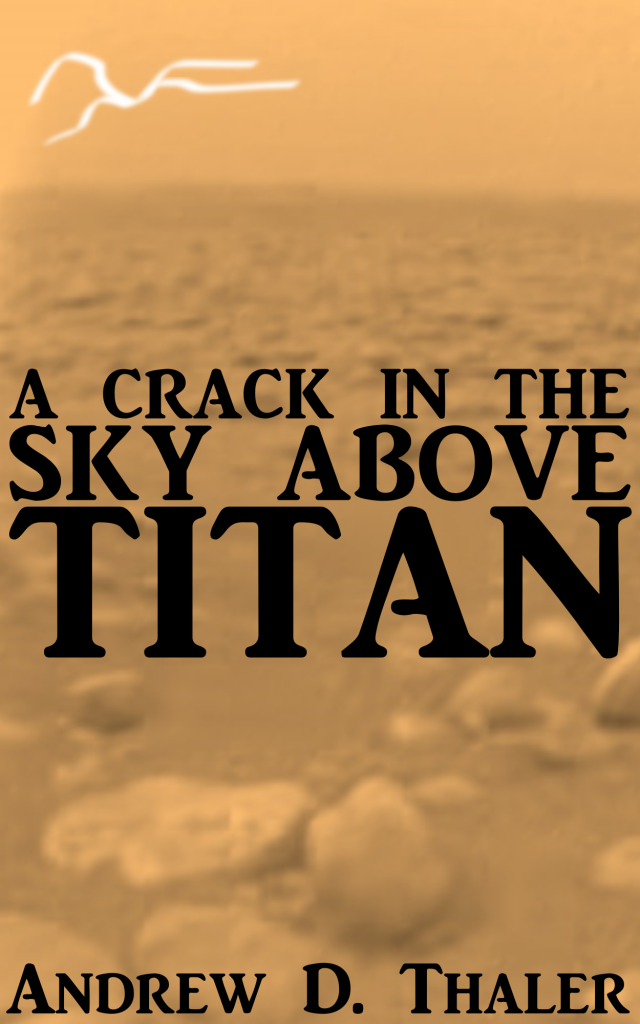
coverTitanA simple writing prompt–what would it be like to sail across Titan?–has taken me on a 20,000-word journey through the intricacies of life on Saturn’s largest moon. Join the Salvager on a journey across Kraken Mare to land the score of a lifetime, if the rest of the universe doesn’t get in their way. Discover the weird, wonderful world of Titan and her coastal colonies and confront the challenges of sailing across an alien world.
A Crack in the Sky above Titan takes a lot of the ideas developed during Field Notes from the Future and extends them out into the extremely distant future. At what point do humans, heavily augmented with hardware and software, stop being human? What rights are retained when a person contains no human parts? How does art evolve in a future obsessed with technology? And how exactly do you sail via celestial navigation with no polar star and an atmosphere of dense haze.

In honor of this new launch, my other novella, Prepared, an adventure in doomsday prepping, seasteading, and catastrophic sea level rise, is free to download all week long.

A Crack in the Sky above Titan.


Read an excerpt from my latest novella, below:

Read More “What is it like to sail across Titan’s methane seas?” »

A comprehensive list of statements made about the ocean by candidates during the 2016 election season.

Posted on March 17, 2016 By Andrew Thaler
Uncategorized

1. “I was once bitten by an octopus at the beach and got terribly ill. (Yes, apparently octopuses can be poisonous.)” Senator Ted Cruz

This Paper Should Not Have Been Retracted: #HandofGod highlights the worst aspects of science twitter

Posted on March 5, 2016March 5, 2016 By Andrew Thaler 6 Comments on This Paper Should Not Have Been Retracted: #HandofGod highlights the worst aspects of science twitter
Academic life

I really didn’t want to care about this paper, at all.

When news broke Wednesday afternoon that a paper in PLOS One referenced the “Creator” in the abstract, introduction, and discussion, I took a look, read through the methodology and results, asked a few colleagues in that field if there were any methodological problems that would indicate that the actual science was unsound, and concluded it was… fine. Not phenomenal, earth-shattering, or paradigm shifting, but methodologically sound.

Incidentally, publishing based on the soundness of the methodology rather than the ground-breakingness of the research, is one of PLOS ONE’s mandates.

But the paper was awkwardly framed around a few phrases referencing the role of the Creator. This framework didn’t bleed into the methods or results but it was there, and the scientific community noticed. I noted, under the assumption that the authors were inserting creationist language into their paper, that there are numerous papers that try to hang their studies on tenuous frameworks and draw not entirely supportable conclusions, and not just in PLOS. Then I chatted with a few colleagues about it and called it a day.

Here’s the weird thing about Twitter: sometimes even your apathy is newsworthy.

Read More “This Paper Should Not Have Been Retracted: #HandofGod highlights the worst aspects of science twitter” »

A year of 3D printing in the home: does it live up to the hype?

Posted on March 2, 2016March 18, 2016 By Andrew Thaler
Blogging

3D Printing. No new technology in the last decade has been heralded with as much hope and hyperbole as the promise of desktop replicators fabricating whatever object you need at the push of a button. 3D printing has made huge steps forward, with more sophisticated machines at lower prices, new materials that vastly expand the printer’s capabilities, and the breathless optimism that foresees a printer in every home, as mundane and easy to operate as a conventional printer*.

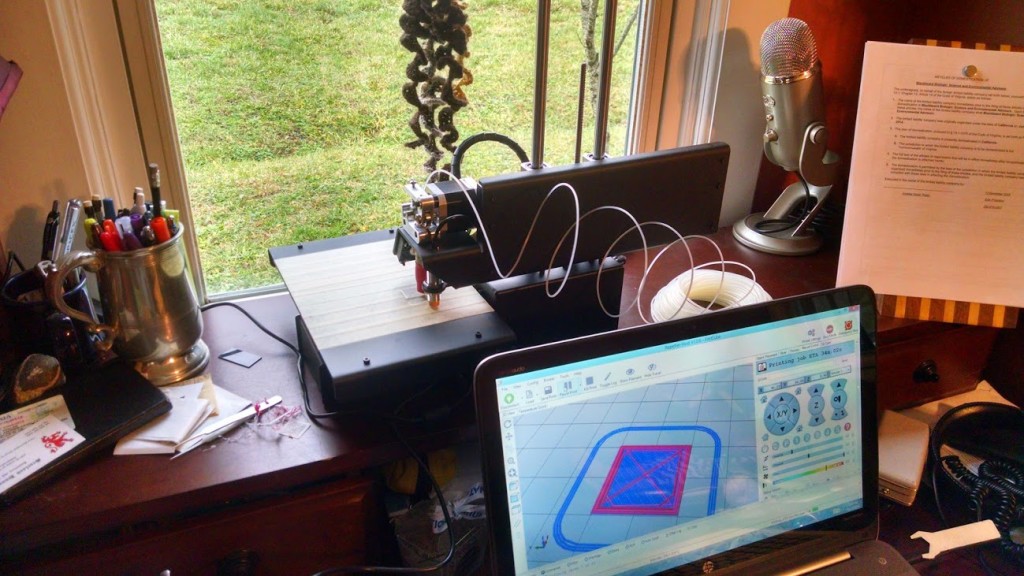
A Printrbot in the home.

And yet, for all the hype, most personal 3D printers are pressed into service fabricating plastic tschotskes — low quality, low function items of little to no utility. While the raw potential of 3D printing continues to expand, the promise of personal printers seems mired in the sandbox: an expensive toy for grownups. A toy that produces heaps of plastic detritus that will eventually find it’s way into the environment.

I posit here that, while it is true the the vast majority of people currently have no practical need for a 3D printer, under the right circumstances, a personal 3D printer can be an incredibly useful tool in the modern home.

A little over a year ago, we bought a personal 3D printer. It’s a Printrbot Simple Metal, a tough, no nonsense machine that works as well in my home office as it does at sea. Its footprint is small, and it can handle object up to 150 mm by 150 mm by 150 mm. Not huge, but big enough to be useful. And yes, this printer has primarily been used to fabricate parts for Oceanography for Everyone and other scientific endeavors. You can read more about that here: A 3D-printable, drone and ROV-mountable, water sampler and Oceanography for Everyone: Empowering researchers, educators, and citizen scientists through open-source hardware. I’m not talking about the scientific utility of the printer, but rather, how it fits into our homestead.

Read More “A year of 3D printing in the home: does it live up to the hype?” »

What the Farm?! Six months of farming podcasts

Posted on February 27, 2016 By Andrew Thaler
Conservation

Six months ago, my buddy Andrew Middleton and I launched What the Farm?! a podcast about small scale farming, by two people at the very beginning of their exploration in self-sufficiency. Small-scale and backyard farming has been one of the subtle themes of Southern Fried Science for years. While on the surface it may seem like practical farming articles have nothing to do with marine science and conservation, the reality is that how we produce food is inextricably linked to the future of our oceans.

As environmentalists, becoming self-sufficient on our own land, with both meat and produce that we have complete control over the chain of custody, from dirt to dishwasher is the ultimate expression of walking the walk. We’re not there yet, but through What the Farm?! we invite you to follow us on our journey.

Read More “What the Farm?! Six months of farming podcasts” »

Pushing back against technological puritanism in ocean conservation.

Posted on February 22, 2016February 22, 2016 By Andrew Thaler
Conservation

By now, you’ve almost certainly seen this photograph, making the viral rounds, of a Franciscana dolphin in South America, attached to headlines like the following: Endangered baby dolphin dies after swimmers pass it around for selfies, A Baby Dolphin Died Because Tourists Wanted Selfies With Her, A selfie mob in Argentina may have killed a dolphin.

seflie

I hate these news stories, but not for the reasons you might think.

These stories represent a kind of technological puritanism in ocean outreach, where we draw weirdly unfounded conclusions about the way humans relate to their tools to somehow absolve us of social responsibility. It’s not people mistreating a dolphin, it’s a selfie-crazed mob. We chuckle and move on, because we don’t take aggressive selfies. We’re better than that.

This is not correct.

Read More “Pushing back against technological puritanism in ocean conservation.” »

Six ways the new Old Spice ad violates the Marine Mammal Protection Act

Posted on February 15, 2016February 16, 2016 By Andrew Thaler 9 Comments on Six ways the new Old Spice ad violates the Marine Mammal Protection Act
Education

This is art. Maybe. Probably. Old Spice has taken it upon themselves to ask the all-important question: How many different violations of the Marine Mammal Protection act can we demonstrate in a single minute and fifteen second commercial? As it turns out, quite a few.

https://www.youtube.com/watch?v=5hteeecX1oQ

The Marine Mammal Protection Act expressly forbids the “taking” of marine mammals, a “take” being defined as:

“To harass, hunt, capture, collect, or kill, or attempt to harass, hunt, capture, collect, or kill any marine mammal. This includes, without limitation, any of the following:

  • the collection of dead animals, or parts thereof
  • the restraint or detention of a marine mammal, no matter how temporary
  • tagging a marine mammal
  • the negligent or intentional operation of an aircraft or vessel
  • the doing of any other negligent or intentional act which results in disturbing or molesting a marine mammal
  • feeding or attempting to feed a marine mammal in the wild.” 

Source.

Broadly, this include any actions that may interfere with a marine mammal’s behavior or cause it undue stress. Fines can be… severe.

Read More “Six ways the new Old Spice ad violates the Marine Mammal Protection Act” »

How I prepare a peer review

Posted on February 11, 2016February 10, 2016 By Andrew Thaler
Academic life

Over the last couple of months the question of how to write a peer review came up quite a few times, and a couple of my colleagues even asked me directly to help them prepare for their first  peer reviews. Preparing solid, critical peer review is an essential component of being a good citizen in the scientific community. I generally do about two for every paper I submit. I thought it might be helpful to provide a brief overview of how I personally prepare a peer review, primarily for marine science and conservation journals geared towards population genetic studies. I’d like to think that this advice is broadly applicable to any scientific peer review.

Step 1.  Read the paper. It might seem silly to start with this but a lot of people dive into their peer reviews before they’ve even read the submitted paper in its entirety. You start thinking about how you’ll review it as soon as you get a request from the editor with the title and authors. When you get a paper to review, you immediately start reading it with a critical eye. Think about when you  read a paper for pleasure or because you are interested in the content. You’re generally not looking for the fine details or nitpicking word choice, you’re looking for the ideas in the paper. You’re trying to understand what the paper is about and you’re trying to understand what the authors concluded with paper. So before you even begin with your peer review just read the paper as if it were any of a dozen other scientific papers that slide across your desk every week..

Step 2. Write down what you think the paper is about. Do this in broad terms, not so much focused on the methodology but rather the ideas behind the methodology, the motivation for the study, the questions the authors want to answer. Use this as a framework to hang the rest of your review on because you’re not just looking for technical precision but to make sure that the study itself is relevant to the broader themes of the paper.

Read More “How I prepare a peer review” »

Posts pagination

Previous 1 … 43 44 45 … 149 Next

Popular Posts

The story of the pride flag made from NASA imagery: Bluesky's most-liked imageThe story of the pride flag made from NASA imagery: Bluesky's most-liked imageSeptember 27, 2024David Shiffman
"Why Sustainable Seafood Matters" is now available for preorder! Here's what it's about, and why I decided to write it."Why Sustainable Seafood Matters" is now available for preorder! Here's what it's about, and why I decided to write it.June 8, 2026David Shiffman
Tackling the least important debate in deep-sea mining: the desultory hyphenTackling the least important debate in deep-sea mining: the desultory hyphenJune 8, 2026Andrew Thaler
What Ocean Ramsey does is not shark science or conservation: some brief thoughts on "the Shark Whisperer" documentaryWhat Ocean Ramsey does is not shark science or conservation: some brief thoughts on "the Shark Whisperer" documentaryJuly 2, 2025David Shiffman
Deep-sea Mining, Domestic Cats, Star Trek, and Ocean Exploration: Andrew's mid-year podcast round-up.Deep-sea Mining, Domestic Cats, Star Trek, and Ocean Exploration: Andrew's mid-year podcast round-up.June 6, 2026Andrew Thaler
Shark of Darkness: Wrath of Submarine is a fake documentaryShark of Darkness: Wrath of Submarine is a fake documentaryAugust 10, 2014Michelle Jewell
The evolution of the International Whaling Commission – from  whaling quotas to whale conservationThe evolution of the International Whaling Commission – from  whaling quotas to whale conservationJune 10, 2026Chris Parsons
Isn’t ironic, don’t you think: dismantling the Ocean Observatories Initiative on World Oceans DayIsn’t ironic, don’t you think: dismantling the Ocean Observatories Initiative on World Oceans DayJune 9, 2026Southern Fried Science
What is a Sand Shark?What is a Sand Shark?November 12, 2017Chuck Bangley
That's not a blobfish: Deep Sea Social Media is Flooded by AI SlopThat's not a blobfish: Deep Sea Social Media is Flooded by AI SlopDecember 19, 2025Andrew Thaler
Subscribe to our RSS Feed for updates whenever new articles are published.

We recommend Feedly for RSS management. It's like Google Reader, except it still exists.

Southern Fried Science

  • Home
  • About SFS
  • Authors
  • Support SFS


If you enjoy Southern Fried Science, consider contributing to our Patreon campaign.

Copyright © 2026 Southern Fried Science.

Theme: Oceanly Premium by ScriptsTown