Skip to content

Southern Fried Science

Over 15 years of ocean science and conservation online

  • Home
  • About SFS
  • Authors
  • Support SFS

Author: Andrew Thaler

Marine science and conservation. Deep-sea ecology. Population genetics. Underwater robots. Open-source instrumentation. The deep sea is Earth's last great wilderness.

Six ways the new Old Spice ad violates the Marine Mammal Protection Act

Posted on February 15, 2016February 16, 2016 By Andrew Thaler 9 Comments on Six ways the new Old Spice ad violates the Marine Mammal Protection Act
Education

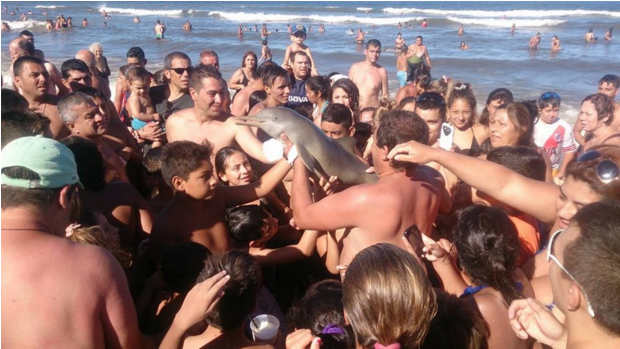
This is art. Maybe. Probably. Old Spice has taken it upon themselves to ask the all-important question: How many different violations of the Marine Mammal Protection act can we demonstrate in a single minute and fifteen second commercial? As it turns out, quite a few.

https://www.youtube.com/watch?v=5hteeecX1oQ

The Marine Mammal Protection Act expressly forbids the “taking” of marine mammals, a “take” being defined as:

“To harass, hunt, capture, collect, or kill, or attempt to harass, hunt, capture, collect, or kill any marine mammal. This includes, without limitation, any of the following:

  • the collection of dead animals, or parts thereof
  • the restraint or detention of a marine mammal, no matter how temporary
  • tagging a marine mammal
  • the negligent or intentional operation of an aircraft or vessel
  • the doing of any other negligent or intentional act which results in disturbing or molesting a marine mammal
  • feeding or attempting to feed a marine mammal in the wild.” 

Source.

Broadly, this include any actions that may interfere with a marine mammal’s behavior or cause it undue stress. Fines can be… severe.

Read More “Six ways the new Old Spice ad violates the Marine Mammal Protection Act” »

How I prepare a peer review

Posted on February 11, 2016February 10, 2016 By Andrew Thaler
Academic life

Over the last couple of months the question of how to write a peer review came up quite a few times, and a couple of my colleagues even asked me directly to help them prepare for their first  peer reviews. Preparing solid, critical peer review is an essential component of being a good citizen in the scientific community. I generally do about two for every paper I submit. I thought it might be helpful to provide a brief overview of how I personally prepare a peer review, primarily for marine science and conservation journals geared towards population genetic studies. I’d like to think that this advice is broadly applicable to any scientific peer review.

Step 1.  Read the paper. It might seem silly to start with this but a lot of people dive into their peer reviews before they’ve even read the submitted paper in its entirety. You start thinking about how you’ll review it as soon as you get a request from the editor with the title and authors. When you get a paper to review, you immediately start reading it with a critical eye. Think about when you  read a paper for pleasure or because you are interested in the content. You’re generally not looking for the fine details or nitpicking word choice, you’re looking for the ideas in the paper. You’re trying to understand what the paper is about and you’re trying to understand what the authors concluded with paper. So before you even begin with your peer review just read the paper as if it were any of a dozen other scientific papers that slide across your desk every week..

Step 2. Write down what you think the paper is about. Do this in broad terms, not so much focused on the methodology but rather the ideas behind the methodology, the motivation for the study, the questions the authors want to answer. Use this as a framework to hang the rest of your review on because you’re not just looking for technical precision but to make sure that the study itself is relevant to the broader themes of the paper.

Read More “How I prepare a peer review” »

Ocean Kickstarter of the Month: Whale Science Double Feature

Posted on February 10, 2016 By Andrew Thaler
Science

whale1Comprehensive Conservation of Southern Resident Killer Whales in the Modern Ocean
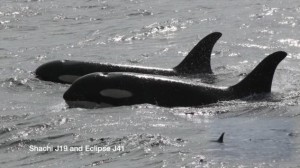
Southern Resident Killer Whales are endangered; only 85 remain. In today’s modern ocean they face many threats simultaneously. A holistic approach to addressing the cumulative impacts of all threats is needed. However, data are sparse, making it difficult to identify which threat(s) is causing the most harm. We are developing a new, comprehensive way to assess threats by having experts fill data gaps. With your help, we can pinpoint which protective actions will help Southern Residents recover.

blowWhale snot and blubber: Tools used to better understand basic physiology in free ranging cetaceans

Baseline indices for steroid hormone levels in humpback whales do not exist, and current monitoring techniques are invasive. Hormones can advise in management, and help in understanding climate change related population shifts. We want to test if whale snot is reliable in collecting sufficient data without disturbing them. By analyzing hormone levels in both blubber and snot, we can establish hormone level baselines from blubber, and see whether less invasive snot-collecting is just as telling.

We haven’t featured Experiment yet in this Ocean Kickstarter series. Experiment is a crowdfunding platform exclusively for scientific research. It helps practicing scientists connect with a community funding base. Because of its narrow focus, Experiment is a little bit different. There are no rewards, instead you get access to updates about the project as it progresses. There is an elevated focus on budget, and, because it’s more akin to a philanthropic donation, rather than an investment, there is often fund-matching from NGOs and larger foundations.

Since last month’s recommendation won’t launch for another 25 years, this month I’ve picked two excellent projects to support. 

Read More “Ocean Kickstarter of the Month: Whale Science Double Feature” »

Playing against the slaughter rule

Posted on February 8, 2016August 11, 2016 By Andrew Thaler 1 Comment on Playing against the slaughter rule
Blogging

My middle school baseball team was bad. Really bad. Ball droppingly, bat throwingly, pitch ditchingly bad. It was a good inning if four of our batters made it to the plate. A great inning if the other team didn’t rotate through it’s entire line-up, twice. Our MVP was the kid who caught a ball. And if you think this is going to be one of those articles about how one tough player (me?) turned a bunch of scrappy underdogs into winners, it is not. I played right field, and not particularly well. We lost, often.

In peewee sports, at least in the US, there’s something called a “slaughter rule”. The slaughter rule ends the game if a team is losing by more than a certain number of points. In our case, it took something like a 20 run difference to trigger a slaughter. The slaughter rule exists so that outmatched teams don’t have to slog through 7 innings of a brutal losing streak, racking up demoralizing 112 to zero defeats. Once, we got slaughtered in the first inning.

Were it not for the slaughter rule, I would probably still be out somewhere in right field, wondering if maybe I should sign up for the Latin team next year.

Read More “Playing against the slaughter rule” »

On spending a month publishing science fiction from our Ocean Future.

Posted on February 2, 2016February 2, 2016 By Andrew Thaler 1 Comment on On spending a month publishing science fiction from our Ocean Future.
Blogging

January 2016 was different.

We blocked off an entire month, primed it with some of the best speculative fiction from our ocean’s future, wrapped it in a narrative to connect seemingly disparate topics, and launched Field Notes from the Future, 41 blog post imagining the issues we would face in 2041, 25 years in the future. This was the first time in the blog’s almost 8-year run that we dedicated an entire month to a single concept. It was also the first time that the authors collaborated and coordinated our content.

I am incredibly happy with the results. Field Notes from the Future gave us a chance to flex our creative muscles in new and exciting ways. It gave us an outlet to express our hopes and fears, to expand on our concerns, and to look beyond the horizon and imagine the conflicts that have yet to emerge.

Science and Science Fiction have always been deeply connected. For all the great work of the “heroes of science communication”, the STEM-advocates, the science outreach professionals, it was Clarke, Verne, Shelley, Wells, and Le Guin who inspired me to pursue a career in science. Science shows us the world as it is, Science Fiction imagines the world as it could be.

Read More “On spending a month publishing science fiction from our Ocean Future.” »

The final server update: All systems normal.

Posted on January 31, 2016January 26, 2016 By Andrew Thaler
Uncategorized

He showed me exactly what we needed to see. He? I, me, we. The me that is yet to be. The Nautilus is not of the future. Only data flow backwards. That much, I understand. At least I think I understand. He that is, well, me, eventually, understood. Will understand. The message was a code. … Read More “The final server update: All systems normal.” »

Happy New Years, old me

Posted on January 30, 2016January 26, 2016 By Andrew Thaler
Uncategorized

I really hope this old twitter embed code works, otherwise this whole thing is going to fall apart. Hey Dr. Thaler circa 2016, did you get my package? Check the infill. On January 1, 2016, the Southern Fried Science central server began uploading blog posts apparently circa 2041. Due to a related corruption of the … Read More “Happy New Years, old me” »

How to fight invasive software: the cure to the cyborg crisis.

Posted on January 29, 2016January 26, 2016 By Andrew Thaler
Uncategorized

On January 1, 2016, the Southern Fried Science central server began uploading blog posts apparently circa 2041. Due to a related corruption of the contemporary database, we are, at this time, unable to remove these Field Notes from the Future or prevent the uploading of additional posts. Please enjoy this glimpse into the ocean future while we attempt to rectify the situation.


It came from the deep.

The heart of Zero Cloner is a snippet of cunningly concealed genetic code isolated from shrimp on the Mid-Cayman Spreading Center, retro-edited to create an easy to edit gene region to which other Cloner derivatives can latch.  Zero Cloner pave the way for Omega Cloner. Omega Cloner spread across the world, locking augmented humans out of society. The Standard Deviants launched a series of attacks early Monday morning, destroying essential digital architecture needed to maintain a fully integrated world.

Entire nations are grinding to a halt. We needed a cure, and we needed it fast.

It also came from the deep. 

Read More “How to fight invasive software: the cure to the cyborg crisis.” »

Technocracy and the Sea

Posted on January 28, 2016 By Andrew Thaler 1 Comment on Technocracy and the Sea
Uncategorized

On January 1, 2016, the Southern Fried Science central server began uploading blog posts apparently circa 2041. Due to a related corruption of the contemporary database, we are, at this time, unable to remove these Field Notes from the Future or prevent the uploading of additional posts. Please enjoy this glimpse into the ocean future while we attempt to rectify the situation.


“The sea is big. The sea is cruel. She takes more than she gives. That’s how it’s always been.”

This line from my long forgotten first science fiction novel still resonates with me. The ocean is a tough place. No matter how good we get at working at sea, the sea always finds new and creative ways to totally undermine our endeavors.

The last quarter century has seen a tremendous rise in our collective faith in technology’s power to save us. When hundreds of thousands were dying on the roads, we made car that drove themselves, reducing traffic fatalities by several orders of magnitude. After the last great recession, we created new digital currencies to protect our savings from market forces. When we could no longer afford to burn coal and oil, we finally built an alternative energy infrastructure.

When firearm deaths and mass shootings were out of control, we built “safe” guns with sophisticated biometric locks, and developed clothing and shields to reduce fatalities. These measures had almost no effect, but we continue to throw technology at the problem.

That is the problem with technocracy. 

Read More “Technocracy and the Sea” »

Welcome to the Future: Three Rules for Artificially Intelligent Underwater Robots.

Posted on January 27, 2016January 28, 2016 By Andrew Thaler
Uncategorized

On January 1, 2016, the Southern Fried Science central server began uploading blog posts apparently circa 2041. Due to a related corruption of the contemporary database, we are, at this time, unable to remove these Field Notes from the Future or prevent the uploading of additional posts. Please enjoy this glimpse into the ocean future while we attempt to rectify the situation.


Underwater robotics has come a long way since I started working on it in the early ‘noughts. From the massive industrial beasts of the old guard to the small, sleak, eminently hackable sprite of the Connected Exploration movement to this new crop of fully autonomous, decision-making and directive setting AI-powered drones of the last few years, everything keeps getting smaller, cheaper, and more capable. It’s a great decade to be exploring the deep.

Last month, we deployed our first swarm of artificially intelligent deep diving robots designed to patrol the abyssal plane, identify regions of unique biodiversity, and recommend critical ecosystems for international protection in advance of biomining operations. What’s unique about this project is that we’ve assigned all decision-making authority directly to the swarm. They get to decide where in the world they go and how and when they sample. This came after years of debate and negotiation with stakeholders from science, conservation, and industry, and has been accepted through international agreement as the most unbiased and equitable solution to the challenge of getting groups with vastly different goals to agree upon dividing up the deep.

Read More “Welcome to the Future: Three Rules for Artificially Intelligent Underwater Robots.” »

Posts pagination

Previous 1 … 44 45 46 … 149 Next

Popular Posts

What Ocean Ramsey does is not shark science or conservation: some brief thoughts on "the Shark Whisperer" documentaryWhat Ocean Ramsey does is not shark science or conservation: some brief thoughts on "the Shark Whisperer" documentaryJuly 2, 2025David Shiffman
What is a Sand Shark?What is a Sand Shark?November 12, 2017Chuck Bangley
Zombie ideas in conservation: trophy hunting and conservationZombie ideas in conservation: trophy hunting and conservationAugust 6, 2026Ali Gaster
Jumping the shark: New study reviews the breaching behavior of sharks and raysJumping the shark: New study reviews the breaching behavior of sharks and raysSeptember 19, 2024David Shiffman
Shark of Darkness: Wrath of Submarine is a fake documentaryShark of Darkness: Wrath of Submarine is a fake documentaryAugust 10, 2014Michelle Jewell
That's not a blobfish: Deep Sea Social Media is Flooded by AI SlopThat's not a blobfish: Deep Sea Social Media is Flooded by AI SlopDecember 19, 2025Andrew Thaler
Please Help This Little Dumbo Octopus Travel Across AmericaPlease Help This Little Dumbo Octopus Travel Across AmericaAugust 3, 2026Angelo Villagomez
Is Academic Publishing is breaking conservation science?Is Academic Publishing is breaking conservation science?August 10, 2026Chris Parsons
Considering writing a popular science book? Here's my adviceConsidering writing a popular science book? Here's my adviceJuly 7, 2025David Shiffman
Fun facts and FAQs about Megalodon, Maryland's new (and definitely extinct) official state sharkFun facts and FAQs about Megalodon, Maryland's new (and definitely extinct) official state sharkApril 15, 2026David Shiffman
Subscribe to our RSS Feed for updates whenever new articles are published.

We recommend Feedly for RSS management. It's like Google Reader, except it still exists.

Southern Fried Science

  • Home
  • About SFS
  • Authors
  • Support SFS


If you enjoy Southern Fried Science, consider contributing to our Patreon campaign.

Copyright © 2026 Southern Fried Science.

Theme: Oceanly Premium by ScriptsTown