Skip to content

Southern Fried Science

Over 15 years of ocean science and conservation online

  • Home
  • About SFS
  • Authors
  • Support SFS

Author: Andrew Thaler

Marine science and conservation. Deep-sea ecology. Population genetics. Underwater robots. Open-source instrumentation. The deep sea is Earth's last great wilderness.

A huge thank you to all who helped make “Buy David Shiffman less ugly sunglasses” a success

Posted on May 6, 2015 By Andrew Thaler
Blogging

Last month we crowdfunded an initiative to buy everyone’s favorite shark conservation superstar a new, less ugly pair of sunglasses. We blew our initial goal out of the water, raising nearly $2500 from almost 100 people. Amazing! Rewards are going out over the next few weeks (I’m mailing all the big teeth today. The smaller … Read More “A huge thank you to all who helped make “Buy David Shiffman less ugly sunglasses” a success” »

From Sea and Sky: Hacking the Chesapeake with #BayBots

Posted on April 27, 2015April 29, 2015 By Andrew Thaler
Conservation, Science

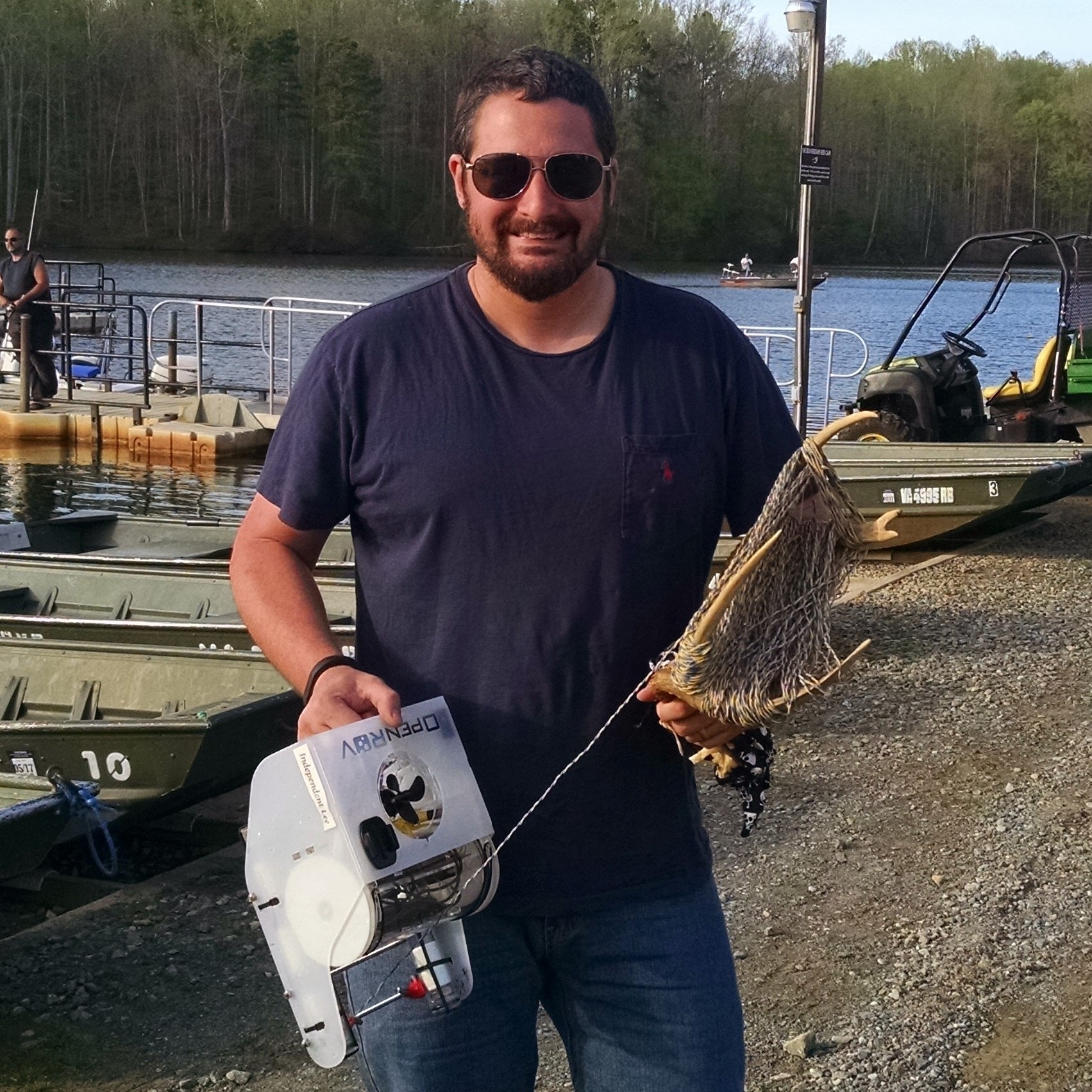
IMG_20150417_180905259 (2)Two years ago, I moved to San Francisco. It was… an experience. I had the opportunity to meet some incredible technologists, leaders in the emerging world of citizen exploration, and developers, coders, and makers using their skills and expertise to help save the environment. I met some amazing drone builders developing platforms and tools to measure the world. I also learned that West Coast living was not for me. The southern Atlantic coast called me back. But before I left, I led a small team across the Pacific to Papua New Guinea, where we taught undergraduates from the University of Papua New Guinea and the University of the South Pacific how to build and operate OpenROVs and incorporate them into marine ecology research.

The West Coast was good to me. It helped refine my vision for bringing low-cost, open-source technologies into the marine science and conservation world. Citizen science is becoming increasingly important, and the need for both democratizing and decolonizing science will drive much of the evolution of the scientific community in the 21st century. Tools that are effective, cheap, and open-source will play a major role in this transition. I returned east and began planning the next phase of this vision.

The Chesapeake Bay (San Franciscans take heed, you can keep your “Area” but “The Bay” will always be the Chesapeake) is the largest estuary in the United States, is economically important for shipping, fisheries, and tourism, and also happens to be the body of water that I grew up on. I learned to swim, fish, sail, and motor in one of the Bay’s many tributaries. It’s also home to more than a dozen research institutes, which work, sometimes in coordination and sometimes not, on studying and protecting the Bay.

Read More “From Sea and Sky: Hacking the Chesapeake with #BayBots” »

What happens when we punch a hole in the seafloor?

Posted on April 23, 2015April 24, 2015 By Andrew Thaler 1 Comment on What happens when we punch a hole in the seafloor?
Science
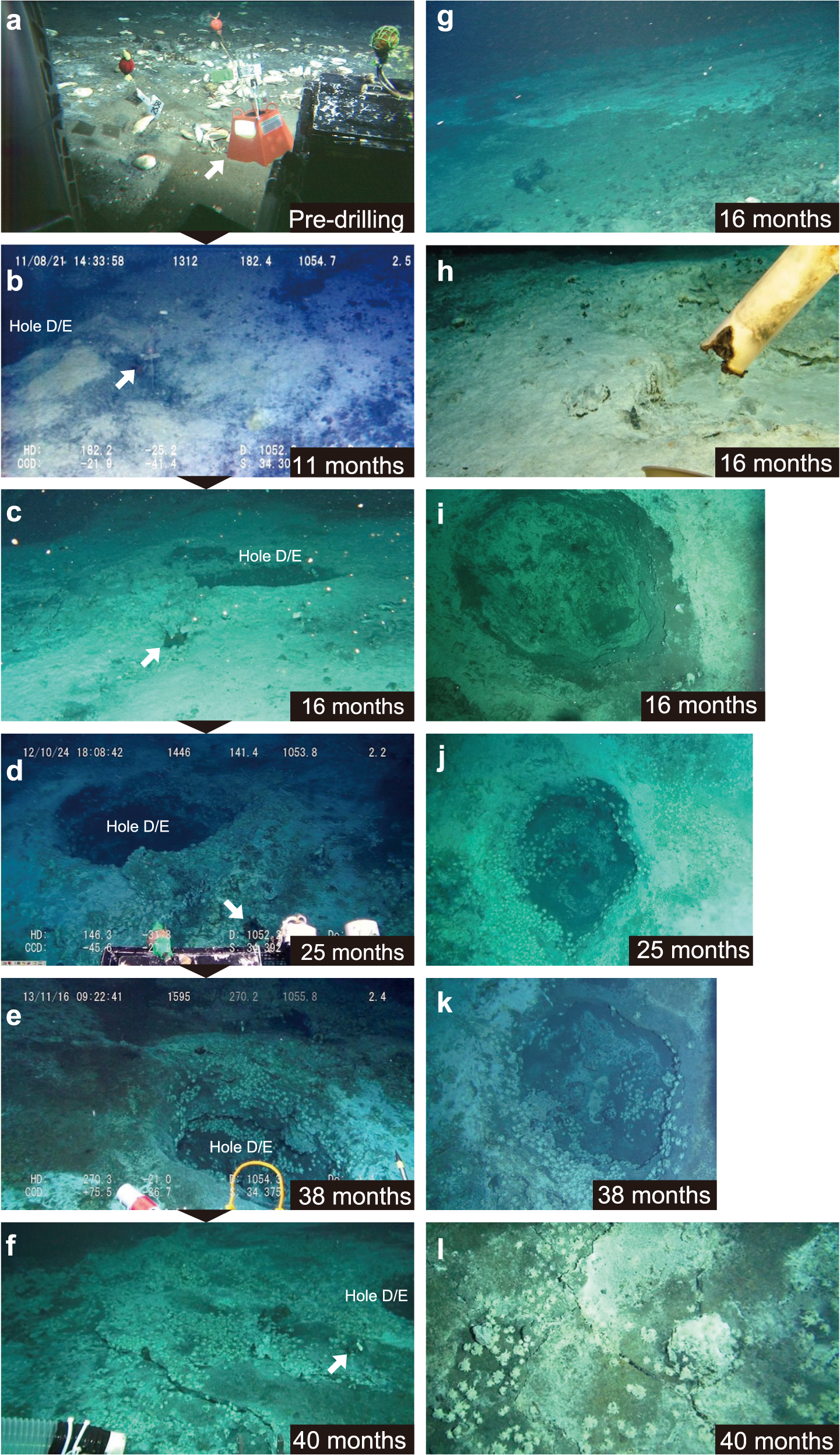
Fig 3. Temporal sequence of landscape at/around Hole D/E. From Nakajima et al. 2015.

A longtime submariner I know tells the story of a most unusual dive. On this particular plunge, they went down into the briny deep to place what can best be described as a giant manhole cover on the seafloor. There was a hole, and, by all accounts, the sea was draining in to it.

For more than half-a-century, we’ve been drilling holes in the bottom of the sea. Some reveal the buried history of the evolution of our oceans. Others uncover vast wells of crude oil. Science, exploration, and exploitation have all benefited from ocean drilling programs. But what happens to the seafloor when you punch a hole in the ocean? In my friend’s case, the drilling program opened a sub-sea cavern, resulting in changes to local current regimes, potentially disturbing the surrounding benthic community. The most practical solution was to simply plug the hole.

We’ve punched a lot of holes in the seafloor, but despite a few anecdotes and scant research, we know precious little about how these holes actually alter the marine environment. This is particularly worrying, as deep-sea mining at hydrothermal vents, manganese nodule fields, and oceanic crusts are slowly creeping out of the realm of science fiction and into our oceans. Ocean drilling in the deep sea is perhaps the closest analog to industrial-scale deep-sea mining. Understanding the potential impacts is critical to designing management and mitigation regimes that protect the delicate deep seafloor.

Read More “What happens when we punch a hole in the seafloor?” »

How a 10 Million Year old fossil, a smart phone, and a 3D printer recharged my #OceanOptimism.

Posted on April 10, 2015 By Andrew Thaler
Popular Culture, Science

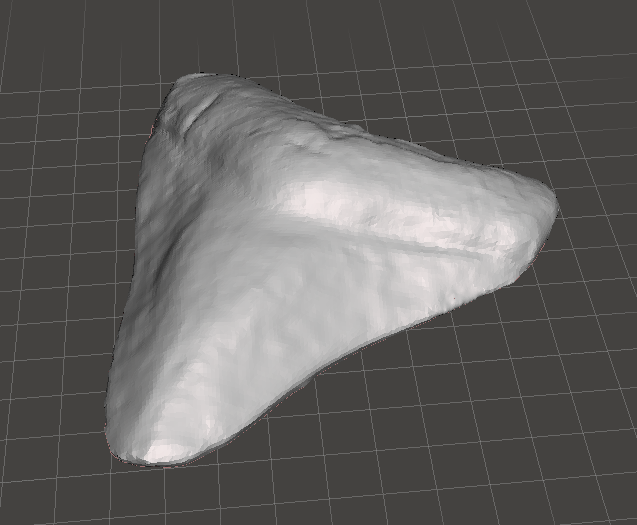
3dtootLast week, we launched a novel little experiment in crowdfunding marine science and conservation – Buy David Shiffman a Less Ugly Pair of Sunglasses – ostensibly about replacing David’s legendarily hideous sunglasses with something a bit more aesthetic. Of course, anyone digging into the stretch goals quickly realized that this was less about sunglasses and more about funding some cool research and outreach projects we’re currently working on; projects like a hammerhead conservation genetics analysis, building a marine ecology drone, and sending students from underserved schools of a shark tagging trip. This was made more explicit when we hit our first goal in the first 36 hours of funding.

With the first funding goal achieved, I decided we needed a cool perk, something not particularly expensive to produce but completely novel and cool enough to justify making a heftier donation. And, of course, it needed to be thematically related to the spirit of the project.

Enter the Megalodon.

Read More “How a 10 Million Year old fossil, a smart phone, and a 3D printer recharged my #OceanOptimism.” »

Science Flyers: My comment to the FAA regarding proposed new drone regulations.

Posted on April 8, 2015April 8, 2015 By Andrew Thaler
Science

I submitted the following to the FAA regarding docket number FAA-2015-0150: Operation and Certification of Small Unmanned Aircraft Systems. Comments can be filed online, but I also sent an actual, physical letter. If you care about the regulation of drone in US airspace, you have until April 24, 2015 to submit you own.


I am a marine ecologist based in Virginia, with plans to operate small Unmanned Aircraft Systems in the conduct of marine ecologic research.

With regards to the FAA’s recently proposed regulations for the Operation and Certification of Small Unmanned Aircraft Systems, I find that the vast majority of suggested restrictions and requirements to be both reasonable and not particularly onerous for those wishing to operate UAS’s for commercial purposes. I commend the FAA for taking a pragmatic approach to UAS regulation. In particular, I support the requirement for a comprehensive knowledge test, which will be separate from and less expensive than a full pilot’s license. I also appreciate the recognition that UAS technology is advancing so quickly that a certification of airworthiness for specific airframes will place an undue burden on commercial pilots and force them to operate vehicles several generation behind the state of the art. I also approve of a special exemption for “microdrones”, which have significantly a lower safety risk and allow UAS pilots additional freedom in their use of very small vehicles.

I approve of the requirement that operators maintain visual line-of-sight, however, in the proposed regulations, there are make no provisions for autonomous flight. Autonomous flight dramatically changes the relationship between the aircraft and the operator and is an essential component of ecological surveys, allowing drones to fly straight transects and pinpoint sampling sites. This points to a more specific problem with the proposed regulations: in current form, there is little clarity regarding the role of scientists and other researcher in relation to UAS use. Will ecologists fall under the same restrictions as commercial drone pilots, or will they be treated more similar to hobbyist?

I urge the FAA to adopt a “Science Flyer” certification, similar to the American Association of Underwater Scientists “Science Diver” program. To wit, science divers have enhanced training requirements over recreational SCUBA divers, but less than professional commercial divers. A Science Flyer program could span a similar gap, with more training requirements than a hobbyist but fewer restrictions than a commercial UAS operator and could also provide additional training and certification to allow for autonomous operation.

Read More “Science Flyers: My comment to the FAA regarding proposed new drone regulations.” »

David Shiffman wears ugly sunglasses. We need to fix that. For the sharks.

Posted on April 1, 2015March 31, 2015 By Andrew Thaler
Uncategorized

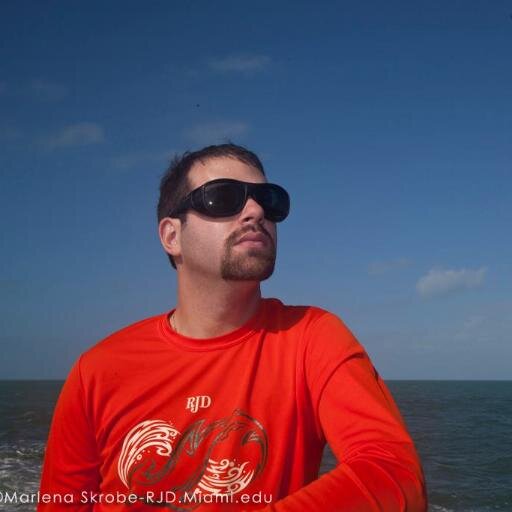
David is a legend in the online ocean conservation world, but that doesn’t mean he’s a legend of style. Everywhere, in every picture, he wears these:

Just terrible.
Just terrible.

Let’s be clear: these sunglasses, if you can even call a second pair of glasses worn over his normal glasses that, are ugly. Really ugly. Distractingly ugly. In an non-parametric, multivariate analysis of his outreach effort, David is 7% less effective* at disseminating ocean content than he should be, given his follower base and content stream. I believe that the majority of this deficit can be directly attributed to his sunglasses.

It’s time to change that.

Buy David Shiffman a less ugly pair of sunglasses.


David Shiffman has spent his life saving sharks. Isn’t it time he did so in style? I think so. And I hope you do too. Let’s buy him some sunglasses that reflect how cool his shark conservation work really is. Support our efforts to buy David less ugly sunglasses on Indiegogo.

Read More “David Shiffman wears ugly sunglasses. We need to fix that. For the sharks.” »

Bioshock Oceanographic: The Problem with Buried at Sea

Posted on February 18, 2015February 17, 2015 By Andrew Thaler
Popular Culture

Previously on “Andrew takes a piece of pop culture and over-analyzes it to death“: we went to Rapture, the city under the sea in Bioshock and Bioshock 2 (and, briefly, Bioshock Infinite) to figure out exactly where and how deep the city was. In the end, I came up with a respectable if underwhelming, maximum depth of 150 meters. Deep, but not crush-your-sub, deep.

And then I played Bioshock Infinite: Burial at Sea 2 and Glomar Challenger, we have a problem.

Read More “Bioshock Oceanographic: The Problem with Buried at Sea” »

How will the FAA’s proposed rules impact drone use for research and conservation?

Posted on February 16, 2015 By Andrew Thaler
Conservation

This weekend, the FAA released its proposed rules regulating the use of small Unmanned Aircraft Systems (drones). Today, I worked through the full, 200-page document, so that you don’t have to. These regulations, which are 3 years in the making and soon to be open for public comment, would determine who could fly, what licensing is required, and what limits would be imposed on drone flights. The regulations are pretty fair and leave open plenty of room for amateur enthusiasts while charting a way forward for commercial operators, but there are some glaring oversights and some unnecessary (and ineffective) security steps. I’ve written extensively on the used of drones for marine science, so my big question is: How will these rules impact drone use for research and conservation?

How many times are you going to use this image, Andrew?

Before I get into specific research and conservation applications, here is my general impression of this proposal. Overall, I think it’s good. Most of the suggestions are reasonable and not unnecessarily onerous. I particularly like that there could be a special exemption for microdrones, so your tiny Hubsan x4 wouldn’t be treated like the massive and mighty Aerotestra IVAN. I’m a big proponent of ensuring drone operators have the proper knowledge base, so I actually like the requirement for a comprehensive knowledge test, which will be separate from and less expensive than a full pilot’s license. I like that there’s no requirement to certify the “airworthiness” of drones as if they were 6000+ pound aircraft (the certification process take 3 to 5 years and drone tech moves so fast that by the time one was certified, it would be several generations obsolete).

Read More “How will the FAA’s proposed rules impact drone use for research and conservation?” »

Bioshock Oceanographic: How deep is Rapture?

Posted on February 11, 2015February 17, 2015 By Andrew Thaler 5 Comments on Bioshock Oceanographic: How deep is Rapture?
Popular Culture, Science

“To build a city at the bottom of the sea! Insanity. But where else could we be free from the clutching hand of the Parasites? Where else could we build an economy that they would not try to control, a society that they would not try to destroy? It was not impossible to build Rapture at the bottom of the sea. It was impossible to build it anywhere else.”

Andrew Ryan, Bioshock

Rapture, a city beneath the sea, the crowning achievement of Randian industrialist Andrew Ryan. This atmospheric world of technological wonder and urban decay serves as the setting for one of the greatest video games of all time, Bioshock. The player, finding themselves stranded at sea in a fiery plane crash, makes their way towards a lonely lighthouse, descends into the sunken, desolate city, and unlocks the mysteries surrounding the creation and destruction of a most unusual city.

Rapture. From Bioshock.

Though many questions are answered as the player journeys into the heart of Rapture, collecting audio diaries of its residents along the way, one question still eludes: How deep is Rapture and where, exactly, is it?

Read More “Bioshock Oceanographic: How deep is Rapture?” »

Sizing Sizing Ocean Giants: Patterns of #scicomm outreach in a marine megapaper

Posted on January 20, 2015February 9, 2021 By Andrew Thaler 2 Comments on Sizing Sizing Ocean Giants: Patterns of #scicomm outreach in a marine megapaper
Blogging, Conservation, Science

Last week, Craig McClain and many friends published Sizing Ocean Giants: patterns of intraspecific size variation in marine megafauna, a research paper that would better be described as a monograph. The response to the paper has been overwhelming.

Since it’s publication last Tuesday, Sizing Ocean Giants has been viewed almost 44,000 times by 38,000 people and downloaded 1200 times. If this seems like a lot for what is essentially a natural history monograph, you are correct. According to Altmetric, a service that measures the non-citation impact of scientific papers, Sizing Ocean Giants is the most discussed and shared article in the history of PeerJ. With a score of 546 (most papers average a score of 5, PeerJ papers average about 20), our paper has climbed into the 99th percentile of all articles ever tracked.

We’ve been covered in the Washington Post, Newsweek, National Geographic, and Scientific American, as well as numerous non-English media outlets from Mexico to Greece. Opa!  We’ve seen a small attention spike on twitter and tons of shares (almost 12,000) via Facebook.

So how do we account for the huge success of this massive paper?

Read More “Sizing Sizing Ocean Giants: Patterns of #scicomm outreach in a marine megapaper” »

Posts pagination

Previous 1 … 51 52 53 … 149 Next

Popular Posts

The story of the pride flag made from NASA imagery: Bluesky's most-liked imageThe story of the pride flag made from NASA imagery: Bluesky's most-liked imageSeptember 27, 2024David Shiffman
"Why Sustainable Seafood Matters" is now available for preorder! Here's what it's about, and why I decided to write it."Why Sustainable Seafood Matters" is now available for preorder! Here's what it's about, and why I decided to write it.June 8, 2026David Shiffman
Tackling the least important debate in deep-sea mining: the desultory hyphenTackling the least important debate in deep-sea mining: the desultory hyphenJune 8, 2026Andrew Thaler
What Ocean Ramsey does is not shark science or conservation: some brief thoughts on "the Shark Whisperer" documentaryWhat Ocean Ramsey does is not shark science or conservation: some brief thoughts on "the Shark Whisperer" documentaryJuly 2, 2025David Shiffman
The evolution of the International Whaling Commission – from  whaling quotas to whale conservationThe evolution of the International Whaling Commission – from  whaling quotas to whale conservationJune 10, 2026Chris Parsons
Deep-sea Mining, Domestic Cats, Star Trek, and Ocean Exploration: Andrew's mid-year podcast round-up.Deep-sea Mining, Domestic Cats, Star Trek, and Ocean Exploration: Andrew's mid-year podcast round-up.June 6, 2026Andrew Thaler
Shark of Darkness: Wrath of Submarine is a fake documentaryShark of Darkness: Wrath of Submarine is a fake documentaryAugust 10, 2014Michelle Jewell
Isn’t ironic, don’t you think: dismantling the Ocean Observatories Initiative on World Oceans DayIsn’t ironic, don’t you think: dismantling the Ocean Observatories Initiative on World Oceans DayJune 9, 2026Southern Fried Science
What is a Sand Shark?What is a Sand Shark?November 12, 2017Chuck Bangley
That's not a blobfish: Deep Sea Social Media is Flooded by AI SlopThat's not a blobfish: Deep Sea Social Media is Flooded by AI SlopDecember 19, 2025Andrew Thaler
Subscribe to our RSS Feed for updates whenever new articles are published.

We recommend Feedly for RSS management. It's like Google Reader, except it still exists.

Southern Fried Science

  • Home
  • About SFS
  • Authors
  • Support SFS


If you enjoy Southern Fried Science, consider contributing to our Patreon campaign.

Copyright © 2026 Southern Fried Science.

Theme: Oceanly Premium by ScriptsTown