Skip to content

Southern Fried Science

Over 15 years of ocean science and conservation online

  • Home
  • About SFS
  • Authors
  • Support SFS

Author: Andrew Thaler

Marine science and conservation. Deep-sea ecology. Population genetics. Underwater robots. Open-source instrumentation. The deep sea is Earth's last great wilderness.

How to protect yourself from Zombie Dolphins without violating the Marine Mammal Protection Act

Posted on April 1, 2014March 31, 2014 By Andrew Thaler 3 Comments on How to protect yourself from Zombie Dolphins without violating the Marine Mammal Protection Act
Science

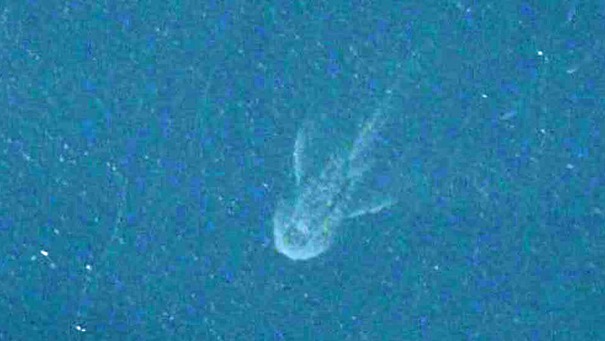
They rise from the deep with gnashing teeth and hissing blowholes. They stagger through the shallows, hunting for human flesh, piercing the air with their high pitched moan. They are dead but not dead. They are Zombie Dolphins.

And you can’t fight them, because they are protected.

Read More “How to protect yourself from Zombie Dolphins without violating the Marine Mammal Protection Act” »

Help track fire restoration with this innovative Citizen Science project!

Posted on March 24, 2014March 24, 2014 By Andrew Thaler 1 Comment on Help track fire restoration with this innovative Citizen Science project!
Conservation, Science

Last year, over 3,000 acres of Mount Diablo State Park were scorched by the Morgan Wildfire. The fire, likely started by target shooters, caused 75 homes to be evacuated and left the park closed to visitors for weeks. The park is now open and the massive fire scar is beginning to heal.

Nerds for Nature, URS, and the Mount Diablo Park service have teamed up to promote wildfire education and harness the enthusiasm of the park’s visitors to monitor fire recovery. Throughout the park, a series of signs will inform hikers about the Morgan Fire and direct them to a fixed bracket where they can line of their smart phone, take a picture, and tweet it to the MorganFire hashtags (#morganfire01, #morganfire02, #morganfire03, #morganfire04, depending on location). As the area recovers, those picture will be pooled to create a long-term documentation of change.

This is an incredibly innovative use of citizen scientist and I’d love to see more recovery projects adopt this model. The next time your hiking in Mount Diablo, keep an eye for the Fire Brackets. Amy and I were out there this weekend, contributing to wildfire recovery monitoring.

Read More “Help track fire restoration with this innovative Citizen Science project!” »

Today in Sacramento, I’m talking about #DrownYourTown

Posted on March 18, 2014 By Andrew Thaler
#DrownYourTown

Come by and check it out!  

A field guide to ocean science and conservation on Twitter, volume 2

Posted on March 14, 2014 By Andrew Thaler
Conservation, Science

Almost 2 years ago, we published our first field guide to ocean science and conservation on twitter. While the advice is still sound (and you should definitely read it), the recommended people to follow is now painfully dated. Here’s two updated lists of core people to follow on twitter to get yourself plugged in to the ocean science and conservation community.

New to the online ocean community? This list will help you get connected to the conversation by following key members of the community. Rather than a comprehensive collection of all ocean science and conservation broadcasters, this short list will help you follow along without becoming overwhelmed.

Read More “A field guide to ocean science and conservation on Twitter, volume 2” »

10 times more fish in the sea? Context matters.

Posted on March 11, 2014March 12, 2014 By Andrew Thaler 3 Comments on 10 times more fish in the sea? Context matters.
Science

Earlier this year, a research team from Spain released a surprising new estimate of mesopelagic fish biomass that is 10 times greater than previous estimates. This new study raises the total estimated biomass of mesopelagic fish from 1 billion tons to 10 billion tons, accounting for 95% of all fish biomass. The news media ran with dozens of variations on the “plenty of fish in the sea” trope, suggesting that the global fisheries may be more abundant and reversing the doom-and-gloom message of fisheries decline.

This is not correct.

The fish in question are small, mid-water species like myctophids and cyclothones, fish that are incredibly important for ocean ecosystems, but commercially non-viable. The reason they were missed in previous studies is that these small, agile fish avoid nets; This new study uses SONAR and other acoustic tools to measure biomass.  So while there is a huge, untapped fish stock in the mid-water world, it is not a commercial fishery.

Let’s put things in perspective.

Read More “10 times more fish in the sea? Context matters.” »

2 opportunities to hone your online science outreach skills

Posted on March 11, 2014 By Andrew Thaler
Blogging, Conservation

Looking for classes on science, social media, and online environmental writing? We’ve got two classes coming up for undergraduate, graduate, and professionals students looking to hone their online outreach skills. Social Media For Environmental Communications: taught this year by me and Dr. Amy Freitag, this course will be taught over 6 weeks this spring as … Read More “2 opportunities to hone your online science outreach skills” »

Attack of the paranormal mermaid romance novel: Why you should never, ever lose a bet to David Shiffman

Posted on March 3, 2014March 3, 2014 By Andrew Thaler 1 Comment on Attack of the paranormal mermaid romance novel: Why you should never, ever lose a bet to David Shiffman
Popular Culture

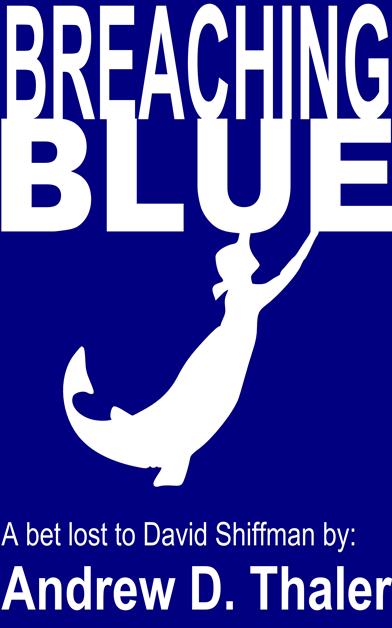
breakingblueTake heed, all those who would dare to gamble against David Shiffman. You will fail.

It seemed innocent enough. I was in the middle of a job search, paying the bills with consulting, freelance work, and science writing while pursuing the next academic appointment. Finally having a bit of time, I wrote a science fiction novel, something I’ve always wanted to do. Sometime last summer, our resident shark fanatic made a dangerous suggestion. “Why don’t you just cash in on the mermaid craze?” “Fine,” I said, “if I don’t land a job by 2014, I’ll write a marine science-inspired paranormal mermaid romance novel.”

It’s 2014. This is Breaching Blue.

Below, for your enjoyment, is the first chapter.

If you’re interested in my other writings, you can check out Fleet and Prepared on Amazon or read my short story, The Lucky Ones, at Nature. And a huge shout-out to Mark Gibson, who writes the excellent marine science blog, Breaching the Blue, and was kind enough to let me use the inadvertently parallel name. For obvious reasons, this is not the final draft.


Chapter 1: Sisters of the Reef

The reef was old. It rose out of the seamount, a honeycomb of chambers piled one on top of the other; each chamber perfectly sized for Janthia and her sisters. This reef was made for them.

Read More “Attack of the paranormal mermaid romance novel: Why you should never, ever lose a bet to David Shiffman” »

#DrownYourTown Coastal States Road Trip is coming to your (virtual) town

Posted on February 11, 2014 By Andrew Thaler
#DrownYourTown, Science

Last week, I kicked off the #DrownYourTown Coastal States Road Trip with a cruise through California. Over the next few weeks, we’ll visit every coastal US state (and territory) and see what they look like after 5 meters of sea level rise. The first week of images is available at the #DrownYourTown tumblr and you can follow along in real time on twitter @DrownYourTown.

Panama City, FL after 5 meters of sea level rise.

Read More “#DrownYourTown Coastal States Road Trip is coming to your (virtual) town” »

Global is Personal: 4 Lessons About Climate Change Outreach from #DrownYourTown

Posted on February 3, 2014February 3, 2014 By Andrew Thaler
#DrownYourTown, Science

Almost four months ago, I sat down at my computer with a puzzle to solve: is there an easy way to model sea level rise without using expensive GIS programs. I found that solution in Google Earth and, after a few days of experimenting and tweeking, #DrownYourTown was born.

1 meter of sea level rise would make for a very soggy superbowl.

#DrownYourTown is a tool for exploring sea level rise through real-time, interactive, GIS modeling. Anyone can submit a request via twitter or tumblr and receive a custom, 3D model of sea level rise anywhere in the world. The system allows users to produce dramatic visuals of both plausible and implausible climate change scenarios. The project is ongoing, with user generated content, an active tumblog, and a vibrant twitter community centered around the hashtag. I am constantly exploring new ways to reach a broader audience. Currently, #DrownYourTown is on a virtual road trip, visiting a new coastal state each day, and cruising through towns after 5 meters of sea level rise.

#DrownYourTown has been an exciting and sometimes humbling journey. Here are four lessons about climate change outreach I learned from drowning your town.

Read More “Global is Personal: 4 Lessons About Climate Change Outreach from #DrownYourTown” »

Release the Karaqan! How does Aquaman’s latest foe stack up against real ocean giants?

Posted on January 31, 2014January 31, 2014 By Andrew Thaler 1 Comment on Release the Karaqan! How does Aquaman’s latest foe stack up against real ocean giants?
Popular Culture
Aquaman #27. DC Comics.

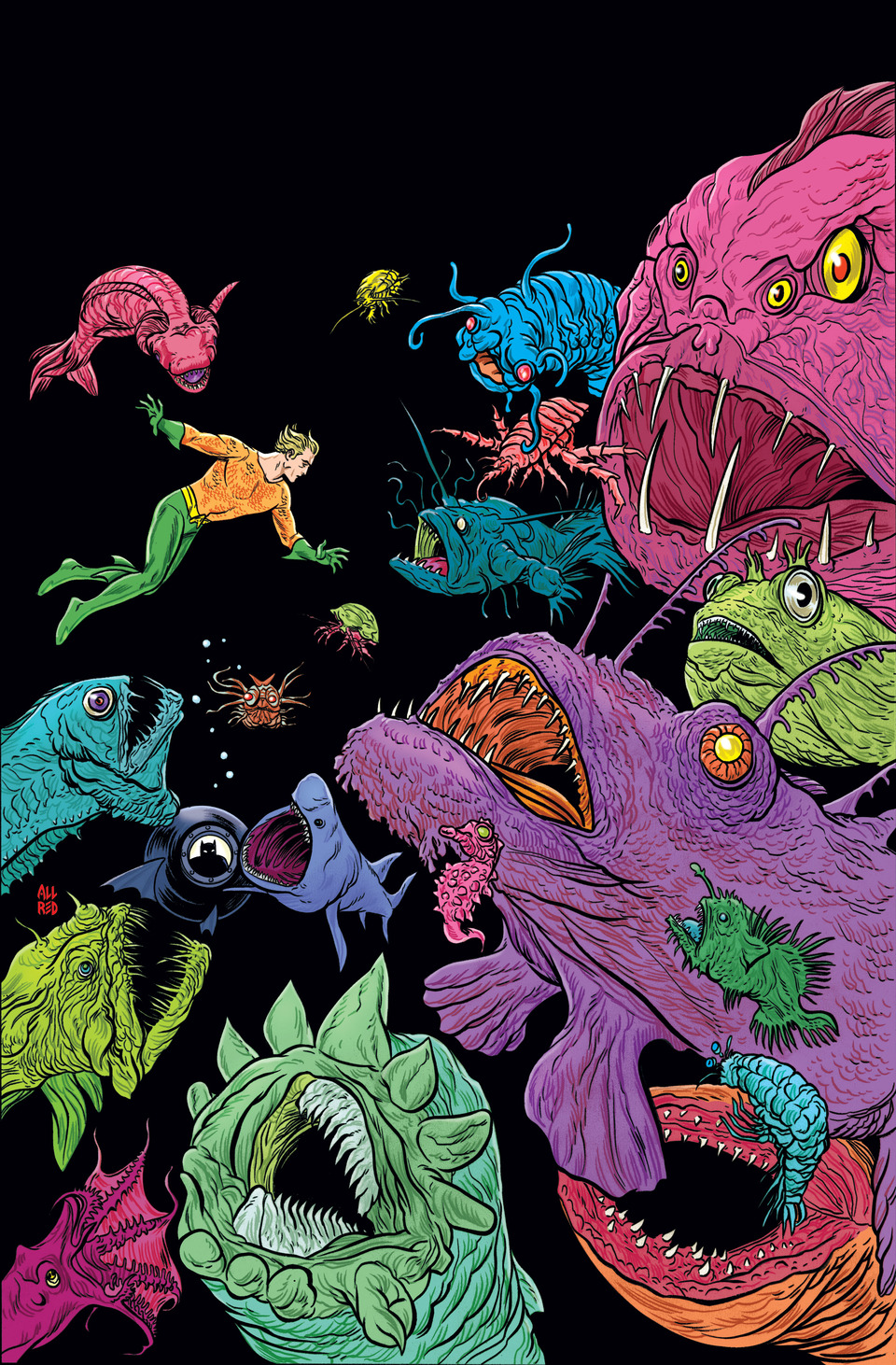
It’s been more than 2 months since we last discussed the patron saint of Southern Fried Science, the one and only Aquaman. The Atlantean übermensch has a new lead writer, Jeff Parker, who’s teamed up with Aquaman veteran Paul Pelletier to produce an engaging and visually stunning story. After the epic conclusion to Throne of Atlantis, Aquaman is off on an entirely new adventure. Unfortunately, this new quest puts our hero in the path of a gargantuan guardian of ancient Atlantis, the Karaqan!

The Karaqan is big, but just how big is it? How does the Karaqan stack up against living sea creatures? Could an arthropod ever get as big as the Karaqan? Most important, if Aquaman does successfully slay the Karaqan, just how much Old Bay would we need to steam it?

Read More “Release the Karaqan! How does Aquaman’s latest foe stack up against real ocean giants?” »

Posts pagination

Previous 1 … 57 58 59 … 149 Next

Popular Posts

The story of the pride flag made from NASA imagery: Bluesky's most-liked imageThe story of the pride flag made from NASA imagery: Bluesky's most-liked imageSeptember 27, 2024David Shiffman
"Why Sustainable Seafood Matters" is now available for preorder! Here's what it's about, and why I decided to write it."Why Sustainable Seafood Matters" is now available for preorder! Here's what it's about, and why I decided to write it.June 8, 2026David Shiffman
Tackling the least important debate in deep-sea mining: the desultory hyphenTackling the least important debate in deep-sea mining: the desultory hyphenJune 8, 2026Andrew Thaler
The evolution of the International Whaling Commission – from  whaling quotas to whale conservationThe evolution of the International Whaling Commission – from  whaling quotas to whale conservationJune 10, 2026Chris Parsons
What Ocean Ramsey does is not shark science or conservation: some brief thoughts on "the Shark Whisperer" documentaryWhat Ocean Ramsey does is not shark science or conservation: some brief thoughts on "the Shark Whisperer" documentaryJuly 2, 2025David Shiffman
Deep-sea Mining, Domestic Cats, Star Trek, and Ocean Exploration: Andrew's mid-year podcast round-up.Deep-sea Mining, Domestic Cats, Star Trek, and Ocean Exploration: Andrew's mid-year podcast round-up.June 6, 2026Andrew Thaler
Isn’t ironic, don’t you think: dismantling the Ocean Observatories Initiative on World Oceans DayIsn’t ironic, don’t you think: dismantling the Ocean Observatories Initiative on World Oceans DayJune 9, 2026Southern Fried Science
Shark of Darkness: Wrath of Submarine is a fake documentaryShark of Darkness: Wrath of Submarine is a fake documentaryAugust 10, 2014Michelle Jewell
What is a Sand Shark?What is a Sand Shark?November 12, 2017Chuck Bangley
That's not a blobfish: Deep Sea Social Media is Flooded by AI SlopThat's not a blobfish: Deep Sea Social Media is Flooded by AI SlopDecember 19, 2025Andrew Thaler
Subscribe to our RSS Feed for updates whenever new articles are published.

We recommend Feedly for RSS management. It's like Google Reader, except it still exists.

Southern Fried Science

  • Home
  • About SFS
  • Authors
  • Support SFS


If you enjoy Southern Fried Science, consider contributing to our Patreon campaign.

Copyright © 2026 Southern Fried Science.

Theme: Oceanly Premium by ScriptsTown