Skip to content

Southern Fried Science

Over 15 years of ocean science and conservation online

  • Home
  • About SFS
  • Authors
  • Support SFS

Author: Andrew Thaler

Marine science and conservation. Deep-sea ecology. Population genetics. Underwater robots. Open-source instrumentation. The deep sea is Earth's last great wilderness.

San Diego Demon? This ain’t my first trip down Possum Trot Road

Posted on February 2, 2012February 2, 2012 By Andrew Thaler 10 Comments on San Diego Demon? This ain’t my first trip down Possum Trot Road
Popular Culture

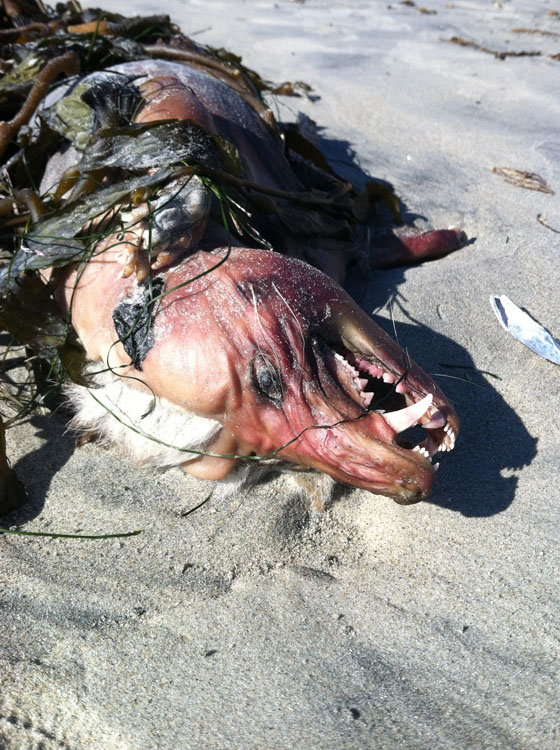
Ever since we started tackling marine cryptids (not to be confused with real cryptic species) during our annual Week of Ocean Pseudoscience, people occasionally e-mail me with new “rotting rodent” style monsters. This news story – Behold: The San Diego Demonoid – has been making the twitter and e-mails rounds today. Like the Montauk Monster a few years back, a waterlogged, decomposed critter washed up on a beach, this time in San Diego, and people unfamiliar with what decomposing varmints look like branded it some sort of cryptid. To the right is the uncredited photo (now credited to Josh Menard) that’s been cropping up in various corners of the internet. Like many “cryptic critter” photos leaked to the press, the ones associated with this story fail to show the entire animal or provide any sense of scale. That should be red flag #1 that it is, in fact, a common local resident that is being dressed up to appear more monstrous than it really is.

Now, I’m not a marsupial specialists, but I’ve seen my fair share of possums (Opposums for our non-southern readers) in all states of decay, so those nasty teeth immediately clued me in. Here’s a possum skull (from a Virginia possum) for comparisons:

Read More “San Diego Demon? This ain’t my first trip down Possum Trot Road” »

Core Themes for 2012: A renewed sense of wonder

Posted on January 27, 2012January 27, 2012 By Andrew Thaler 1 Comment on Core Themes for 2012: A renewed sense of wonder
Uncategorized

In the past four years, we took our readers from the remote shoals of the Skeleton Coast to the unfathomable depths of the western Pacific. We touched the coasts of every continent, plumbed the depth of every ocean. Throughout this shared journey, the unspoken, implicit rationale, the very heart of our passion, the reason that any of this is worth doing, is that the ocean is awesome. When I say awesome, I don’t mean awesome in some mundane, biblical sense of fear and wonder when staring into the face of god; I’m talking about something much greater than our fragile brains can comprehend.

We have sailed so far, in these four years, and in this voyage I fear that we have found ourselves, like Ishmael, in “the damp, drizzly November of [our] souls.” The conversation at Southern Fried Science has changed, become more cynical, fatalistic, and driven by threats facing the ocean, rather than reasons why we value it. What once was a sea of boundless potential is now cast in bondage to statistics, benefit analyses, weights and measures, action items. In a way, this shift was inevitable. The ocean is in trouble, the world is changing, and the less we understand it, the more we will lose. Without someone to mark the ledger, to take the bearing, the ship is lost.

Read More “Core Themes for 2012: A renewed sense of wonder” »

Core Themes for 2012: The story behind the paper

Posted on January 23, 2012January 24, 2012 By Andrew Thaler
Uncategorized

There is a disconnect between those who conduct scientific research and those who consume it. The public has a vision of science that involves crisp lab coats and expensive equipment, lone students toiling at the bench waiting for an eureka moment or field researchers swinging, Indiana Jones-style through the jungle, Science is, unfortunately, not that neat.

Read More “Core Themes for 2012: The story behind the paper” »

Southern Fried Science Core Themes for 2012

Posted on January 23, 2012 By Andrew Thaler
Uncategorized

This month, David, Amy, and I gathered to discuss the future direction of Southern Fried Science at the Third Annual Southern Fried Retreat. One of the outcomes of that meeting was the sleek, new comment policy at the top of the page. Instead of a rigid list of rules, we’ll be trying to foster a … Read More “Southern Fried Science Core Themes for 2012” »

Nine ways journalists demonstrate they don’t understand science

Posted on January 17, 2012January 17, 2012 By Andrew Thaler 12 Comments on Nine ways journalists demonstrate they don’t understand science
Uncategorized

Ah the Guardian, that venerable bastion of Truth and Light*. Today they posted a handy reference guide for scientists trying to work with journalist, attempting to explain why science news is covered in certain ways and trying to ease the process by pointing out “Nine ways scientists demonstrate they don’t understand journalism”. The knife, of course, cuts both ways, so science journalist may want to meditate on a few ways that journalists demonstrate they don’t understand science.

Read More “Nine ways journalists demonstrate they don’t understand science” »

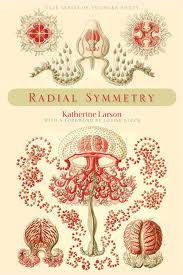
Radial Symmetry – the poetry of Katherine Larson

Posted on January 16, 2012 By Andrew Thaler
Uncategorized

What is it about the ocean that inspires otherwise precise and stoic scientists to cast off the shackles of structured, rigorously defined scientific language and swim, instead, through a sea of verse and meter. You can find examples littered across the internet, from Kevin Zelnio’s song lyrics featured in the Open Lab, to my own pedestrian attempts at Hardtack and Sardines. Of course, some poets rise above our amateur attempts and merge a deep understanding of the natural world with a precise eye for beauty, bringing both together in a sea of verse which stirs the soul and challenges the intellect. That is exactly what Katherine Larson has done with her first book of science-inspired poetry: Radial Symmetry.

It may seem a strange book for a marine science blog to review, but Larson, a molecular biologist by training, has captured a the spirit of scientific inquiry and the ocean in a way that few other mediums can. Her poetry evokes the thrill of discovery as well as frustration. How many practicing scientists can’t relate to Love at thirty-two degrees, a poem that begins by observing the branchial hearts of a squid,  when she announces:

Read More “Radial Symmetry – the poetry of Katherine Larson” »

Updates from the Deep: New and Noteworthy in Hydrothermal Vent Research

Posted on January 10, 2012January 12, 2012 By Andrew Thaler 7 Comments on Updates from the Deep: New and Noteworthy in Hydrothermal Vent Research
Conservation, Science

From hairy-chested yeti crabs to the deepest known fields, hydrothermal vents have been enjoying a bit of science celebrity in the last few weeks. Beneath the headlines, there has been an eruption of vent-related research published in the scientific literature and some exciting new expeditions just left port.

The Discovery of New Deep-Sea Hydrothermal Vent Communities in the Southern Ocean and Implications for Biogeography

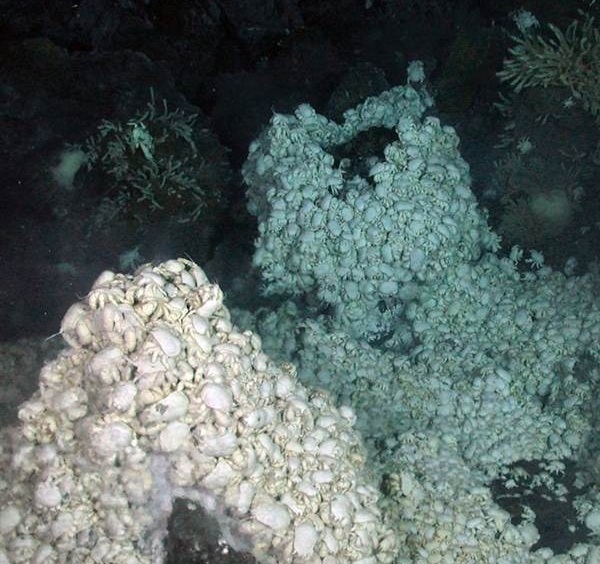
'Hoff' crabs in paradise. Image from ChEss Southern Ocean Consortium

The exhaustive author list on this paper reads like a who’s who in hydrothermal vent biogeography. This is the paper that introduced “the Hoff” crab to the world, but the findings are far more significant. Hydrothermal vent systems are sorted into biogeographic provinces, with different regions supporting different communities. The iconic giant tube worms dominate the eastern Pacific, while the western Pacific (prominently featured in Deep Fried Sea) plays host to fist sized snails, and the Atlantic features shrimp as its dominant species. There are several missing gaps in our understanding of how these qualitatively different communities are connected – the Southern Ocean, the south Atlantic, the Indian Ocean, and the Cayman Trough, among others. Filling in these gaps in our knowledge can help us understand the history and evolution of hydrothermal vent ecosystems.

Read More “Updates from the Deep: New and Noteworthy in Hydrothermal Vent Research” »

Four fish fight for the future

Posted on January 4, 2012 By Andrew Thaler
Conservation

How much of the world’s food supply is locked up in a few crops – corn, wheat, rice (for example) – and even fewer livestock – cows, pigs, chickens? Of the major commercial food production industries, only fish, and even then, only some fish, are still hunted. In a very real sense, fish are the last wild food. That may be changing. In Four Fish: The Future of the Last Wild Food, published last year, Paul Greenberg highlights the ways in which commercial fishing is becoming less like hunting and more like agriculture, with a few, often farm raised species, dominating the market.

Greenberg, a native of Long Island Sound who fished there since the 1970’s, documents the changes in four major fisheries – salmon, sea bass, cod, and tuna – and the changing attitudes of the (mostly) men who catch them. He travels to Alaska to meet with First Nation salmon fishermen, to Greece to visit groundbreaking aquaculture facilities, he charters a tuna boat to experience the fight first hand, and across the world he talks to those of whom fishing matters most, including himself. At times, the book becomes autobiographical, focusing on Greenberg’s personal journey – but this is a book about fish and fishermen, and he is, if only recreationally, a fisher.

Read More “Four fish fight for the future” »

That sinking feeling: Hog lagoons, superbugs, and the proliferation of antibiotics in livestock

Posted on January 2, 2012January 2, 2012 By Andrew Thaler 9 Comments on That sinking feeling: Hog lagoons, superbugs, and the proliferation of antibiotics in livestock
Science

From here, it looks like such a lovely pond. Photo by Andrew David Thaler

The murky brown water was still, reflecting, perfectly, the drifting clouds above. Had I not known what it was, an acre-wide manmade pond almost a dozen feet deep filled to the brim with hog feces, I might be tempted to describe it as “beautiful”. Hog lagoons like this are a common sight in North Carolina, though their use is in decline. My lab group arrived at this particular lagoon to take microbial samples, fungi in this case, from the steaming cauldron of organic waste: an ideal culture medium. Carefully, we loaded a small skiff and rowed out into the stink. Near the center, we gingerly dipped our sampling vials, affixed to the end of an old fishing pole, into the dense fluid. It was then that we noticed the rising waterline, the slow trickle at the stern, the shift in balance. We locked the oars and rowed, frantically, towards shore. Our labmates on shore had, thankfully, tied a line to the bow before we departed. The skiff’s gunwales were creeping closer and closer to the water. We were sinking. We were sinking in a lake of pig shit.

Read More “That sinking feeling: Hog lagoons, superbugs, and the proliferation of antibiotics in livestock” »

The top eleven science hashtags of 2011

Posted on December 30, 2011December 31, 2011 By Andrew Thaler 8 Comments on The top eleven science hashtags of 2011
Uncategorized

Science is a conversation, and in 2011, a significant portion of that conversation happened on twitter. 2011 saw some fascinating new discoveries, bizarre assertions, disheartening revelations, and brilliant discussions. Twitter, it seems, is both a petri dish for nuggets of insight and an autoclave for steaming piles. So, without any further ado, here are the top 11 science hastags of 2011.

Read More “The top eleven science hashtags of 2011” »

Posts pagination

Previous 1 … 76 77 78 … 149 Next

Popular Posts

The story of the pride flag made from NASA imagery: Bluesky's most-liked imageThe story of the pride flag made from NASA imagery: Bluesky's most-liked imageSeptember 27, 2024David Shiffman
"Why Sustainable Seafood Matters" is now available for preorder! Here's what it's about, and why I decided to write it."Why Sustainable Seafood Matters" is now available for preorder! Here's what it's about, and why I decided to write it.June 8, 2026David Shiffman
Tackling the least important debate in deep-sea mining: the desultory hyphenTackling the least important debate in deep-sea mining: the desultory hyphenJune 8, 2026Andrew Thaler
The evolution of the International Whaling Commission – from  whaling quotas to whale conservationThe evolution of the International Whaling Commission – from  whaling quotas to whale conservationJune 10, 2026Chris Parsons
What Ocean Ramsey does is not shark science or conservation: some brief thoughts on "the Shark Whisperer" documentaryWhat Ocean Ramsey does is not shark science or conservation: some brief thoughts on "the Shark Whisperer" documentaryJuly 2, 2025David Shiffman
Isn’t ironic, don’t you think: dismantling the Ocean Observatories Initiative on World Oceans DayIsn’t ironic, don’t you think: dismantling the Ocean Observatories Initiative on World Oceans DayJune 9, 2026Southern Fried Science
Shark of Darkness: Wrath of Submarine is a fake documentaryShark of Darkness: Wrath of Submarine is a fake documentaryAugust 10, 2014Michelle Jewell
Deep-sea Mining, Domestic Cats, Star Trek, and Ocean Exploration: Andrew's mid-year podcast round-up.Deep-sea Mining, Domestic Cats, Star Trek, and Ocean Exploration: Andrew's mid-year podcast round-up.June 6, 2026Andrew Thaler
What is a Sand Shark?What is a Sand Shark?November 12, 2017Chuck Bangley
That's not a blobfish: Deep Sea Social Media is Flooded by AI SlopThat's not a blobfish: Deep Sea Social Media is Flooded by AI SlopDecember 19, 2025Andrew Thaler
Subscribe to our RSS Feed for updates whenever new articles are published.

We recommend Feedly for RSS management. It's like Google Reader, except it still exists.

Southern Fried Science

  • Home
  • About SFS
  • Authors
  • Support SFS


If you enjoy Southern Fried Science, consider contributing to our Patreon campaign.

Copyright © 2026 Southern Fried Science.

Theme: Oceanly Premium by ScriptsTown