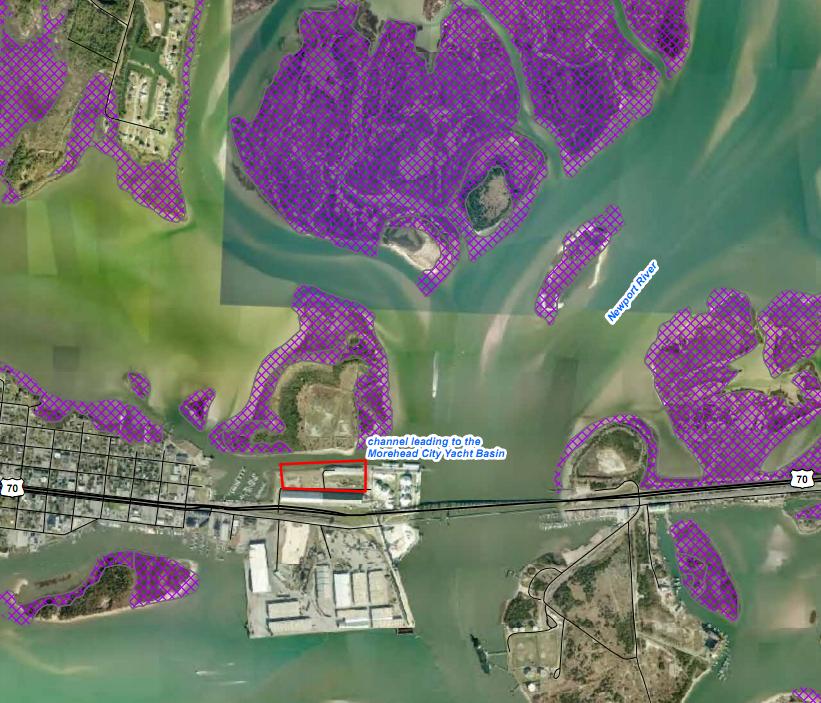
For background, please see our original post – Secrets and Sulfur at the Morehead City Port. Over the last two days, I’ve dug through the PCS Phosphate Environmental Assessment, checked out some of the press reports, and talked to an insider from their Aurora facility. After pouring through what little data is available, I have six concerns that I would like to see addressed before this project is approved.
Author: Andrew Thaler
Marine science and conservation. Deep-sea ecology. Population genetics. Underwater robots. Open-source instrumentation. The deep sea is Earth's last great wilderness.
The news caught us by surprise. PCS Phospate, a division of Potash Corp. and one of the largest suppliers of fertilizer in the world is planing to build a Sulfur processing plant in Morehead City. Seemingly overnight, it had grown from a few rumors to an announcement that the final permitting and funding process was already underway. Initial planning began almost a year ago, and an environmental assessment was produce in in December 2010, but at no point during this year of closed door meetings was there ever a public review. The first official notice occurred when an adjacent landowner was informed of the expansion.
Click to embiggen.
A thousand thanks to all our readers who donated to the Bonehenge project. We managed to raise $300 this year, which we sent off this morning. As always, the donor plaque will read “southernfriedscience.com readers”. To date our readers have raised $500! Read more about Bonehenge here.
Check out my interview with Dr. Kiki Sanford on Dr. Kiki’s Science Hour. httpv://www.youtube.com/watch?v=Huf6ahIgShU And here’s a direct link for a high resolution version.
This is a new weekly feature on Southern Fried Science where we’ll highlight 4 or 5 posts from other blogs in our network, and one post from outside our network published in the previous week. Posts of Note will run every Thursday, but the hosts will alternate among myself, David, and Amy. Enjoy this week’s … Read More “Posts of Note from around the Gam – July 7, 2011” »

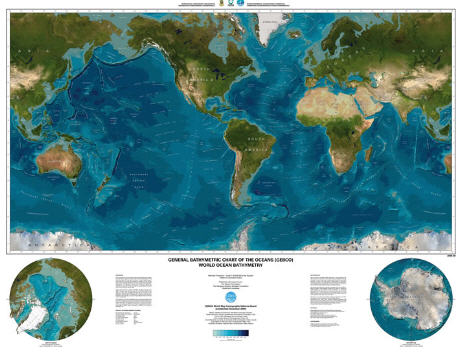
The deep benthos is simultaneously the largest and least explored ecosystem on the planet. Covering nearly 60% of the Earth’s surface, it supports an almost unimaginable reservoir of biodiversity, rivaling all terrestrial habitats combined. Its microbial and metabolic diversity have revolutionized our view of how life is sustained, not once, but twice (first with the discovery of chemoautotrophic organisms at hydrothermal vents, and again with the discovery of cognate communities at methane cold-seeps). In spite of these major discoveries, the deep benthos is essentially invisible. Only a select few will ever witness it first hand, while for the rest, it will remain a dark and unfathomable abyss.
This places the deep benthos in a precarious position. Human activities that influence the deep sea go unnoticed. Without a thorough understanding of its ecology, it is impossible to assess the damage caused by anthropogenic impacts. Although recent and ongoing studies have shed light on many species and communities, the deep benthos remains largely unexplored. Two studies, both released this week, reveal simultaneously how little we know about the deep benthos and how human impacts, even unintentional ones, could shape this ecosystem.
Read More “Rumors from the Abyss: visions of a future without deep sea conservation” »

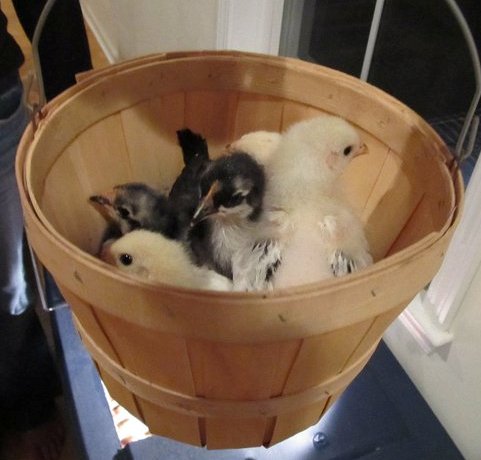
So you’ve decided to commit to a more sustainable lifestyle, you’ve built a Pico-farm and are ready to stock it with a flock of happy, egg-laying chickens. Congratulations, you’ve reached the fun part.
Before you go out and buy chickens, you need to ask yourself a few questions: do you want hens only, or do you want a rooster for breeding? Do you want to raise them from chicks or buy adults ready to lay? How big a flock do you want?
Read More “Adventures in Backyard Agriculture: Raising Chickens” »
This entertaining and informative video comes to us from physical oceanography graduate student Katie Smith. Hat Tip: Girls are Geeks

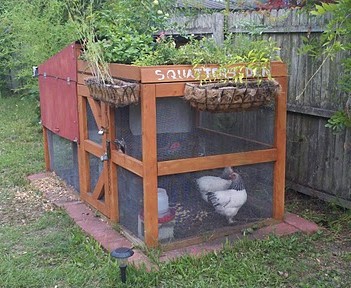
Several months ago, I began a new personal challenge to live more sustainably. I wanted to do something more substantial and larger in scale than the conventional methods of reducing your environmental impacts, which involve changes in habit, not changes in lifestyle. After many discussions, Bluegrass Blue Crab and myself decided it was time to try our hands at backyard agriculture.
Read More “Adventures in Backyard Agriculture: Building the Pico-farm.” »