Skip to content

Southern Fried Science

Over 15 years of ocean science and conservation online

  • Home
  • About SFS
  • Authors
  • Support SFS

Author: David Shiffman

Tweets from the American Elasmobranch Society: Elasmobranch Behavior

Posted on August 18, 2012August 17, 2012 By David Shiffman
Science

The American Elasmobranch Society is a non-profit professional society focusing on the scientific study and conservation of sharks, skates, and rays. AES members meet each year in a different North American city, and this meeting is the world’s largest annual gathering of shark scientists. AES recently met in Vancouver, British Columbia for the 2012 meeting, and for the first time the event was live-tweeted by meeting attendees, including myself. I’ve organized the best conference tweets by session using Storify. If anyone has any questions or comments about the research presented below, please feel free to share it in the comments section of this blog post.

Here are selected tweets from the Elasmobranch Behavior sessions.

Read More “Tweets from the American Elasmobranch Society: Elasmobranch Behavior” »

Tweets from the American Elasmobranch Society: Deepwater Chondrichthyans Symposium

Posted on August 18, 2012August 17, 2012 By David Shiffman
Science

The American Elasmobranch Society is a non-profit professional society focusing on the scientific study and conservation of sharks, skates, and rays. AES members meet each year in a different North American city, and this meeting is the world’s largest annual gathering of shark scientists. AES recently met in Vancouver, British Columbia for the 2012 meeting, and for the first time the event was live-tweeted by meeting attendees, including myself. I’ve organized the best conference tweets by session using Storify. If anyone has any questions or comments about the research presented below, please feel free to share it in the comments section of this blog post.

Here are selected tweets from the Deepwater Chondrichthyans Symposium.

Read More “Tweets from the American Elasmobranch Society: Deepwater Chondrichthyans Symposium” »

Tweets from the American Elasmobranch Society: President Ferry’s plenary “Elasmobranchs in Biological Research”

Posted on August 18, 2012August 17, 2012 By David Shiffman
Science

The American Elasmobranch Society is a non-profit professional society focusing on the scientific study and conservation of sharks, skates, and rays. AES members meet each year in a different North American city, and this meeting is the world’s largest annual gathering of shark scientists. AES recently met in Vancouver, British Columbia for the 2012 meeting, and for the first time the event was live-tweeted by meeting attendees, including myself. I’ve organized the best conference tweets by session using Storify. If anyone has any questions or comments about the research presented below, please feel free to share it in the comments section of this blog post.

Here are conference tweets from AES President Lara Ferry’s plenary talk, “Elasmobranchs in Biological Research”.

Read More “Tweets from the American Elasmobranch Society: President Ferry’s plenary “Elasmobranchs in Biological Research”” »

Books reviews: read up on sharks and grouper before the AES/ASIH meeting

Posted on July 23, 2012July 23, 2012 By David Shiffman
Uncategorized

In just three weeks, the American Elasmobranch Society and the American Society of Ichthyologists and Herpetologists will hold their annual meeting. This year, it will take place in Vancouver, British Columbia as part of the World Herpetology Congress. I’ll be presenting, and I’m looking forward to seeing many of our readers there. Those of you who will be attending this conference, as well as anyone with an interest in sharks and other marine fishes, may be interested in these great new marine science books!

1. Groupers of the world: a field and market guide (by Matthew Craig, Yvonne Sadovy de Mitcheson, and Phillip Heemstra). Grouper are some of the most economically important fish in the ocean, and it’s important that scientists, managers, and eco-conscious consumers have access to the latest scientific and conservation information about these fish. As fisheries landings have increased greatly in recent years (the 300,000 tons landed in 2008 are 10 times the landings from the 1950’s), many species are rapidly declining in population. Recent research showed that 12% of known grouper species are Threatened (Vulnerable, Endangered, or Critically Endangered according to IUCN Red List standards) and another 13% are Near Threatened. Mating behaviors like spawning aggregations and the tendency to change sex further complicates management.

In addition to introducing readers to the field and summarizing the latest scientific discoveries, this book serves as a detailed reference guide to the 163 known species of grouper. The authors demonstrate how to identify each species using more than 300 beautiful color photographs and line drawings,  and detailed maps show where each can be found. The population status (including major threats and some proposed solutions), IUCN Red List conservation status, life history information and known feeding behavior is also reviewed for each species. $79.95, CRC Press.

Read More “Books reviews: read up on sharks and grouper before the AES/ASIH meeting” »

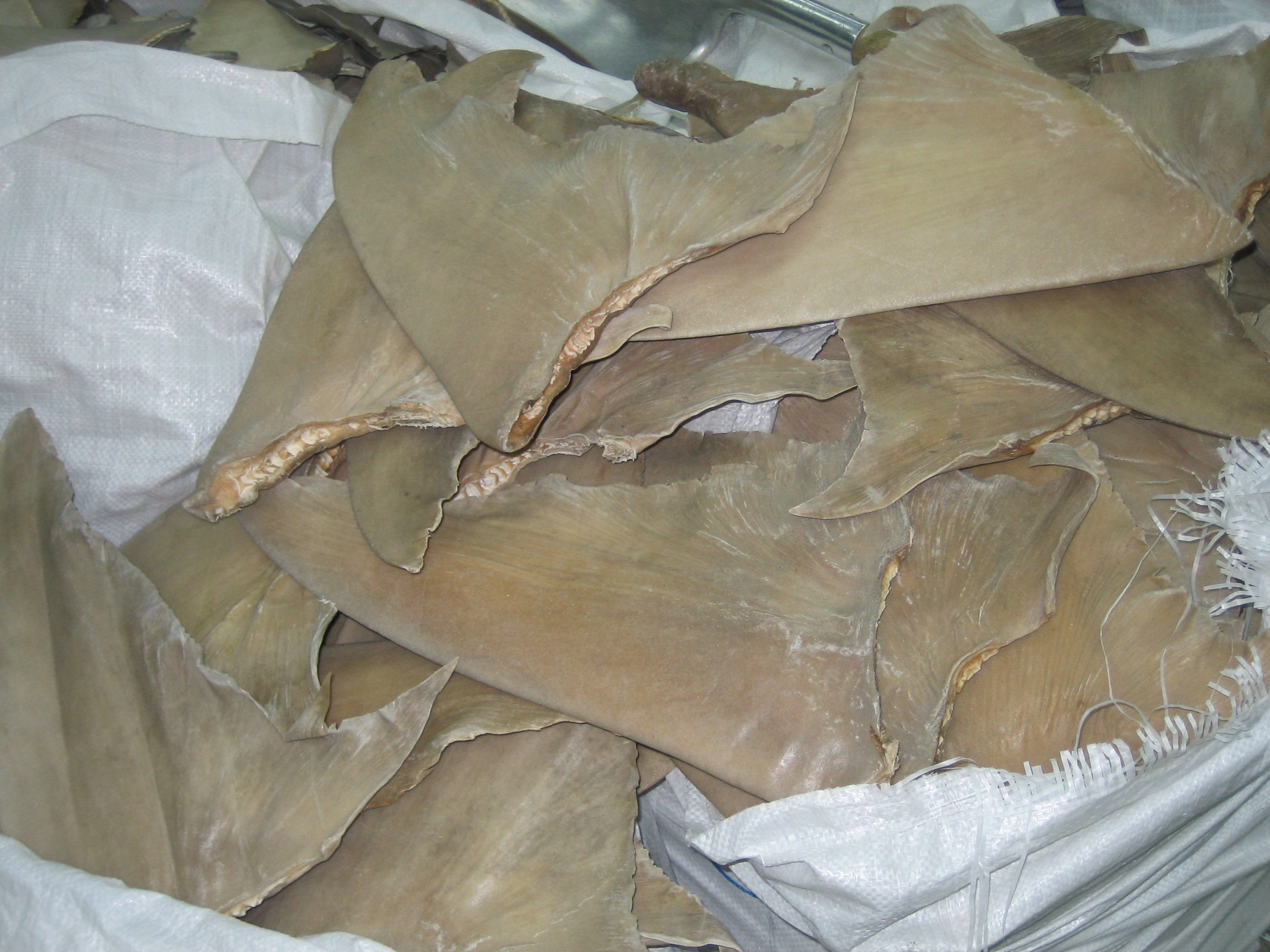
Shark fin soup, conservation, and racism: A Storify of yesterday’s twitter discussion

Posted on July 19, 2012 By David Shiffman 3 Comments on Shark fin soup, conservation, and racism: A Storify of yesterday’s twitter discussion
Uncategorized

Accusations of racism and cultural imperialism have long plagued the shark conservation movement. Earlier this week, a second lawsuit was filed in California opposing their shark fin ban. One of the reasons given for the Chinatown Neighborhood Association’s lawsuit was discrimination against citizens of Chinese descent. According to the San Francisco Examiner:

“[Chinatown Neighborhood Association Member Marcus] Lee noted that the law allows consumers to eat shark meat steaks, but not shark fin soup, leading to racial tensions. “How can you save the shark if you ban eating only the fins, but not the shark meat?” Lee asked. “This ruling is not the solution to the problem. In order to save the sharks, you might as well ban the whole shark entirely.” “

An earlier lawsuit against California’s fin ban, filed by the Asian-American Rights Committee of California, also pointed out the cultural significance of shark fin soup. According to the Huffington Post:

 ” “Shark fin soup is an Asian cultural delicacy with origins in the Ming Dynasty. It is a ceremonial centerpiece of traditional Chinese banquets, as well as celebrations of weddings and birthdays of one’s elders,” the committee wrote in its complaint. “

My personal views on this issue are complex. Populations of many species of sharks are declining at alarming rates (which has numerous negative ecological consequences), the single largest driver for these declines is demand for shark fin soup, and this demand primarily comes from Asian cultures. With very few exceptions, conservationists are not racist, and there are very good reasons to campaign for reducing shark fin soup consumption (and reducing shark fishing in general) . There’s a big difference between criticizing something because it’s different from your own culture and criticizing something because it creates negative ecological and economic ripple effects worldwide. However, when conservationists who are primarily Westerners criticize something that is done primarily by non-Westerners, it undeniably creates what politicians call troubling “optics”. In short, I don’t think campaigning to reduce shark fin consumption is racist, but I can understand how some people might.

I asked my twitter followers what they thought of the claim that criticizing shark fin soup is racist, and added some of the best contributions to the excellent discussion that resulted to a Storify. Check it out below, and feel free to continue the discussion in the comments below.

Read More “Shark fin soup, conservation, and racism: A Storify of yesterday’s twitter discussion” »

The Beneath the Waves Film Festival is touring the U.S. West Coast

Posted on July 18, 2012 By David Shiffman 3 Comments on The Beneath the Waves Film Festival is touring the U.S. West Coast
Uncategorized

Regular readers know that we are big fans of the Beneath the Waves Film Festival, which shows marine science and conservation movies (I’m actually a co-organizer). If you’ve been excited to attend the festival after reading about it on Southern Fried Science but haven’t been able to attend, this could be your chance. The flagship event takes place each March as part of the Benthic Ecology conference, but this year the festival has expanded to include a variety of public screenings throughout the country.

Read More “The Beneath the Waves Film Festival is touring the U.S. West Coast” »

South Carolina Governor Nikki Haley slashes funding for coastal science and sustainable development

Posted on July 12, 2012January 9, 2024 By David Shiffman 4 Comments on South Carolina Governor Nikki Haley slashes funding for coastal science and sustainable development
South Carolina Governor Nikki Haley slashes funding for coastal science and sustainable development
Science

Earlier this week, South Carolina governor and rising tea party star Nikki Haley cut all state funding for the South Carolina Sea Grant Consortium. Sea Grant programs are a critical part of the United States’ marine and coastal research network. In addition to providing millions of dollars in scientific grants, the  national Sea Grant college program (of which the South Carolina consortium is a member) connects scientists, educators, and citizens with the goal of “helping citizens utilize scientific information to support a vibrant economy while ensuring ecological sustainability” (source). In total, there are 32 Sea Grant programs throughout the country, which help coordinate research and strategic goals with experts in every state that borders an ocean or one of the Great Lakes.

Despite Governor Haley’s claims, the Sea Grant Consortium is basically the opposite of big government and wasteful government spending. Though they are administered centrally by the National Oceanic and Atmospheric Administration, each Sea Grant program is independently run. According to Executive Director Rick DeVoe,

“It is important to note that the programs we undertake are developed as a result of the input we solicit from our stakeholders along the coast and inland – businesses and organizations, NGOs, and people who depend on coastal and marine resources for their livelihoods, their pleasure and their quality of life….The S.C. Sea Grant Consortium generates and applies science-based information on issues and opportunities to enhance the practical use and conservation of coastal and marine resources to foster a sustainable economy and environment in the state and region.”

The state contribution pays mostly for local staff and facilities that are used to apply for and distribute grants. Since much of the funding for grants they distribute comes from the Federal government, the entire state-contributed budget for the South Carolina Sea Grant Consortium is a little over $428, 000 out of a total state budget of around $21,000,000,000, less than the total salaries of the Governor’s personal staff. Cutting this critical program thus results in a 0.002% reduction in state government spending, right after the state of South Carolina got more than $1.4 billion in increased tax revenue as a result of the economy improving.

Read More “South Carolina Governor Nikki Haley slashes funding for coastal science and sustainable development” »

Genetics study reveals 79 potentially new species of sharks and rays: what does it mean for science and conservation?

Posted on July 3, 2012July 3, 2012 By David Shiffman 3 Comments on Genetics study reveals 79 potentially new species of sharks and rays: what does it mean for science and conservation?
Conservation, Science

When Dr. Gavin Naylor and his team started a genetic survey of existing shark and ray species, they didn’t expect the results of their project to make international news.  Their recent paper (which, at over 250 pages and complete with more than 100 figures, is nothing short of epic), however, is too striking to ignore. The results indicate that there may be as many as 79 previously unrecognized cryptic species of sharks and rays.

A cryptic species is defined as a group that looks almost exactly like another, and may even live in the same region, but is genetically distinct. We’ve known that cryptic species of sharks and rays exist for some time, such as manta rays and scalloped hammerhead sharks, but 79 is a lot; as of the paper’s publication, only 1,221 species of sharks and rays were recognized.

According to Dr. Naylor,

“Organisms become genetically differentiated over time through the cumulative effects of mutation and recombination mediated via drift and selection. When they differentiate in isolation they eventually become so different from the parental stock from which they were derived that they can no longer produce fertile offspring when crossed with them.  Some biologists use the point of reproductive inviability as the point at which new species should be recognized…..  For practical purposes we recognize “new species” as being genetically or morphologically distinctive from previously recognized forms.”

The study’s methods, though enormous in scope, were relatively basic. According to Dr. Naylor, the study utilized a technique very familiar to geneticists: “standard DNA extraction, PCR, Sanger sequencing, alignment and analysis of a protein coding mitochondrial  gene”. To achieve the goals of understanding both evolutionary relationships of sharks and rays and parasite host specificity ( where certain parasites associated only with one species), Dr. Naylor and his team obtained and analyzed samples from as many species as they could. The numbers are impressive- 56 of 57 known families of elasmobranchs were represented among the 4,283 samples from 305 species of sharks and 269 species of batoids. In other words, this study included approximately half of all known elasmobranch species, including many that had never been analyzed genetically before. Since 1986, when the project began, samples have been obtained in more than 50 countries, mostly through the team’s own field work!

Read More “Genetics study reveals 79 potentially new species of sharks and rays: what does it mean for science and conservation?” »

An 8th grade WhySharksMatter gets career advice

Posted on July 2, 2012 By David Shiffman 3 Comments on An 8th grade WhySharksMatter gets career advice
Science

A few weeks ago, I went home to Pittsburgh to surprise my mom for Mother’s Day. While there, I had the unenviable task of emptying out my childhood bedroom in preparation for my parents moving to a smaller place. I was apparently a bit of a pack rat growing up- while cleaning the room, I found every birthday card I had received and every test I had taken from elementary school through high school.  I also found the results of my 8th grade career aptitude test, taken in 1999.

Based on my skills and interests, the “Career Futures” computer had recommended three potential careers for me: high school science teacher, military officer specializing in intelligence gathering, and marine biologist. Some of you may also know that three years later, my high school guidance counselor half-jokingly recommended that I consider a career as the leader of a cult, but that’s a story for another time.

While taking a break from cleaning out my room, I looked over the full reports for each career choice. The description of the career of a marine biologist was of particular interest, since that’s what I actually ended up doing with my life (I am definitely not secretly working as a military intelligence officer, nothing to see here, move along).

Read More “An 8th grade WhySharksMatter gets career advice” »

World Oceans Day #OceanFacts

Posted on June 26, 2012 By David Shiffman
Science

On World Oceans Day, I asked the online marine science and conservation community to tweet their favorite facts about the ocean using the hashtag #OceanFacts . Dozens of people joined the discussion, and more than 300 #OceanFacts were contributed. These tweets cover a variety of topics, from marine invertebrates, fish, sharks, and marine mammals to facts about the ocean itself and conservation policy. The discussion also inspired a great deal of humorous posts, including an entire spinoff #OceanFibs hashtag. Some of my favorite #OceanFacts tweets are saved in the Storify below.

Read More “World Oceans Day #OceanFacts” »

Posts pagination

Previous 1 … 34 35 36 … 68 Next

Popular Posts

The next OpenCTD is here!The next OpenCTD is here!June 22, 2026Andrew Thaler
What Ocean Ramsey does is not shark science or conservation: some brief thoughts on "the Shark Whisperer" documentaryWhat Ocean Ramsey does is not shark science or conservation: some brief thoughts on "the Shark Whisperer" documentaryJuly 2, 2025David Shiffman
Undermining the Law of the Sea. Some additional thoughts following my OpEd in the Hill.Undermining the Law of the Sea. Some additional thoughts following my OpEd in the Hill.June 22, 2026Andrew Thaler
What is a Sand Shark?What is a Sand Shark?November 12, 2017Chuck Bangley
The story of the pride flag made from NASA imagery: Bluesky's most-liked imageThe story of the pride flag made from NASA imagery: Bluesky's most-liked imageSeptember 27, 2024David Shiffman
Tagging Bull Sharks in the Neuse RiverTagging Bull Sharks in the Neuse RiverAugust 4, 2011Guest Writer
That's not a blobfish: Deep Sea Social Media is Flooded by AI SlopThat's not a blobfish: Deep Sea Social Media is Flooded by AI SlopDecember 19, 2025Andrew Thaler
Our favorite sea monsters – Ningen (#4)Our favorite sea monsters – Ningen (#4)September 7, 2010Andrew Thaler
Rice’s whale and the curious case of the disappearing species.Rice’s whale and the curious case of the disappearing species.June 25, 2026Southern Fried Science
Shark of Darkness: Wrath of Submarine is a fake documentaryShark of Darkness: Wrath of Submarine is a fake documentaryAugust 10, 2014Michelle Jewell
Subscribe to our RSS Feed for updates whenever new articles are published.

We recommend Feedly for RSS management. It's like Google Reader, except it still exists.

Southern Fried Science

  • Home
  • About SFS
  • Authors
  • Support SFS


If you enjoy Southern Fried Science, consider contributing to our Patreon campaign.

Copyright © 2026 Southern Fried Science.

Theme: Oceanly Premium by ScriptsTown