Skip to content

Southern Fried Science

Over 15 years of ocean science and conservation online

  • Home
  • About SFS
  • Authors
  • Support SFS

Category: Academic life

Conservation, Technology, and the Future of the Seafloor: My 2023 science year in review.

Posted on January 4, 2024January 4, 2024 By Andrew Thaler
Conservation, Technology, and the Future of the Seafloor: My 2023 science year in review.
Academic life, Science

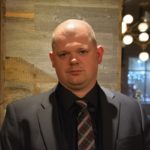
2023 felt like a year where I was just treading water. I barreled through it so fast that I barely registered everything that we accomplishes (and just how much is left to finish). This was a kludge year for me, with lots of small projects instead of one, big, overarching project. Onwards! Deep-sea Mining remains … Read More “Conservation, Technology, and the Future of the Seafloor: My 2023 science year in review.” »

Five Experiment ocean campaigns that need your support.

Posted on April 24, 2023 By Andrew Thaler
Academic life

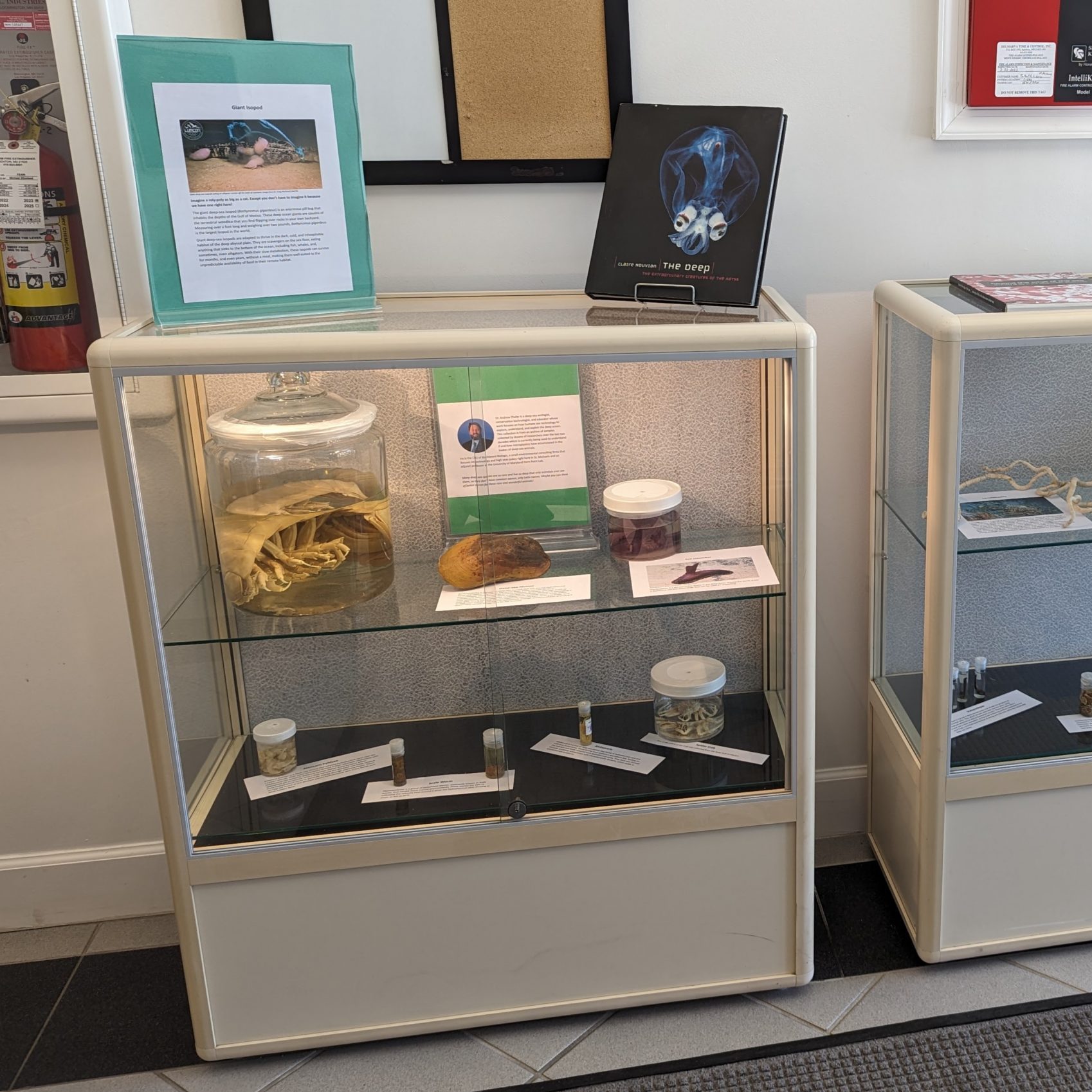
Hi, it’s me, Andrew. And right now I’m crowdfunding an effort to develop an environmental baseline for microplastics in the deep sea using a historic sample archive. You can read more about it here: We need to know more about microplastics in the deep sea. What is Experiment? Experiment is a crowdfunding platform that connects … Read More “Five Experiment ocean campaigns that need your support.” »

The true, essential, and definitive guide to looking like a professional while teaching from home.

Posted on August 17, 2020August 17, 2020 By Andrew Thaler
The true, essential, and definitive guide to looking like a professional while teaching from home.
Academic life

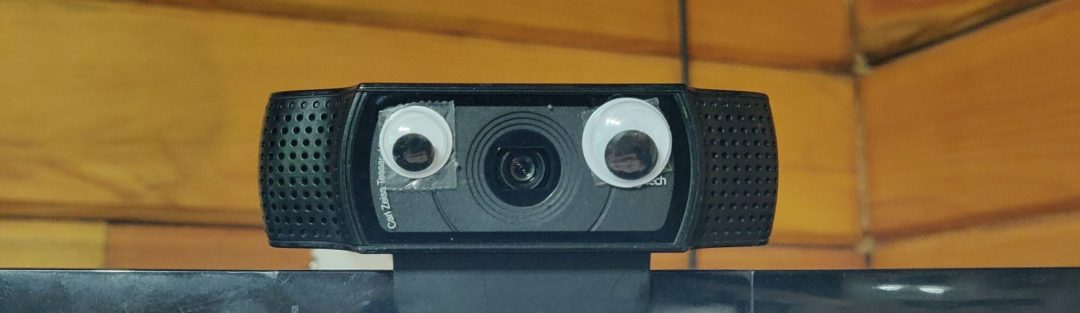
Our world is in turmoil. From the chaos rises a new breed of academics, dedicated to the proposition that, amidst the fire and fury, with the seas rising around us and pandemics descending upon our communities, they alone have the foresight to lead you into the light, to guide you towards a greater good,  to brace the walls and cry out, with clarity of purpose, “No More!” They will  raise a clarion against that greatest of tribulations: looking sloppy while teaching on Zoom. 

I get it. It’s frustrating right now. We’re all trying to figure out how to be good educators and mentors and colleagues in a new, uncertain semester of hybrid classes, asymmetric learning, and teaching from a home that perhaps reveals a little too much about the grim prospects of academia to our bright eyed students. There are ways to make it better, and there are faux pas to avoid but no one has any idea what “professionalism” looks like in the age of Zoom.

This is new ground. We are the professionals. Whatever we need to do to make the class work, provide our students with an enriching and valuable education experience, and not collapse, exhausted, into a three-week-old laundry pile where we lie, like a barnacle, until the next lecture, is professional. 

But given all that, there are a few things you can do to improve the teach-from-home experience for you and for your students.

Read More “The true, essential, and definitive guide to looking like a professional while teaching from home.” »

Creating Healthy Working Cultures in Marine Science Education

Posted on April 10, 2020April 10, 2020 By Catherine Macdonald
Academic life, Education

Below you’ll find a document I’ve been thinking about for more than a decade. I teach marine science field skills to undergraduates and graduate students at Field School and the University of Miami, and I’ve had a lot of opportunities to observe science and scientific learning in action. This is my best effort to distill the key principles I’ve learned about creating a healthy, supportive working environment. Starting the year, my students at Field School will all read and sign on to these principles before working with us.

It feels important to add that cultures are the product of choices and actions (or inaction). They don’t create themselves; they are created by the people within them. That means, sadly, that in every toxic organization there are people who choose, and benefit (or think they benefit) from that toxicity. The good news is that it also means we can choose something else. It’s not out of our hands.     

I’ve spent a lot of my time thinking about how to create welcoming, supportive learning environments for all of my students. And no: I don’t believe compassion and acceptance mean you have to sacrifice scientific rigor—in fact, I think students learn and grow more in these settings.

If you are also engaged in looking for solutions to the systemic problems in how we train future marine scientists, please feel free to join me by sharing this, implementing it in your own teaching, or reaching out with suggestions for how it can be improved based on your knowledge and practice. If you are a student who is struggling with these issues and you need advice or a friendly ear, please know that you are not alone, and my inbox is always open to you.

Read More “Creating Healthy Working Cultures in Marine Science Education” »

Academia should be more Skyrim and less Mario Kart to address lack of long-term diversity

Posted on September 12, 2019September 11, 2019 By Michelle Jewell
Academia should be more Skyrim and less Mario Kart to address lack of long-term diversity
Academic life

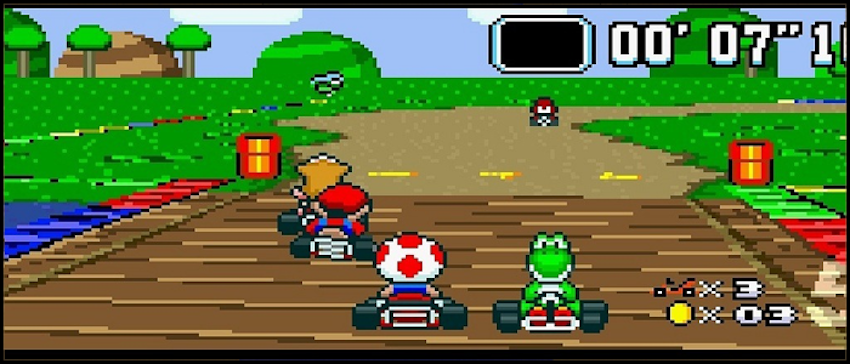
Many friendships in the 90s were built or lost over who got to select their Mario Kart character first because character selection largely determined whether or not you would win.  SNES Mario Kart designers tried to correct this by crafting tracks that favored one character over others, guaranteeing a win on at least one race. Bowser’s fast top speed and drifting skills made them the best suited character for Bowser Castle’s sharp turns and straightaways.  The icy pools of Vanilla Lake smiled upon Koopa Troopa and Toad’s tight handling and minimal drift, but that was arguably the only track they could dominate.  

Now imagine another version of Mario Kart, but instead of a variety of different tracks that celebrate different strengths, every track was built by Mario.  With Mario as an architect, it’s highly likely that every track would favor his particular set of (minimal) strengths.  This would give the non-Mario players an unintended disadvantage since they would never get a chance to excel with their diverse skills, and the majority of races would consequently be won by Marios.  In many places, this is the current state of academia.  

Read More “Academia should be more Skyrim and less Mario Kart to address lack of long-term diversity” »

Egosystem management. Or how tantrums and unprofessional behavior are hindering conservation

Posted on September 2, 2019September 2, 2019 By Chris Parsons
Academic life, Conservation

In helping to organize several meetings and events for conservation groups, I’ve frequently encountered conservation professionals loudly declaiming “Don’t you know who I am!” and expecting special treatment. Recently I got an email from someone whose abstract was rejected by a conference committee I was assisting, in which they had quite a tantrum. There were lots of … Read More “Egosystem management. Or how tantrums and unprofessional behavior are hindering conservation” »

Beware the ghost! The problem of conference ‘ghosting’

Posted on August 7, 2018August 8, 2018 By Chris Parsons
Academic life


Ghosting – the practice of ending a personal relationship with someone by suddenly and without explanation withdrawing from all communication.

Have you ever seen a ghost at a conference? That’s when a presentation is in the program, and the audience is assembled expectantly, and the presenter never turns up. Ghosting is becoming increasingly common at conferences, and as a meeting organizer it’s incredibly frustrating. Conferences only have a limited number of presentation slots. So, if someone says they are going to attend, and then don’t, that’s a slot that could have been taken by someone else. For a student, or someone early in their career, having a conference presentation slot could make a huge difference. So for someone to ‘waste’ a presentation slot by simply not turning up, you are being unthinking towards colleagues as well as the meeting organizers.

Read More “Beware the ghost! The problem of conference ‘ghosting’” »

Customer Service for Science.

Posted on December 6, 2017December 1, 2017 By Andrew Thaler
Academic life

Travis Nielsen is the founder and CEO of Azurigen Management and Consulting Solutions Inc. A STEM project management firm that specializes in linking conservation based science to business and government. He is a published scientist specializing in Marine Biology with 10 years experience in STEM, and 10 years of experience in management and leadership. He has been responsible for projects with budgets up to $500,000, working with multiple stakeholders, large public engagement mandates, and with staffs up to 100 people in locations all across the globe.


Walking into the airport one morning, my mind was still addled by the fog of waking up at 4am. I was heading to a conference for work and as I get to my ticket counter to check-in for my flight I am politely told by the counter staff that the flight had been cancelled. Confused, and curious as to why the flight was shut down, I enquired around until I found a friend that was on shift as a TSA agent, I asked what she knew, and it turns out that the flight was cancelled because one of the flight crew didn’t show up for work. The rumor was the crew member had a little too much fun at the pub and was nursing off a self-inflicted illness… I sighed and laughed to myself about how it was just my luck. This led to a magic adventure of cancellations and bookings for multiple flights and waiting for hours, just to leave the airport.  The reason that this cancellation is now a funny story and not a vivid nightmare – the airline that cancelled the flight went out of its way to help me when things went sideways, giving me vouchers for food and hotel stays, helping me as best they could to get where I needed to go, and generally doing all it could to help.  This help is what the business world calls ‘customer service’ and it is a critical part of every business out there, and for many small businesses, it can be the difference between success and failure.

In science, even though we deal with businesses daily, we rarely realize that we engage in customer service constantly! From professors dealing with the students they teach to the post-docs searching for in-kind services and grant money. To restate the cliché – Science is not done in a vacuum. Scientists should consider themselves an unconventional type of business entity that doesn’t sell a product or service, but instead deals in data and discovery – this is an invaluable product and service that keeps many industries going. As a result, customer service is an integral part of how we do science, and it should be obvious we need to keep our customer service skills sharp.

Read More “Customer Service for Science.” »

Speaking out about sexual harassment in shark science

Posted on November 21, 2017November 21, 2017 By Guest Writer 7 Comments on Speaking out about sexual harassment in shark science
Academic life

Dr. Lisa Whitenack is an Associate Professor of Biology of Allegheny College. She is a shark paleobiologist, studying modern and fossil shark teeth over their 400 million year history. While she is also a member of the Board of Directors and acting chair of the Equity and Diversity committee of the American Elasmobranch Society (AES), this piece is not written under the umbrella of AES. Follow her on twitter at @WhitenackLab.

Author’s note: italicized quotations in this piece come from many different female shark researchers who gave Lisa permission to share their stories in this post.


“Funny that all of this Harvey Weinstein nonsense triggers feelings of AES in me…”

Back in mid-October, a colleague of mine sent the above to me in a private message on social media.

Over the last few years, there has been an increase in stories of sexual harassment and assault coming out of the scientific community. There have been papers and commentary published on the prevalence of harassment and assault in STEM fields such as anthropology, astronomy, and geology. There have been some high profile cases that have made it into the popular media as well. It’s easy to point to the fact that some of these fields are male-dominated as an excuse or a reason. Despite the fact that women are well represented in the biosciences, earning approximately 58% of the Bachelors degrees, 57% of the Masters degrees, and 53% of the Doctorates in 2014, the field of biology is not immune from these issues (see these articles about allegations against Ebola researcher Michael Katze, mammalogist Miguel Pinto, and molecular biologist Jason Lieb.)

“I arranged my desk so he couldn’t sneak up and rub my shoulders anymore.”

Even before the Weinstein news broke, harassment and assault have been at the forefront of my mind, and have been for the last 3 years or so. Until July 2017, part of my committee work at the institution I work at was to evaluate our student code of conduct and to serve on panels for student misconduct cases, including Title IX related cases. As is typical for many female faculty, students tend to visit my office looking for a sympathetic ear or help. Most recently, I have been helping American Elasmobranch Society (AES) write a Code of Conduct for its meetings and am serving as chair of the Equity & Diversity committee. It’s hard to escape these topics when it’s your job. But, it’s really more than just my job. These are issues that infiltrate most aspects of my life, and have for a long time.

“I’ve been told that women can’t do fieldwork.”

Read More “Speaking out about sexual harassment in shark science” »

Nature Publishes Top 100 List for Ecology Papers. Here’s Why It’s Wrong.

Posted on November 14, 2017November 14, 2017 By Bluegrass Blue Crab
Academic life

This morning, I sat down at my desk to clear out my morning emails, make my to-do list, and go about my day. Through several of these channels, I was pointed to a new article in Nature detailing the top 100 articles every ecologist should read. There were already critiques of it flowing through social media, mainly about the representativeness of the list. Depending on which kind of professional hat I’m wearing at the moment, I tend to agree with these assessments. While I recognize – and have read – most of the papers on the list in my early ecological education, I think it misses the mark on defining ecology.

Read More “Nature Publishes Top 100 List for Ecology Papers. Here’s Why It’s Wrong.” »

Posts pagination

Previous 1 2 3 4 Next

Popular Posts

Shark scientists want their research to help save threatened species, but don’t know how. Our new paper can help.Shark scientists want their research to help save threatened species, but don’t know how. Our new paper can help.December 1, 2025David Shiffman
Norway and Cook Islands put their deep-sea mining plans on pause.Norway and Cook Islands put their deep-sea mining plans on pause.December 3, 2025Andrew Thaler
What Ocean Ramsey does is not shark science or conservation: some brief thoughts on "the Shark Whisperer" documentaryWhat Ocean Ramsey does is not shark science or conservation: some brief thoughts on "the Shark Whisperer" documentaryJuly 2, 2025David Shiffman
What we know we don't know: impacts of deep-sea mining on whales, dolphins, sharks, turtles, and other migratory species.What we know we don't know: impacts of deep-sea mining on whales, dolphins, sharks, turtles, and other migratory species.November 20, 2025Andrew Thaler
2025: My year in writing, public speaking, and media interviews2025: My year in writing, public speaking, and media interviewsDecember 3, 2025David Shiffman
The Trouble with Teacup PigsThe Trouble with Teacup PigsOctober 14, 2012Andrew Thaler
Urea and Shark OsmoregulationUrea and Shark OsmoregulationNovember 15, 2010David Shiffman
How tiny satellites are tracking marine wildlifeDecember 1, 2025Andrew Thaler
Shark of Darkness: Wrath of Submarine is a fake documentaryShark of Darkness: Wrath of Submarine is a fake documentaryAugust 10, 2014Michelle Jewell
Quick Tips for Graduate Student Life - Write a Book ReviewJanuary 23, 2014Andrew Thaler
Subscribe to our RSS Feed for updates whenever new articles are published.

We recommend Feedly for RSS management. It's like Google Reader, except it still exists.

Southern Fried Science

  • Home
  • About SFS
  • Authors
  • Support SFS


If you enjoy Southern Fried Science, consider contributing to our Patreon campaign.

Copyright © 2025 Southern Fried Science.

Theme: Oceanly Premium by ScriptsTown