Skip to content

Southern Fried Science

Over 15 years of ocean science and conservation online

  • Home
  • About SFS
  • Authors
  • Support SFS

Category: Blogging

A request to environmentalists and journalists discussing shark fin ban legislation

Posted on March 23, 2015 By David Shiffman
Blogging, Science

Many of the U.S. state-level shark fin bans which make it illegal to buy, sell, or possess shark fins include exemptions for smooth and spiny dogfish, i.e. by far the most common species of sharks caught by U.S. fishermen. Some of these fisheries have significant conservation concerns associated with them. Much of this fishing is not currently subject to catch limits or other basic management

You would never know that most locally caught sharks are not affected at all by fin bans by reading most of the action alerts that some conservation organizations send out to encourage ocean lovers to support these laws, by following most of the media coverage of these laws, or by reading most people’s excited posts after these laws pass. Many of these inaccurately say that shark fin bans “protect all sharks.”

I have a request to make to the conservation organizations supporting these laws, journalists covering them, and the shark and ocean lovers celebrating when they pass. If you want to support laws with an exemption for dogfish sharks, that’s fine, but let’s have an open and honest discussion about why you are doing this instead of just acting like it isn’t happening.

Read More “A request to environmentalists and journalists discussing shark fin ban legislation” »


How to write and publish a scientific paper in the field of marine ecology and conservation

Posted on March 6, 2015 By David Shiffman
Blogging, Science

Author’s note: The following blog post is an adaptation of a professional development training workshop that I gave to our lab’s interns. It is intended to serve as an introductory guide for advanced undergraduate and beginning graduate students who have never published a scientific paper before. It’s a combination of advice I’ve received from teachers, colleagues, and training workshops. This advice has worked well for me personally in the fields of marine ecology and conservation; as of this writing I have 14 published papers and have served as a peer reviewer for 26 different journals. However, there are lots of other strategies out there, and you should seek them out and figure out what works best for you, particularly if you’re in a radically different academic discipline. 

Part 1: What is a scientific paper?

The process of writing and publishing peer-reviewed scientific papers can be confusing and intimidating to beginning students, who may know that these papers are professionally important but not how to create their own. Different in scope, style, and significance from a class term paper or thesis, these papers are formal, technical writeups of a scientific research project or idea. They are written by scientists or technical experts, and peer-reviewed by other scientists or technical experts who (ideally) provide constructive criticism.

Read More “How to write and publish a scientific paper in the field of marine ecology and conservation” »

17 actually worthwhile things to know about mosquitoes

Posted on March 3, 2015 By Guest Writer
Blogging

ATanjim Hossain is an NSF graduate research fellow at the University of Miami. His research focuses on the intersection of microclimatology and mosquito vector ecology from an epidemiological perspective. Follow him on twitter here

BuzzFeed: the epitome of unnecessary hyperbole and an amalgam of often unoriginal content. I’ve long been convinced that this website is a waste of time and that it parrots bullshit in exchange for pageviews. Imagine my surprise, then, when I saw a recent article headlined, “17 Things Only Chronic Mosquito Victims Will Understand.”For a brief moment I was encouraged, hopeful even, that BuzzFeed might have turned a page and published something worth reading. You, wise reader, likely know this this turned out. Below I present 17 things which I think are actually worth knowing relevant to mosquitoes.

Read More “17 actually worthwhile things to know about mosquitoes” »

What Leonard Nimoy and Spock meant to me as a Jewish conservation biologist

Posted on February 27, 2015 By David Shiffman 4 Comments on What Leonard Nimoy and Spock meant to me as a Jewish conservation biologist
Blogging

Earlier today, the New York Times reported that actor Leonard Nimoy had died at the age of 83. Coming just two days after the death of Genie Clark, this means that I’ve lost two of my childhood heroes in one week. I’ve already briefly written about what Genie meant to me and to my friends here and here and am quoted here, but Leonard Nimoy’s impact on me  is a little harder to explain. I hope our readers will indulge me in an unusually personal post.

I’ve been a big fan of science fiction, something I’ve always loved sharing with my mother, since I was a kid. A world where science and intellect and technology, not brute force, are used to solve problems holds obvious appeal. To a kid who grew up struggling with some anti-Jewish discrimination, the diversity featured on shows like Star Trek was inspiring. People that were different didn’t have to hide their differences and lay low and try to avoid standing out in a crowd of people different from you, like I did. Not only did the main characters not tease and attack each other because they were different, but this behavior was actively portrayed as a problem on several episodes. The Federation wasn’t successful despite including different cultures and religions and even species, they were successful because of it.  The environmental conservation message in Star Trek plotlines like “the Voyage Home” made a budding young conservation biologist relate to it even more.

Read More “What Leonard Nimoy and Spock meant to me as a Jewish conservation biologist” »

Fun Science FRIEDay – Darwin Says Survival of the… empathetic?!

Posted on January 23, 2015 By Kersey Sturdivant
Blogging, Science

Dacher Keltner, professor of psychology and founding faculty director of the Greater Good Science Center at UC Berkeley has been pushing an idea – Humans are built to be good, because it aids in human survival.

Photo credit:  ThinkGeek @ shirtoid.com
Photo credit: Berkeley Social Interaction Lab, UC Berkley

Read More “Fun Science FRIEDay – Darwin Says Survival of the… empathetic?!” »

Sizing Sizing Ocean Giants: Patterns of #scicomm outreach in a marine megapaper

Posted on January 20, 2015February 9, 2021 By Andrew Thaler 2 Comments on Sizing Sizing Ocean Giants: Patterns of #scicomm outreach in a marine megapaper
Blogging, Conservation, Science

Last week, Craig McClain and many friends published Sizing Ocean Giants: patterns of intraspecific size variation in marine megafauna, a research paper that would better be described as a monograph. The response to the paper has been overwhelming.

Since it’s publication last Tuesday, Sizing Ocean Giants has been viewed almost 44,000 times by 38,000 people and downloaded 1200 times. If this seems like a lot for what is essentially a natural history monograph, you are correct. According to Altmetric, a service that measures the non-citation impact of scientific papers, Sizing Ocean Giants is the most discussed and shared article in the history of PeerJ. With a score of 546 (most papers average a score of 5, PeerJ papers average about 20), our paper has climbed into the 99th percentile of all articles ever tracked.

We’ve been covered in the Washington Post, Newsweek, National Geographic, and Scientific American, as well as numerous non-English media outlets from Mexico to Greece. Opa!  We’ve seen a small attention spike on twitter and tons of shares (almost 12,000) via Facebook.

So how do we account for the huge success of this massive paper?

Read More “Sizing Sizing Ocean Giants: Patterns of #scicomm outreach in a marine megapaper” »

Snowy Owls and Goliath Groupers: Why I co-authored “Trophy fishing for species threatened with extinction.”

Posted on January 9, 2015January 9, 2015 By Andrew Thaler 2 Comments on Snowy Owls and Goliath Groupers: Why I co-authored “Trophy fishing for species threatened with extinction.”
Blogging, Conservation, Science

In both my professional and private life, I am a man who wears many hats. I am a deep-sea ecologist, a science writer, a goatherd, a geneticist, a conservation advocate, a grill master, and many others. When David asked me to join him in co-authoring “Trophy fishing for species threatened with extinction: A way forward building on a history of conservation” I did so not in my capacity as a marine science Ph.D., but as a recreational fisherman who cares deeply about the survival of his sport. Without fish, there is no fishing.

I was, at first, skeptical, but over the course of a summer, I came to appreciate what David was trying to accomplish.

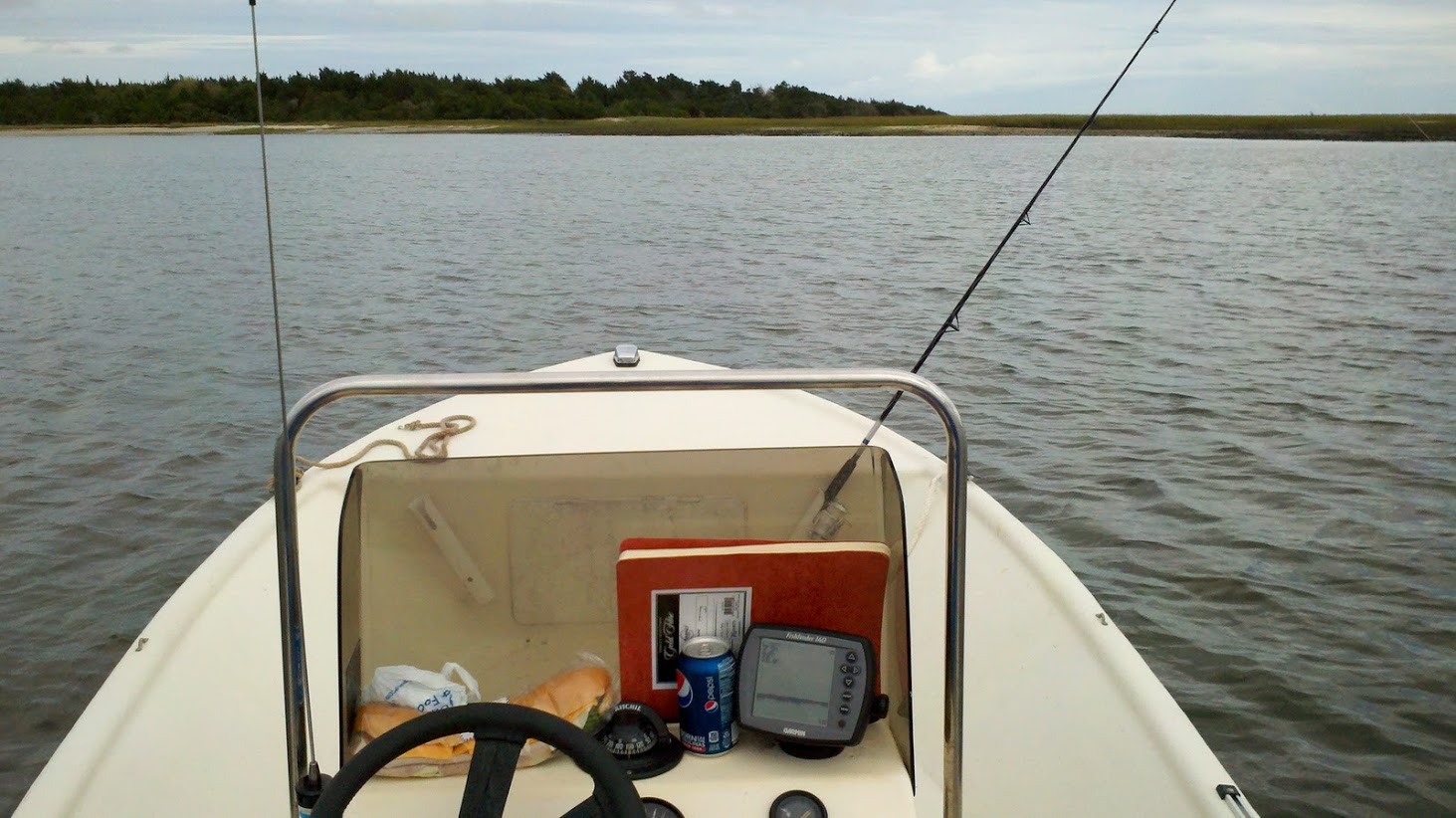
I wrote most of my thesis on this boat, with a rod in the water.

Before I talk about fish, I need to talk about birds. 

Read More “Snowy Owls and Goliath Groupers: Why I co-authored “Trophy fishing for species threatened with extinction.”” »

Andrew’s five favorite “new” ocean blogs

Posted on December 9, 2014 By Andrew Thaler 2 Comments on Andrew’s five favorite “new” ocean blogs
Blogging, Science

Several years ago, the ocean blogosphere experienced a moment which can only be described as a Great Convergence. Numerous popular independent blogs, either seeking refuge from The Event, looking for a broader audience, or undergoing life transitions that made it impossible to maintain the high volume of new content, merged under the aegis of the Southern Fried Science/Deep Sea News aegis. For a while, the ocean blogosphere felt empty, with few giants roaming the internet depths (once one-man shows, Craig McClain now shares Deep Sea News with 8 current writers, the addition of Michelle Jewell brings Southern Fried Science up to 11). For a while the mighty Sea Monster filled the void, but they have slowed in recent months.

I miss the days when we had to check a dozen links each morning for the latest and greatest in ocean science writing. Fortunately, as often happens when ecologic niches are left empty, new species emerge to fill them. There is a new crop of excellent ocean blogs rising up from the deep. Here are five of my favorite new* ocean blogs that you should already be reading.

Read More “Andrew’s five favorite “new” ocean blogs” »

Seals use signals from acoustic tags to find fish

Posted on December 4, 2014December 8, 2014 By Michelle Jewell
Blogging, Conservation, Science

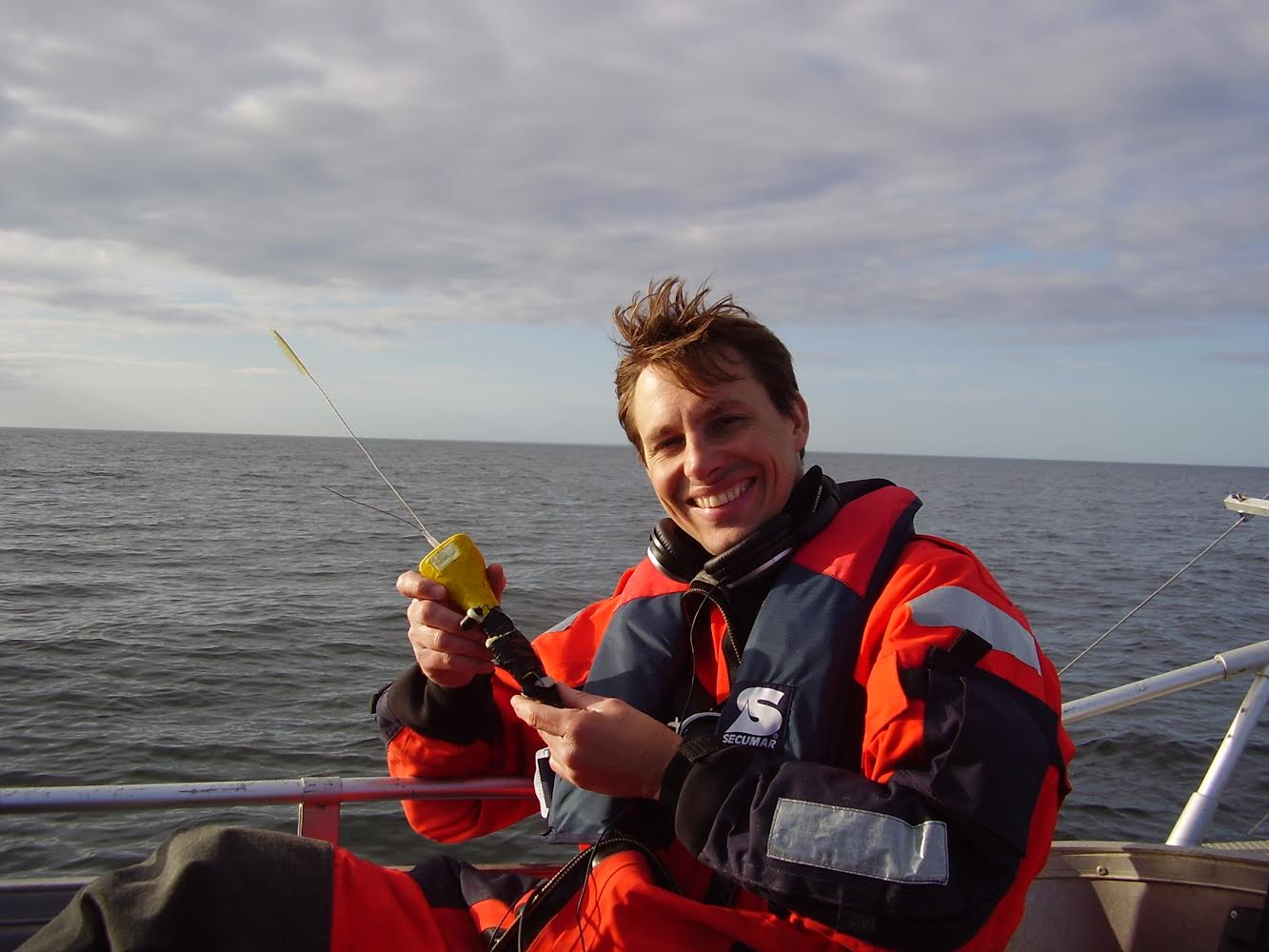
michelleMichelle Jewell is a Zoologist specialized in predator/prey behaivour and the Scientific Communicator for EDNA Interactive.  She has spent the past 4 years studying the behaviour of white sharks and Cape fur seals at Geyser Rock, ‘Shark Alley’, South Africa.  

Anyone who has worked with seals knows they are crafty critters that will always find the easiest way to eat fish.  Take the rise and fall of acoustic deterrent devices in aquaculture farms that were designed to scare away seals and other predators.  They had limited success and resident predators habituated to the sound when they realized there was no immediate danger.  These devices have been shown to actually attract more predators over time, especially passing pinnipeds.

Scientists have used acoustic tags to monitor fish movements since the 1950s, and hundreds of species have been implanted with these tags (a ‘few’ studies listed here) throughout rivers, lakes, estuaries, and the ocean.  Could marine mammals associate tag signals with food and do they do this in the wild?  A recent laboratory study from St. Andrews (free to download here) answers the first half of this question, showing that grey seals Halichoerus grypus  were able to use the signals transmitted from Vemco V9–2H tags to identify boxes that contained fish.

Read More “Seals use signals from acoustic tags to find fish” »

Here lies American science

Posted on November 28, 2014December 1, 2014 By Guest Writer
Blogging

wrightAndrew Wright is a British marine biologist that has been working on the science-policy boundary around the world for over a decade. His experiences have led him to champion a better communication of science to policy makers and the lay public. His research has included a population viability analysis for the vaquita, sperm whales bioacoustics and the impacts of noise on various marine mammals. Andrew is currently working on several projects, most relating to investigating either sleeping behaviour or chronic stress in wild cetaceans. He is also spearheading efforts to bring more marketing techniques into conservation outreach.


As most of you know by now, on November 12th, the European Space Agency (ESA) landed a probe (Philae) on the surface of a comet (67P/Churyumov–Gerasimenko) as part of the Rosetta mission. However, perhaps some of you are unaware that NASA cut a strikingly similar mission (Comet Rendezvous Asteroid Flyby) due to budget constraints. NASA basically had to choose between two missions and picked the other one (the Cassini-Huygens mission to Saturn). That forgotten mission was scheduled to touch-down on the comet Kopff in 2001, and its cancellation left the ESA to grab first prize for a soft-landing on a comet.

Read More “Here lies American science” »

Posts pagination

Previous 1 … 10 11 12 … 19 Next

Popular Posts

Shark scientists want their research to help save threatened species, but don’t know how. Our new paper can help.Shark scientists want their research to help save threatened species, but don’t know how. Our new paper can help.December 1, 2025David Shiffman
What Ocean Ramsey does is not shark science or conservation: some brief thoughts on "the Shark Whisperer" documentaryWhat Ocean Ramsey does is not shark science or conservation: some brief thoughts on "the Shark Whisperer" documentaryJuly 2, 2025David Shiffman
Norway and Cook Islands put their deep-sea mining plans on pause.Norway and Cook Islands put their deep-sea mining plans on pause.December 3, 2025Andrew Thaler
What is a Sand Shark?What is a Sand Shark?November 12, 2017Chuck Bangley
Mermaids: The New Evidence is a Fake DocumentaryMermaids: The New Evidence is a Fake DocumentaryMay 28, 2013Andrew Thaler
Build a dirt cheap, tough-as-nails field computer in a Pelican caseBuild a dirt cheap, tough-as-nails field computer in a Pelican caseJuly 21, 2015Andrew Thaler
What can the funniest shark memes on the internetz teach us about ocean science and conservation?What can the funniest shark memes on the internetz teach us about ocean science and conservation?November 8, 2013David Shiffman
Breaking News! "Most Comprehensive Estimate of Mortality": Between 63 and 273 Million Sharks Killed Each YearBreaking News! "Most Comprehensive Estimate of Mortality": Between 63 and 273 Million Sharks Killed Each YearMarch 1, 2013David Shiffman
Shark of Darkness: Wrath of Submarine is a fake documentaryShark of Darkness: Wrath of Submarine is a fake documentaryAugust 10, 2014Michelle Jewell
10 fish weirder than the fish in the 10 weirdest fish in the world list10 fish weirder than the fish in the 10 weirdest fish in the world listDecember 18, 2013Guest Writer
Subscribe to our RSS Feed for updates whenever new articles are published.

We recommend Feedly for RSS management. It's like Google Reader, except it still exists.

Southern Fried Science

  • Home
  • About SFS
  • Authors
  • Support SFS


If you enjoy Southern Fried Science, consider contributing to our Patreon campaign.

Copyright © 2025 Southern Fried Science.

Theme: Oceanly Premium by ScriptsTown