Skip to content

Southern Fried Science

Over 15 years of ocean science and conservation online

  • Home
  • About SFS
  • Authors
  • Support SFS

Category: Conservation

Mining the Deep Sea: what’s it worth?

Posted on December 13, 2011December 15, 2011 By Andrew Thaler
Conservation, Science

a fragment of a hydrothermal vent
The shimmering insides of a vent chimney

In Jules Verne’s 20,000 Leagues Under the Sea*, the iconic Captain Nemo announced that “in the depths of the ocean, there are mines of zinc, iron, silver and gold that would be quite easy to exploit” while predicting that the abundance of marine resources could satisfy human need. If the pace of development for deep-sea mining projects and the estimated value of deep-sea ores is any indicator, it seems as though our misanthropic mariner was wrong on both counts.

In The abundance of seafloor massive sulfide deposits, an international team of geologists attempts to quantify the total available copper and zinc contained in deep-sea massive sulfide mounds. Seafloor massive sulfide mounds are a byproduct of the processes that create deep-sea hydrothermal vents. As super-heated sea water emerges from the vent, it deposits heavy metals and other elements and minerals along the walls of the vent. Over thousands of years, an active vent field can build up a huge mound of metal and mineral rich ore – a massive sulfide mound. In addition to copper and zinc, these mounds can contain gold and silver. Generally, the ore is of much higher quality than its terrestrial counterpart. Over the last few decades, many exploration companies were eyeing these deposits, but it’s only recently that technological developments and economic incentives have aligned to permit potentially profitable deep-sea mining.


Read More “Mining the Deep Sea: what’s it worth?” »

Saving Nemo: 1 out of 6 species that appear in Finding Nemo are threatened with extinction

Posted on December 12, 2011December 13, 2011 By David Shiffman 3 Comments on Saving Nemo: 1 out of 6 species that appear in Finding Nemo are threatened with extinction
Conservation, Popular Culture, Science

WhySharksMatter found Nemo at Disney's Living Seas Aquarium

Like most marine biology geeks, I’m a huge fan of Disney/Pixar’s “Finding Nemo”. In addition to a heartwarming story of a father trying to bring his son home to their aneme…anemeneme… amenememe… anemone,  the film showcases an enormous variety of beautiful real-life coral reef species. According to  research published today in Conservation Letters, however, we may soon only be able to see some of these animals in the movies. The paper, titled “Extinction Risk and Bottlenecks in the Conservation of Charismatic Marine Species”, concluded that many of the stars of Finding Nemo are in deep trouble.

Read More “Saving Nemo: 1 out of 6 species that appear in Finding Nemo are threatened with extinction” »

The Birth of Sustainability Science

Posted on December 9, 2011December 9, 2011 By Bluegrass Blue Crab 1 Comment on The Birth of Sustainability Science
Conservation

Every once in a while, with predictable regularity, I will encounter a call to be more interdisciplinary in order to fully understand the many aspects of a given issue. The world forgot to compartmentalize its problems for ease of solution. Solutions require scientists to think big and basic at the same time – recent estimates that 7 billion people will roam the planet by the end of this year – and that creates a big demand for resources such as food, water, fuel, and fiber. Ecologists clearly have something to say on the matter and designated 2011’s meeting theme  “Earth Stewardship”, meant as a way to kick off new thinking on research process and connecting research to problem solving.

Read More “The Birth of Sustainability Science” »

Better Conservation through Cloning: this cock doesn’t crow

Posted on December 7, 2011December 7, 2011 By Andrew Thaler 7 Comments on Better Conservation through Cloning: this cock doesn’t crow
Conservation, Science

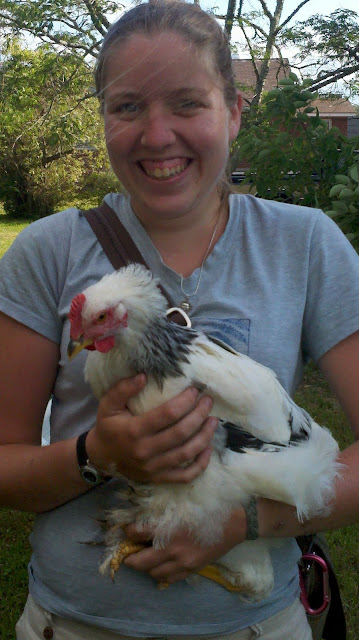
Poor Vindaloo never learned to crow.
Poor Vindaloo never learned to crow. Photo by Andrew David Thaler.

I awoke one morning early last spring to a noise I has been dreading for weeks, the first crow of a chicken that was not supposed to be a rooster. It took me several minutes to fully register what I was hearing. Rather that the classic cock-a-doodle-do we often associate with the rooster’s crow, the sound emanating from my hen house was an awkward, unstable noise not unlike a turkey squawking through a vat of molasses while being vigorously shaken. Over the next several months, two more cocks arrived crowing, in my flock. All three roosters, different breeds from different parents, made noises resembling nothing like a rooster’s crow. There was no pattern; some mornings they would crow off-and-on for a few hours, other mornings they would, for lack of a better word, gargle for half-an-hour straight.

I raise my chickens from day-old hatchlings. Those three roosters, from my very first flock, had never met an adult chicken. They imprinted on Amy and me and looked to us for guidance. When we introduced them to new food, new water dispensers, even small changes to their habitat (like a particularly terrifying log), we had to teach them. Instinctively, they would scratch for food, and if left to their own devices, they would attempt to eat everything, but for the most part, we had to show them how to eat, how to drink, how to roost. But we could not teach them how to crow.

Which is why Casey B. Mulligan’s Economix article in the New York Times – Species Protection and Technology – which argues that cloning could be an effective tool to restore extinct species (a topic I’ve been thinking about quite a bit in terms of population dynamics), is fatally flawed.

Read More “Better Conservation through Cloning: this cock doesn’t crow” »

Bluefin Tuna, Big Game Hunters, and the Conservation Vortex

Posted on November 29, 2011December 9, 2011 By Andrew Thaler 4 Comments on Bluefin Tuna, Big Game Hunters, and the Conservation Vortex
Conservation, Science

Bluefin Tuna. Public Domain NOAA

Why are we still killing Bluefin Tuna? This question has resonated through the ocean blogosphere recently, as various experts weigh the issues surrounding overfishing and wonder why, when we know how limited the Bluefin Tuna populations are, and how precipitously they’ve declined in the last decade, do they demand record-breaking prices able to support an industry that must range further afield to chase that last, lonely fish? Other conservation writers discuss the recent extinction of not one, but two, rhinoceros species and ponder the fate of large terrestrial mammals. Knowing how rare these rhinoceroses were, why did they continue to be poached? Where does this demand come from?

Read More “Bluefin Tuna, Big Game Hunters, and the Conservation Vortex” »

Wording Matters: Conservation vs. Preservation

Posted on November 27, 2011December 9, 2011 By Bluegrass Blue Crab 2 Comments on Wording Matters: Conservation vs. Preservation
Conservation

In a world where words like sustainability are used in many contexts with widely varying meanings, we forget that the environmental community was once very choosy in its wording. Terms have specific meanings such that a single word can communicate a philosophy and accompanying ethics. Conservation and preservation are two such terms. The first denotes an effort to sustain a space or resource for perpetual use. Preservation denotes a fortress-like approach to nature, walling off human influence in order to maintain pristine “wilderness”. The terms are linked to big figures in American history, each of whom established a land ethic according to their philosophy now codified in US law.

Read More “Wording Matters: Conservation vs. Preservation” »

Do richer nations pollute less? An evaluation of the Kuznets curve

Posted on November 27, 2011December 9, 2011 By David Shiffman 2 Comments on Do richer nations pollute less? An evaluation of the Kuznets curve
Conservation

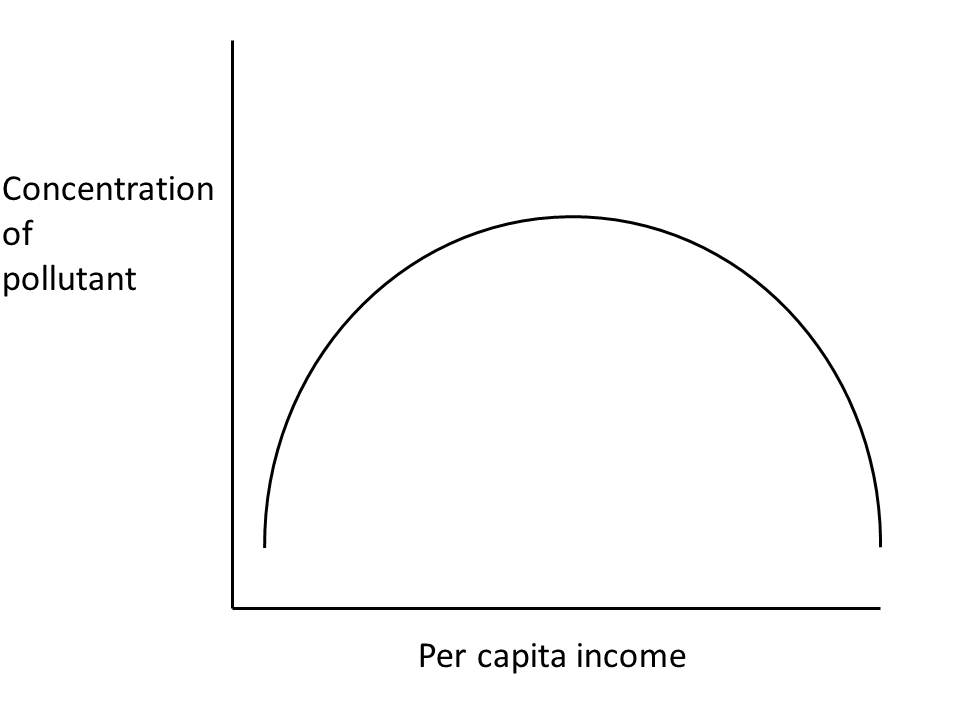
We’ve often heard that “the solution to pollution is dilution”, but according to one theory, the best way to reduce pollution in the first place may be to encourage economic growth. This is best modeled by a simple theoretical figure called a “Kuznets Curve”. According to the Kuznets curve, extremely poor nations pollute relatively little, partially because they lack the technology and resources for large-scale industry. Moderately wealthy nations have the technology for large-scale industry, but not the resources for pollution-reduction measures. The wealthiest nations are able to create large-scale industry and can also afford to purchase pollution reduction technology for their industries (or alternative industries entirely).

A simple Kuznets curve (credit: David Shiffman)

Read More “Do richer nations pollute less? An evaluation of the Kuznets curve” »

Giant manta rays protected by Convention on Migratory Species

Posted on November 25, 2011December 9, 2011 By David Shiffman 6 Comments on Giant manta rays protected by Convention on Migratory Species
Conservation, Science

A few weeks after they were listed as Vulnerable on the IUCN Red List, giant manta rays (Manta birostris) have received major international legal protection. The Parties to the Convention on Migratory Species of Wild Animals (CMS) just agreed to list giant mantas on Appendix 1 and II of CMS at their tri-annual meeting in … Read More “Giant manta rays protected by Convention on Migratory Species” »

America’s lust for gigantic breasts leads to impotence: the population genetics of captive-reared turkeys

Posted on November 23, 2011November 27, 2013 By Andrew Thaler 2 Comments on America’s lust for gigantic breasts leads to impotence: the population genetics of captive-reared turkeys
Conservation, Science
Gobble? image from http://www.public-domain-image.com

The noble turkey, a centerpiece of the American Thanksgiving supper. It looms large from its prominent position on the dining room table. The master of ceremonies – or, in my case, the guy who keeps slicing himself open with various sharp objects yet is inexplicably the one people call on when there’s knife-work needs doing – draws a set of fine, honed knives, set aside for this particular task, and carves, delicately yet firmly, into the hefty white meat of the turkey’s breast. Sure, some favor the dark, rich meat around the legs, but this white meat, soaked in gravy and topped with cranberry sauce or stuffing, that is what we crave.

“We give thanks,” the benediction may begin, “to Charles Darwin, for determining the underlying mechanism by which a theropod may, over the course of 65 million years, through a process of gradual change by means of the retention of beneficial traits through successive generations, evolve into this delicious, delicious bird.” And then, perhaps, that surly teenager, the one determined to point out the social inequalities inherent in the holiday and the colonialist attitudes which led to the wholesale extermination of America’s native peoples – every family has at least one – will chime in to quip “you know, evolution didn’t shape the turkey. The modern Thanksgiving turkey is the product of an extensive selective breeding program that began in the 1940’s. Commercial turkeys can’t even reproduce naturally, they have to be artificially inseminated.” At which point the older members of your family may blush and/or faint at such an unseemly turn of phrase.

Read More “America’s lust for gigantic breasts leads to impotence: the population genetics of captive-reared turkeys” »

Conservation and the American Ginseng

Posted on November 20, 2011December 9, 2011 By Andrew Thaler 2 Comments on Conservation and the American Ginseng
Conservation

Ginseng, the ubiquitous, all-encompassing darling of the alternative medicine and natural health movements, itself a stocky, unassuming root, is in trouble. Prized as a curative additive in everything from sports drinks to dietary supplements, the vast majority of commercial ginseng is farmed in two Canadian provinces and Wisconsin. While commercial stocks remain robust, it is wild ginseng that fetches the highest market price, up to $1,200 a pound, and is used in some high-end ginseng containing products and traditional and alternative medicines. The leading exporter of wild ginseng is the United States, where 85,000 pounds are legally harvested and exported primarily to Hong Kong every year.

Read More “Conservation and the American Ginseng” »

Posts pagination

Previous 1 … 29 30 31 … 49 Next

Popular Posts

At least 74 practicing shark researchers: How a silly thing I said online raised thousands for conservationAt least 74 practicing shark researchers: How a silly thing I said online raised thousands for conservationFebruary 26, 2025David Shiffman
Why the new Trump order to shoot wolves is both illegal and a dreadful precedent for endangered speciesWhy the new Trump order to shoot wolves is both illegal and a dreadful precedent for endangered speciesSeptember 5, 2026Ali Gaster
Severely injured great white shark found, are scientists responsible?Severely injured great white shark found, are scientists responsible?March 29, 2011David Shiffman
5 things I learned helping to reassess the global conservation status of every species of tuna and billfish5 things I learned helping to reassess the global conservation status of every species of tuna and billfishSeptember 15, 2026David Shiffman
That's not a blobfish: Deep Sea Social Media is Flooded by AI SlopThat's not a blobfish: Deep Sea Social Media is Flooded by AI SlopDecember 19, 2025Andrew Thaler
Getting a sense of porpoiseJanuary 20, 2009Andrew Thaler
How to build a canoe from scratch on a graduate student stipendHow to build a canoe from scratch on a graduate student stipendApril 17, 2010Andrew Thaler
13 wrong things about sharks that conservation advocates should stop saying in 2013 (and what they should say instead)December 27, 2012David Shiffman
What is a Sand Shark?What is a Sand Shark?November 12, 2017Chuck Bangley
The Trump Administration’s latest attack on endangered speciesThe Trump Administration’s latest attack on endangered speciesSeptember 17, 2026Ali Gaster
Subscribe to our RSS Feed for updates whenever new articles are published.

We recommend Feedly for RSS management. It's like Google Reader, except it still exists.

Southern Fried Science

  • Home
  • About SFS
  • Authors
  • Support SFS


If you enjoy Southern Fried Science, consider contributing to our Patreon campaign.

Copyright © 2026 Southern Fried Science.

Theme: Oceanly Premium by ScriptsTown