Skip to content

Southern Fried Science

Over 15 years of ocean science and conservation online

  • Home
  • About SFS
  • Authors
  • Support SFS

Category: Science

An open letter to the Florida Fish and Wildlife Conservation Commission on revising land-based recreational shark fishing regulations

Posted on April 17, 2018 By David Shiffman
Conservation, Science

Note: The Florida Fish and Wildlife Conservation Commission (FWC) is holding a public meeting on April 25th which will include the issue of land-based recreational shark fishing. Part of my dissertation research focused on this topic, so I am submitting expert testimony, but since I no longer live in Florida I am submitting it remotely. I am sharing my testimony here. Anyone else who is interested in attending the meeting in person (Fort Lauderdale Marriott on April 25th), or submitting testimony remotely, is free to quote my talking points below if the appropriate references are cited. 

Dear Chair Rivard, Vice Chair Spottswood, Commissioner Kellam, Commissioner Lester, Commissioner Nicklaus, Commissioner Rood, and Commissioner Sole of the Florida Fish and Wildlife Conservation Commission (FWC),

My name is Dr. David Shiffman, and I studied land-based shark fishing in Florida as part of my Ph.D. dissertation at the University of Miami’s Abess Center for Ecosystem Science and Policy. This research was published in the peer-reviewed scientific journal Fisheries Research (here’s a link to an open access copy) and covered in major media outlets including National Geographic, Nature, and the Miami Herald. Accordingly, I would like to provide expert testimony for your April 25th public hearing on this topic. Since I no longer reside in Florida I am submitting this testimony remotely. As a conservation biologist who spent years studying harmful practices among some elements of the land-based Florida shark fishing community, I am grateful to see FWC holding a public meeting that includes this important issue, and I am grateful for the opportunity to contribute.

Overall, the scientific evidence is clear and overwhelming that while many anglers are rule-following and conservation-minded, many common land-based shark fishing practices represent a significant conservation threat to threatened, protected shark species in Florida. Additionally, the evidence is clear and overwhelming that in many cases anglers are breaking existing laws and regulations, and that in some of those cases the anglers are aware that they are breaking the law and are explicitly stating that they don’t care. Finally, the evidence is clear and overwhelming that many of the arguments put forward by land-based anglers in support of the status quo are not argued in good faith, and are intentionally crafted to misrepresent the facts of the situation.

It is obvious to me, and to many expert colleagues with whom I have discussed this issue, that the FWC can and must do more to protect threatened sharks, building off of early successes that made Florida a leader in shark conservation. Specifically, the FWC can and must do more to regulate these harmful practices, enforce clear violations of existing regulations, and educate anglers about these issues. Below I will elaborate on each of these points and propose specific regulatory, enforcement, and public education changes that can be made to protect sharks without significantly infringing on anyone’s rights. I will also counter several common arguments that are put forth by bad actors in the recreational angling community.
Read More “An open letter to the Florida Fish and Wildlife Conservation Commission on revising land-based recreational shark fishing regulations” »

Thoughts on the Sustainable Shark Fisheries and Trade Act

Posted on April 5, 2018 By David Shiffman
Conservation, Science

A few weeks ago, H.R. 5248, The Sustainable Shark Fisheries and Trade Act, was introduced into Congress. The purpose of this bill is to “encourage a science-based approach to significantly reduce the overfishing and unsustainable trade of sharks, rays and skates around the world and prevent shark finning,” according to a press release from Mote Marine Lab. 

Though the devil is always in the details, and I’ll get into those below, here is a general overview of how this would work. The Sustainable Shark Fisheries and Trade Act would direct NOAA Fisheries to evaluate the fisheries management practices of other shark and ray fishing nations. This is similar in principle to other things NOAA is already doing, and a similar role for NOAA was included in the 2010 Shark Conservation Act (but has yet to be implemented).

Nations that have sustainable fisheries management practices comparable to ours (or certain fisheries associated with those nations, even if other fisheries are less well managed) will get a formal certification of their sustainable management practices, and nothing will change for them. Nations (or fisheries) that are found to not have sustainable fisheries management practices comparable to ours will not be allowed to have those products imported into the US and sold in our markets until their management practices improve. In the meantime, they’ll have access to NOAA’s existing capacity building resources and expertise to improve their own practices.

I support much of what this bill is trying to do, but I have some significant concerns about some of the current phrasing and plan for implementation.

Read More “Thoughts on the Sustainable Shark Fisheries and Trade Act” »

In South Louisiana, Seafood Means Hope

Posted on March 19, 2018April 20, 2018 By David Shiffman
Science

This blog post and photo slideshow was created during OCEANDOTCOMM, an ocean science communication event, and supported by the Louisiana Universities Marine Consortium (LUMCON) The theme of OCEANDOTCOMM was Coastal Optimism. Photos were contributed by our lead photographer, Rafeed Hussain/Ocean Conservancy, with additions from other OCEANDOTCOMM attendees, including Melissa Miller, Samantha Oester, Susan Von Thun, Solomon David, Rebecca Helm, and Alexander Havens.

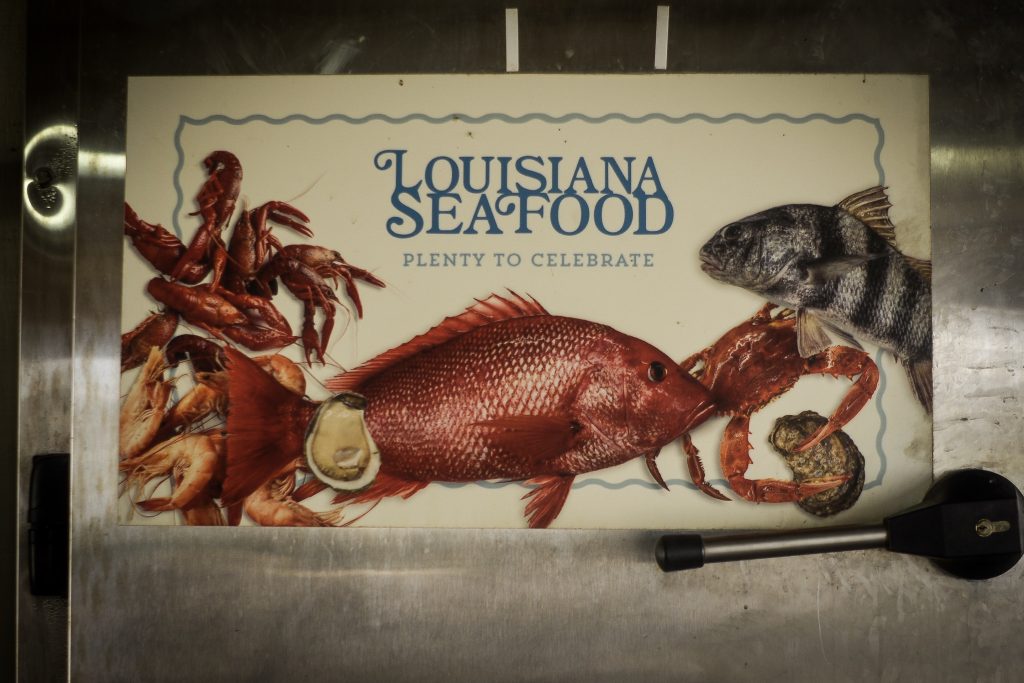
A sign at the Bait House in Chauvin, Louisiana. Photo by Rafeed Hussain / Ocean Conservancy

In many ways, South Louisiana is seafood- a trip here isn’t complete without eating some gumbo, oysters, or crawfish. Only one state (Alaska) lands more seafood than Louisiana’s 1.2 billion pounds a year (as of 2016). As of 2008, one in 70 jobs in the whole state is tied to fishing or related industries. According to the Louisiana Seafood Marketing and Promotion Board, “when you choose Louisiana seafood, you’re ensuring that your purchase benefits an American community and a way of life.”

When we visited Terrebonne Parish, home to nearly 20 percent of all commercial fishing license holders in Louisiana, we found that fishing means more to the people of this community than food and jobs. Here in South Louisiana, fishing is a vital part of the vibrant local culture and community pride. In a region that’s been devastated by hurricanes and oil spills, fishing is also a source of something more important: hope.

Below, you’ll hear what fishing means to South Louisiana’s fishing communities through the voices of a former shrimper, the owner of a grocery store that has served the town of Chauvin for more than a century, and representatives of a local Native American tribe. You’ll also get a glimpse into this beautiful part of the world through a photo slideshow. Together, this paints a picture of communities that have overcome unimaginable struggle, but still look forward to the future, in no small part because of the riches of the sea.

Read More “In South Louisiana, Seafood Means Hope” »

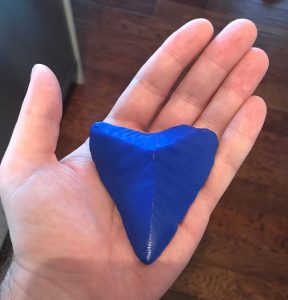
This month’s 3D printed reward is a megalodon tooth! Here are 5 things to know about megalodon.

Posted on March 14, 2018March 13, 2018 By David Shiffman
Education, Science

I recently unveiled a new tier of Patreon rewards: 3D printed shark and ray models! For $17 per month, you will get a monthly 3D printed educational model of different shark or ray parts in the mail, and you’ll be supporting my efforts to provide these models to schools for free.

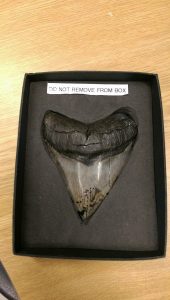
The first month’s reward comes from one of the most (in)famous sharks of all time, Carcharocles megalodon! The first 3D printed Patreon reward is a meg tooth, an exact copy of the meg tooth that has been used to educate thousands of students at UBC’s Beaty Biodiversity Museum!

The original tooth

Here are some things to know about Carcharocles megalodon!

Read More “This month’s 3D printed reward is a megalodon tooth! Here are 5 things to know about megalodon.” »

Announcing new Patreon rewards: 3D printed shark and ray models!

Posted on March 9, 2018March 9, 2018 By David Shiffman
Science

Want to support public education about sharks and rays while getting some one-of-a-kind elasmoswag? Sign up for my latest tier of Patreon rewards! Each month, you’ll receive a 3D printed educational model highlighting various aspects of shark and ray biology in the mail. These models will include: Shark teeth Components of shark jaws Stingray spines … Read More “Announcing new Patreon rewards: 3D printed shark and ray models!” »

Have you heard the good news about shark populations? Shark population increases are cause for #OceanOptimism

Posted on February 28, 2018February 28, 2018 By David Shiffman
Conservation, Science

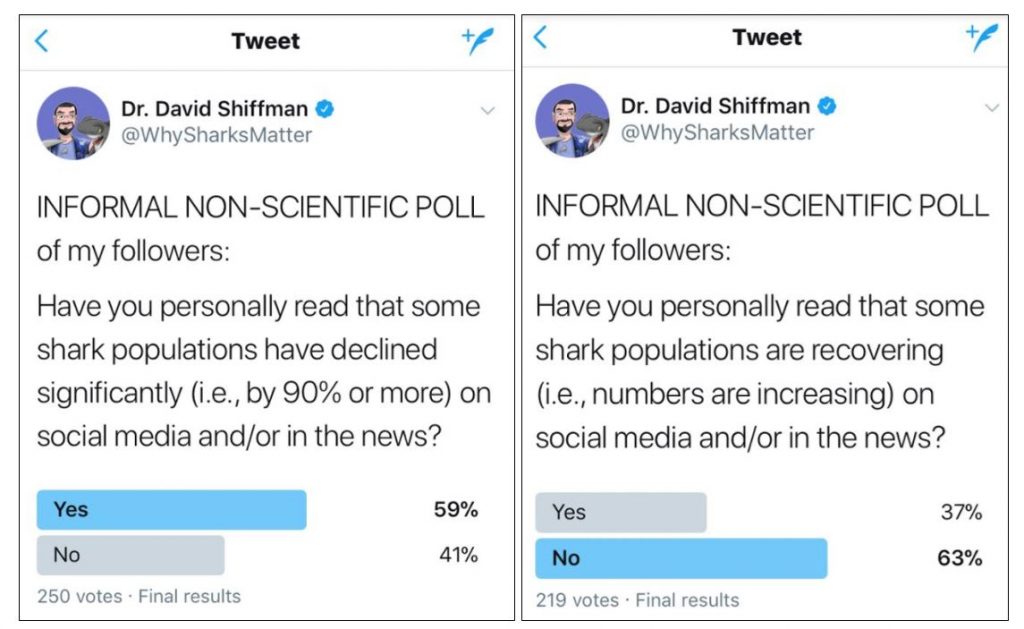
Did you know that some shark populations have declined due to overfishing? Did you know that some once-declined shark populations have recovered? If you’re like my twitter followers, it’s likely that you’ve heard the bad news, but have not heard the good news.

Why does this matter?
It’s important to share bad news so that people know there’s a problem, and that we need to act to solve that problem. However, it’s also important to share good news so that people know that a problem is solvable! This idea was behind the birth of the #OceanOptimism online outreach campaign.

Read More “Have you heard the good news about shark populations? Shark population increases are cause for #OceanOptimism” »

Canada proposed revisions to the Fisheries Act. Here’s how science and conservation experts reacted.

Posted on February 7, 2018February 7, 2018 By David Shiffman
Science

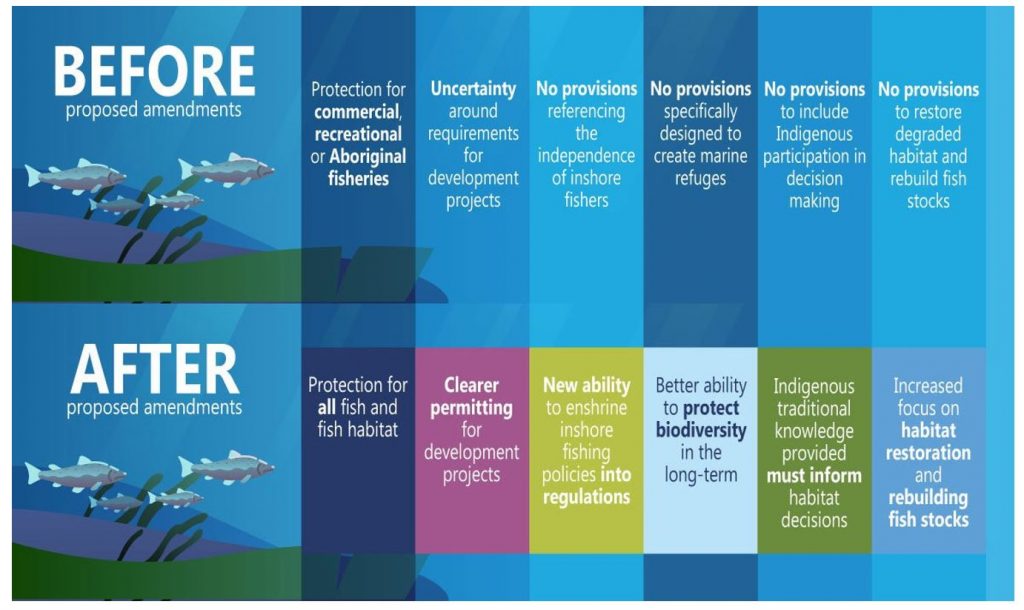
Yesterday, the government of Canada announced some proposed amendments to the national Fisheries Act. The full text of the proposal can be viewed here. So far, it’s gone through the First Reading in the House of Commons (for my non-Canadian readers, here is what that means). I reached out to fisheries and conservation policy experts across Canada to ask what they think of these proposed changes.

Image courtesy Fisheries and Oceans Canada, modified by Hakai Magazine

Read More “Canada proposed revisions to the Fisheries Act. Here’s how science and conservation experts reacted.” »

Fun Science FRIEDay – A blood test for cancer

Posted on January 26, 2018 By Kersey Sturdivant
Science

Cancer is a tricky disease. It comes in many varieties and can pop-up anywhere in the body seemingly at random. The somewhat cryptic nature of this disease can make diagnosis difficult; this can be frustrating because most cancers are treatable if diagnosed early. Thats what makes this most recent breakthrough all the more exciting; a method to detect cancer through a single blood test!

The blood test is called CancerSEEK and its speculated that it would cost less than 500 USD, which is comparable to or lower than other screening tests. CancerSEEK, is a single blood test that was shown to detect 8 types of common cancer (ovary, liver, stomach, pancreas, esophagus, colorectum, lung, and breast) and helps identify the location of the cancer.

Photo credit: fotoquique – Getty Images

Read More “Fun Science FRIEDay – A blood test for cancer” »

A year of snot-oozing, carcass-scavenging, slime eels: Hagfish Science in 2017.

Posted on December 27, 2017December 27, 2017 By Andrew Thaler
Science

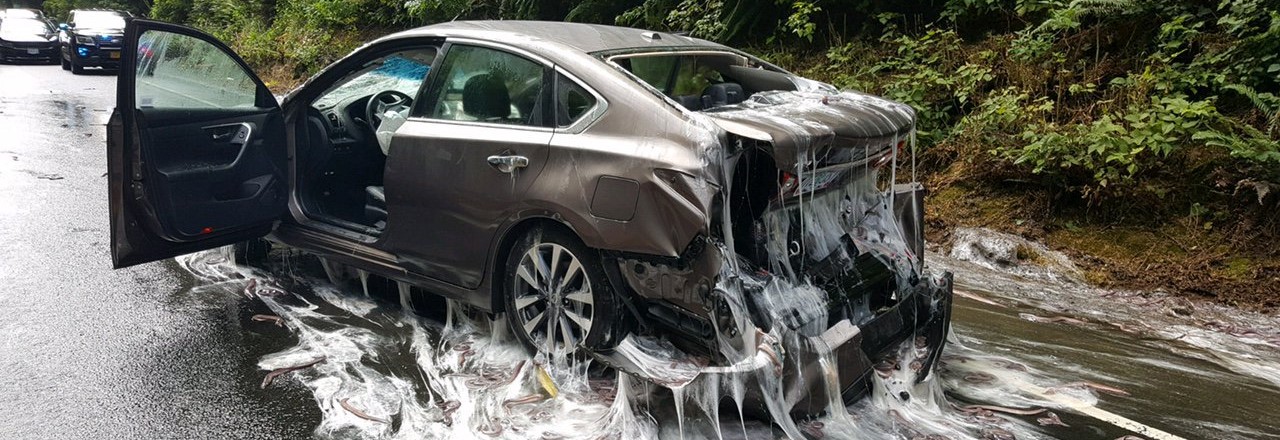
Hagfish. You love them. I love them. The owner of this sedan has no choice but to love them:

Photo courtesy Oregon State Police.

2017 was a big year for hagfish science.

Big Ideas (the ecologic paradigms that hagfish shifted) 

Heincke’s law is one of those ecologic principles that more often acts as a foil for rejecting the null hypothesis than as a consistent pattern in ecology. It’s most basic summary is: The further from shore and the deeper dwelling a fish is, the bigger it grows. Heincke’s law does not appear to be true for hagfish, whose size appear to have no relation to the depth at which they occur. On the other hand, phylogenetic relationships do seem to play some role in regulating body size in hagfish.

  • Schumacher and friends (2017) No support for Heincke’s law in hagfish (Myxinidae): lack of an association between body size and the depth of species occurrence. DOI: 10.1111/jfb.13361.

Defense and Behavior (how hagfish do the things that they do)

Hagfish are master escape artists, capable of squeezing in and out of tight spaces barely half the width of their body. This great for getting in an out of rotting whale carcasses on the sea floor, creeping into crevices, and avoiding predators. But how do they accomplish this incredible feat? Hagfish have a flaccid sinus under their skin which allows them to control the distribution of venous blood and alter their body width as they wriggle through narrow passages. Freedman and Fudge identified 9 distinct behaviors which take advantage of this adaptation, including anchoring, forming tight loops to push the body through an opening, and bending the hagfish head 90 degrees to force it through a slit. And there are videos!

  • Freedman and Fudge (2017) Hagfish Houdinis: biomechanics and behavior of squeezing through small openings. DOI: 10.1242/jeb.151233.

The Fudge lab has been busy this year, cranking out some of the most noteworthy work on the incredible behavior of hagfish. In addition to examining hagfish motility, Boggett and friends looked into how those flaccid sinuses aid predator avoidance. The team build wee little guillotines loaded with shark teeth to see how hagfish skin protects the animal from vicious bites. In a year when a truckload of hagfish spectacularly crushed a car, the fact that this research was the biggest breakout sensation in hagfish pop culture says everything you need to know about the compelling results of this study. You can read more about this study at The Verge, Futurity, Popular Science, and plenty of other outlets.

  • Boggett and friends (2017) Flaccid skin protects hagfishes from shark bites. DOI: 10.1098/rsif.2017.0765.

Read More “A year of snot-oozing, carcass-scavenging, slime eels: Hagfish Science in 2017.” »

17 amazing and important things about sharks and rays that scientists discovered in 2017

Posted on December 22, 2017December 22, 2017 By David Shiffman 1 Comment on 17 amazing and important things about sharks and rays that scientists discovered in 2017
Science

2017 was… yeah. Of all the years I’ve lived through, 2017 was definitely one of them. Anyway, some interesting things happened in the world of shark research. Here, in no particular order, are 17 amazing and important things that scientists discovered about sharks and rays over the last year.


1 Sharks can switch between sexual and asexual reproduction. We’ve known that several shark species can reproduce asexually for over a decade now, but this year, Dudgeon and friends showed an individual shark switching between sexual and asexual reproduction for the first time!

Noteworthy media coverage: CNN, National Geographic, Gizmodo

Read More “17 amazing and important things about sharks and rays that scientists discovered in 2017” »

Posts pagination

Previous 1 … 11 12 13 … 81 Next

Popular Posts

How close did the world's first deep-sea mining come to the dredging the world's largest cold-water coral reef?How close did the world's first deep-sea mining come to the dredging the world's largest cold-water coral reef?March 17, 2026Andrew Thaler
What Ocean Ramsey does is not shark science or conservation: some brief thoughts on "the Shark Whisperer" documentaryWhat Ocean Ramsey does is not shark science or conservation: some brief thoughts on "the Shark Whisperer" documentaryJuly 2, 2025David Shiffman
That's not a blobfish: Deep Sea Social Media is Flooded by AI SlopThat's not a blobfish: Deep Sea Social Media is Flooded by AI SlopDecember 19, 2025Andrew Thaler
Urea and Shark OsmoregulationUrea and Shark OsmoregulationNovember 15, 2010David Shiffman
Tangier, an Island out of Time.Tangier, an Island out of Time.July 3, 2017Andrew Thaler
Here's what I teach my students about finding jobs in marine biology and conservationHere's what I teach my students about finding jobs in marine biology and conservationApril 10, 2024David Shiffman
The story of the pride flag made from NASA imagery: Bluesky's most-liked imageThe story of the pride flag made from NASA imagery: Bluesky's most-liked imageSeptember 27, 2024David Shiffman
Alberta, Canada is the proud owner of the largest man-made pyramid on the planetAlberta, Canada is the proud owner of the largest man-made pyramid on the planetOctober 16, 2012Andrew Thaler
America's Second-Largest Estuary is a Lagoon Full of SharksAmerica's Second-Largest Estuary is a Lagoon Full of SharksApril 12, 2018Chuck Bangley
Here are some ocean conservation technologies that I'm excited aboutHere are some ocean conservation technologies that I'm excited aboutFebruary 19, 2026David Shiffman
Subscribe to our RSS Feed for updates whenever new articles are published.

We recommend Feedly for RSS management. It's like Google Reader, except it still exists.

Southern Fried Science

  • Home
  • About SFS
  • Authors
  • Support SFS


If you enjoy Southern Fried Science, consider contributing to our Patreon campaign.

Copyright © 2026 Southern Fried Science.

Theme: Oceanly Premium by ScriptsTown