Skip to content

Southern Fried Science

Over 15 years of ocean science and conservation online

  • Home
  • About SFS
  • Authors
  • Support SFS

Category: Uncategorized

Did monster hunters find a 120 meter long giant squid on google maps?

Posted on June 17, 2016June 19, 2016 By Andrew Thaler 5 Comments on Did monster hunters find a 120 meter long giant squid on google maps?
Uncategorized

No. No they did not. I awoke this morning to a delightful flood of emails in my inbox pointing to this article: Has a KRAKEN been spotted on Google Earth? Monster hunters claim to have found 120m long giant squid-like creature. In short, while exploring the area around Deception Island on Google Earth, some well-known anomaly hunters … Read More “Did monster hunters find a 120 meter long giant squid on google maps?” »

Title is the new abstract

Posted on June 1, 2016June 1, 2016 By Chris Parsons
Uncategorized

There are an increasing number of scientific articles being produced and posted at a frantic rate. How can you make your paper stand out and be memorable amongst this plethora of publications? Moreover, if your work is conservation-related, how do you ensure that the people who matter see and remember your work?

The one part of your paper all readers see and read is the title. From my own experience as an editor of scientific journals, as well as from the page-view statistics I have seen, the percentage of people that go on to read your abstract is less than a tenth of those that read the title. The percentage that read beyond the abstract to look at the whole article is a tenth of that again.

This why I have entitled this blog “Title is the new abstract“. You want to maximize the amount of information in the title of your paper.

Read More “Title is the new abstract” »

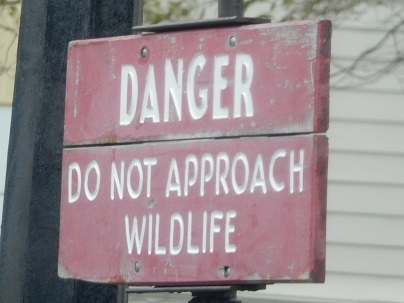
Please do not hug the dangerous wildlife …!

Posted on June 1, 2016June 1, 2016 By Chris Parsons 1 Comment on Please do not hug the dangerous wildlife …!
Uncategorized

Danger sign

This week social media was afire with news that a child fell into a gorilla enclosure at the Cincinnati Zoo, with the result that a male lowland gorilla was shot to protect the child. This is the third time a toddler has fallen into a gorilla enclosure. Comments on social media blamed the parent for not minding their child, the zoo for shooting the gorilla, and a few also blamed the zoo for not building a safer enclosure, which would prevent toddlers from being able to enter. I did not notice, however, any comments on how the public often perceives potentially dangerous wildlife – as something that is safe, and not actually life-threatening.

Read More “Please do not hug the dangerous wildlife …!” »

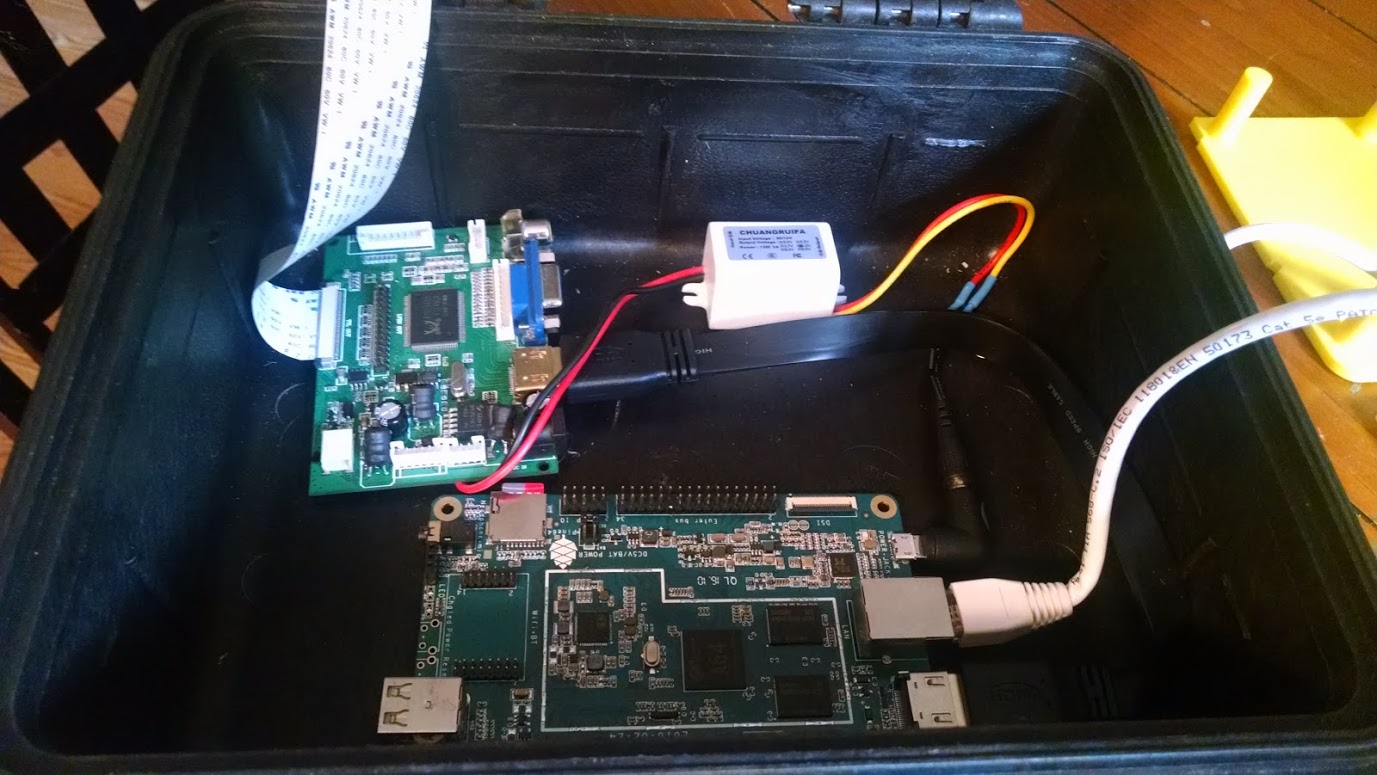
Build your own BeagleBox 2!

Posted on May 9, 2016May 12, 2016 By Andrew Thaler
Uncategorized

A more comprehensive build guide, along with the 3D printer files, can be found in the BeagleBox GitHub Repository. 


The BeagleBox 2 is a dirt-cheat, tough, versatile field computer built from 3D-printed parts, off-the-shelf hardware, and a single board computer. You can read all about it here: The BeagleBox 2: a dirt-cheap, tough-as-nails, 3D-printed, versatile field laptop.

Let’s build one!

The Brain of the BeagleBox 2

Read More “Build your own BeagleBox 2!” »

Learn what whale harassment looks like (GIFs)

Posted on May 6, 2016May 6, 2016 By Michelle Jewell
Uncategorized

It’s nearly summer, which means the shores will soon be filled with SUP boards, drones, and self-professed whale whisperers.  This authentic lifestyle is an obnoxious time for marine mammals, and soon your online feeds will be flooded with aerial footage of people “sharing the water” with marine megafauna.  Some of these shots are innocent but an … Read More “Learn what whale harassment looks like (GIFs)” »

The tuna that ate a seagull, and other bird swallowing marine megafauna

Posted on April 26, 2016April 28, 2016 By Michelle Jewell 2 Comments on The tuna that ate a seagull, and other bird swallowing marine megafauna
The tuna that ate a seagull, and other bird swallowing marine megafauna
Uncategorized

Once again, the internet is in a fervour over a rarely documented, but pretty common, animal interaction.  The video below shows fishermen at a pier in L’Escala, Spain tossing small fish to a tuna.  A nearby seagull went for the same fish and was ingested by the tuna, much to everyone’s surprise.  Naturally, the tuna spat out … Read More “The tuna that ate a seagull, and other bird swallowing marine megafauna” »

Fun Science FRIEDay – Osprey Version of the Truman Show #ospreycam

Posted on April 15, 2016 By Kersey Sturdivant
Uncategorized

Do you ever get that feeling that you are being watched? I imagine that is what the ospreys at the nesting platform at the Virginia Institute of Marine Science (VIMS) must feel, if they notice at all. These birds have a camera that is trained on their nest 24/7 during the osprey breeding season (generally from mid-March … Read More “Fun Science FRIEDay – Osprey Version of the Truman Show #ospreycam” »

Ocean Kickstarter of the Month: New Robot to Explore the Depths of Yellowstone Lake

Posted on April 14, 2016 By Andrew Thaler
Uncategorized

We are engineers and explorers who plan to help Yellowstone scientists make what could be tomorrow’s greatest discoveries.

New Robot to Explore the Depths of Yellowstone Lake

The Global Foundation for Ocean Exploration is a non-profit engineering group that designs and builds robots to explore the world’s oceans and large lakes. They are trying to build Yogi, a small research ROV to explore the depths of Yellowstone Lake in Yellowstone National Park. Yellowstone Lake is a fascinating water body, with hydrothermal vents similar to the deep-sea vents that my primary research focuses on.

I’ll let them explain why this project is so cool:

Why explore Yellowstone Lake?

Yellowstone started a proud tradition of protecting our planet’s most unique environments when it became the world’s first National Park more than a century ago. However, there is a part of Yellowstone that very few people have visited. An entire ecosystem that is hidden from us at the surface. A place that scientists are eager to study and may harbor unknown life; the depths of Yellowstone Lake.

We now know that the bottom of the Lake is far from barren, hosting species of crustaceans, sponges, and even small creatures that feed off of the Earth’s heat and chemistry rather than the Sun. ‘Thermophilic’ (or hot water-loving) microbes thrive in the relatively high-temperatures immediately surrounding active thermal features at the bottom of the Lake and scattered throughout Yellowstone Park. These creatures may be microscopic but they have the potential to profoundly influence the medical and biological sciences.

New Robot to Explore the Depths of Yellowstone Lake

Onward to the Ocean Kickstarter Criteria!

Read More “Ocean Kickstarter of the Month: New Robot to Explore the Depths of Yellowstone Lake” »

Behaviour Bites: The uncomfortable truth about that penguin video

Posted on March 31, 2016 By Michelle Jewell
Uncategorized

A brilliant thing about the internet is how natural events are immediately accessible to the world-wide public.  Someone can record a cheetah jumping onto their safari car and I can watch it in my Netherlands office less than 24 hours later.  Sadly, most animal videos that go viral are ones that feature animal behaviour that … Read More “Behaviour Bites: The uncomfortable truth about that penguin video” »

On Naming Boats, or why we love Boaty McBoatface.

Posted on March 23, 2016March 23, 2016 By Andrew Thaler 1 Comment on On Naming Boats, or why we love Boaty McBoatface.
Uncategorized

My first personal research vessel, a 20′ runabout with a huge staging area, was name ‘Black Smoker‘. It was an homage to the hydrothermal vents I study (via a much larger vessel), but also a reference to the nasty old Force 125 outboard, that burned oil like it had just driven the Seleucid Empire from the Temple Mount. My second boat, was small, but lighter, faster, and much more aggressive. I sailed it in some seriously marginal seas. I named it ‘Iffy’.

The French named two different research vessels ‘Pourquoi Pas?’ (literally “Why not?”) which, in addition to being hilarious, is also the answer to the question: Why did you name your ship Pourquoi Pas? The University of Wisconsin-Madison has been studying  Lake Mendota for over 6 years via the research platform ‘David Buoy’. And though the Celtic Explorer was given a strong and noble name, an engine incident on one fateful cruise led many in the Irish research community to informally rechristen it the Celtic Exploder (true story: I once reviewed a proposal that referred to it as the Exploder, throughout).

Giving a research vessel a silly name is a deep and abiding tradition within the marine research community. And, frankly, even if a vessel has a Very Serious Name (TM), the crew is still going to call it something else.

I think Boaty McBoatface is a perfectly good name for a ship, and I agree with Craig McClain that it is a great science outreach opportunity. Did you know the U launched Sikuliag last year? Or that the British christened the Discovery in 2013? No? Well I bet you know about Boaty McBoatface. 

Read More “On Naming Boats, or why we love Boaty McBoatface.” »

Posts pagination

Previous 1 … 20 21 22 … 119 Next

Popular Posts

Playing God - How the ESA "God Squad" just voted for the extinction of a uniquely American whalePlaying God - How the ESA "God Squad" just voted for the extinction of a uniquely American whaleApril 9, 2026Southern Fried Science
The story of the pride flag made from NASA imagery: Bluesky's most-liked imageThe story of the pride flag made from NASA imagery: Bluesky's most-liked imageSeptember 27, 2024David Shiffman
Here's how to join my IMCC8 symposium, "Ocean Science Communication: What's New and What's Next?"Here's how to join my IMCC8 symposium, "Ocean Science Communication: What's New and What's Next?"April 22, 2026David Shiffman
What Ocean Ramsey does is not shark science or conservation: some brief thoughts on "the Shark Whisperer" documentaryWhat Ocean Ramsey does is not shark science or conservation: some brief thoughts on "the Shark Whisperer" documentaryJuly 2, 2025David Shiffman
Our favorite sea monsters – Ningen (#4)Our favorite sea monsters – Ningen (#4)September 7, 2010Andrew Thaler
Join Me at Upwell: A Wave of Ocean Justice — Our Fourth Year!Join Me at Upwell: A Wave of Ocean Justice — Our Fourth Year!March 24, 2026Angelo Villagomez
On the clarity of animals: the art and science of clearing and stainingOn the clarity of animals: the art and science of clearing and stainingDecember 17, 2013Guest Writer
Shark of Darkness: Wrath of Submarine is a fake documentaryShark of Darkness: Wrath of Submarine is a fake documentaryAugust 10, 2014Michelle Jewell
What can the funniest shark memes on the internetz teach us about ocean science and conservation?What can the funniest shark memes on the internetz teach us about ocean science and conservation?November 8, 2013David Shiffman
That's not a blobfish: Deep Sea Social Media is Flooded by AI SlopThat's not a blobfish: Deep Sea Social Media is Flooded by AI SlopDecember 19, 2025Andrew Thaler
Subscribe to our RSS Feed for updates whenever new articles are published.

We recommend Feedly for RSS management. It's like Google Reader, except it still exists.

Southern Fried Science

  • Home
  • About SFS
  • Authors
  • Support SFS


If you enjoy Southern Fried Science, consider contributing to our Patreon campaign.

Copyright © 2026 Southern Fried Science.

Theme: Oceanly Premium by ScriptsTown