Skip to content

Southern Fried Science

Over 15 years of ocean science and conservation online

  • Home
  • About SFS
  • Authors
  • Support SFS

Category: Uncategorized

A comprehensive list of statements made about the ocean by candidates during the 2016 election season.

Posted on March 17, 2016 By Andrew Thaler
Uncategorized

1. “I was once bitten by an octopus at the beach and got terribly ill. (Yes, apparently octopuses can be poisonous.)” Senator Ted Cruz

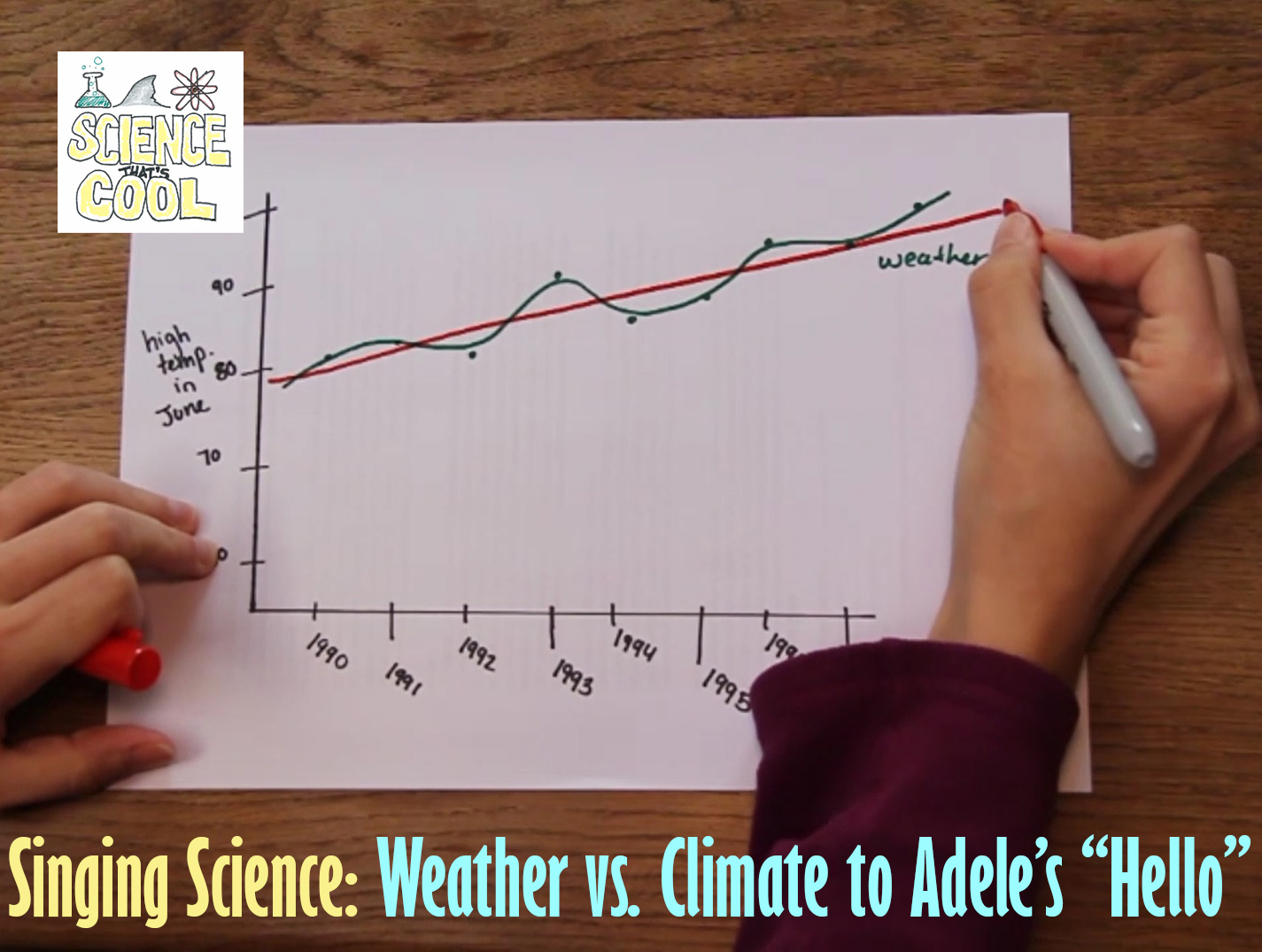
Singing Science: Weather vs. Climate with lyrics for teachers

Posted on March 14, 2016 By Michelle Jewell
Singing Science: Weather vs. Climate with lyrics for teachers
Uncategorized

The month of February 2016 just broke a global temperature record, previously held by… January…2016.

While the Trubama climate plans are being praised, the comments section of this Guardian article was still inundated with “Well, it’s cold where I am” posts.  Perhaps we need to create more awareness about the difference between weather and climate…

I know, I’m not supposed to talk about this, but I love to sing.  Every neighbor, flat mate, and unwilling car passenger knows this.  In fact, the only thing I love as much as singing is teaching science, but the metaphorical light bulb didn’t come on until I attended a SciComm workshop in Portugal.  Why not sing about science like many others?  Maybe even weather and climate??

Adele songs were the obvious choice, both for singability and availability of karaoke versions on YouTube, so I began my research.  I asked facebook if this would be a valuable addition to the internets, or best not to talk about it ever again, and the response was significantly positive.  Thus, #SingingScience was born and with it a commitment to do more of these when I have free time.

Enjoy, Weather vs. Climate set to Adele’s “Hello”

**Note (because evidently it’s not obvious):  This is not real meteorological data.

Here are the lyrics for any science teachers who would like them:

Read More “Singing Science: Weather vs. Climate with lyrics for teachers” »

Fun Science FRIEDay – Bionic Eye

Posted on February 5, 2016February 9, 2016 By Kersey Sturdivant
Science, Uncategorized

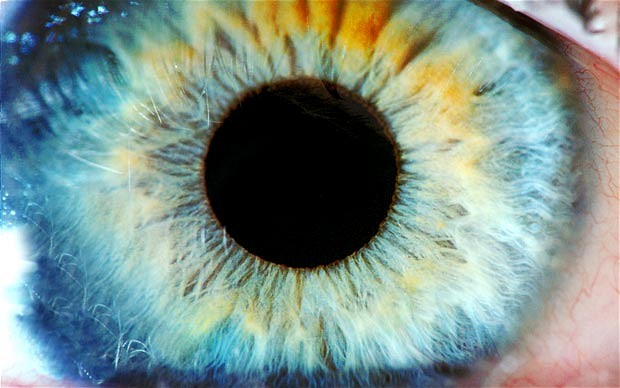
Every year modern medicine brings more and more surprises. It really does seem that the limitations of man’s achievements are solely limited to our creative ability to dream what is possible. This week we bring you the bionic eye. As part of an ongoing trial at Oxford’s John Radcliffe Hospital surgeons implanted a micro electric chip into a patients eye restoring part of her sight.

Human eye.
Human eye.

Read More “Fun Science FRIEDay – Bionic Eye” »

Making your scientific outreach go further

Posted on February 3, 2016February 4, 2016 By Guest Writer
Uncategorized

1009103_10151717293838265_589812446_oCatherine Macdonald is the Executive Director of Field School, an interdisciplinary field science training program. She is also a fifth year PhD student at the Abess Center for Ecosystem Science and Policy at the University of Miami, and the Intern Coordinator for the Shark Research and Conservation Program (SRC).

Like a lot of the scientists I know, teaching (outside the classroom) and outreach are a key part of the work I do, and one of the things I love most about my job. This isn’t because scientists accrue big rewards for prioritizing outreach (in the academic tenure system, we can actually pay a pretty high price for spending time on anything other than research/required teaching/publication) but because we want to get people excited about science and care a lot about the subjects we study.

Unfortunately, we aren’t always maximizing our positive impacts on students or citizen scientists who engage with our research—maybe because we aren’t familiar enough with the vast and labyrinthine social science literature on what works in education.* (I wish I had a dollar for every time a natural scientist, in talking to me about education or outreach, has said “if only someone would study this…” without being aware that education researchers have been studying it, in some cases for decades.)

This list is in no way comprehensive, but distills some key points I’ve come across that have influenced the way I teach and interact with students. My thinking here is geared towards programs like those I work with, which take students into the field and involve them in science or outreach in a direct, hands-on way. Although I think it’s great for scientists to go into classrooms and give talks, this advice is only partially applicable to that kind of outreach, and is really geared towards out-of-classroom folks.

Let’s also note that a variety of good potential outcomes have been shown to result from experiential education programs, including increased academic success, improved self-esteem and “self-concept” (i.e., how kids see themselves), increased personal and social responsibility, and better attitudes towards and relationships with adults. There’s no question that those of us who work with students above and beyond what is required or expected of us are doing a good thing. The question becomes: how do we do that good thing better?

* In this list, I am not attempting to differentiate between environmental education, experiential education, service education, scientific outreach, adventure education or any of the other various terms which can be used to describe similar programs. Although there can be important differences in approaches and goals among these categories, it is key elements that the most effective programs have in common that I am interested in.

Read More “Making your scientific outreach go further” »

The final server update: All systems normal.

Posted on January 31, 2016January 26, 2016 By Andrew Thaler
Uncategorized

He showed me exactly what we needed to see. He? I, me, we. The me that is yet to be. The Nautilus is not of the future. Only data flow backwards. That much, I understand. At least I think I understand. He that is, well, me, eventually, understood. Will understand. The message was a code. … Read More “The final server update: All systems normal.” »

Happy New Years, old me

Posted on January 30, 2016January 26, 2016 By Andrew Thaler
Uncategorized

I really hope this old twitter embed code works, otherwise this whole thing is going to fall apart. Hey Dr. Thaler circa 2016, did you get my package? Check the infill. On January 1, 2016, the Southern Fried Science central server began uploading blog posts apparently circa 2041. Due to a related corruption of the … Read More “Happy New Years, old me” »

How to fight invasive software: the cure to the cyborg crisis.

Posted on January 29, 2016January 26, 2016 By Andrew Thaler
Uncategorized

On January 1, 2016, the Southern Fried Science central server began uploading blog posts apparently circa 2041. Due to a related corruption of the contemporary database, we are, at this time, unable to remove these Field Notes from the Future or prevent the uploading of additional posts. Please enjoy this glimpse into the ocean future while we attempt to rectify the situation.


It came from the deep.

The heart of Zero Cloner is a snippet of cunningly concealed genetic code isolated from shrimp on the Mid-Cayman Spreading Center, retro-edited to create an easy to edit gene region to which other Cloner derivatives can latch.  Zero Cloner pave the way for Omega Cloner. Omega Cloner spread across the world, locking augmented humans out of society. The Standard Deviants launched a series of attacks early Monday morning, destroying essential digital architecture needed to maintain a fully integrated world.

Entire nations are grinding to a halt. We needed a cure, and we needed it fast.

It also came from the deep. 

Read More “How to fight invasive software: the cure to the cyborg crisis.” »

Technocracy and the Sea

Posted on January 28, 2016 By Andrew Thaler 1 Comment on Technocracy and the Sea
Uncategorized

On January 1, 2016, the Southern Fried Science central server began uploading blog posts apparently circa 2041. Due to a related corruption of the contemporary database, we are, at this time, unable to remove these Field Notes from the Future or prevent the uploading of additional posts. Please enjoy this glimpse into the ocean future while we attempt to rectify the situation.


“The sea is big. The sea is cruel. She takes more than she gives. That’s how it’s always been.”

This line from my long forgotten first science fiction novel still resonates with me. The ocean is a tough place. No matter how good we get at working at sea, the sea always finds new and creative ways to totally undermine our endeavors.

The last quarter century has seen a tremendous rise in our collective faith in technology’s power to save us. When hundreds of thousands were dying on the roads, we made car that drove themselves, reducing traffic fatalities by several orders of magnitude. After the last great recession, we created new digital currencies to protect our savings from market forces. When we could no longer afford to burn coal and oil, we finally built an alternative energy infrastructure.

When firearm deaths and mass shootings were out of control, we built “safe” guns with sophisticated biometric locks, and developed clothing and shields to reduce fatalities. These measures had almost no effect, but we continue to throw technology at the problem.

That is the problem with technocracy. 

Read More “Technocracy and the Sea” »

Remember when sexism in science died? Me neither.

Posted on January 28, 2016January 26, 2016 By Michelle Jewell
Uncategorized

On January 1, 2016, the Southern Fried Science central server began uploading blog posts apparently circa 2041. Due to a related corruption of the contemporary database, we are, at this time, unable to remove these Field Notes from the Future or prevent the uploading of additional posts. Please enjoy this glimpse into the ocean future while we attempt to rectify the situation.


Any female scientist my age (Generation Pre-Internet) can remember when sexism was a standard rite of passage.  Truly, you hadn’t ‘made it’ in science until you could one-up your colleague’s harassment story.  I remember being enlisted into the Sisterhood of the Travelling Confidants (to quote an old classic), where we laughed at the futility of filing complaints while helping new members process their anger.  We were powerless back then… but many.

Then came the advent of ‘social media’, sharing and liking posts, hashtags, connectivity and a voice.  This led to the realization that all institutes of every field of science had their own Sisterhoods.  One by one, reluctantly, these groups came out of the libraries on the second floor (there’s a second floor??), hidden basement kitchenettes, and forgotten conference rooms.  New members, who were younger and more internet savvy than the old guard, took to social media to process their anger.  The sisterhoods became solidarities when male colleagues used their position to amplify the messages.  Soon, a spotlight was put on our inside joke that reporting harassment to higher-ups was as effective as one of David’s remote petitions, and titans of torment began to fall, one by one, each story more disturbing – at least to those outside of the sisterhood – than the last.

Read More “Remember when sexism in science died? Me neither.” »

Welcome to the Future: Three Rules for Artificially Intelligent Underwater Robots.

Posted on January 27, 2016January 28, 2016 By Andrew Thaler
Uncategorized

On January 1, 2016, the Southern Fried Science central server began uploading blog posts apparently circa 2041. Due to a related corruption of the contemporary database, we are, at this time, unable to remove these Field Notes from the Future or prevent the uploading of additional posts. Please enjoy this glimpse into the ocean future while we attempt to rectify the situation.


Underwater robotics has come a long way since I started working on it in the early ‘noughts. From the massive industrial beasts of the old guard to the small, sleak, eminently hackable sprite of the Connected Exploration movement to this new crop of fully autonomous, decision-making and directive setting AI-powered drones of the last few years, everything keeps getting smaller, cheaper, and more capable. It’s a great decade to be exploring the deep.

Last month, we deployed our first swarm of artificially intelligent deep diving robots designed to patrol the abyssal plane, identify regions of unique biodiversity, and recommend critical ecosystems for international protection in advance of biomining operations. What’s unique about this project is that we’ve assigned all decision-making authority directly to the swarm. They get to decide where in the world they go and how and when they sample. This came after years of debate and negotiation with stakeholders from science, conservation, and industry, and has been accepted through international agreement as the most unbiased and equitable solution to the challenge of getting groups with vastly different goals to agree upon dividing up the deep.

Read More “Welcome to the Future: Three Rules for Artificially Intelligent Underwater Robots.” »

Posts pagination

Previous 1 … 21 22 23 … 119 Next

Popular Posts

Playing God - How the ESA "God Squad" just voted for the extinction of a uniquely American whalePlaying God - How the ESA "God Squad" just voted for the extinction of a uniquely American whaleApril 9, 2026Southern Fried Science
The story of the pride flag made from NASA imagery: Bluesky's most-liked imageThe story of the pride flag made from NASA imagery: Bluesky's most-liked imageSeptember 27, 2024David Shiffman
Here's how to join my IMCC8 symposium, "Ocean Science Communication: What's New and What's Next?"Here's how to join my IMCC8 symposium, "Ocean Science Communication: What's New and What's Next?"April 22, 2026David Shiffman
What Ocean Ramsey does is not shark science or conservation: some brief thoughts on "the Shark Whisperer" documentaryWhat Ocean Ramsey does is not shark science or conservation: some brief thoughts on "the Shark Whisperer" documentaryJuly 2, 2025David Shiffman
Our favorite sea monsters – Ningen (#4)Our favorite sea monsters – Ningen (#4)September 7, 2010Andrew Thaler
Join Me at Upwell: A Wave of Ocean Justice — Our Fourth Year!Join Me at Upwell: A Wave of Ocean Justice — Our Fourth Year!March 24, 2026Angelo Villagomez
On the clarity of animals: the art and science of clearing and stainingOn the clarity of animals: the art and science of clearing and stainingDecember 17, 2013Guest Writer
Shark of Darkness: Wrath of Submarine is a fake documentaryShark of Darkness: Wrath of Submarine is a fake documentaryAugust 10, 2014Michelle Jewell
What can the funniest shark memes on the internetz teach us about ocean science and conservation?What can the funniest shark memes on the internetz teach us about ocean science and conservation?November 8, 2013David Shiffman
That's not a blobfish: Deep Sea Social Media is Flooded by AI SlopThat's not a blobfish: Deep Sea Social Media is Flooded by AI SlopDecember 19, 2025Andrew Thaler
Subscribe to our RSS Feed for updates whenever new articles are published.

We recommend Feedly for RSS management. It's like Google Reader, except it still exists.

Southern Fried Science

  • Home
  • About SFS
  • Authors
  • Support SFS


If you enjoy Southern Fried Science, consider contributing to our Patreon campaign.

Copyright © 2026 Southern Fried Science.

Theme: Oceanly Premium by ScriptsTown