Skip to content

Southern Fried Science

Over 15 years of ocean science and conservation online

  • Home
  • About SFS
  • Authors
  • Support SFS

Category: Uncategorized

Protecting the freshwater riches of the Southeastern US

Posted on November 16, 2016 By Guest Writer
Uncategorized

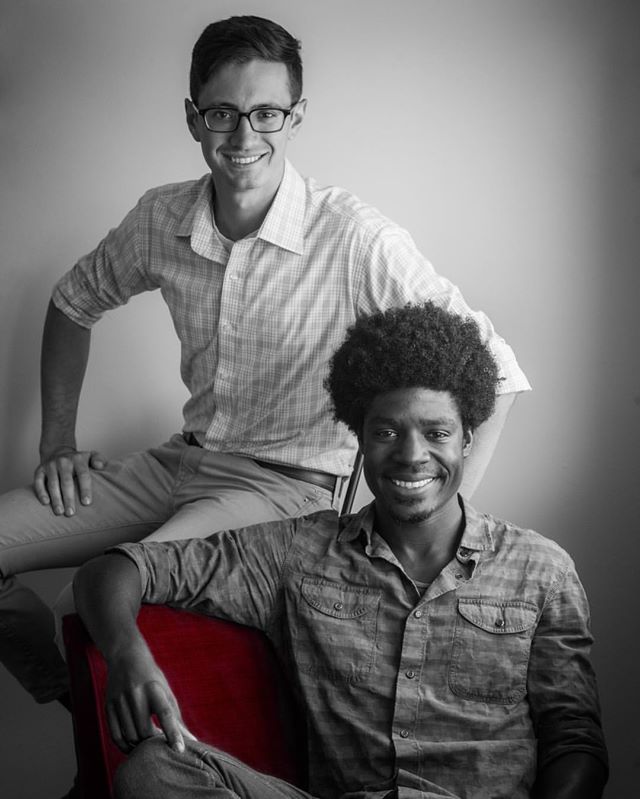
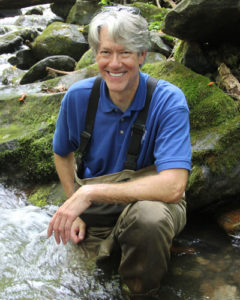
bernie-kuhajdaDr. Bernie Kuhajda joined the Tennessee Aquarium Conservation Institute staff in May 2012 after 25 years at the University of Alabama, where he managed a museum collection of one million specimens of preserved fishes from all around the world. Though his studies of fishes and other aquatic organisms have taken him around the United States, Mexico, and Central Asia, his particular expertise is surveying and monitoring threatened and endangered species from aquatic systems in the Southeast, in part to help evaluate the effectiveness of conservation programs. He currently teaches weekend courses at the University of Alabama Gadsden Campus and on the main campus in Tuscaloosa every summer. He serves on multiple USFWS Recovery Teams/Groups for endangered and threatened species.

Imagine possessing untold wealth but lacking the means to keep it safe. That is the broad-strokes reality faced by those of us who work to protect the Southeast’s rich aquatic biodiversity.

Our waterways are home to an incredible natural profusion, one that is unrivaled in the temperate world. More than 1,400 aquatic species reside in waterways within a 500-mile radius of the Tennessee Aquarium’s home in Chattanooga, including about three-quarters (73.1 percent) of all native fish species in the United States. More than 90 percent of all American mussels and crayfish species live within that same area, as do 80 percent of North America’s salamander species and half of its turtle species.

Read More “Protecting the freshwater riches of the Southeastern US” »

Sifting the fact from the false in an internet full of fake ‘news’

Posted on November 15, 2016November 16, 2016 By Chris Parsons
Uncategorized

Southern Fried Science has at the forefront of trying to debunk fake news, such as faux documentaries about mermaids or giant sharks. In their article “Fish tales: combating fake science in the popular media” Andrew Thaler and David Shiffman asked that:

“scientists familiarize themselves with common sources of misinformation within their field, so that they can be better able to respond quickly when factually inaccurate content begins to spread”

morpheus

Read More “Sifting the fact from the false in an internet full of fake ‘news’” »

Fun Science FRIEDay – Visualize the Seafloor

Posted on November 4, 2016November 7, 2016 By Kersey Sturdivant
Open Science, Science, Uncategorized

Happy FSF! As some of you may know (and for those who don’t), I study the bottom of the ocean, and I do so primarily using innovative technology to image the seafloor (e.g., Wormcam). The interesting work I’ve conducted has resulted in me having the opportunity to present my work to a larger lay audience, in the form of a TEDx presentation.

(Photo Credit: TEDx Newport)

I am giving my TED talk with my good buddy and colleague Steve Sabo.  In our talk, “A Picture is Worth a Thousand Worms”, Steve & I will illustrate the significance of the ocean floor through advancements in underwater camera technology and data visualization, making complex science more accessible for everyone.

Our TED photo (Photo credit: Meg Heriot)

Read More “Fun Science FRIEDay – Visualize the Seafloor” »

We love giant isopods and America should love them too!

Posted on November 3, 2016 By Andrew Thaler
Uncategorized

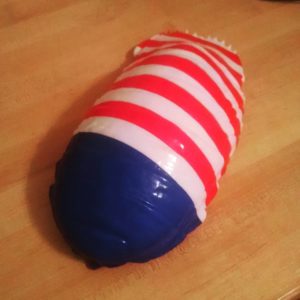
14884452_10101639425674614_3310426167506511986_oSouthern Fried Science loves giant isopods. There are few deep-sea animals more iconic, more charismatic, more weird and wonderful, than the deep-sea isopod. The biggest of the deep-sea isopods, the giant deep-sea isopod, Bathynomus giganteus, is a quintessentially American beast. It dwells in the deep Gulf of Mexico. The bulk of its known range falls within the United States Exclusive Economic Zone. It was first collected by American scientist Alexander Agassiz (though it was formally described by his colleague and collaborator French zoologist Alphonse Milne-Edwards). Tough on the outside, soft on the inside, fiercely independent yet able to work in massive aggregations to consume the bloated carcass of a whale, alternately terrifying and adorable, I can think of no better animal to represent the deep water of the United States better than our own Bathynomous giganteus.
So today, with an historic election looming, we decided it was past time to reflect on the things we love, the things that unite us, the things that fill us with wonder, and call upon Congress to officially adopt the giant deep-sea isopod as the National Deep-sea Animal of the United States.

Read More “We love giant isopods and America should love them too!” »

Columbus doesn’t deserve a day ! (We should be giving credit to Cabot anyway)

Posted on October 10, 2016October 11, 2016 By Chris Parsons 4 Comments on Columbus doesn’t deserve a day ! (We should be giving credit to Cabot anyway)
Uncategorized

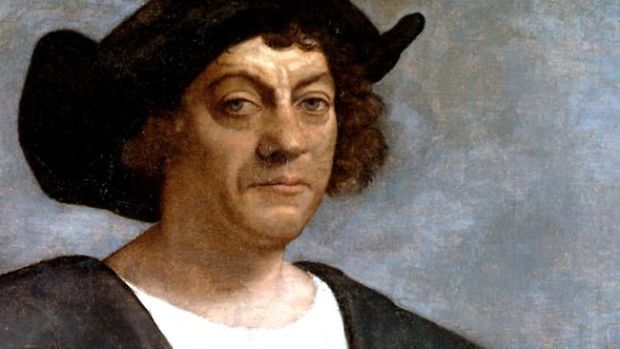
Today is Columbus day in the US, and so I technically have a day off from teaching. However, despite a day of alleged freedom (I still have a stack of grading to do) the fact that we get a holiday to celebrate Columbus galls me. Firstly, because he was responsible for mass enslavement of indigenous people (over 1000 in just one round up, of which 550 were sent to Spain, with about 40% dying en route), sending an estimated 5000 Taino, Arawak and other indigenous peoples to Europe. His treatment of these enslaved people was barbaric – they were forced to bring him gold and failure to do so led to mass amputations and death. An estimated quarter of a million indigenous people died in Haiti alone due to resisting Columbus’ Governorship of Hispaniola, and many more died from diseases he and his crew introduced to the Caribbean.

columbus

However, secondly, he doesn’t deserve recognition for discovering North America. He never set foot on the North American continent*. If we should be recognizing someone from this era, it would be John Cabot.

Read More “Columbus doesn’t deserve a day ! (We should be giving credit to Cabot anyway)” »

Time to release the Kraken ! Addressing controversial questions in marine conservation

Posted on September 30, 2016October 2, 2016 By Chris Parsons
Conservation, Uncategorized

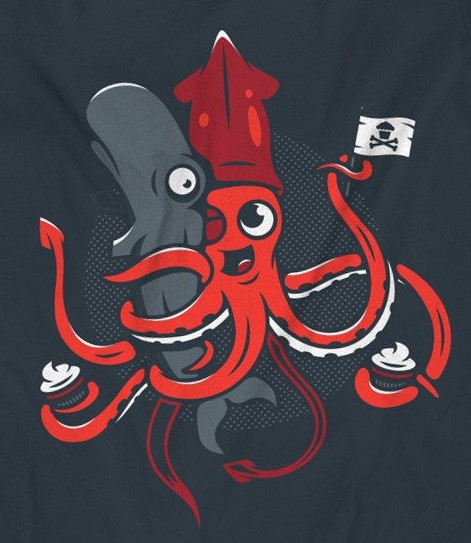
A few years ago, we organized a group of marine conservation scientists to meet to discuss, and list,  the most urgent issues that need to be studied. The resulting paper  came up with 71 questions which urgently needed to be addressed, because a lack of an answer was severely impeding marine conservation. However, during this exercise we also came up with a list of other questions – these were issues that were controversial, that everyone  knew were important, but were unwilling to raise as being an issue. These were the Voldemorts of marine conservation questions (they that shall not be named), the elephant (or elephant seal) in the room questions …. or as we more aquatically termed them: “the kraken in the aquarium” questions.

love-a-kraken

Read More “Time to release the Kraken ! Addressing controversial questions in marine conservation” »

Fun Science FRIEDay – Drug Resistant Bacteria, The Movie

Posted on September 9, 2016September 9, 2016 By Kersey Sturdivant
Uncategorized

In today’s FSF we bring you both a jaw dropping, and somewhat terrifying cinematic visualization of how bacteria evolve resistance to antibiotics, and overtime can become super bugs immune to any antibiotic treatment.  A concise and detailed description is presented below:

This stunning video of evolution in action captures how bacteria with no resistance to an antibiotic can in a very short time become resistant to concentrations of more than a thousand times the initial concentration. Other scientists have documented this phenomenon before, but never with such vivid clarity as that provided by Michael Bay and Roy Kishony of Harvard University.

Read More “Fun Science FRIEDay – Drug Resistant Bacteria, The Movie” »

Fun Science FRIEDay – Shark Daycare

Posted on September 2, 2016September 2, 2016 By Kersey Sturdivant 3 Comments on Fun Science FRIEDay – Shark Daycare
Conservation, Uncategorized

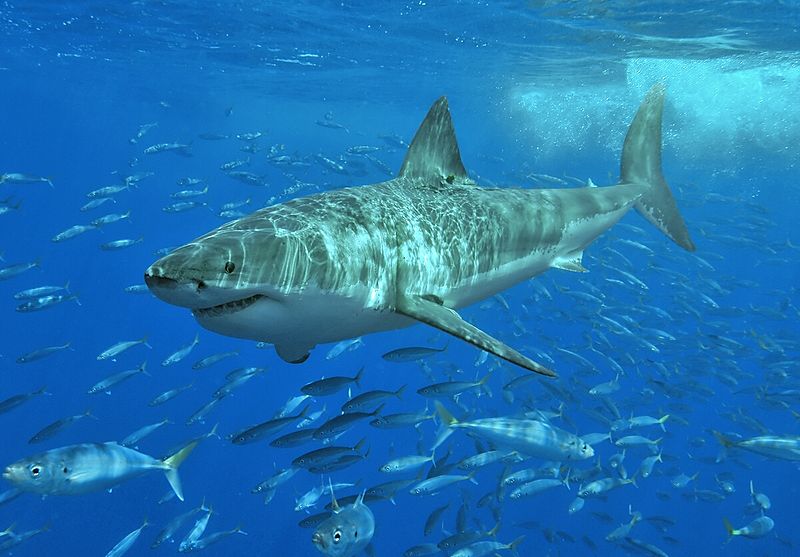
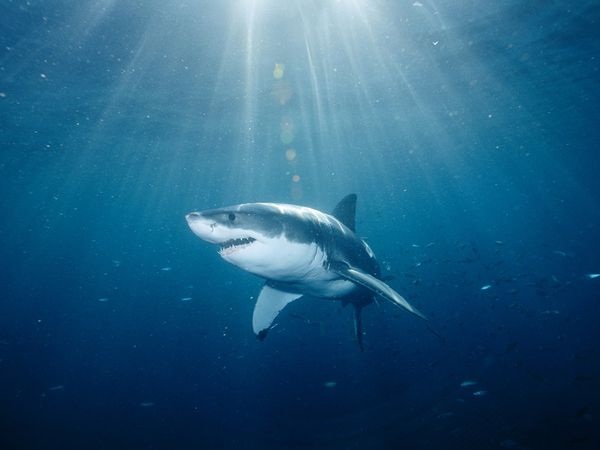
A great white shark nursery in the North Atlantic that was discovered in 1985 south of Cape Cod in the waters off Montauk, New York  has received renewed attention due to the increased activity of white sharks off cape cod in recent years. The nursery was first documented in 1985 by Casey and Pratt who deduced the presence of a nursery based on the number of juvenile sightings and landings in the area. This work was followed up recently  by OCEARCH (an organization dedicated to generating scientific data related to tracking/telemetry and biological studies of keystone marine species such as great white sharks), which tagged and tracked nine infant great whites to the nursery, located a few miles off Montauk.

Great White Shark. Image courtesy animals.NationalGeographic.com
Photo of a great white shark in Mexico by Terry Goss, WikiMedia Commons. http://commons.wikimedia.org/wiki/File:White_shark.jpg


Read More “Fun Science FRIEDay – Shark Daycare” »

Scientific literature needs discipline – an example from a killer whale life expectancy study

Posted on August 23, 2016August 23, 2016 By Chris Parsons 1 Comment on Scientific literature needs discipline – an example from a killer whale life expectancy study
Uncategorized

If you let a puppy piddle on the carpet without discipline, it will keep doing it. It will grow into a big dog that destroys your carpeting and rugs and makes your whole house stink.

So it is with scientific literature.

puppy-pees

We all know bad papers are out there. When you read them, you’re left scratching your head and wondering, “How on earth did these pass peer-review?” Worse still, there are “ugly” science articles, where the scientific method goes by the wayside and data are cherry-picked, misinterpreted or manipulated to justify a political or ideological agenda or to undermine science that interferes with that agenda.

Read More “Scientific literature needs discipline – an example from a killer whale life expectancy study” »

Fun Science FRIEDay – Glaciers Lost in Time

Posted on July 29, 2016July 29, 2016 By Kersey Sturdivant
Uncategorized

Human induced climate change is real. It feels weird that I have to say that, but the overwhelming body of evidence suggest human activity post the industrial revolution is having irrevocable damage on our environment. One of the major implications of climate change is the loss of the polar glaciers (and subsequent sea level rise).

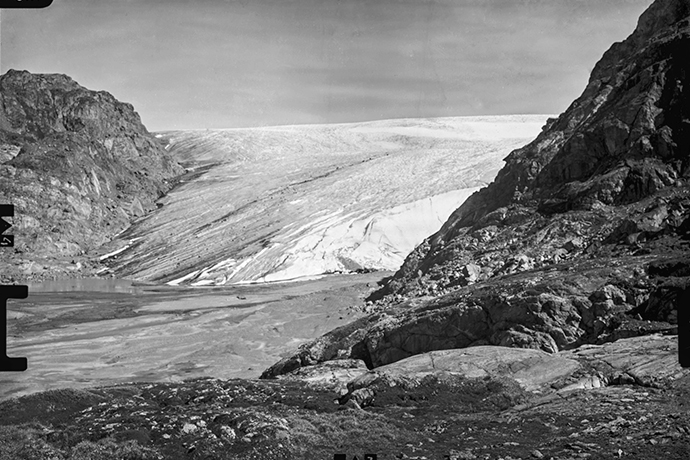
Danish researchers from the University of Copenhagen and Aarhus University photographed glaciers in east Greenland in 2010 from the same vantage point used by scientists in 1933. Below you can contrast the images from the Mittivakkat and Tunu glaciers to see how much the two glaciers have retreated due to the warming climate (Photo Credit: Natural History Museum of Denmark; Hans Henrik Tholstrup/Natural History Museum of Denmark).

The Mittivakkat Glacier

The Mittivakkat Glacier in 1933.

The Mittivakkat Glacier in 1933.

Read More “Fun Science FRIEDay – Glaciers Lost in Time” »

Posts pagination

Previous 1 … 19 20 21 … 119 Next

Popular Posts

At least 74 practicing shark researchers: How a silly thing I said online raised thousands for conservationAt least 74 practicing shark researchers: How a silly thing I said online raised thousands for conservationFebruary 26, 2025David Shiffman
Why the new Trump order to shoot wolves is both illegal and a dreadful precedent for endangered speciesWhy the new Trump order to shoot wolves is both illegal and a dreadful precedent for endangered speciesSeptember 5, 2026Ali Gaster
The Trump Administration’s latest attack on endangered speciesThe Trump Administration’s latest attack on endangered speciesSeptember 17, 2026Ali Gaster
That's not a blobfish: Deep Sea Social Media is Flooded by AI SlopThat's not a blobfish: Deep Sea Social Media is Flooded by AI SlopDecember 19, 2025Andrew Thaler
How to build a canoe from scratch on a graduate student stipendHow to build a canoe from scratch on a graduate student stipendApril 17, 2010Andrew Thaler
What is a Sand Shark?What is a Sand Shark?November 12, 2017Chuck Bangley
5 things I learned helping to reassess the global conservation status of every species of tuna and billfish5 things I learned helping to reassess the global conservation status of every species of tuna and billfishSeptember 15, 2026David Shiffman
What Ocean Ramsey does is not shark science or conservation: some brief thoughts on "the Shark Whisperer" documentaryWhat Ocean Ramsey does is not shark science or conservation: some brief thoughts on "the Shark Whisperer" documentaryJuly 2, 2025David Shiffman
Shark of Darkness: Wrath of Submarine is a fake documentaryShark of Darkness: Wrath of Submarine is a fake documentaryAugust 10, 2014Michelle Jewell
I turned my woodshop into a personal solar farm.I turned my woodshop into a personal solar farm.June 21, 2021Andrew Thaler
Subscribe to our RSS Feed for updates whenever new articles are published.

We recommend Feedly for RSS management. It's like Google Reader, except it still exists.

Southern Fried Science

  • Home
  • About SFS
  • Authors
  • Support SFS


If you enjoy Southern Fried Science, consider contributing to our Patreon campaign.

Copyright © 2026 Southern Fried Science.

Theme: Oceanly Premium by ScriptsTown