Skip to content

Southern Fried Science

Over 15 years of ocean science and conservation online

  • Home
  • About SFS
  • Authors
  • Support SFS

Category: Uncategorized

Ready, set, speak!  Tips for effectively communicating your science with public audiences

Posted on May 18, 2015 By Guest Writer
Uncategorized

About the author – Dr. Allison Coffin is Assistant Professor of Neuroscience at Washington State University Vancouver studying acoustic communication and hearing loss. Over the past 10 years she’s taught communication workshops to a variety of scientific and professional audiences and was the Audience Choice winner at the 2014 U.S. FameLab Finals, a science communication competition hosted by NASA and National Geographic.  She runs the science communication website communicatalyst.com and am a long-time member (junkie?) of Toastmasters International.

Why communicate your science?

You’re a scientist doing important and interesting work in conservation biology, right? You probably publish your research in reputable journals and give departmental seminars, but these reach a limited (and self-selected!) audience. Do you want your research to have a broader impact?  Head the call of recent editorials by Chris Parsons and Andrew Wright, and learn to advocate for your science – get out and communicate!

Between online forums, public scientific discussions such as Science Cafés, and interactions with the 24-hr media cycle, there are more venues than ever for us to communicate our science to lay audiences. However, being willing to communicate isn’t enough. To quote a recent JCom article by van der Wurff and colleagues, “Scientists…supposedly aim for a serious and scientific style in which complex matters are unraveled and accurately explained, remaining uncertainties acknowledged, and ideas not too quickly taken for granted.” Does this sound familiar?  For many scientists, our natural inclination (or perhaps, our training) makes it difficult to step out of this “information transfer” mode to connect with our audience.  At its heart, communication is about connection.  How can scientists connect with lay audiences, so that our message is both heard and received? This article is for all scientists who want to speak to the public, advocate for their science, and build their skills so that they can connect effectively.

Know your audience
Read More “Ready, set, speak!  Tips for effectively communicating your science with public audiences” »

Dusky Sharks: Whale Killers

Posted on May 17, 2015 By Chuck Bangley 3 Comments on Dusky Sharks: Whale Killers
Uncategorized

It’s generally thought that baleen whales are too large to be successfully attacked by most marine predators.  Orcas are typically considered the only real predatory threat to large whales, and even they have to use teamwork to take down a young whale.  Large sharks, which also sit near the top of the marine food web, are known to scavenge on whale carcasses as a nutritious and blubbery supplement to their usual diet of fishes and smaller marine mammals.  However, evidence has been found that white sharks actually take a proactive approach to increasing the whale carcass supply by attacking live northern right whale calves.  Now researchers in South Africa directly observed dusky sharks actively teaming up to bring down a humpback whale calf.

Read More “Dusky Sharks: Whale Killers” »

Fun Science FRIEDay – “A cold-water fish with a warm heart!”

Posted on May 15, 2015 By Kersey Sturdivant
Uncategorized

OPAH, OPAH, OPAH!

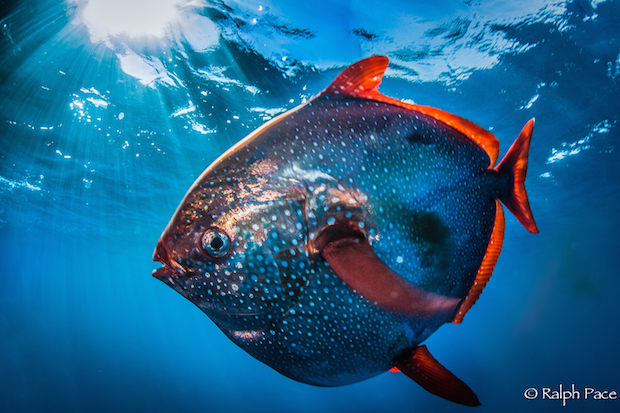
Recently scientists at NOAA’s South West Fisheries Science Center made a stunning discovery, the worlds first known warm-blooded fish, the moonfish, opah  (Lampris guttatus). Until this recent discovery all fish were considered cold-blooded ectotherms – allowing their body temperature to fluctuate with the change in ambient ocean temperature. However, opah’s are different, in that these largely solitary fish regulate their internal body temperature above the ambient temperature of their environment like mammals and birds (other warm-blooded animals).

Opah off the coast of southern California. (Photo credit: Ralph Pace Photography)

Read More “Fun Science FRIEDay – “A cold-water fish with a warm heart!”” »

We built a beer-delivering underwater robot and sent it out to sea. You can probably guess what happened next.

Posted on May 13, 2015 By Andrew Thaler
Uncategorized

Did Wyoming really just outlaw citizen science?

Posted on May 11, 2015May 11, 2015 By Bluegrass Blue Crab 15 Comments on Did Wyoming really just outlaw citizen science?
Uncategorized

I first heard about the new Wyoming law #SF0012 through the Slate article summarizing it as a criminalization of citizen science. There’s a real danger that it could be interpreted and implemented that way, but let’s try and give Wyoming the benefit of the doubt for a minute. The text of the law only requires that scientists (citizen or otherwise) acquire written or verbal permission from landowners for collecting data on their land. It goes on to define what “data” means, including photographs in a fairly wide definition, and “collecting” as taking data with the intention of turning it over to a state or federal agency. It also defines trespassing and outlines the consequences for those who fail to receive permission. In short: the data collector could go to jail and their data will not be admissible in legal or policy proceedings.

At the core, the law re-hashes a fairly common definition of trespassing. The key part of the law that’s new is that the data won’t be admissible in court and the act of turning them over to federal or state agencies will make you an outlaw. Part of me thinks that data collectors, including citizen science groups, should be asking permission to go on someone’s land. This is both to keep ethics at the forefront of our scientific endeavors and for the personal safety of scientists (ranchers are known to carry shotguns, after all).

Read More “Did Wyoming really just outlaw citizen science?” »

Happy Fun Science FRIEDay – Glass Frogs

Posted on May 1, 2015April 17, 2015 By Kersey Sturdivant
Uncategorized

Raise your hand if you realized there were frogs so translucent you could see their innards? Ok if you actually raised your hand while reading this, kudos, but put it down now. Glass frogs are tiny green organisms whos organs are visible from their underside given the translucent nature of their bellies. There were 148 … Read More “Happy Fun Science FRIEDay – Glass Frogs” »

Advice About Applying to Graduate School

Posted on April 29, 2015April 29, 2015 By Kersey Sturdivant
Uncategorized

In 2013 a colleague and I were commissioned by Cambridge University Press to write a book about applying to graduate school in the sciences. A large part of the approach was to source knowledge from others with experience in this process (both from admissions offices and former applicants), and to use that information to drive … Read More “Advice About Applying to Graduate School” »

Fun Science FRIEDay – Snap, Crack, Pop

Posted on April 24, 2015April 17, 2015 By Kersey Sturdivant
Uncategorized

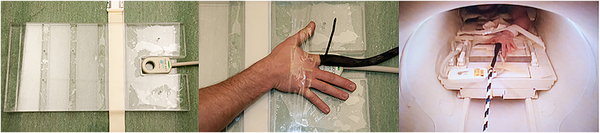
You’ve been there before. You are sitting or standing around and get a mental sensation that you need to “pop your knuckles”.  A swift squeeze of your fingers and the tension is relieved. Crisis averted. But why do knuckles make that popping sound when you crack them? If questions like this keep you up at night… maybe you need to reevaluate your priorities. But, if the start of this article has piqued your interest, you will be pleased to know that a a team of researchers, led by the University of Alberta Faculty of Rehabilitation Medicine, have confirmed the reasons for knuckle popping.

Pull My Finger experiment.  The radiofrequency coil inside the clear housing (left). The metocarpophaangeal (MCP) joint of interest centred over the bore of the radiofrequency coil (middle). The participant’s hand within the imaging magnet (right).  (Photo credit: Kawchuck et al. 2015, PLoS ONE)
Pull My Finger experiment. The radiofrequency coil inside the clear housing (left).
The metocarpophaangeal (MCP) joint of interest centred over the bore of the radiofrequency coil (middle). The participant’s hand within the imaging magnet (right). (Photo credit: Kawchuck et al. 2015, PLoS ONE)

Read More “Fun Science FRIEDay – Snap, Crack, Pop” »

This is the worst academic presentation in the world … tribute

Posted on April 23, 2015 By Chris Parsons
Uncategorized

Conference season is fast approaching, and around the hallowed halls of academia frantic graduate students are rushing around trying to cat herd committee members for thesis drafts and preparing the capstone to all of their recent study and research: the thesis defense. For the past two weeks my life has largely been back to back student presentations, and on the whole they were excellent. a couple of moments when nerves got the better of presenters, but generally high quality.

Then I went to an academic meeting, and I was reminded again why we are struggling to communicate environmental issues to the general public. I had forgotten quite how excruciatingly dull and painfully constructed academic presentations can be.

The presenters were completely unaware of the effect of their talks on the audience, who were checking email, napping and in one case just staring blankly at a wall, which was obviously more entertaining than the presentation at hand.

It really was a master class in how to ensure that your presentation was as dull, dense, and obtuse as possible. So for the benefit of those who what to ensure that they can give the most perfectly dull academic presentation, here are some tips:

Read More “This is the worst academic presentation in the world … tribute” »

Fun Science FRIEDay – The Moby Dick of Sperm Whale Encounters

Posted on April 17, 2015 By Kersey Sturdivant
Uncategorized

Happy FSF Folks!

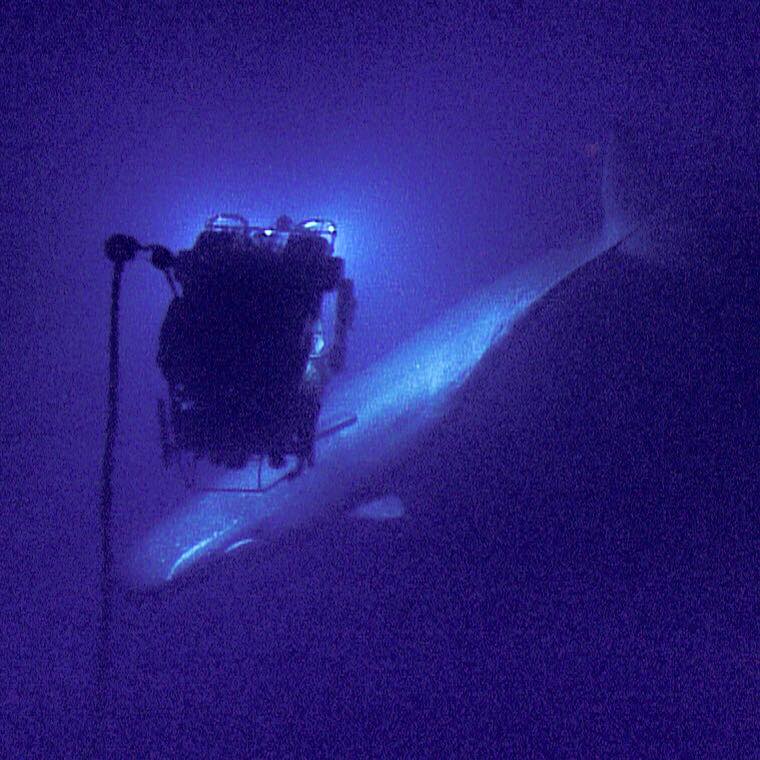
So this news has been making the rounds, and it is too amazing not to include for FSF. So if you missed it, you are in luck because we highlight it again here. A giant sperm whale was captured by a remotely operated vehicle (ROV) piloted as part of Bob Ballard and the Corps of Exploration’s Nautilus cruise. The whale was captured by the ROV Hercules at 598 meter (1,962 ft) below the sea surface in the Gulf of Mexico off the coast of Louisiana.

Sperm whale captured at 598 meter (1,962 ft) depth by the ROV Hercules. (Photo Credit: Ocean Exploration Trust)

Read More “Fun Science FRIEDay – The Moby Dick of Sperm Whale Encounters” »

Posts pagination

Previous 1 … 28 29 30 … 119 Next

Popular Posts

At least 74 practicing shark researchers: How a silly thing I said online raised thousands for conservationAt least 74 practicing shark researchers: How a silly thing I said online raised thousands for conservationFebruary 26, 2025David Shiffman
Why the new Trump order to shoot wolves is both illegal and a dreadful precedent for endangered speciesWhy the new Trump order to shoot wolves is both illegal and a dreadful precedent for endangered speciesSeptember 5, 2026Ali Gaster
The Trump Administration’s latest attack on endangered speciesThe Trump Administration’s latest attack on endangered speciesSeptember 17, 2026Ali Gaster
That's not a blobfish: Deep Sea Social Media is Flooded by AI SlopThat's not a blobfish: Deep Sea Social Media is Flooded by AI SlopDecember 19, 2025Andrew Thaler
How to build a canoe from scratch on a graduate student stipendHow to build a canoe from scratch on a graduate student stipendApril 17, 2010Andrew Thaler
5 things I learned helping to reassess the global conservation status of every species of tuna and billfish5 things I learned helping to reassess the global conservation status of every species of tuna and billfishSeptember 15, 2026David Shiffman
What is a Sand Shark?What is a Sand Shark?November 12, 2017Chuck Bangley
What Ocean Ramsey does is not shark science or conservation: some brief thoughts on "the Shark Whisperer" documentaryWhat Ocean Ramsey does is not shark science or conservation: some brief thoughts on "the Shark Whisperer" documentaryJuly 2, 2025David Shiffman
Shark of Darkness: Wrath of Submarine is a fake documentaryShark of Darkness: Wrath of Submarine is a fake documentaryAugust 10, 2014Michelle Jewell
When is a take not a take? Yet another attack on Endangered Species by the Trump AdministrationWhen is a take not a take? Yet another attack on Endangered Species by the Trump AdministrationSeptember 22, 2026Ali Gaster
Subscribe to our RSS Feed for updates whenever new articles are published.

We recommend Feedly for RSS management. It's like Google Reader, except it still exists.

Southern Fried Science

  • Home
  • About SFS
  • Authors
  • Support SFS


If you enjoy Southern Fried Science, consider contributing to our Patreon campaign.

Copyright © 2026 Southern Fried Science.

Theme: Oceanly Premium by ScriptsTown