Skip to content

Southern Fried Science

Over 15 years of ocean science and conservation online

  • Home
  • About SFS
  • Authors
  • Support SFS

Category: Uncategorized

Core Themes for 2012: A renewed sense of wonder

Posted on January 27, 2012January 27, 2012 By Andrew Thaler 1 Comment on Core Themes for 2012: A renewed sense of wonder
Uncategorized

In the past four years, we took our readers from the remote shoals of the Skeleton Coast to the unfathomable depths of the western Pacific. We touched the coasts of every continent, plumbed the depth of every ocean. Throughout this shared journey, the unspoken, implicit rationale, the very heart of our passion, the reason that any of this is worth doing, is that the ocean is awesome. When I say awesome, I don’t mean awesome in some mundane, biblical sense of fear and wonder when staring into the face of god; I’m talking about something much greater than our fragile brains can comprehend.

We have sailed so far, in these four years, and in this voyage I fear that we have found ourselves, like Ishmael, in “the damp, drizzly November of [our] souls.” The conversation at Southern Fried Science has changed, become more cynical, fatalistic, and driven by threats facing the ocean, rather than reasons why we value it. What once was a sea of boundless potential is now cast in bondage to statistics, benefit analyses, weights and measures, action items. In a way, this shift was inevitable. The ocean is in trouble, the world is changing, and the less we understand it, the more we will lose. Without someone to mark the ledger, to take the bearing, the ship is lost.

Read More “Core Themes for 2012: A renewed sense of wonder” »

Core themes of 2012: Underrepresented issues in marine science and conservation

Posted on January 26, 2012 By David Shiffman 3 Comments on Core themes of 2012: Underrepresented issues in marine science and conservation
Uncategorized

One of the many unfortunate consequences of the decline in traditional media has been a reduction in science reporting. The formerly great CNN science unit closed in 2008, followed soon after by the health and science page of the Boston Globe. Alarmingly few trained science journalists are left, and people without proper training are being asked to cover the few science stories that still make it on the air ( I was once interviewed about shark research by the weatherman from CNN’s “American Morning”).  With few exceptions, science and conservation stories are no longer considered a priority to the major news networks and newspapers. However, science is no less important to our everyday lives.

Read More “Core themes of 2012: Underrepresented issues in marine science and conservation” »

Core Themes of 2012: Challenging the Conventional Narrative

Posted on January 25, 2012January 25, 2012 By Bluegrass Blue Crab 3 Comments on Core Themes of 2012: Challenging the Conventional Narrative
Uncategorized

Isaac Newton, after experiencing the bottom end of a falling apple, used that experience to formulate the theory of gravity. The inductive process Newton used is common to the goals of most scientific endeavors and a deeply ingrained part of the human psyche. As humans, we love to generalize. It helps us understand the world around us by categorizing parts of it and explaining natural dynamics by the “laws of nature”. We also stereotype each other by race, hometown, or favorite basketball team. Some would say these tendencies help us prepare – to predict and expect the logical outcome of the set of clues presented in our everyday lives. But just like the reasons your mother told you not to stereotype, sometimes nature has its own surprises that defy prediction, categorization, or law-following. Especially if you don’t quite know what the law is yet.

Read More “Core Themes of 2012: Challenging the Conventional Narrative” »

Core Themes for 2012: Highlighting the Rural Voice

Posted on January 24, 2012January 24, 2012 By Bluegrass Blue Crab
Uncategorized

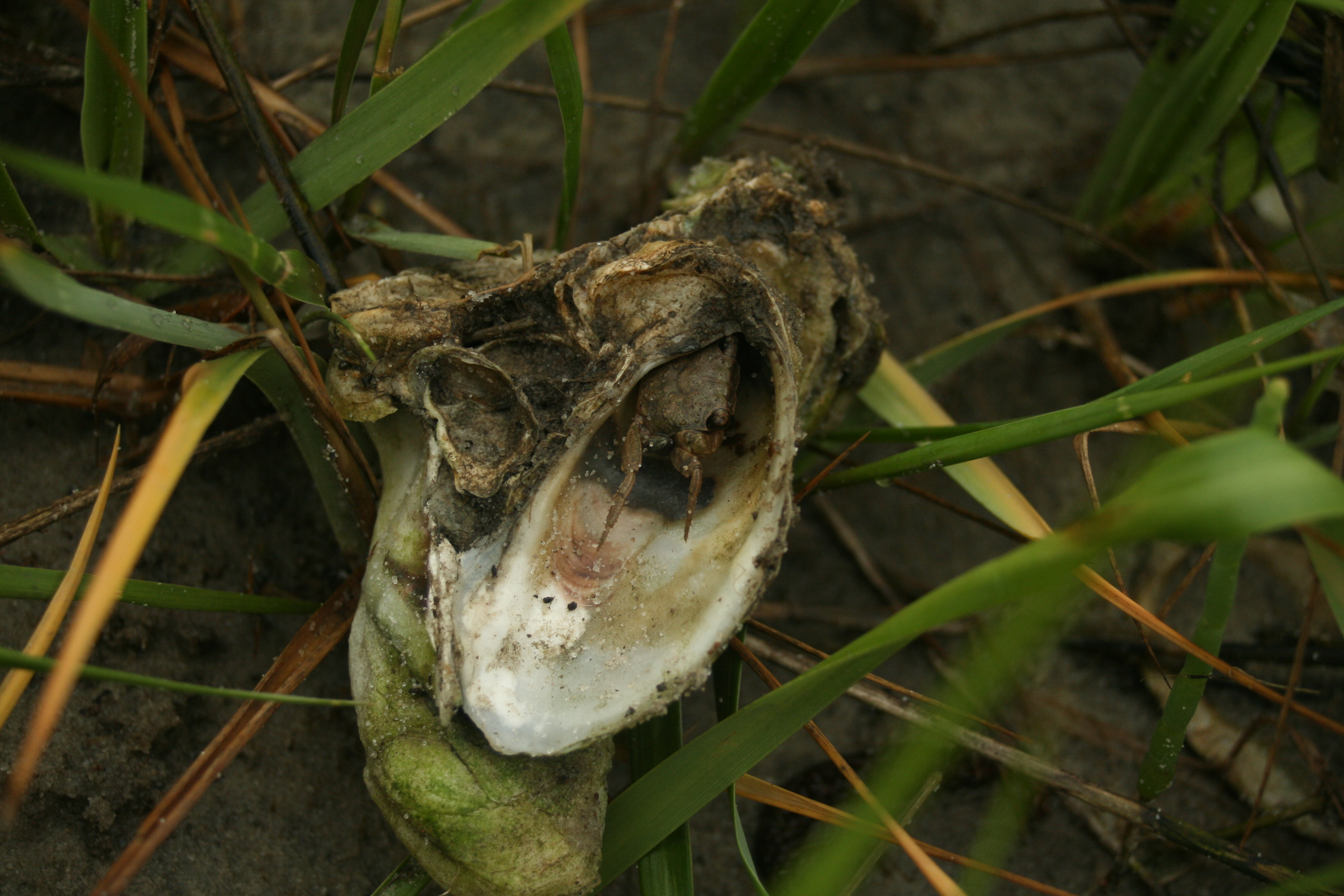
Oyster shell, photo by author

Imagine the last time you went to an oyster roast – good food, happy friends, and maybe a delicious smelling fire to warm your toes. Someone brought warm homemade crackers. The youngest in the crowd is both delighted and disgusted at the discovery of a lucky oyster crab in the corner of his oyster shell.

Moments like these that help define what sustainability means – a desire for the continued existence of those oyster roasts. That requires healthy estuaries to make oysters every year, careers that keep people in the community, and healthy local farming for trees and agriculture. Moments like these define the word ‘rural’, where residents are dependent on the natural resources they interact with daily for food and livelihood. This could mean life on a farm in one of the most sparsely populated regions of the country or a piece of the rural carved out of an increasingly urbanized landscape. Rural describes an ethic and a way of life more than any particular location.

Read More “Core Themes for 2012: Highlighting the Rural Voice” »

Core Themes for 2012: The story behind the paper

Posted on January 23, 2012January 24, 2012 By Andrew Thaler
Uncategorized

There is a disconnect between those who conduct scientific research and those who consume it. The public has a vision of science that involves crisp lab coats and expensive equipment, lone students toiling at the bench waiting for an eureka moment or field researchers swinging, Indiana Jones-style through the jungle, Science is, unfortunately, not that neat.

Read More “Core Themes for 2012: The story behind the paper” »

Southern Fried Science Core Themes for 2012

Posted on January 23, 2012 By Andrew Thaler
Uncategorized

This month, David, Amy, and I gathered to discuss the future direction of Southern Fried Science at the Third Annual Southern Fried Retreat. One of the outcomes of that meeting was the sleek, new comment policy at the top of the page. Instead of a rigid list of rules, we’ll be trying to foster a … Read More “Southern Fried Science Core Themes for 2012” »

Nine ways journalists demonstrate they don’t understand science

Posted on January 17, 2012January 17, 2012 By Andrew Thaler 12 Comments on Nine ways journalists demonstrate they don’t understand science
Uncategorized

Ah the Guardian, that venerable bastion of Truth and Light*. Today they posted a handy reference guide for scientists trying to work with journalist, attempting to explain why science news is covered in certain ways and trying to ease the process by pointing out “Nine ways scientists demonstrate they don’t understand journalism”. The knife, of course, cuts both ways, so science journalist may want to meditate on a few ways that journalists demonstrate they don’t understand science.

Read More “Nine ways journalists demonstrate they don’t understand science” »

Radial Symmetry – the poetry of Katherine Larson

Posted on January 16, 2012 By Andrew Thaler
Uncategorized

What is it about the ocean that inspires otherwise precise and stoic scientists to cast off the shackles of structured, rigorously defined scientific language and swim, instead, through a sea of verse and meter. You can find examples littered across the internet, from Kevin Zelnio’s song lyrics featured in the Open Lab, to my own pedestrian attempts at Hardtack and Sardines. Of course, some poets rise above our amateur attempts and merge a deep understanding of the natural world with a precise eye for beauty, bringing both together in a sea of verse which stirs the soul and challenges the intellect. That is exactly what Katherine Larson has done with her first book of science-inspired poetry: Radial Symmetry.

It may seem a strange book for a marine science blog to review, but Larson, a molecular biologist by training, has captured a the spirit of scientific inquiry and the ocean in a way that few other mediums can. Her poetry evokes the thrill of discovery as well as frustration. How many practicing scientists can’t relate to Love at thirty-two degrees, a poem that begins by observing the branchial hearts of a squid,  when she announces:

Read More “Radial Symmetry – the poetry of Katherine Larson” »

Aquaculture in North Carolina: NC State’s Marine Aquaculture Research Center

Posted on January 12, 2012 By Bluegrass Blue Crab
Uncategorized

This year we’re starting a new series highlighting the many faces of aquaculture in eastern North Carolina. From research facilities to new species under domestication to large facilities to feed the masses, there’s a lot going on in the state’s low-lying coast. Periodically, we’ll visit one and bring you pictures and stories from the operation. Stay tuned for more.


The entrance to the MARC facility. Scenic. Photo by Andrew David Thaler

Tucked on the banks of Sleepy Creek between the two small towns of Marshallberg and Smyrna, NC, a world of new aquaculture ideas grows – NC State’s Marine Aquaculture Research Center.  A single building with large tanks behind emerged from the landscape as we drove down the dirt farm road that connects the property to the main road. Originally planned as a three-building complex, recent budget cuts  felt throughout the state have made the operation smaller – but no less important. The facility houses projects for anyone with an idea for how to forward aquaculture in the 21st century – be they local researchers, students, or people already in the industry. The two major projects happening during our visit are a comparison of hybrid and striped bass feeding efficiencies at a variety of temperatures and continuing development of a waste-management strategy for tank effluent water. There was also a red porgy mating effort and mud minnow spawning setup.

Read More “Aquaculture in North Carolina: NC State’s Marine Aquaculture Research Center” »

Fishing on Your Phone: Apps for the Ocean-Savvy

Posted on January 5, 2012January 6, 2012 By Bluegrass Blue Crab 1 Comment on Fishing on Your Phone: Apps for the Ocean-Savvy
Uncategorized

In recent months, I’ve been hearing snippets of conversation about the use of smartphones for lots of things involving fish: guiding seafood choices, fishing identification, even reporting to the state. Most are free, some cost money, and there’s a bunch that haven’t reached the Android market yet (so no review from me). Feel free to add your own reviews, and iPhone users out there – add to the sketch of a review here. Here’s the results of my app playing:

Fish eating:

The Green Seafood Guide

by Lificious Software, cost: free

Start by browsing a list of “highly recommended”, “good choices”, or “to avoid” for either seafood or sushi – or search for a particular species in the search bar. Either the lists or your search results will link you to the appropriate information sheet on the Monterey Bay Aquarium website. The Aquarium facts sheets aren’t exactly smart-phone friendly, so the text comes up small, but it’s manageable. The search left something to be desired, as a search for “clams” offered me just the farmed variety and routed me directly to these fact sheets rather than telling me the basics firts. The app itself is fairly streamlined and straightforward, with just one basic home screen that also boasts a button “What should I eat today”, that from what I can tell provides a random suggestion from the “highly recommended” seafood list. I’m guessing this is an alternative interface to the Monterey Bay Aquarium’s more clunky app. Overall, it’s no more helpful than the card the Aquarium puts out, but less easy to lose and offers links to more information should you feel so compelled.

Read More “Fishing on Your Phone: Apps for the Ocean-Savvy” »

Posts pagination

Previous 1 … 40 41 42 … 119 Next

Popular Posts

Playing God - How the ESA "God Squad" just voted for the extinction of a uniquely American whalePlaying God - How the ESA "God Squad" just voted for the extinction of a uniquely American whaleApril 9, 2026Southern Fried Science
The story of the pride flag made from NASA imagery: Bluesky's most-liked imageThe story of the pride flag made from NASA imagery: Bluesky's most-liked imageSeptember 27, 2024David Shiffman
Here's how to join my IMCC8 symposium, "Ocean Science Communication: What's New and What's Next?"Here's how to join my IMCC8 symposium, "Ocean Science Communication: What's New and What's Next?"April 22, 2026David Shiffman
What Ocean Ramsey does is not shark science or conservation: some brief thoughts on "the Shark Whisperer" documentaryWhat Ocean Ramsey does is not shark science or conservation: some brief thoughts on "the Shark Whisperer" documentaryJuly 2, 2025David Shiffman
Our favorite sea monsters – Ningen (#4)Our favorite sea monsters – Ningen (#4)September 7, 2010Andrew Thaler
Join Me at Upwell: A Wave of Ocean Justice — Our Fourth Year!Join Me at Upwell: A Wave of Ocean Justice — Our Fourth Year!March 24, 2026Angelo Villagomez
On the clarity of animals: the art and science of clearing and stainingOn the clarity of animals: the art and science of clearing and stainingDecember 17, 2013Guest Writer
Shark of Darkness: Wrath of Submarine is a fake documentaryShark of Darkness: Wrath of Submarine is a fake documentaryAugust 10, 2014Michelle Jewell
What can the funniest shark memes on the internetz teach us about ocean science and conservation?What can the funniest shark memes on the internetz teach us about ocean science and conservation?November 8, 2013David Shiffman
That's not a blobfish: Deep Sea Social Media is Flooded by AI SlopThat's not a blobfish: Deep Sea Social Media is Flooded by AI SlopDecember 19, 2025Andrew Thaler
Subscribe to our RSS Feed for updates whenever new articles are published.

We recommend Feedly for RSS management. It's like Google Reader, except it still exists.

Southern Fried Science

  • Home
  • About SFS
  • Authors
  • Support SFS


If you enjoy Southern Fried Science, consider contributing to our Patreon campaign.

Copyright © 2026 Southern Fried Science.

Theme: Oceanly Premium by ScriptsTown