Skip to content

Southern Fried Science

Over 15 years of ocean science and conservation online

  • Home
  • About SFS
  • Authors
  • Support SFS

Happy Fun Science FRIEDay – Change you DNA… One Step at a Time!

Posted on January 31, 2015 By Kersey Sturdivant
Science

It’s around about this time of year when people begin to question their New Year’s resolutions to commit to better health. You know what I am talking about. Right after NYE the number of people at the gym swells to an unholy number of hopeful fitness do-gooders. Yet without fail, by the end of the month the gym population begins to stabilize back to its pre New Year’s resolution numbers. But maybe, just maybe, this article will convince you to stick with your commitment to better health, change your DNA regarding your approach to fitness, and keep on exercising! Because exercise, as a new study has found, does just that. Exercise changes the shape and functioning of our genes, an important step on the way to improved health and fitness!
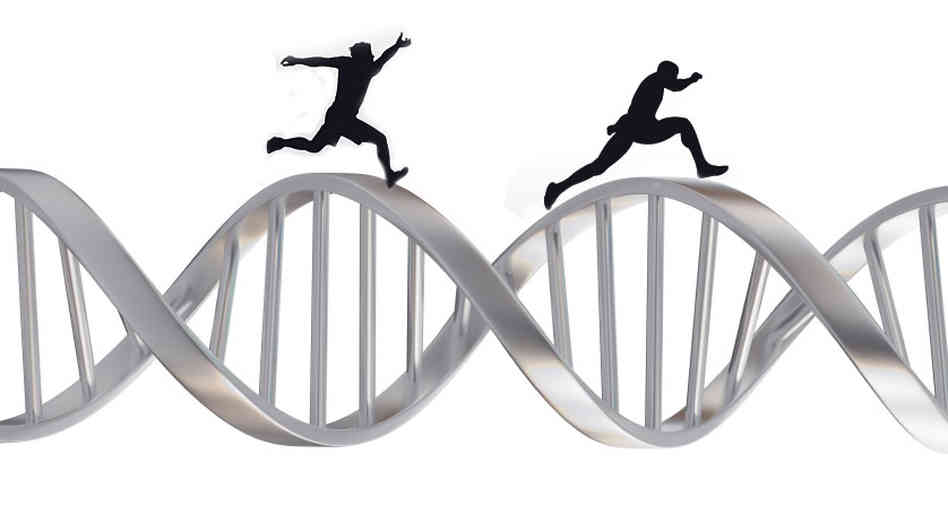
Photo credit: precisionnutrition.com

It is well known that exercise improves our health making us fitter, boosting our immune system, and reducing our susceptibility to illnesses such as diabetes and heart disease. But how exactly do our bodies receive benefits from exercise? A recent study, by scientists at the Karolinska Institute in Stockholm, believes that part of the answer may lie in our DNA. Our genes are amazing things, constantly turning on and off, and being expressed in response to changes in our environment. When genes are turned on they express proteins that prompt physiological responses in the body. Scientist have known that genes respond to exercise, but the real mystery is deciphering how those genes know how to respond to exercise, and the group at Karolinska discovered just that.

In short, the answer is epigenetics, a process where a genes operation is changed, but not the actual DNA itself. How does this happen? Primarily through a process called methylation, where a cluster of atoms called a methyl group attach to the outside of a gene allowing it to receive and response to biochemical signals from body. Like those signals the body might send when you are exercising. To assess how exercise might influence epigenetics scientists at Karolinska devised a study to compare and contrasted gene response in the exercised and unexercised legs of participants. They had people pedal one-legged on a bike over a series of months, and then assessed the epigenetic response. Oh the things we do for science!
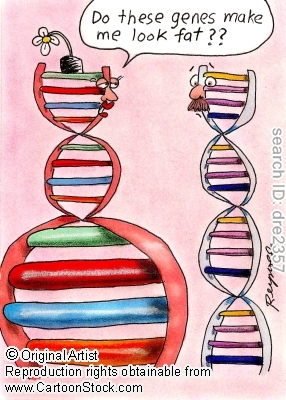
genes

What they found was the exercised legs had significantly different patterns in the methyl groups on their genes, and most of the genes in question were known to play a role in energy, metabolism, insulin response, and inflammation within muscles. Essentially these are the genes that affect how healthy and fit a muscle, and by extension the body, had become.

So through exercise, they showed that we can change how are genes are use (i.e. change our DNA), and from that live healthier lives.

So get out there and exercise your genes!


You can read this awesome study in the journal Epigenetics.

Share this:

  • Click to share on Bluesky (Opens in new window) Bluesky
  • Click to share on Facebook (Opens in new window) Facebook
  • Click to share on Reddit (Opens in new window) Reddit
  • Click to share on Threads (Opens in new window) Threads
  • Click to share on WhatsApp (Opens in new window) WhatsApp
  • Click to share on Mastodon (Opens in new window) Mastodon

Related

Tags: DNA (DEOXYRIBONUCLEIC ACID) EXERCISE FITNESS GENETICS AND HEREDITY KAROLINSKA INSTITUTE LINDHOLM PHYS ED

Post navigation

❮ Previous Post: Fun Science FRIEDay – Darwin Says Survival of the… empathetic?!
Next Post: Fun Science FRIEDay – Those Genes Look Tasty ❯

You may also like

Uncategorized
Fun Science FRIEDay – Embryonic Gene Editing
August 18, 2017
Uncategorized
I spent 50 days working out in Virtual Reality and everything went better than expected.
May 16, 2019

Popular Posts

What Ocean Ramsey does is not shark science or conservation: some brief thoughts on "the Shark Whisperer" documentaryWhat Ocean Ramsey does is not shark science or conservation: some brief thoughts on "the Shark Whisperer" documentaryJuly 2, 2025David Shiffman
I can serve on your graduate thesis committee. Here’s what you can expect of me, and what I expect in return.I can serve on your graduate thesis committee. Here’s what you can expect of me, and what I expect in return.October 16, 2025David Shiffman
The story of the pride flag made from NASA imagery: Bluesky's most-liked imageThe story of the pride flag made from NASA imagery: Bluesky's most-liked imageSeptember 27, 2024David Shiffman
What can the funniest shark memes on the internetz teach us about ocean science and conservation?What can the funniest shark memes on the internetz teach us about ocean science and conservation?November 8, 2013David Shiffman
The Trouble with Teacup PigsThe Trouble with Teacup PigsOctober 14, 2012Andrew Thaler
I turned my woodshop into a personal solar farm.I turned my woodshop into a personal solar farm.June 21, 2021Andrew Thaler
Shark of Darkness: Wrath of Submarine is a fake documentaryShark of Darkness: Wrath of Submarine is a fake documentaryAugust 10, 2014Michelle Jewell
"Twitter sucks now and all the cool kids are moving to Bluesky:" Our new survey shows that scientists no longer find Twitter professionally useful or pleasant"Twitter sucks now and all the cool kids are moving to Bluesky:" Our new survey shows that scientists no longer find Twitter professionally useful or pleasantAugust 19, 2025David Shiffman
Nodules, Lost Mines, and Dark Oxygen: A new documentary on deep-sea mining asks important questions about the future of the industry.Nodules, Lost Mines, and Dark Oxygen: A new documentary on deep-sea mining asks important questions about the future of the industry.July 24, 2025Andrew Thaler
Blackfish: the Science Behind the MovieBlackfish: the Science Behind the MovieSeptember 18, 2013Chris Parsons
Subscribe to our RSS Feed for updates whenever new articles are published.

We recommend Feedly for RSS management. It's like Google Reader, except it still exists.

Southern Fried Science

  • Home
  • About SFS
  • Authors
  • Support SFS


If you enjoy Southern Fried Science, consider contributing to our Patreon campaign.

Copyright © 2025 Southern Fried Science.

Theme: Oceanly Premium by ScriptsTown