Skip to content

Southern Fried Science

Over 15 years of ocean science and conservation online

  • Home
  • About SFS
  • Authors
  • Support SFS

Marine Ecology via Remote Observation: an update from #ROV2PNG

Posted on November 12, 2014November 12, 2014 By Andrew Thaler
Science

Note: we’re home after an exceptional 3 weeks of work in Papua New Guinea. Sadly, the course was so intense that we weren’t able to produce updates during the program. Instead, please accept these time-shifted updates from #ROV2PNG.

After more than a week of building robots, developing research proposals, presenting and defending their proposals to the class, and refine their methodology, it’s finally time to enter the field, sending our small fleet of robots out to explore marine ecosystems around Kavieng in New Ireland Province.
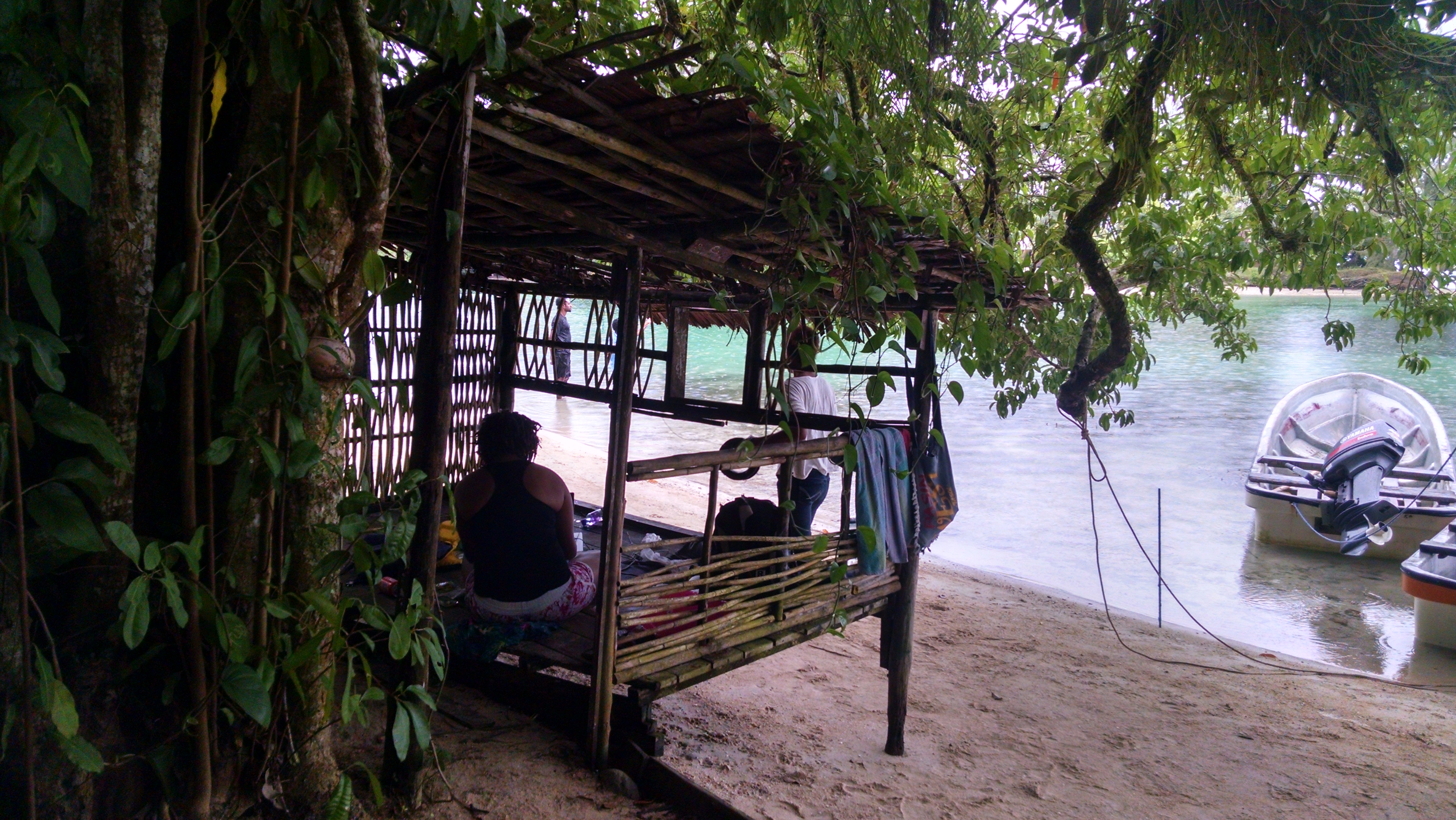
One of the more sophisticated ROV control vans.

The fantastic student projects include: a survey of hard coral coverage around Nago Island to assess reef health; an assessment of garbage dumping around the Kavieng marketplace and other related areas; a test to determine if the electromagnetic fields of the OpenROV might attract sharks; a study of seagrass distribution and abundance of related seagrass species; a survey of seastars around Nago and Nusa islands; and an assessment of commercially important sea cucumber species in Kavieng Lagoon. All in all,an impressive array of diverse and challenging projects.

And these projects were challenging. Students weren’t just learning new fieldwork skills, they also needed to master flying the ROVs. Navigating through the rough surf, maintaining a straight and stable heading, controlling depth, recording video, watching for passing boats, and taking copious notes were all required of these 3 to 5 person teams.
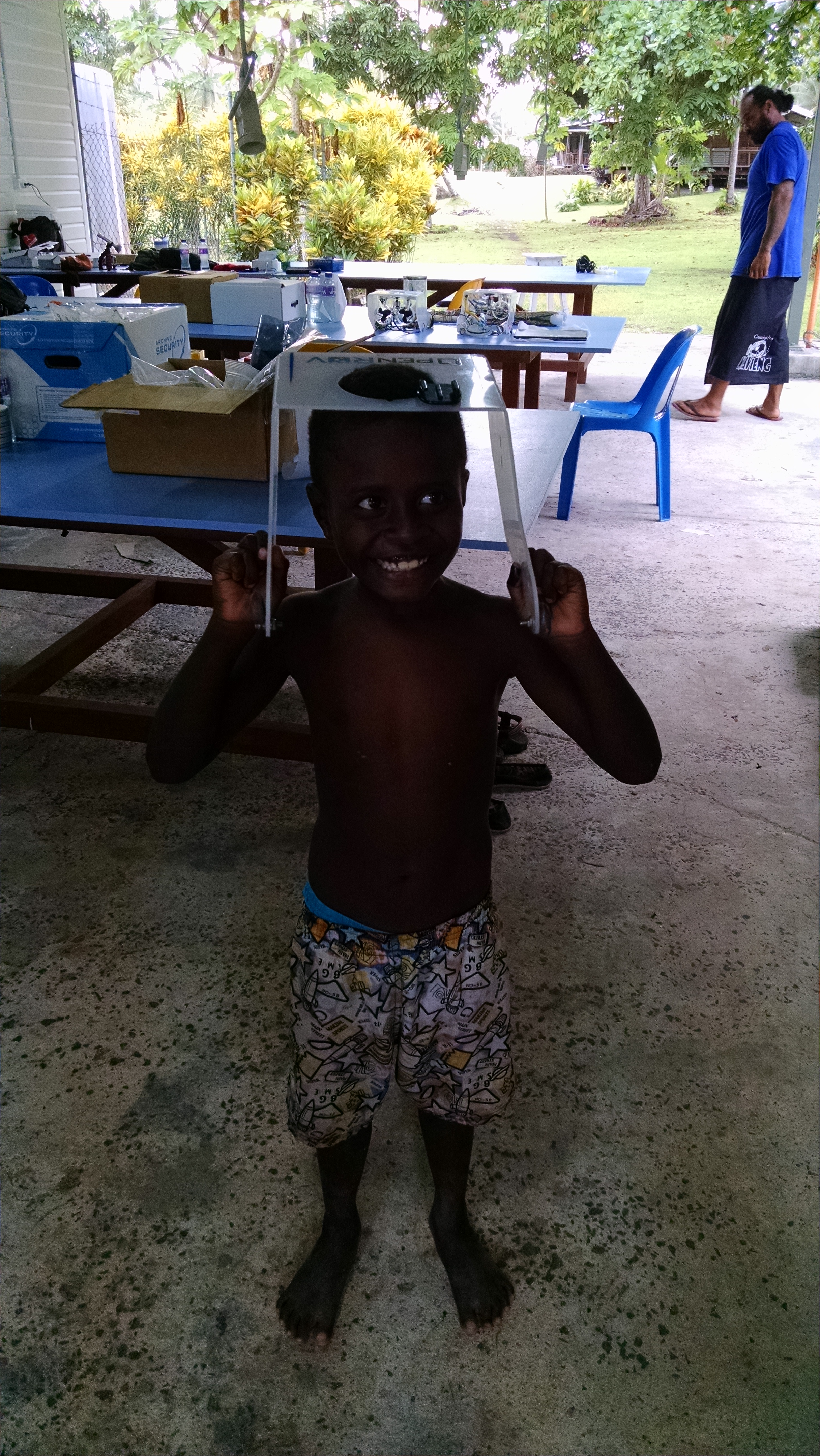
Our youngest student tries the ROV on for size.

They rose to the challenge, fixing robots in the field, adapting their sampling design to account for changes in the weather and unforeseen obstacles in the sea. The robots were not without their own problems. One robot flooded and needed a rebuild, others lost access to their IMUs (the internal sensor bank which feeds environmental data to the operator), some got tangled and needed a manual rescue. But after 3 days of heavy use, all six ROVs returned battered, but functional.

We ended class on the last day with student presentations. Each group presented their results, an impressive display of tenacity, teamwork, curiosity, and adaptability, the heart of what field science is all about.

Share this:

  • Click to share on Bluesky (Opens in new window) Bluesky
  • Click to share on Facebook (Opens in new window) Facebook
  • Click to share on Reddit (Opens in new window) Reddit
  • Click to share on Threads (Opens in new window) Threads
  • Click to share on WhatsApp (Opens in new window) WhatsApp
  • Click to share on Mastodon (Opens in new window) Mastodon

Related

Tags: #ROV2PNG OpenROV Papua New Guinea

Post navigation

❮ Previous Post: Newly-build robots face many sea trials: an update from #ROV2PNG
Next Post: Fun Science FRIEDay – The Origin of HIV ❯

You may also like

Weekly Salvage
Skate saunas, clone armies, deep news from deep-sea mining, an ocean of plastic, and more! Monday Morning Salvage: February 12, 2018.
February 12, 2018
Weekly Salvage
The hunt for Soviet submarines, a 5-foot-long shipworm, the impossibilities of deep-sea mining, and more! Massive Monday Morning Salvage: March 5, 2018.
March 5, 2018
Science
The Extraterrestrial Ocean: Could OpenROV Trident explore the seas of Europa?
October 26, 2015
Conservation
From Sea and Sky: Hacking the Chesapeake with #BayBots
April 27, 2015

Popular Posts

Shark scientists want their research to help save threatened species, but don’t know how. Our new paper can help.Shark scientists want their research to help save threatened species, but don’t know how. Our new paper can help.December 1, 2025David Shiffman
Norway and Cook Islands put their deep-sea mining plans on pause.Norway and Cook Islands put their deep-sea mining plans on pause.December 3, 2025Andrew Thaler
What Ocean Ramsey does is not shark science or conservation: some brief thoughts on "the Shark Whisperer" documentaryWhat Ocean Ramsey does is not shark science or conservation: some brief thoughts on "the Shark Whisperer" documentaryJuly 2, 2025David Shiffman
The Trouble with Teacup PigsThe Trouble with Teacup PigsOctober 14, 2012Andrew Thaler
What we know we don't know: impacts of deep-sea mining on whales, dolphins, sharks, turtles, and other migratory species.What we know we don't know: impacts of deep-sea mining on whales, dolphins, sharks, turtles, and other migratory species.November 20, 2025Andrew Thaler
2025: My year in writing, public speaking, and media interviews2025: My year in writing, public speaking, and media interviewsDecember 3, 2025David Shiffman
Urea and Shark OsmoregulationUrea and Shark OsmoregulationNovember 15, 2010David Shiffman
Shark of Darkness: Wrath of Submarine is a fake documentaryShark of Darkness: Wrath of Submarine is a fake documentaryAugust 10, 2014Michelle Jewell
How tiny satellites are tracking marine wildlifeDecember 1, 2025Andrew Thaler
Build a dirt cheap, tough-as-nails field computer in a Pelican caseBuild a dirt cheap, tough-as-nails field computer in a Pelican caseJuly 21, 2015Andrew Thaler
Subscribe to our RSS Feed for updates whenever new articles are published.

We recommend Feedly for RSS management. It's like Google Reader, except it still exists.

Southern Fried Science

  • Home
  • About SFS
  • Authors
  • Support SFS


If you enjoy Southern Fried Science, consider contributing to our Patreon campaign.

Copyright © 2025 Southern Fried Science.

Theme: Oceanly Premium by ScriptsTown