

Skip to content

Southern Fried Science

Over 15 years of ocean science and conservation online

  • Home
  • About SFS
  • Authors
  • Support SFS

Recent Posts

Here’s how to join my IMCC8 symposium, “Ocean Science Communication: What’s New and What’s Next?”
April 22, 2026
Deep Sea Mining Symposium Announcement
April 21, 2026
Join Me at Upwell: A Wave of Ocean Justice — Our Fourth Year!
March 24, 2026
How close did the world’s first deep-sea mining come to the dredging the world’s largest cold-water coral reef?
March 17, 2026
Here are some ocean conservation technologies that I’m excited about
February 19, 2026
Walking Backwards Into the Future: Applying Indigenous Knowledge to Deep Sea Mining
February 5, 2026

No bones about it

Posted on February 7, 2014February 13, 2014 By Sarah Keartes 2 Comments on No bones about it
Uncategorized

Hello, dear internets! Thank you for the warm welcome. I am extremely excited to be joining Southern Fried Science—talk about being in good company! For those of you who don’t know me, I am a student at the University of Oregon, where I study marine biology and journalism. I love all things science, but I have a small (ok, not so small) love for shark biology. I look forward to promoting ocean outreach through kick-ass science communication with the rest of the team, here at SFS.

Enough about me, on to some animal insides.

In honor of #unshark week’s end, I return to the awesome that is shark science. Like skates and rays, sharks are chondrichthyans, cartilaginous fishes whose skeletons are made primarily of cartilage rather than bone. Ever wonder what a mostly-boneless skeleton looks like? Sure you have (and if not, you are now thinking about it and the suspense is killing you, I say).

Shark skeletons are complex, beautiful, and thanks to Dr. Gavin Naylor, and his team at College of Charleston Naylor Lab, they are here for you to see.

Read More “No bones about it” »

Southern Fried Science needs your help!

Posted on February 7, 2014 By Administrator
Blogging

For more than 5 years, Southern Fried Science has shared incisive, clever, humorous, informative, and educational ocean science and conservation stories. Our content has always been free, and, with the exception of one brief experiment, ad-free. Our writers are volunteers. Our tech support donates his time and expertise to keep the site running smoothly  (for … Read More “Southern Fried Science needs your help!” »

Social media as a scientific research tool: Background info for my #scio14 session

Posted on February 6, 2014February 6, 2014 By David Shiffman 1 Comment on Social media as a scientific research tool: Background info for my #scio14 session
Blogging, Science

ScionlineAt the 2014 ScienceOnlineTogether conference, I will be moderating a session focusing on how to use social media as a scientific research tool (2:30 P.M. on Friday, February 28th in room 3).  The hashtag is #ScioResearch , so be sure to follow along, and I’ll make a Storify afterwards. This post is primarily intended to be a source of background information for participants in my session, though feel free to read, share and ask questions in the comments if you are not planning on participating in my session.

ScienceOnline community members understand the value of social media for collaborating with colleagues and communicating science to the public, but few think of the incredible resource that these tools are for scientific research. Hundreds of millions of people all over the world are constantly sharing their experiences and opinions in a format that is public, archived, searchable, and accessible, giving researchers access to this enormous dataset without the expense or logisitical difficulties involved in organizing a large-scale survey or series of focus groups. To use a technical term, for many types of scientific research, social media and “big data” is what is called “a freakin’ gold mine.”

Onion

Below are a few examples of how social media can be used for scientific research.

Read More “Social media as a scientific research tool: Background info for my #scio14 session” »

SciFund Challenge: Help support my shark feeding ecology research

Posted on February 3, 2014February 10, 2014 By David Shiffman
Blogging, Science

I am participating in the 4th SciFund Challenge, a crowdfunding event for scientific research! My project, part of my Ph.D. dissertation research, is looking at the feeding ecology of local species of sharks with the goal of generating data that can help managers to conserve and protect these species. I’d appreciate any assistance you can … Read More “SciFund Challenge: Help support my shark feeding ecology research” »

Global is Personal: 4 Lessons About Climate Change Outreach from #DrownYourTown

Posted on February 3, 2014February 3, 2014 By Andrew Thaler
#DrownYourTown, Science

Almost four months ago, I sat down at my computer with a puzzle to solve: is there an easy way to model sea level rise without using expensive GIS programs. I found that solution in Google Earth and, after a few days of experimenting and tweeking, #DrownYourTown was born.

1 meter of sea level rise would make for a very soggy superbowl.

#DrownYourTown is a tool for exploring sea level rise through real-time, interactive, GIS modeling. Anyone can submit a request via twitter or tumblr and receive a custom, 3D model of sea level rise anywhere in the world. The system allows users to produce dramatic visuals of both plausible and implausible climate change scenarios. The project is ongoing, with user generated content, an active tumblog, and a vibrant twitter community centered around the hashtag. I am constantly exploring new ways to reach a broader audience. Currently, #DrownYourTown is on a virtual road trip, visiting a new coastal state each day, and cruising through towns after 5 meters of sea level rise.

#DrownYourTown has been an exciting and sometimes humbling journey. Here are four lessons about climate change outreach I learned from drowning your town.

Read More “Global is Personal: 4 Lessons About Climate Change Outreach from #DrownYourTown” »

Look beyond Shark Week to find the ocean’s most fascinating life

Posted on February 3, 2014February 3, 2014 By Guest Writer 1 Comment on Look beyond Shark Week to find the ocean’s most fascinating life
Conservation, Science

Dr. Steve Palumbi studies the genetics, evolution, conservation, population biology and systematics of a diverse array of marine organisms. Along with Tony Palumbi he is the author of the forthcoming book The Extreme Life of the Sea. UnShark Week is a week long celebration of the ocean’s extremes. 


Dr. Palumbi, enjoying a day at the beach.

Since 1987, the Discovery Channel’s annual Shark Week pumps up the thrill of encountering a dangerous shark. Teeth, danger, lunging predation, more teeth: this is what the week is mostly about.  But most of the extreme species in the sea are not sharks. Sharks are not the biggest, the deepest, the fastest, even the deadliest.  This week is exactly midway between Shark Weeks, 26 weeks till the next one; 26 weeks since the last. And because there are so many other thrilling species in the sea, we declare this week as UnShark Week – and dedicate it to the truly extreme animals in the ocean.

The fastest fish in the sea is not a shark. Sailfish have the unofficial record at 60 mph, and well documented speed trails have clocked tuna and wahoo at nearly 50 mph. By contrast the most celebrated human swimmers manage 6-7 mph. Billfish like marlin and sailfish feed at such high speeds that their brains and eyes can not operate fast enough. So as an adaptation to speed, these fish have evolved heaters in the brains and eyes so they can form and process images fast enough to snap up prey in high velocity sorties.

Read More “Look beyond Shark Week to find the ocean’s most fascinating life” »

Release the Karaqan! How does Aquaman’s latest foe stack up against real ocean giants?

Posted on January 31, 2014January 31, 2014 By Andrew Thaler 1 Comment on Release the Karaqan! How does Aquaman’s latest foe stack up against real ocean giants?
Popular Culture

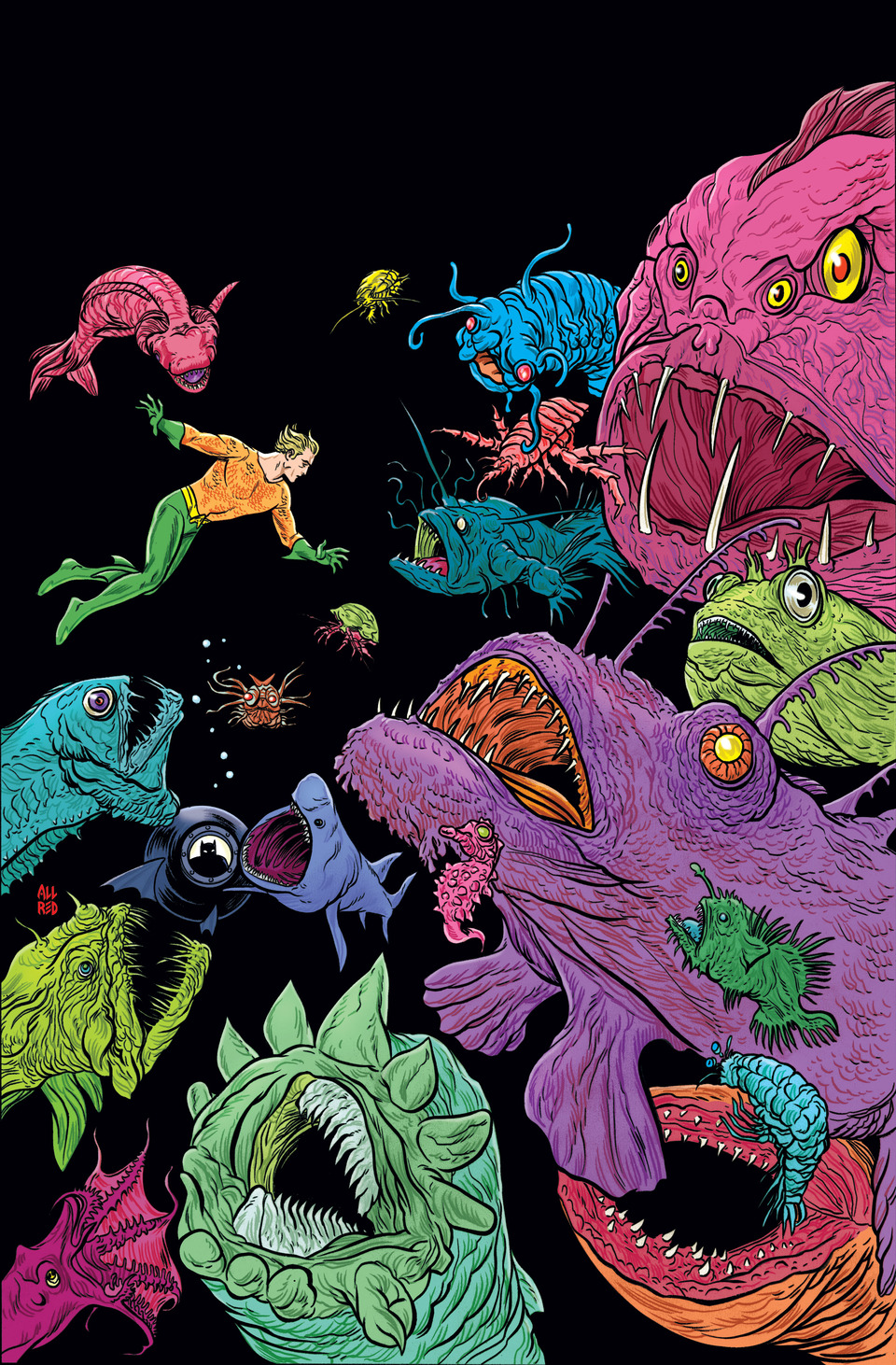
Aquaman #27. DC Comics.

It’s been more than 2 months since we last discussed the patron saint of Southern Fried Science, the one and only Aquaman. The Atlantean übermensch has a new lead writer, Jeff Parker, who’s teamed up with Aquaman veteran Paul Pelletier to produce an engaging and visually stunning story. After the epic conclusion to Throne of Atlantis, Aquaman is off on an entirely new adventure. Unfortunately, this new quest puts our hero in the path of a gargantuan guardian of ancient Atlantis, the Karaqan!

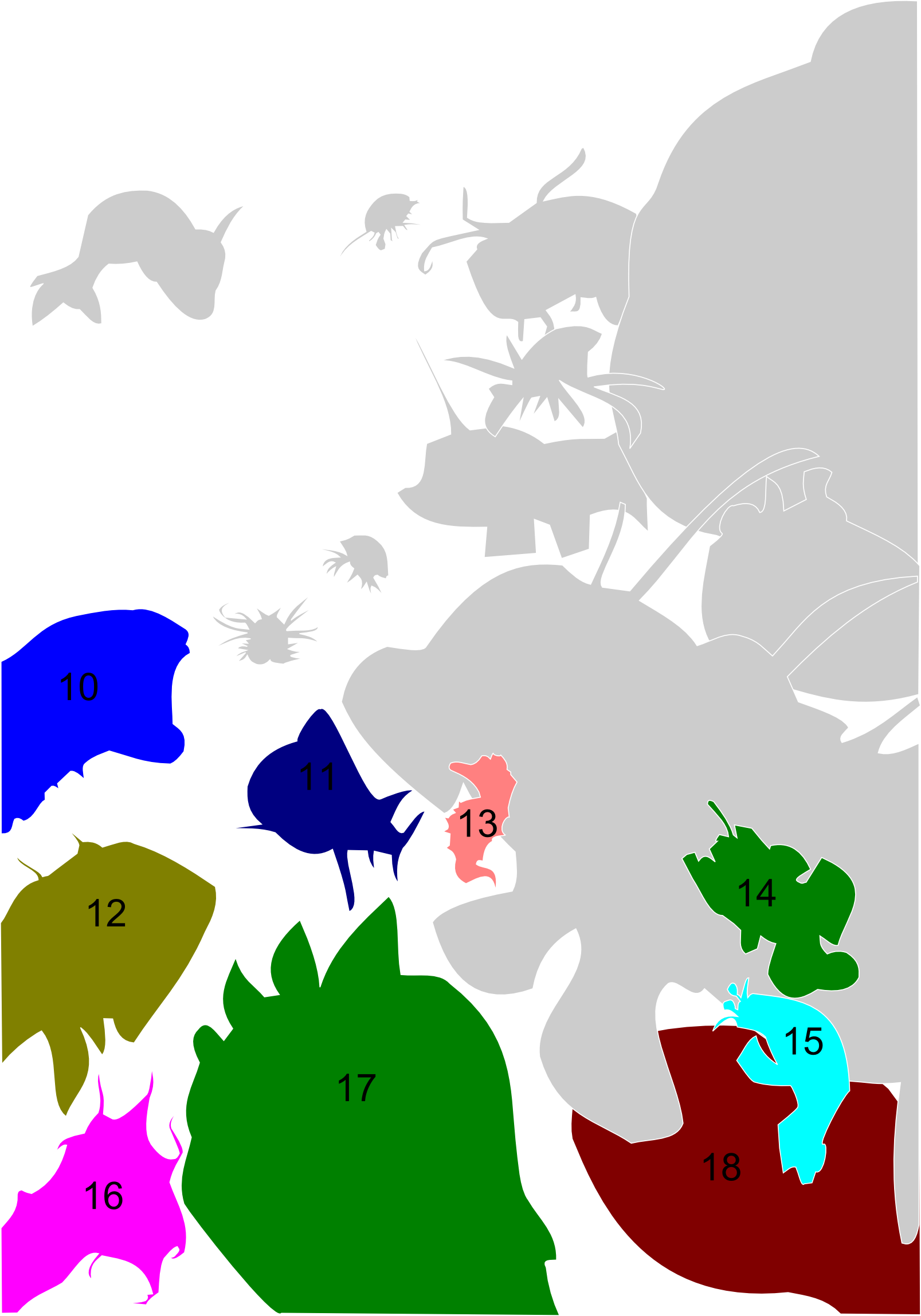
The Karaqan is big, but just how big is it? How does the Karaqan stack up against living sea creatures? Could an arthropod ever get as big as the Karaqan? Most important, if Aquaman does successfully slay the Karaqan, just how much Old Bay would we need to steam it?

Read More “Release the Karaqan! How does Aquaman’s latest foe stack up against real ocean giants?” »

Book review: are dolphins really smart?

Posted on January 29, 2014January 30, 2014 By Guest Writer 6 Comments on Book review: are dolphins really smart?
Blogging, Reviews and Interviews

melMel Cosentino obtained her Degree in Environmental Biology at the Universidad de Málaga (Spain) and her MRes in Applied Marine and Fisheries Ecology at the University of Aberdeen (UK). She has been involved in cetacean research since 1998, starting as a volunteer for Fundación Orca Patagonia-Antártida in Argentina (her country of birth) working in educational campaigns against killer whale captivity. Since then she has participated in several research projects in Spain, Portugal and Norway.  Mel has conducted field work, both from land and at sea, focused on different cetacean species, including killer whales, Risso’s dolphins and Northern bottlenose whales. In addition, she participated in the Annual meeting of the IWC as part of the Luxembourgish delegation, both in 2011 and 2012.


“The fact that an opinion has been widely held is no evidence whatsoever that it is not utterly absurd; indeed in view of the silliness of the majority of mankind, a widespread belief is more likely to be foolish than sensible” (Bertrand Russell)

gregg bookThis is how the book “Are dolphins really smart?” by Dr. Justin Gregg starts. It has been recently published and it is available in several countries, including the US and the UK. Moreover there have been a large number of newspaper and web stories based on the conclusions of the book, most along the lines of “dolphins are no smarter than chickens” “Flipper is a thug!” and “dolphins are dumb” This led to a rebuttal article published in Southern Fried Science when David Shiffman interviewed the author and some cetacean scientists about the media frenzy spawned by the book’s release. Studying animal cognition is no easy task, and Dr. Gregg has put together a great amount of information; however, I believe the reader will be confused and misled by some of the comments and statements made by the author, a scientist who holds a PhD and who claims to be analysing the evidence “as impartially as possible with a sincere desire to let objectivity take centre stage”.

It would be impossible to critique the thesis of the book point by point, so I have compiled the topics I consider to be more problematic.

Read More “Book review: are dolphins really smart?” »

5 fantastic nautical science fiction novels

Posted on January 27, 2014March 4, 2018 By Andrew Thaler 5 Comments on 5 fantastic nautical science fiction novels
Popular Culture

Enterprise versus Enterprise. From ForeignPolicy.com

One thing I’ve discovered by publishing my first work of nautical science fiction is that the field is incredibly small. There just doesn’t seem to be that many SciFi writers taking their stories out to sea. This seems strange to me, as most of the great space operas are really nautical tales. There’s a reason that TV Tropes has an exhaustive list of entries under “Space is an Ocean” (and, for that matter, “Space Whale“, because we can’t ever have enough Moby-Dick-in-Space stories). It isn’t a coincidence that the US Navy has named at least 7 ships Enterprise (FYI, the aircraft carrier CVN-80 Enterprise is actually bigger than the starship NCC-1701 Enterprise).

So here are my 5 favorite maritime science fiction stories.

Title page for 20,000 Leagues by Jules Verne

Twenty Thousand Leagues Under the Sea by Jules Verne.

The Grand Daddy of maritime science fiction, 20,000 Leagues still holds up. Even though the science is dated, Verne’s insight shines through, predicting the deep-sea gold rush more than 100 years before we even knew about the geologic formations that would produce seafloor massive sulfides. Considering that almost one-fifth of all deep-sea hydrothermal vents are currently at risk for deep-sea mining, Captain Nemo’s declaration that “in the depths of the ocean, there are mines of zinc, iron, silver and gold that would be quite easy to exploit” is particularly prescient.

Read More “5 fantastic nautical science fiction novels” »

7 ways to make beaches safer without killing sharks

Posted on January 26, 2014January 27, 2014 By David Shiffman 12 Comments on 7 ways to make beaches safer without killing sharks
Uncategorized

This past weekend, the shark cull officially began in Western Australia as the first shark was killed. The scientific evidence is clear that culls do not lessen people’s risk of shark attacks, and more than 100 scientific experts from around the world have signed an open letter opposing this cull.  While the only sure way to reduce the risk of a shark bite by 100% is to stay out of the water, there are many strategies that actually can reduce someone’s risk significantly without harming populations of threatened animals.

1) Aerial patrols. Planes or helicopters flying above the beach can help identify when potentially dangerous sharks are present. The Australian Aerial Patrol has done this for decades. Though the spotting rate is relatively low and the patrols are expensive,  new technologies like drones can help reduce the cost of these patrols.

Photo via Russavaia, WikiMedia Commons

Read More “7 ways to make beaches safer without killing sharks” »

Posts pagination

Previous 1 … 111 112 113 … 272 Next

Popular Posts

Playing God - How the ESA "God Squad" just voted for the extinction of a uniquely American whalePlaying God - How the ESA "God Squad" just voted for the extinction of a uniquely American whaleApril 9, 2026Southern Fried Science
The story of the pride flag made from NASA imagery: Bluesky's most-liked imageThe story of the pride flag made from NASA imagery: Bluesky's most-liked imageSeptember 27, 2024David Shiffman
What Ocean Ramsey does is not shark science or conservation: some brief thoughts on "the Shark Whisperer" documentaryWhat Ocean Ramsey does is not shark science or conservation: some brief thoughts on "the Shark Whisperer" documentaryJuly 2, 2025David Shiffman
Here's how to join my IMCC8 symposium, "Ocean Science Communication: What's New and What's Next?"Here's how to join my IMCC8 symposium, "Ocean Science Communication: What's New and What's Next?"April 22, 2026David Shiffman
Our favorite sea monsters – Ningen (#4)Our favorite sea monsters – Ningen (#4)September 7, 2010Andrew Thaler
Shark of Darkness: Wrath of Submarine is a fake documentaryShark of Darkness: Wrath of Submarine is a fake documentaryAugust 10, 2014Michelle Jewell
Join Me at Upwell: A Wave of Ocean Justice — Our Fourth Year!Join Me at Upwell: A Wave of Ocean Justice — Our Fourth Year!March 24, 2026Angelo Villagomez
On the clarity of animals: the art and science of clearing and stainingOn the clarity of animals: the art and science of clearing and stainingDecember 17, 2013Guest Writer
That's not a blobfish: Deep Sea Social Media is Flooded by AI SlopThat's not a blobfish: Deep Sea Social Media is Flooded by AI SlopDecember 19, 2025Andrew Thaler
What can the funniest shark memes on the internetz teach us about ocean science and conservation?What can the funniest shark memes on the internetz teach us about ocean science and conservation?November 8, 2013David Shiffman

squishy

Subscribe to our RSS Feed for updates whenever new articles are published.

We recommend Feedly for RSS management. It's like Google Reader, except it still exists.

Southern Fried Science

  • Home
  • About SFS
  • Authors
  • Support SFS


If you enjoy Southern Fried Science, consider contributing to our Patreon campaign.

Copyright © 2026 Southern Fried Science.

Theme: Oceanly Premium by ScriptsTown