
Skip to content

Southern Fried Science

Over 15 years of ocean science and conservation online

  • Home
  • About SFS
  • Authors
  • Support SFS

Recent Posts

humpback whale in Antarctica
The evolution of the International Whaling Commission – from  whaling quotas to whale conservation
June 10, 2026
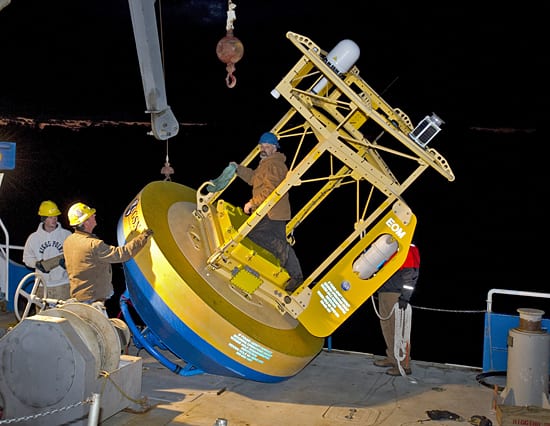
Isn’t ironic, don’t you think: dismantling the Ocean Observatories Initiative on World Oceans Day
June 9, 2026
“Why Sustainable Seafood Matters” is now available for preorder! Here’s what it’s about, and why I decided to write it.
June 8, 2026
Here’s how to join my IMCC8 symposium, “Ocean Science Communication: What’s New and What’s Next?”
April 22, 2026
Deep Sea Mining Symposium Announcement
April 21, 2026
Join Me at Upwell: A Wave of Ocean Justice — Our Fourth Year!
March 24, 2026

Tweets from the American Elasmobranch Society: Ecology and Conservation

Posted on July 16, 2013October 28, 2013 By David Shiffman

davesquareAESlogoThe American Elasmobranch Societyis a non-profit professional organization of shark, ray, skate, and chimaera scientists. Each year, AES holds an annual conference in a different North American city where members meet and present their research. The 2013 meeting took place in Albuquerque, New Mexico from July 10-15th. The full schedule of talks (including other societies participating in the Joint Meeting of Ichthyologists and Herpetologists) can be found here.

Presented below are selected tweets from the Ecology and Conservation sessions.

Read More “Tweets from the American Elasmobranch Society: Ecology and Conservation” »

Tweets from the American Elasmobranch Society: Biology and Conservation of Rays Symposium

Posted on July 16, 2013October 28, 2013 By David Shiffman

AESlogoThe American Elasmobranch SocietyAmerican Elasmobranch Society is a non-profit professional organization of shark, ray, skate, and chimaera scientists. Each year, AES holds an annual conference in a different North American city where members meet and present their research. The 2013 meeting took place in Albuquerque, New Mexico from July 10-15th. The full schedule of talks (including other societies participating in the Joint Meeting of Ichthyologists and Herpetologists) can be found here.

Presented here are selected tweets from the Biology, Ecology, and Management of Durophagous Stingrays Symposium at the 2013 American Elasmobranch Society meeting.

Read More “Tweets from the American Elasmobranch Society: Biology and Conservation of Rays Symposium” »

5 reasons you should attend ScienceOnline Oceans

Posted on July 5, 2013October 27, 2013 By David Shiffman 1 Comment on 5 reasons you should attend ScienceOnline Oceans

This October, I’ll be hosting ScienceOnline Oceans at the University of Miami. Registration is now open (register here), and we still have a few spots available. Here are 5 reasons why you should join us. 1) The people. The list of ScienceOnline Oceans attendees includes scientists, students, conservationists, journalists, and science communicators from all over … Read More “5 reasons you should attend ScienceOnline Oceans” »

World’s leading experts say there’s a problem with false balance in conservation journalism; Steve disagrees

Posted on July 4, 2013July 16, 2013 By David Shiffman 20 Comments on World’s leading experts say there’s a problem with false balance in conservation journalism; Steve disagrees
Science

davesquare

False balance in the media occurs when a journalist  gives equal coverage, and therefore the perception of equal validity, to both sides of a story. While this sounds preferable to today’s hyper-politicized media, sometimes both sides of a story aren’t equally valid. For example, when the overwhelming consensus of the expert medical community says that vaccines do not cause autism but a famous former actress says they do,  giving both sides equal coverage can be not only frustrating, but harmful to public health. The same is true of early reporting on whether cigarettes are bad for you. Giving equal coverage of the global community of expert climate scientists and spokespeople  for the oil and gas industry who claim that climate science isn’t “settled” can also be problematic, as can coverage of other scientific topics.

Image via http://undsci.berkeley.edu/article/sciencetoolkit_04

Though it is discussed less frequently in this context,  overfishing and marine conservation issues can also feature some fairly egregious examples of false balance. Coverage of a proposal to list great hammerhead sharks under the Endangered Species Act in yesterday’s South Florida Sun-Sentinel provides a useful case study.

Read More “World’s leading experts say there’s a problem with false balance in conservation journalism; Steve disagrees” »

Is Whale Wars a waste of money?

Posted on July 2, 2013October 27, 2013 By Guest Writer 27 Comments on Is Whale Wars a waste of money?
Conservation

Portobello Road

Lindsey Peavey is  a PhD student in the Bren School of Environmental Science & Management at the University of California, Santa Barbara.  She is a marine ecologist whose research seeks to find a sustainable balance between human resource use and species conservation.  You can follow her work on Twitter (@lepeavey) and her blog, turtlesinthedeep.org.

Last December, I sat down to enjoy a pizza pie and draft beer with my friend Neal, a 6-foot, 5-inch, 280-lb. (think offensive lineman), die-hard conservative republican. He was giddy with excitement to talk with me about one of his favorite TV shows, Animal Planet’s “Whale Wars.” Knowing that I’m a tree hugger by nature and a marine biologist by trade, he thought an hour of “Save the whales!” camaraderie was ahead. He was shocked when I let out a long sigh and confessed, “I’m not a fan of Whale Wars.”

Neal was completely deflated. He demanded to know why I didn’t like the show. Shouldn’t I, of all people, be Sea Shepherd’s No. 1 fan? I offered my gripes: It’s outrageously expensive to operate a vessel like Sea Shepherd’s SSS Steve Irwin in the extremely volatile and dangerous environment of intercepting Japanese whaling vessels in the Antarctic — on the order of tens of thousands of dollars a day. Although funds are available to support these operations, the return on investment is unclear. How many whales are actually being saved?

Read More “Is Whale Wars a waste of money?” »

Largest U.S. Shark Fishery: Coming to a School Lunch Near You?

Posted on July 2, 2013October 28, 2013 By Chuck Bangley 8 Comments on Largest U.S. Shark Fishery: Coming to a School Lunch Near You?
Conservation

Spiny dogfish sharks have had a complicated history when it comes to fisheries management, going from hated pest to crashed fishery to conservation concern and now one of two certified-sustainable shark fisheries ever (the other is the Pacific species of spiny dogfish).  The story didn’t end with being certified sustainable though, and recently this fishery has been in the awkward position of keeping itself sustainable while also making sure fishermen can actually sell their catch.  Dogfish quotas have been leaping up annually since the Atlantic fishery was first considered for MSC certification, much to the chagrin of conservationists who would prefer the management plan pay more attention to the life history of these small but slow-growing sharks.  However, these increased quotas, combined with weakening demand in Europe as a result of the economic downturn, have lead to a massive surplus of dogfish in the U.S. market and dramatically lowered the price fishermen receive at the fish house.  Meanwhile, seafood chefs are attempting to get consumers to try out species they’ve previously overlooked (mainly because many of their former favorites are severely depleted), with dogfish sharks among the former “trash fish.”  While this movement gains momentum, fishing industry groups and 19 Senators and House Reps from coastal fishing states are exploring a different option, one that may put spiny dogfish in your local school lunch.

Read More “Largest U.S. Shark Fishery: Coming to a School Lunch Near You?” »

Should scientists avoid publishing shark migration data because it helps fishermen? Spoiler: No

Posted on July 1, 2013 By David Shiffman 15 Comments on Should scientists avoid publishing shark migration data because it helps fishermen? Spoiler: No
Conservation, Science

In recent weeks, some conservation activists have been promoting an idea that I would like to respond to as a member of the scientific community. They claim that scientists shouldn’t publish data about shark migrations, movement, or population dynamics because such data helps fishermen to find areas where there are lots of sharks and kill … Read More “Should scientists avoid publishing shark migration data because it helps fishermen? Spoiler: No” »

Was Aquaman quietly saving the world during Man of Steel?

Posted on June 17, 2013October 27, 2013 By Andrew Thaler 2 Comments on Was Aquaman quietly saving the world during Man of Steel?
Popular Culture

Man of Steel was a thoroughly entertaining superhero movie and a serviceable Superman movie. Fortunately, the last son of Krypton was not the only super-powered being saving the world, as the king of Atlantis was hanging out, cleaning up ol’ Kal-El’s mess.

It has been 98 days since our last Aquaman is Awesome post. We’re due.

Arthur Curry’s presence is first felt near the beginning, while a scruffy Clark is trying his best impression of Jack Kerouac auditioning for Deadliest Catch. Pre-Supes can’t help but hurl himself at a burning oil rig, rescue the roughnecks, and then keep derrick from collapsing on a hapless helicopter. Explosion. We cut to some Kansas flashbacks. Mr. Soupy floats in the water. Pan up and, inexplicably, there’s a couple of humpback whales just chilling, amidst the carnage of a collapsing oil rig,  having a casual sing-in. No doubt those whales are having a chat with a rogue Atlantean, swimming somewhere off screen. He’s probably making sure that the Caped Clam Chowder doesn’t ruin his handy work.

Because, obviously, Aquaman was the one who knocked out that oil rig. I said he was saving the world, not saving humanity. That’s Crab Bisque’s gig.

Read More “Was Aquaman quietly saving the world during Man of Steel?” »

A citizen science project to monitor sevengill sharks in San Diego

Posted on June 13, 2013October 27, 2013 By Guest Writer 3 Comments on A citizen science project to monitor sevengill sharks in San Diego
Science

by Michael Bear

MikeyMichael Bear is  Science Diving Editor for California Diver Magazine and  currently contributor to Marine Science Today with over a 1000 cold-water dives, an AAUS (American Academy of Underwater Sciences) Scientific Diver and  founder of Sevengill Shark Sightings.org. He  lives and work  in San Diego.


I am not a professional shark researcher–just an experienced San Diego diver who has been diving in the San Diego area since 2000. In October of 2008, I began hearing reports of encounters between local San Diego divers and Sevengill sharks, (Notorynchus cepedianus).   At the time, I thought this a bit unusual, since this was the first I had heard of these encounters in nearly a decade of regular diving in the San Diego area and monitoring local Internet dive boards. Between 2000 and 2006, almost no encounters were reported. But in 2008, that all changed and they began appearing on  the dive boards and  lists, one here, two there, five there,  slowing increasing until it was obvious that something was happening–exactly what was not clear–only that more and more encounters were being reported by divers.

Then, in the summer of 2009, I had my own memorable encounter with a Sevengill.   I was diving off of Point La Jolla when a large seven footer glided majestically between me and my dive buddy, who was no more than two meters away from me.   To say we were startled would be an understatement.   It was this incident, along with the increase in reports by other divers, caused me to set up a website  later that same year,  allowing San Diego divers to log and document their encounters with this species, as a sort of  personal citizen science project, because  no local marine institution, including Scripps Institution of Oceanography and NOAA SW Fisheries in La Jolla, had ever done any baseline studies locally prior to this point–I know, because we checked.

Read More “A citizen science project to monitor sevengill sharks in San Diego” »

New “Exploration Science” program is open for applications, looks pretty freakin’ awesome.

Posted on June 11, 2013October 28, 2013 By David Shiffman 1 Comment on New “Exploration Science” program is open for applications, looks pretty freakin’ awesome.

The University of Miami has started a new Master of Professional Science program called “Exploration Science“. The program will teach students both the theory and skills behind field-based research, and graduates will be well equipped to lead field research expeditions in a variety of environments around the world. Classes include “Exploration Technology”, a course on … Read More “New “Exploration Science” program is open for applications, looks pretty freakin’ awesome.” »

Posts pagination

Previous 1 … 125 126 127 … 273 Next

Popular Posts

The story of the pride flag made from NASA imagery: Bluesky's most-liked imageThe story of the pride flag made from NASA imagery: Bluesky's most-liked imageSeptember 27, 2024David Shiffman
"Why Sustainable Seafood Matters" is now available for preorder! Here's what it's about, and why I decided to write it."Why Sustainable Seafood Matters" is now available for preorder! Here's what it's about, and why I decided to write it.June 8, 2026David Shiffman
Tackling the least important debate in deep-sea mining: the desultory hyphenTackling the least important debate in deep-sea mining: the desultory hyphenJune 8, 2026Andrew Thaler
What Ocean Ramsey does is not shark science or conservation: some brief thoughts on "the Shark Whisperer" documentaryWhat Ocean Ramsey does is not shark science or conservation: some brief thoughts on "the Shark Whisperer" documentaryJuly 2, 2025David Shiffman
The evolution of the International Whaling Commission – from  whaling quotas to whale conservationThe evolution of the International Whaling Commission – from  whaling quotas to whale conservationJune 10, 2026Chris Parsons
Deep-sea Mining, Domestic Cats, Star Trek, and Ocean Exploration: Andrew's mid-year podcast round-up.Deep-sea Mining, Domestic Cats, Star Trek, and Ocean Exploration: Andrew's mid-year podcast round-up.June 6, 2026Andrew Thaler
Shark of Darkness: Wrath of Submarine is a fake documentaryShark of Darkness: Wrath of Submarine is a fake documentaryAugust 10, 2014Michelle Jewell
Isn’t ironic, don’t you think: dismantling the Ocean Observatories Initiative on World Oceans DayIsn’t ironic, don’t you think: dismantling the Ocean Observatories Initiative on World Oceans DayJune 9, 2026Southern Fried Science
What is a Sand Shark?What is a Sand Shark?November 12, 2017Chuck Bangley
That's not a blobfish: Deep Sea Social Media is Flooded by AI SlopThat's not a blobfish: Deep Sea Social Media is Flooded by AI SlopDecember 19, 2025Andrew Thaler

squishy

Subscribe to our RSS Feed for updates whenever new articles are published.

We recommend Feedly for RSS management. It's like Google Reader, except it still exists.

Southern Fried Science

  • Home
  • About SFS
  • Authors
  • Support SFS


If you enjoy Southern Fried Science, consider contributing to our Patreon campaign.

Copyright © 2026 Southern Fried Science.

Theme: Oceanly Premium by ScriptsTown