

Skip to content

Southern Fried Science

Over 15 years of ocean science and conservation online

  • Home
  • About SFS
  • Authors
  • Support SFS

Recent Posts

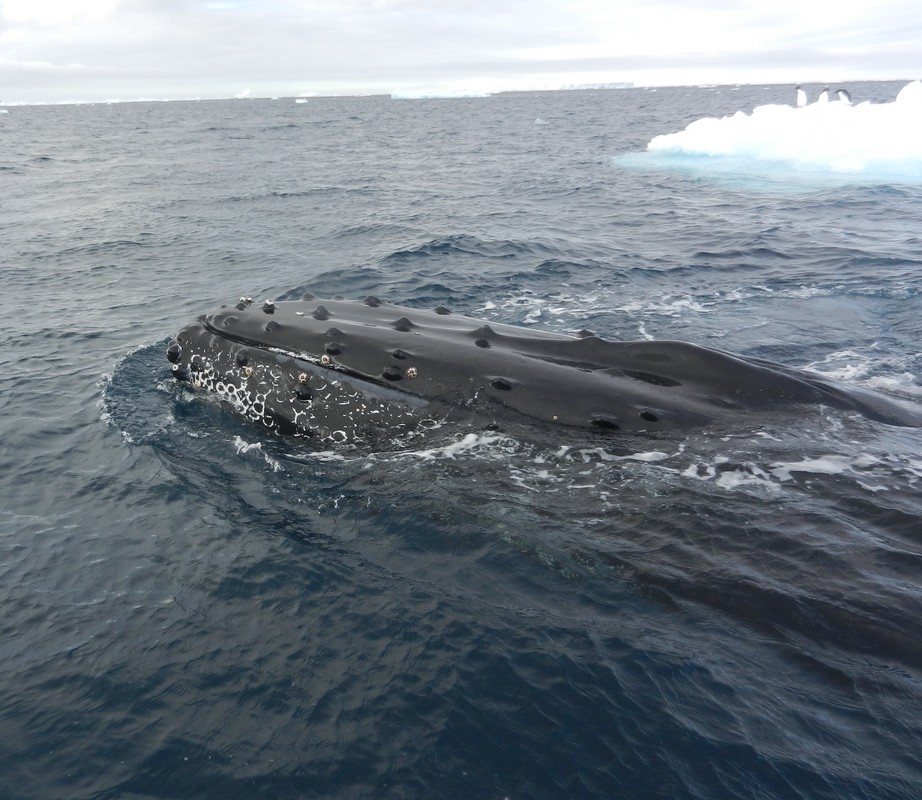
humpback whale in Antarctica
The evolution of the International Whaling Commission – from  whaling quotas to whale conservation
June 10, 2026
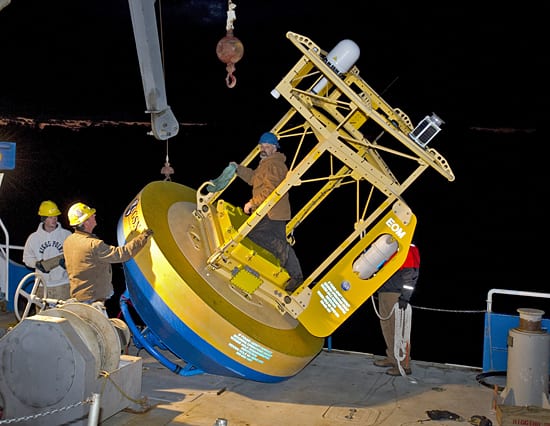
Isn’t ironic, don’t you think: dismantling the Ocean Observatories Initiative on World Oceans Day
June 9, 2026
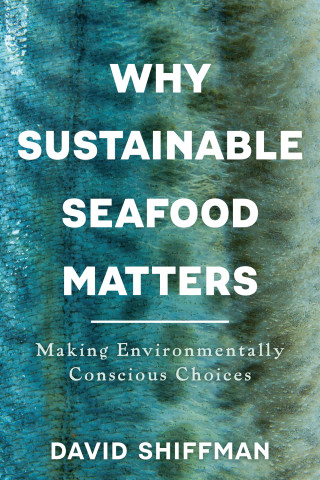
“Why Sustainable Seafood Matters” is now available for preorder! Here’s what it’s about, and why I decided to write it.
June 8, 2026
Here’s how to join my IMCC8 symposium, “Ocean Science Communication: What’s New and What’s Next?”
April 22, 2026
Deep Sea Mining Symposium Announcement
April 21, 2026
Join Me at Upwell: A Wave of Ocean Justice — Our Fourth Year!
March 24, 2026

A citizen science project to monitor sevengill sharks in San Diego

Posted on June 13, 2013October 27, 2013 By Guest Writer 3 Comments on A citizen science project to monitor sevengill sharks in San Diego
Science

by Michael Bear

MikeyMichael Bear is  Science Diving Editor for California Diver Magazine and  currently contributor to Marine Science Today with over a 1000 cold-water dives, an AAUS (American Academy of Underwater Sciences) Scientific Diver and  founder of Sevengill Shark Sightings.org. He  lives and work  in San Diego.


I am not a professional shark researcher–just an experienced San Diego diver who has been diving in the San Diego area since 2000. In October of 2008, I began hearing reports of encounters between local San Diego divers and Sevengill sharks, (Notorynchus cepedianus).   At the time, I thought this a bit unusual, since this was the first I had heard of these encounters in nearly a decade of regular diving in the San Diego area and monitoring local Internet dive boards. Between 2000 and 2006, almost no encounters were reported. But in 2008, that all changed and they began appearing on  the dive boards and  lists, one here, two there, five there,  slowing increasing until it was obvious that something was happening–exactly what was not clear–only that more and more encounters were being reported by divers.

Then, in the summer of 2009, I had my own memorable encounter with a Sevengill.   I was diving off of Point La Jolla when a large seven footer glided majestically between me and my dive buddy, who was no more than two meters away from me.   To say we were startled would be an understatement.   It was this incident, along with the increase in reports by other divers, caused me to set up a website  later that same year,  allowing San Diego divers to log and document their encounters with this species, as a sort of  personal citizen science project, because  no local marine institution, including Scripps Institution of Oceanography and NOAA SW Fisheries in La Jolla, had ever done any baseline studies locally prior to this point–I know, because we checked.

Read More “A citizen science project to monitor sevengill sharks in San Diego” »

New “Exploration Science” program is open for applications, looks pretty freakin’ awesome.

Posted on June 11, 2013October 28, 2013 By David Shiffman 1 Comment on New “Exploration Science” program is open for applications, looks pretty freakin’ awesome.

The University of Miami has started a new Master of Professional Science program called “Exploration Science“. The program will teach students both the theory and skills behind field-based research, and graduates will be well equipped to lead field research expeditions in a variety of environments around the world. Classes include “Exploration Technology”, a course on … Read More “New “Exploration Science” program is open for applications, looks pretty freakin’ awesome.” »

The season finale of Blue Pints: Sea States and Lovable Monsters

Posted on June 10, 2013October 27, 2013 By David Shiffman
Uncategorized

httpv://www.youtube.com/watch?v=cxULreg4A1o

OpenCTD first soak test

Posted on June 10, 2013October 27, 2013 By Andrew Thaler 3 Comments on OpenCTD first soak test
The Open CTD Project

Two weeks ago, we launched Oceanography for Everyone–The OpenCTD, a crowdfunding project to develop a low-cost, open-source CTD. After a few days hunting around for the best sealants, I put the prototype (name pending, suggestions welcome) through its first soak test. The results were… mixed. I left the CTD soaking for 12 hours (with hardware removed) … Read More “OpenCTD first soak test” »

#RaysTheRoof : Research symposium will focus on the biology and conservation of stingrays

Posted on June 6, 2013June 27, 2013 By David Shiffman
Science

The upcoming Joint Meeting of Ichthyologists and Herpetologists will include a research symposium focusing on the biology and conservation of durophagous (shell-eating) stingrays. Organized by Dr.’s Matt Ajemian (Texas A&M University Corpus Christi) and Julie Neer (Southeast Data Assessment and Review), this symposium aims to gather together the world’s experts on these ecologically important and poorly … Read More “#RaysTheRoof : Research symposium will focus on the biology and conservation of stingrays” »

Blue Pints Episode 10: Lionfish and Turtle Tales

Posted on June 3, 2013October 27, 2013 By Andrew Thaler
Uncategorized

httpv://www.youtube.com/watch?v=ZCDgPjz9dv0

What can we do with an OpenCTD – high resolution hurricane monitoring

Posted on June 3, 2013October 27, 2013 By Andrew Thaler
The Open CTD Project

Last Friday we launched Oceanography for Everyone–The OpenCTD, a crowdfunding project to develop a low-cost, open-source CTD. This project won’t succeed without your help. To demonstrate how valuable a device like the OpenCTD is, for the next several weeks I’ll be presenting various projects that could be accomplished with access to low-cost CTD’s. First up … Read More “What can we do with an OpenCTD – high resolution hurricane monitoring” »

Oceanography for Everyone – Help us build a CTD!

Posted on May 31, 2013October 27, 2013 By Andrew Thaler 1 Comment on Oceanography for Everyone – Help us build a CTD!
Science, The Open CTD Project

Head over to our Rockethub Page for more information! Conductivity, temperature, and depth (CTD). With these three measurements, marine scientists can unlock ocean patterns hidden beneath the waves. The ocean is not uniform, it its filled with swirling eddies, temperature boundaries, layers of high and low salinity, changing densities, and many other physical characteristics. To … Read More “Oceanography for Everyone – Help us build a CTD!” »

The Sex Lives of Spoonworms: 10 marine animals with parasitic, dwarf, and otherwise reduced males

Posted on May 31, 2013September 19, 2013 By Andrew Thaler 8 Comments on The Sex Lives of Spoonworms: 10 marine animals with parasitic, dwarf, and otherwise reduced males
Science

Earlier this week, Fox News commentator and all-around terrific guy* Erick Erickson, while discussing a recent Pew Study that revealed that women were the sole breadwinners in 40% of US households that contain children, had this to say:

“I’m so used to liberals telling conservatives that they’re anti-science. But liberals who defend this and say it is not a bad thing are very anti-science. When you look at biology—when you look at the natural world—the roles of a male and a female in society and in other animals, the male typically is the dominant role. The female, it’s not antithesis, or it’s not competing, it’s a complementary role.”

source

headshot-thalerSMALL

I’m not sure where Erickson got his science education from, but it’s pretty clear he should have spent a little more time shopping around on the free market, because he sure is wrong. How wrong? I managed to assemble this list of 10 marine species with dwarf, parasitic, or otherwise reduced males (including an entire female-only class) while waiting for my toast**. So have a seat and let me show you how much weirder and more wonderful the world is than Erickson’s Disney-esque misinterpretation of biology.

1. Anglerfish

The deep-sea Anglerfish is among the most common examples of parasitic males in the marine world. Anglerfish comprise a variety of taxa in the order Lophiiformes. Almost all (females) possess a specialized appendage that acts as a lure to attract unwary prey. Life in the deep sea is rough–even though it is the largest and most diverse ecosystem on Earth, biomass is fairly low–so finding a mate is a struggle for these slow swimming fishes. The solution: carry your partner with you.

Male anglerfish are tiny, often less than 5% the size of the female, but they possess powerful olfactory receptors, allowing them to seek out females. Once a mate is located, the male anglerfish latches on to her abdomen, fuses his circulatory system with hers, and is then slowly digested until there’s nothing left but a sac of gonads surrounded by basic life-supporting tissues. Female anglerfish are not monogamous, either. At any given time she could be covered by a half-dozen parasitic males. Kinky.

Read More “The Sex Lives of Spoonworms: 10 marine animals with parasitic, dwarf, and otherwise reduced males” »

The great #Mermaids Storify

Posted on May 30, 2013May 29, 2013 By David Shiffman 4 Comments on The great #Mermaids Storify
Popular Culture, Science

davesquare

This week, Animal Planet aired “Mermaids: The New Evidence”  the second fake documentary in their series about mermaids.  After complaining about the ridiculous show and the associated devastating effects on science literacy*, we decided to watch the re-air together and live-tweet it. The goal was to get real scientific information into the twitter conversation associated with the show. The Storify of our contributions to the discussion is below.

* Lots of people think that the admittedly fake documentary is real. Search the twitter hashtag #Mermaids and you’ll see literally hundreds of examples of this. These are not included in the Storify in the interest of not being cruel to strangers.

Read More “The great #Mermaids Storify” »

Posts pagination

Previous 1 … 126 127 128 … 273 Next

Popular Posts

That's not a blobfish: Deep Sea Social Media is Flooded by AI SlopThat's not a blobfish: Deep Sea Social Media is Flooded by AI SlopDecember 19, 2025Andrew Thaler
What Ocean Ramsey does is not shark science or conservation: some brief thoughts on "the Shark Whisperer" documentaryWhat Ocean Ramsey does is not shark science or conservation: some brief thoughts on "the Shark Whisperer" documentaryJuly 2, 2025David Shiffman
Screaming into the void - Why your scientific paper doesn’t matterScreaming into the void - Why your scientific paper doesn’t matterJune 18, 2026Chris Parsons
The story of the pride flag made from NASA imagery: Bluesky's most-liked imageThe story of the pride flag made from NASA imagery: Bluesky's most-liked imageSeptember 27, 2024David Shiffman
I can serve on your graduate thesis committee. Here’s what you can expect of me, and what I expect in return.I can serve on your graduate thesis committee. Here’s what you can expect of me, and what I expect in return.October 16, 2025David Shiffman
Shark of Darkness: Wrath of Submarine is a fake documentaryShark of Darkness: Wrath of Submarine is a fake documentaryAugust 10, 2014Michelle Jewell
What is a Sand Shark?What is a Sand Shark?November 12, 2017Chuck Bangley
The plague-busting, prairie-dog-vaccinating, ferret-saving droneThe plague-busting, prairie-dog-vaccinating, ferret-saving droneNovember 1, 2016Andrew Thaler
Our favorite sea monsters – Ningen (#4)Our favorite sea monsters – Ningen (#4)September 7, 2010Andrew Thaler
Fun facts and FAQs about Megalodon, Maryland's new (and definitely extinct) official state sharkFun facts and FAQs about Megalodon, Maryland's new (and definitely extinct) official state sharkApril 15, 2026David Shiffman

squishy

Subscribe to our RSS Feed for updates whenever new articles are published.

We recommend Feedly for RSS management. It's like Google Reader, except it still exists.

Southern Fried Science

  • Home
  • About SFS
  • Authors
  • Support SFS


If you enjoy Southern Fried Science, consider contributing to our Patreon campaign.

Copyright © 2026 Southern Fried Science.

Theme: Oceanly Premium by ScriptsTown