
Skip to content

Southern Fried Science

Over 15 years of ocean science and conservation online

  • Home
  • About SFS
  • Authors
  • Support SFS

Recent Posts

humpback whale in Antarctica
The evolution of the International Whaling Commission – from  whaling quotas to whale conservation
June 10, 2026
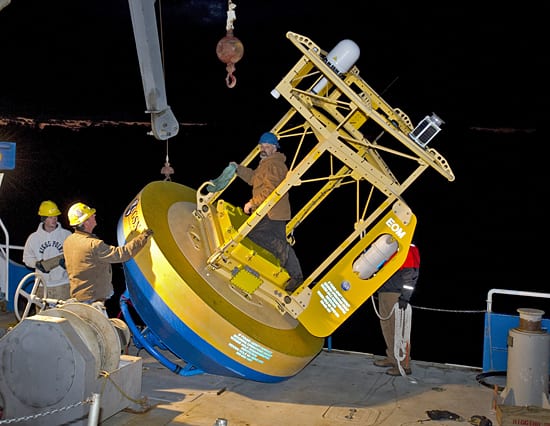
Isn’t ironic, don’t you think: dismantling the Ocean Observatories Initiative on World Oceans Day
June 9, 2026
“Why Sustainable Seafood Matters” is now available for preorder! Here’s what it’s about, and why I decided to write it.
June 8, 2026
Here’s how to join my IMCC8 symposium, “Ocean Science Communication: What’s New and What’s Next?”
April 22, 2026
Deep Sea Mining Symposium Announcement
April 21, 2026
Join Me at Upwell: A Wave of Ocean Justice — Our Fourth Year!
March 24, 2026

How to Make A Pretty Map

Posted on November 6, 2012November 6, 2012 By Bluegrass Blue Crab
Uncategorized

Cartographers of old produced maps that now hang in art galleries, living rooms, and libraries. They were works of art, embellished with the cartographer’s personality – from their handwriting to the fanciful borders of the page  and sometimes even sea creatures. Peruse for a moment this map of North Carolina (then part of the Virginia Colony) from 1636 – the ocean comes complete with ships and large toothy fish, the land depicts the western border of our country back then (the Appalachian mountains) and each tribal territory is nicely color-coded. The map not only gets its message across but says something about the mapmaker. Today’s cartography looks very different.

map from 1636 documenting tribal territories, courtesy of the NC Map Collection in the UNC library

Modern geographers are trained in geographic information systems, highly reliant on software and abundant data to make the required maps. GIS careers are in high demand from both sides – employer and employee – following the adage that a picture speaks 1000 words. Maps talk. But with this technological shift, much of the art is gone from cartography – but it doesn’t have to be.

Read More “How to Make A Pretty Map” »

Presidential Endorsement: On ocean conservation issues, the choice is clear. Obama 2012

Posted on November 2, 2012 By David Shiffman 1 Comment on Presidential Endorsement: On ocean conservation issues, the choice is clear. Obama 2012
Uncategorized

U.S. flag on the wreck of the Speigel Grove. Photo by Scott Hughes, via Wikimedia Commons

On Tuesday, after what seems like an eternity of campaigning, millions of Americans will head to the polls to vote for our next President. Voters will consider numerous important issues, such as the economy, national security, and the endorsement of Lindsay Lohan. Recent polling indicates that Americans are split, and the election is expected to be very close. On an issue near and dear to my heart, the conservation of the ocean and marine life, one candidate is by far the best choice. I endorse President Barack Obama for re-election.

After promising to “restore science to its rightful place” in his 2009 inauguration speech, there are indeed many successes in conservation and science that President Obama can boast of. He has invested unprecedented amounts of Federal money in alternative energy sources, which, despite the bankruptcy of a few companies, will help reduce greenhouse gas emissions and combat climate change and ocean acidification- as will increased fuel efficiency standards. Early action resulted in conservation of wilderness rivers and trails, and Federal Everglades restoration funding has increased. Restrictions on stem cell research were greatly reduced, and mercury pollution was restricted by the EPA. Race to the top programs have improved science and math education in several states.

On ocean issues, the Obama administration has  been a leader domestically and internationally. For the first time, the United States has a National Ocean Policy, which aims to reduce conflicts between different ocean stakeholders. President Obama signed both the Shark Conservation Act and the Billfish Conservation Act, which, despite being imperfect, are strong legal tools to protect charismatic and ecologically important top predators- and numerous other successes in improving the management of U.S. shark fisheries are detailed here. The Obama administration has aggressively pursued fisheries conservation internationally, at CITES, regional fisheries management organization meetings, and the Convention on Migratory Species.

Read More “Presidential Endorsement: On ocean conservation issues, the choice is clear. Obama 2012” »

New special issue of elasmobranch nervous systems “highlights the evolutionary relevance” of sharks and rays

Posted on November 1, 2012 By David Shiffman
Science

The journal Brain, Behavior, and Evolution has just released a special issue on the nervous systems of cartilaginous fishes (sharks, skates, rays, and chimeras). The six research articles contained in the special issue  both summarize and greatly expand what’s known about elasmobranch brains. Dr. Kara Yopak, an elasmobranch nervous system expert who served as the editor … Read More “New special issue of elasmobranch nervous systems “highlights the evolutionary relevance” of sharks and rays” »

Hurricane Sandy Update and Open Thread

Posted on October 28, 2012October 31, 2012 By Andrew Thaler 4 Comments on Hurricane Sandy Update and Open Thread
Uncategorized

At 450 nautical miles, Hurricane Sandy is currently tied as the second largest storm on record. Right now she’s sitting off the Carolina coast delivering massive amounts on rain to Southern Fried Science HQ, but the real trouble is going to start in a two days, when she makes landfall somewhere between Maryland and New … Read More “Hurricane Sandy Update and Open Thread” »

What if you’ve never seen the ocean? Donor’s Choose Project – In Search of Marine Diversity

Posted on October 24, 2012October 24, 2012 By Andrew Thaler 5 Comments on What if you’ve never seen the ocean? Donor’s Choose Project – In Search of Marine Diversity

While my illustrious co-blogger has taken over running the Donor’s Choose challenge for Southern Fried Science this year, I decided to take up a single, worthy project to focus on. One of the challenges with Donor’s Choose is that it’s hard to fund the most expensive projects. People like to see the results of their … Read More “What if you’ve never seen the ocean? Donor’s Choose Project – In Search of Marine Diversity” »

DonorsChoose Update: Over $700 raised so far, 4 new projects added, 12 days to go!

Posted on October 24, 2012 By David Shiffman
Uncategorized

The 2012 DonorsChoose Science Bloggers for Students Challenge is shaping up to be another big success! As of this morning, 132 people had donated a total of nearly $10,000 to help support science education in public schools, and Team Surf and Turf (Ocean and Geology Bloggers) is in the lead with over $3,000 donated. 14 Southern … Read More “DonorsChoose Update: Over $700 raised so far, 4 new projects added, 12 days to go!” »

Anonymity, Pseudonymity, and a Reasonable Expectation of Privacy

Posted on October 17, 2012 By Andrew Thaler
Uncategorized

Since the outing of one of reddit’s most notorious trolls last week, the internet has been buzzing with issues of anonymity, pseudonymity, and privacy. Joe Scalzi’s discussion of the larger issues of privacy is the best I’ve seen, so rather than rehash, I’ll just point you there. What I would like to do, is take a moment to review Southern Fried Science’s policy as it applies to our own community. We welcome both anonymous and pseudonymous commenters, and, of course, we post under pseudonyms (granted, our real identities are literally one click away). Our pseudonyms are a matter of convenience, consistency, and tradition, but we recognize that our commenters may have other reasons to use a pseudonym, including, but by no means limited to, protecting themselves from physical, social, and emotional harm as a result of voicing their opinions. Southern Fried Science strives to create a safe space for people to discuss science, politics, conservation, and any of a thousand issues related to our oceans, our planet, and our future.

Read More “Anonymity, Pseudonymity, and a Reasonable Expectation of Privacy” »

Alberta, Canada is the proud owner of the largest man-made pyramid on the planet

Posted on October 16, 2012October 16, 2012 By Andrew Thaler
Science

Great Pyramid of Giza. Photo by Nina Aldin Thune.

Pharaoh Khufu must be rolling in his monumental grave. Since its construction in 2560 BC, the Great Pyramid of Giza stood as the largest man-made pyramid ever built*. For 3800 years, it held the title of the tallest man-made structure of any kind. It wasn’t until the Industrial Revolution that our buildings began dwarfing this wonder of the ancient world. Even still, the Great Pyramid is massive, with a volume of 2,580,000 cubic meters. But there is another pyramid, more massive than Giza, and it wasn’t built to entomb a mighty king. It’s not a monument of any kind. The largest (by volume) pyramid in the world resides in Alberta, Canada and it’s made entirely of sulfur.

Wait, what?

Read More “Alberta, Canada is the proud owner of the largest man-made pyramid on the planet” »

Help students in need with the DonorsChoose Science Bloggers Challenge!

Posted on October 15, 2012 By David Shiffman
Uncategorized

I’m pleased to announce that Southern Fried Science has once again joined the DonorsChoose Science Bloggers for Students Challenge! For those of you unfamiliar with DonorsChoose, they are an online charity that allows public school teachers to describe projects, and allows anyone to donate to these projects. In the past, the Science Bloggers Challenge has … Read More “Help students in need with the DonorsChoose Science Bloggers Challenge!” »

The Trouble with Teacup Pigs

Posted on October 14, 2012June 12, 2017 By Andrew Thaler 13 Comments on The Trouble with Teacup Pigs
Popular Culture, Science

I adore Here Comes Honey Boo Boo. That’s right, I said it. There’s a soft spot in my brittle old heart for that whole family, Sugar Bear, Mamma June, and all. Especially Glitzy.

Glitzy the Pig. Image from The Learning Channel.

Glitzy, for those of you who don’t know, is a “Teacup” Pig (as you can tell from the video, pigs don’t like to be held). Pigs are cute. Piglets are super cute. Pigs are very intelligent, highly social, and make surprisingly good, house-trainable pets. Unfortunately, 800-lb hogs are not cute. Over the years, various breeders have tried to create pigs that retain all of the adorableness of a piglet without reaching the potential half ton plus mass of a full grown adult hog. Among the most popular “miniature” is the Vietnamese pot-bellied pig, a delightfully spry porcine that tops the scales at a manageable 300 pounds. When legitimate breeders talk about miniature pigs, they’re talking about these 300-lb cuties. Pot-bellied pigs are surprisingly diverse, and, although extremely rare, adults have been reported as small as 20 pounds (most breeders would regard an adult pig that size to be extremely malnourished). This huge size range prompted many breeders to attempt to create even smaller pig breeds, selecting from only the smallest stock. Enter the teacup pig.

A teacup pig (or a micro pig, nano pig, or any of a half dozen variations of “small”) is supposedly a tiny pig breed. Some breeders claim that their pigs only reach up to 30 pounds in weight. Combined with the intelligence and sociability that pigs possess, it would seem that teacup pigs should make a perfect pet. There is only one problem: there’s no such thing as a teacup pig.

Read More “The Trouble with Teacup Pigs” »

Posts pagination

Previous 1 … 136 137 138 … 273 Next

Popular Posts

The story of the pride flag made from NASA imagery: Bluesky's most-liked imageThe story of the pride flag made from NASA imagery: Bluesky's most-liked imageSeptember 27, 2024David Shiffman
"Why Sustainable Seafood Matters" is now available for preorder! Here's what it's about, and why I decided to write it."Why Sustainable Seafood Matters" is now available for preorder! Here's what it's about, and why I decided to write it.June 8, 2026David Shiffman
Tackling the least important debate in deep-sea mining: the desultory hyphenTackling the least important debate in deep-sea mining: the desultory hyphenJune 8, 2026Andrew Thaler
The evolution of the International Whaling Commission – from  whaling quotas to whale conservationThe evolution of the International Whaling Commission – from  whaling quotas to whale conservationJune 10, 2026Chris Parsons
What Ocean Ramsey does is not shark science or conservation: some brief thoughts on "the Shark Whisperer" documentaryWhat Ocean Ramsey does is not shark science or conservation: some brief thoughts on "the Shark Whisperer" documentaryJuly 2, 2025David Shiffman
Deep-sea Mining, Domestic Cats, Star Trek, and Ocean Exploration: Andrew's mid-year podcast round-up.Deep-sea Mining, Domestic Cats, Star Trek, and Ocean Exploration: Andrew's mid-year podcast round-up.June 6, 2026Andrew Thaler
Shark of Darkness: Wrath of Submarine is a fake documentaryShark of Darkness: Wrath of Submarine is a fake documentaryAugust 10, 2014Michelle Jewell
Isn’t ironic, don’t you think: dismantling the Ocean Observatories Initiative on World Oceans DayIsn’t ironic, don’t you think: dismantling the Ocean Observatories Initiative on World Oceans DayJune 9, 2026Southern Fried Science
What is a Sand Shark?What is a Sand Shark?November 12, 2017Chuck Bangley
That's not a blobfish: Deep Sea Social Media is Flooded by AI SlopThat's not a blobfish: Deep Sea Social Media is Flooded by AI SlopDecember 19, 2025Andrew Thaler

squishy

Subscribe to our RSS Feed for updates whenever new articles are published.

We recommend Feedly for RSS management. It's like Google Reader, except it still exists.

Southern Fried Science

  • Home
  • About SFS
  • Authors
  • Support SFS


If you enjoy Southern Fried Science, consider contributing to our Patreon campaign.

Copyright © 2026 Southern Fried Science.

Theme: Oceanly Premium by ScriptsTown