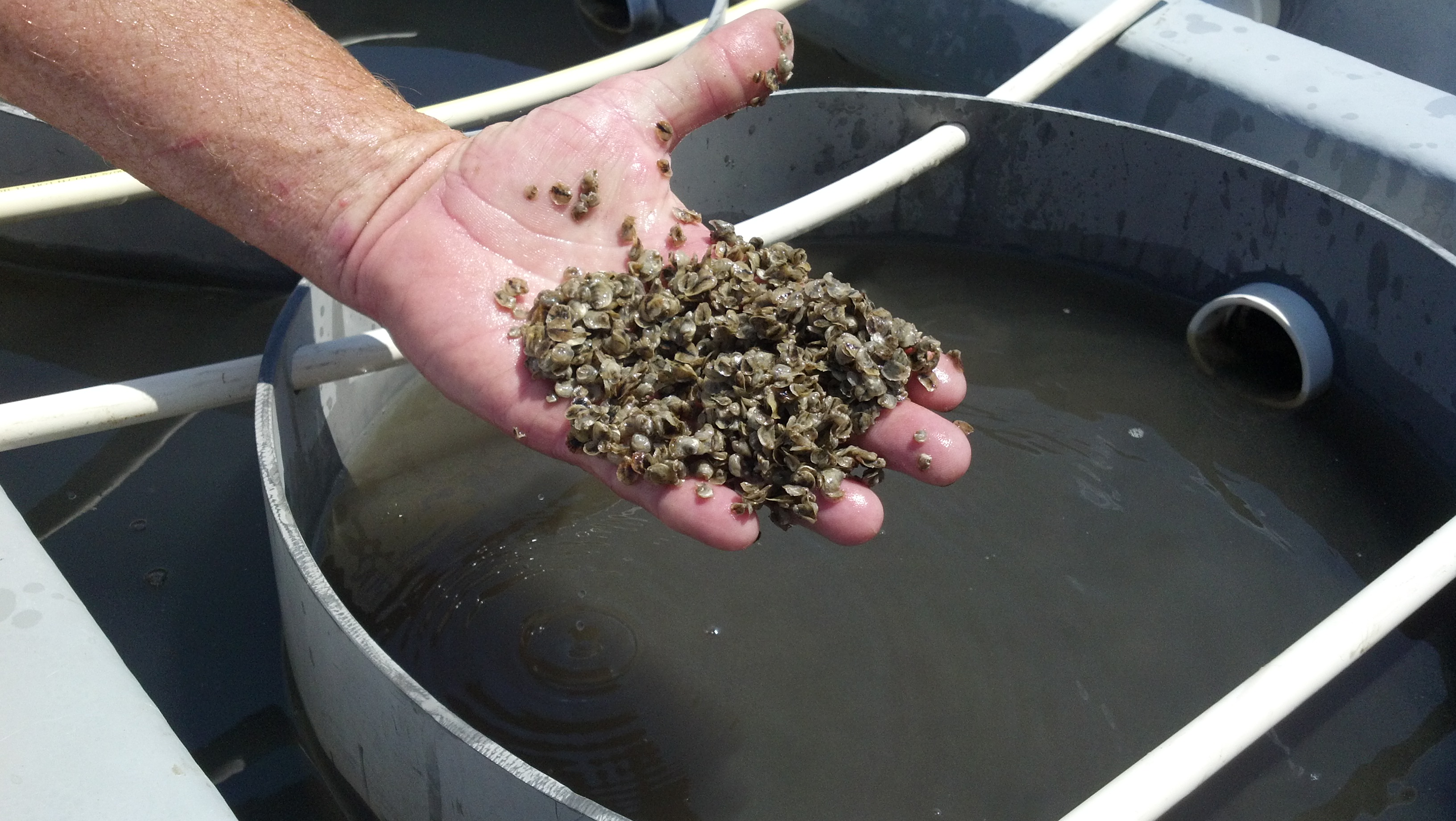
Jimmy Morris is the only hatchery in North Carolina, serving aquaculture operations all along the East Coast and the state’s oyster restoration program. The process would he easy, he says, except that crops of larvae die periodically – for a variety of unknown reasons. Figuring out how to cater to the sensitivities of these shelly babies is a skill few-and-far between in the world of aquaculture and that makes his operation one of the most important businesses in both the region and the industry.

Late last week, inspired by our newly flowering Venus Flytraps, I posted pictures of Amy and my carnivorous plant collection on twitter and on the Southern Fried Science Facebook page. After David’s recent post on a nurse shark that underwent major dietary changes following traumatic surgery and captivity, our wonderful readers must have been on high alert for trophic shifts following anthropogenic disturbance-type articles (or, more casually, “stuff that eats stuff now eats different stuff”), because this morning my inbox was filled with links to variations on the following article: Pollution makes carnivorous plants go vegetarian. Whenever human activity alters trophic interactions, there is potential for major ecological changes in an ecosystem. While ecosystems are dynamic, shape by continuous variation in community structure and resource and habitat variability, rapid changes can result in total collapse or permanent shifts to functional states.
Unfortunately, these “eating different stuff” articles rarely reflect the deep and nuance ecologic reality of trophic interactions and instead capitalize on the narrative of “even animals are going veggie to save the planet!” Allow me to revel in my cultural roots with a hearty “Oy vey!”
Originally published on August 30th, 2011, Climbing Mount Chernobyl is one of my personal favorite posts. It feels appropriate to re-post it today for World Ocean Day.
Read More “Climbing Mount Chernobyl: a repost for World Ocean Day” »
Today, June 8th, is World Oceans Day! Get out there and let the world know how much the ocean just makes you want to dance in celebration! The Smithsonian set a fairly high bar last year with its dancing flash mob in the Sant Ocean Hall. For the less rhythmically inclined, check out what events are … Read More “Happy World Oceans Day!” »
I’m going to try something new this summer. Every Wednesday we’ll post an open thread where you can ask questions, start discussions, post links to interesting articles, or just say “Hi”. Today’s open thread sponsored by Luna, the Nigerian Dwarf Goat.


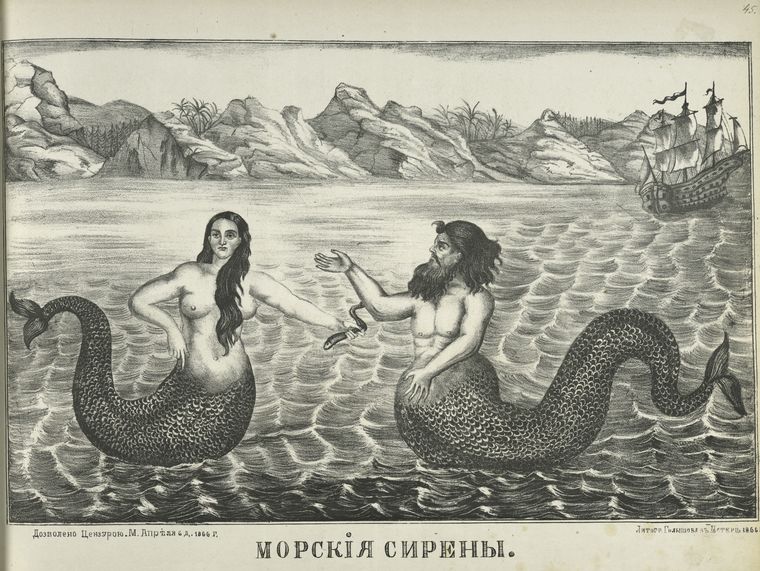
Last week, Animal Planet aired a fictional mockumentary about mermaids. From an educational perspective, it was a disaster that was rightfully described as “the rotting carcass of science television” by Brian Switek. As Dr. M on Deep Sea News pointed out, one of the troubling results of this TV special was the discovery that some people believe that mermaids are real.
When I pointed out on Facebook and twitter that mermaids do not exist and that I hoped none of my friends believe otherwise, it inspired a long and interesting discussion. Someone asked why it matters if people believe in mermaids, as they felt that a sense of whimsy among the public is a good thing. Someone pointed out that scientists are discovering amazing new species all the time. More than a few people said “anything is possible.”
Sure, scientists discover new species all the time, but while finding a new species of monkey, orchid, or jellyfish can be interesting, it is not proof that “anything is possible” and it is not the same thing as finding a species of talking, thinking humanoids with fish tails on the lower half of their bodies. There’s a big and important difference between enjoying fantasy novels and wishing that certain fantastical creatures exist (i.e. having a sense of whimsy) and genuinely believing that those creatures really do exist.
These people don’t believe that in the vast and unexplored ocean, there may be some bizarre undiscovered species still out there. They believe that talking, thinking humanoids with fish tails on the lower half of their bodies exist and are acknowledged as existing by the scientific community. This displays a troubling lack of awareness of reality that likely is not limited to a belief in mermaids. For the benefit of those who have paid so little attention to what’s going on in the real world that they believe mermaids exist, here are five other things that you should, but likely do not, know about the oceans.
News broke yesterday that NC-20, a lobbying group for coastal development that, among other things, thinks property owners should be allowed to dump chemical waste directly into our watersheds, is sponsoring legislation that would outlaw outlaw sea level rise. Ignoring the fact that you can’t actually sue the ocean, what they’re actually promoting is a law that would prevent the state from using any sea surface model that extrapolates future ocean trends using anything but a linear regression. Essentially, they’re making it illegal for the state to anticipate future changes to the coastline, plan and prepare for potential flooding, or restrict development on transient barrier islands.
We traveled to Cape Lookout Bight aboard the R/V Susan Hudson to sample sediment and test our homemade ROV. Along the way, we asked the research team to talk about their favorite marine ecosystems. httpv://www.youtube.com/watch?v=_vpX4XGNjf8 Let us know what your favorite marine ecosystems are in the comments below.
As part of my ongoing community-based research on water quality in coastal North Carolina, I ended up tasked with answering what I thought would be a very basic question: what is the predominant pesticide used in my county? The largest farm and by far the largest amount of cropland is occupied by a traditional corn/soy rotation with the occasional cotton thrown in. Given the multitude of American acres donated to corn/soy, I figured I could easily find out the basics of that crop’s chemistry. Not so. My little information adventure has made me realize why there are so many rumors surrounding farming’s impact on water quality in the region. Rumors are easier to find than facts.
Read More “Chemistry of the Great Big Blue: A Pesticide Mystery” »
#SciFund, a month long initiative to raise funds for a variety of scientific research projects, is once again upon us. Project leaders post a project description and an appeal for funds, and members of the public are invited to make small donations to projects that they deem worthy. Donations come with rewards such as access to … Read More “#SciFund Returns: Where have all the coral reef fish gone?” »