
Skip to content

Southern Fried Science

Over 15 years of ocean science and conservation online

  • Home
  • About SFS
  • Authors
  • Support SFS

Recent Posts

The conservation impacts of recreational fishing
August 25, 2026
How to help protect the deep sea in the Marianas and American Samoa today
August 20, 2026
Trump Administration Advances Mariana Trench Offshore Mineral Leasing Process
August 19, 2026
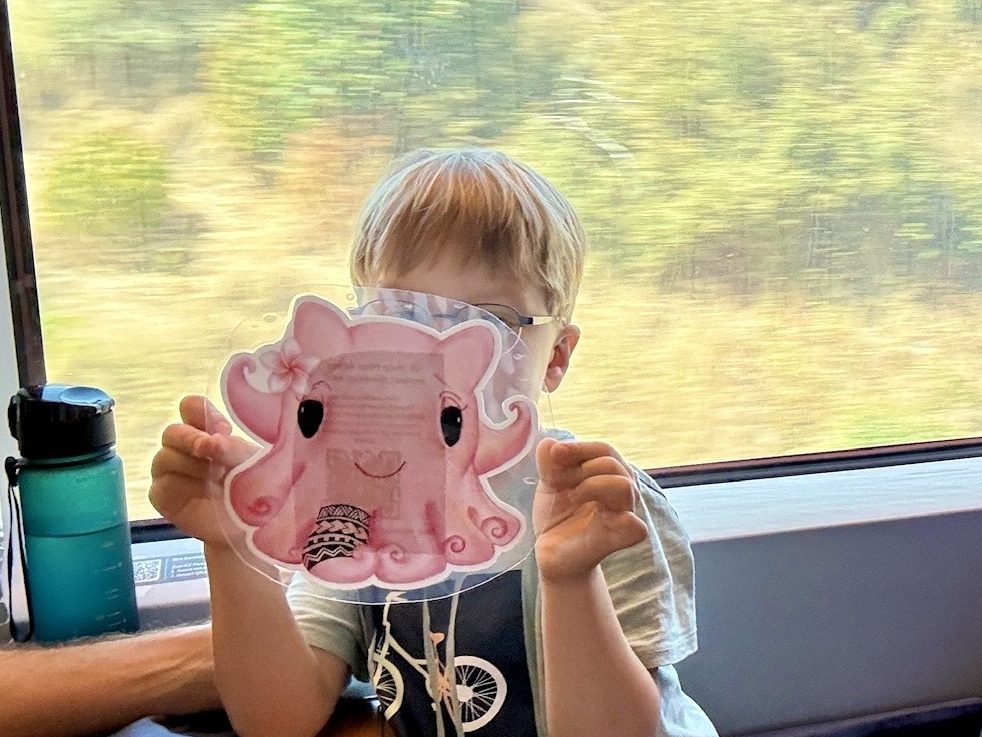
small boy holding Miss Abyss Dumbo Octopus
Please Help This Little Dumbo Octopus Travel Across America
August 3, 2026
Isn’t ironic, don’t you think: dismantling the Ocean Observatories Initiative on World Oceans Day
June 9, 2026
My Journey Into Researching Historical Erasure on Public Lands
July 31, 2026

Kakapo: The world’s largest parrot and the birth of active conservation

Posted on January 4, 2012 By David Shiffman 8 Comments on Kakapo: The world’s largest parrot and the birth of active conservation
Conservation

Our world is facing a biodiversity crisis so severe that many scientists have labeled it as the sixth great mass extinction in Earth’s history. Conservation efforts to date have focused on endangered species and  “biodiversity hotspots” , relatively small areas with large numbers of species. Most of these hotspots are in areas you’d expect them to be, places like coral reefs and tropical rain forests. One surprising biodiversity hotspot is New Zealand.

Though New Zealand is best known for it’s two largest islands, the country has over 700 islands larger than one hectare. Additionally, New Zealand is isolated- hundreds of miles of Pacific ocean separate it from Australia, and it’s farther still from Asia or South America.  Similar to the Galapagos, this isolation has led to an extremely high rate of “endemic” species, plants and animals that are native to an area and aren’t found anywhere else on Earth.

New Zealand is particularly famous for its unique birds. You may have heard of the kiwi, a word which has become slang for a New Zealander*, but this nation is also known as the “seabird capital of the world“. In total, there are more than 60 endemic bird species found there.

Read More “Kakapo: The world’s largest parrot and the birth of active conservation” »

Four fish fight for the future

Posted on January 4, 2012 By Andrew Thaler
Conservation

How much of the world’s food supply is locked up in a few crops – corn, wheat, rice (for example) – and even fewer livestock – cows, pigs, chickens? Of the major commercial food production industries, only fish, and even then, only some fish, are still hunted. In a very real sense, fish are the last wild food. That may be changing. In Four Fish: The Future of the Last Wild Food, published last year, Paul Greenberg highlights the ways in which commercial fishing is becoming less like hunting and more like agriculture, with a few, often farm raised species, dominating the market.

Greenberg, a native of Long Island Sound who fished there since the 1970’s, documents the changes in four major fisheries – salmon, sea bass, cod, and tuna – and the changing attitudes of the (mostly) men who catch them. He travels to Alaska to meet with First Nation salmon fishermen, to Greece to visit groundbreaking aquaculture facilities, he charters a tuna boat to experience the fight first hand, and across the world he talks to those of whom fishing matters most, including himself. At times, the book becomes autobiographical, focusing on Greenberg’s personal journey – but this is a book about fish and fishermen, and he is, if only recreationally, a fisher.

Read More “Four fish fight for the future” »

That sinking feeling: Hog lagoons, superbugs, and the proliferation of antibiotics in livestock

Posted on January 2, 2012January 2, 2012 By Andrew Thaler 9 Comments on That sinking feeling: Hog lagoons, superbugs, and the proliferation of antibiotics in livestock
Science

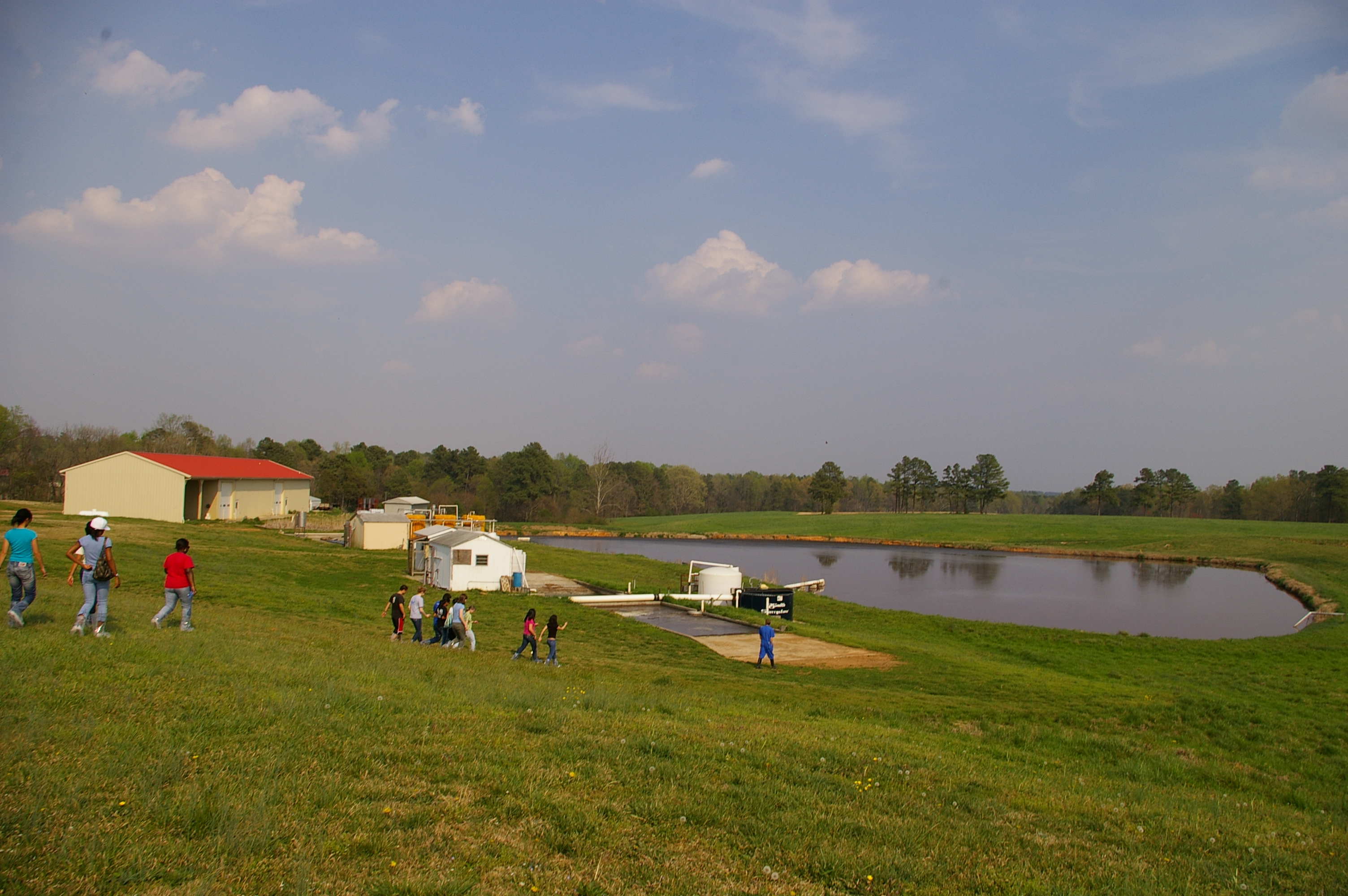
From here, it looks like such a lovely pond. Photo by Andrew David Thaler

The murky brown water was still, reflecting, perfectly, the drifting clouds above. Had I not known what it was, an acre-wide manmade pond almost a dozen feet deep filled to the brim with hog feces, I might be tempted to describe it as “beautiful”. Hog lagoons like this are a common sight in North Carolina, though their use is in decline. My lab group arrived at this particular lagoon to take microbial samples, fungi in this case, from the steaming cauldron of organic waste: an ideal culture medium. Carefully, we loaded a small skiff and rowed out into the stink. Near the center, we gingerly dipped our sampling vials, affixed to the end of an old fishing pole, into the dense fluid. It was then that we noticed the rising waterline, the slow trickle at the stern, the shift in balance. We locked the oars and rowed, frantically, towards shore. Our labmates on shore had, thankfully, tied a line to the bow before we departed. The skiff’s gunwales were creeping closer and closer to the water. We were sinking. We were sinking in a lake of pig shit.

Read More “That sinking feeling: Hog lagoons, superbugs, and the proliferation of antibiotics in livestock” »

The Connected Professor

Posted on January 2, 2012December 31, 2011 By Bluegrass Blue Crab
Science

Here at SFS, we seem to have an affinity for cyborgs. I recently had a dream in which I envisioned my future as such a creature. I had aged, achieved a professorship, and was teaching an introductory geography class. Contrary to the current classroom, however, there was not a learned scholar standing in front of pupils transferring information from my brain to theirs through lecture and leading discussions. Instead, there was a flurry of multimedia flying around the room and the “lecture” was really a snippet of a semester-long conversation involving the entire class intended to immerse them in geographic thinking, in and out of class. My thoughts and the in-person conversation was immediately digitized and encoded to be connected to parallel tweets, emails, blogs, and other online content.

Read More “The Connected Professor” »

The top eleven science hashtags of 2011

Posted on December 30, 2011December 31, 2011 By Andrew Thaler 8 Comments on The top eleven science hashtags of 2011
Uncategorized

Science is a conversation, and in 2011, a significant portion of that conversation happened on twitter. 2011 saw some fascinating new discoveries, bizarre assertions, disheartening revelations, and brilliant discussions. Twitter, it seems, is both a petri dish for nuggets of insight and an autoclave for steaming piles. So, without any further ado, here are the top 11 science hastags of 2011.

Read More “The top eleven science hashtags of 2011” »

The top 10 shark conservation stories of 2011

Posted on December 28, 2011 By David Shiffman 17 Comments on The top 10 shark conservation stories of 2011
Conservation, Science

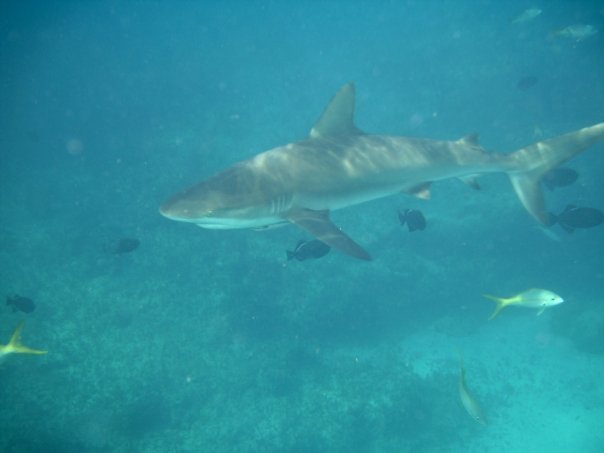
Caribbean reef shark, Bimini. Photo credit: David Shiffman

2011 was a relatively good year for sharks and rays. Presented below, in no particular order, are ten important shark conservation stories from the past year.

1. Shark sanctuaries. The world gained several new shark sanctuaries, areas where shark fishing is banned, in 2011. Nations creating new shark sanctuaries include Honduras (~92,000 square miles), the Bahamas (~240,000 square miles), Marshall Islands/Guam/Palau (a regional partnership protecting almost 2 million square miles). Numerous concerns about enforcing rules in these huge areas, as well as concerns about potential loopholes in the policies, exist among conservation scientists.

2. Fin bans. These laws ban the possession, trade, or sale of shark fins within the boundaries of a city, state/territory, or country. In 2011, Hawaii’s first-in-the-US fin ban took effect, and a few other US states (California, Washington, and Oregon) passed similar laws. There is an ongoing debate in the shark conservation community about whether blanket bans on finning are better than promoting best practices (i.e. more sustainable shark fishing techniques). Additionally, some are concerned that we aren’t focusing enough on other threats to sharks like bycatch and habitat destruction.

Read More “The top 10 shark conservation stories of 2011” »

National Marine Fisheries Service rejects petition to list 4 skate species under Endangered Species Act

Posted on December 27, 2011 By David Shiffman 8 Comments on National Marine Fisheries Service rejects petition to list 4 skate species under Endangered Species Act
Conservation, Science

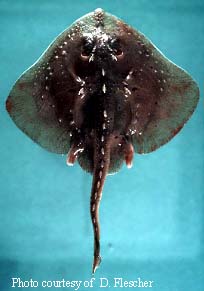
Image from nero.NOAA.gov

Last August, two petitions were sent to the National Marine Fisheries Service from three conservation organizations (the Animal Welfare Institute, WildEarth Guardians and Friends of Animals). The petitions (available in their entirety here) requested that four species of skate be listed as “threatened” or “endangered” under the Endangered Species Act, and requested that critical habitat for these species be designated and appropriately protected. These species are the thorny skate, barndoor skate, winter skate, and smooth skate.

Due to both a directed fishery (skate wings are used for lobster trap bait, and also for food for a primarily-overseas market that includes Europe) and bycatch in bottom fisheries , Northwest Atlantic populations of these species have experienced serious declines in recent years. While some skate species have rebounded (for reasons that are not entirely clear), The thorny skate remains particularly threatened- the IUCN Red List considers the subpopulation off the Northeastern U.S. coast to be Critically Endangered. It is illegal for U.S. fishermen to keep thorny skates they catch (and has been since 2004), but they are commonly taken as bycatch in fisheries for the other skates and groundfish.

Yesterday, the National Marine Fisheries Service formally responded to the petition (thorny skate and other skates), and the news isn’t good for skates:

“After reviewing the information contained in the petition and information readily available in our files, we conclude that the petition fails to present substantial scientific or commercial information indicating that the petitioned action concerning barndoor, smooth and/or winter skate may be warranted…We find that the petitions do not present substantial scientific information indicating the petitioned actions may be warranted. Accordingly, we will not initiate a review of the status of thorny skate at this time.”

The National Marine Fisheries Service listed several reasons why they believe these skates should not be listed under the Endangered Species Act.

Read More “National Marine Fisheries Service rejects petition to list 4 skate species under Endangered Species Act” »

Water Quality in the Era of Small Government

Posted on December 21, 2011 By Bluegrass Blue Crab 1 Comment on Water Quality in the Era of Small Government
Conservation

While the Republican presidential candidates threaten to dissolve the Environmental Protection Agency at the federal level, struggles at the state and local levels show building blocks to such an action were stacking for years.

When asked who is primarily responsible for protecting water quality, many citizens in North Carolina respond “don’t we have a department of water quality for that?”. Those citizens are not wrong, but they are placing a large suite of issues on the shoulders of a single agency. And that agency is losing funding and staff.

Defining responsibility for water quality starts with defining the term. As anyone who has thought about water quality and habitat issues knows well, it’s not as simple as dipping a thermometer in a stream to determine water health. Aquatic ecosystems don’t run a fever when there’s something wrong; issues are far more subtle than that.

When asked to define water quality, a leader at the Division of Water Quality (DWQ) who does not want to be quoted by name, stated:

“We try to prevent pollution from affecting our streams and rivers so that we can enjoy them for recreation, we can enjoy them for drinking water purposes, the fish can survive in them … water quality is that which enables all the uses to be continued to be made of those water bodies.”

For the agency in charge of protecting water quality, traditional uses serve as indicators of the water’s health. Note the definition’s focus on pollution prevention as the means to protect these various uses.

Read More “Water Quality in the Era of Small Government” »

A morning with Christopher Hitchens

Posted on December 16, 2011December 17, 2011 By Andrew Thaler 2 Comments on A morning with Christopher Hitchens
Uncategorized

Christopher Hitchens, author, intellectual, and atheist firebrand, passed away last night. While I’m sure the internet will be filled over the coming days with fitting remembrances from those who knew him well, I couldn’t help but take the time to reflect on my one meeting with the iconic author. Several years ago, when I was … Read More “A morning with Christopher Hitchens” »

Great shark-themed holiday gifts- including some that benefit science and conservation!

Posted on December 15, 2011 By David Shiffman 5 Comments on Great shark-themed holiday gifts- including some that benefit science and conservation!
Uncategorized

My friends and family have always appreciated my obsession passion for sharks, because it makes me extremely easy to shop for. In the spirit of the holiday season mantra that it is better to give than to receive, here is a list of some shark-themed gifts, including some that actually benefit shark research and conservation. If you buy in the next few days, there’s still time to get many of them delivered by Christmas.

Read More “Great shark-themed holiday gifts- including some that benefit science and conservation!” »

Posts pagination

Previous 1 … 152 153 154 … 275 Next

Popular Posts

The conservation impacts of recreational fishingThe conservation impacts of recreational fishingAugust 25, 2026David Shiffman
Toxic workplaces: the “tall poppy” problem in conservation and academiaToxic workplaces: the “tall poppy” problem in conservation and academiaAugust 26, 2026Chris Parsons
What Ocean Ramsey does is not shark science or conservation: some brief thoughts on "the Shark Whisperer" documentaryWhat Ocean Ramsey does is not shark science or conservation: some brief thoughts on "the Shark Whisperer" documentaryJuly 2, 2025David Shiffman
What is a Sand Shark?What is a Sand Shark?November 12, 2017Chuck Bangley
Shark of Darkness: Wrath of Submarine is a fake documentaryShark of Darkness: Wrath of Submarine is a fake documentaryAugust 10, 2014Michelle Jewell
That's not a blobfish: Deep Sea Social Media is Flooded by AI SlopThat's not a blobfish: Deep Sea Social Media is Flooded by AI SlopDecember 19, 2025Andrew Thaler
The Trump Administration’s latest attack on the Endangered Species ActThe Trump Administration’s latest attack on the Endangered Species ActAugust 21, 2026Ali Gaster
Please Help This Little Dumbo Octopus Travel Across AmericaPlease Help This Little Dumbo Octopus Travel Across AmericaAugust 3, 2026Angelo Villagomez
Marine Biology Career AdviceMarine Biology Career AdviceMay 30, 2025David Shiffman
I turned my woodshop into a personal solar farm.I turned my woodshop into a personal solar farm.June 21, 2021Andrew Thaler

squishy

Subscribe to our RSS Feed for updates whenever new articles are published.

We recommend Feedly for RSS management. It's like Google Reader, except it still exists.

Southern Fried Science

  • Home
  • About SFS
  • Authors
  • Support SFS


If you enjoy Southern Fried Science, consider contributing to our Patreon campaign.

Copyright © 2026 Southern Fried Science.

Theme: Oceanly Premium by ScriptsTown