
Skip to content

Southern Fried Science

Over 15 years of ocean science and conservation online

  • Home
  • About SFS
  • Authors
  • Support SFS

Recent Posts

humpback whale in Antarctica
The evolution of the International Whaling Commission – from  whaling quotas to whale conservation
June 10, 2026
Isn’t ironic, don’t you think: dismantling the Ocean Observatories Initiative on World Oceans Day
June 9, 2026
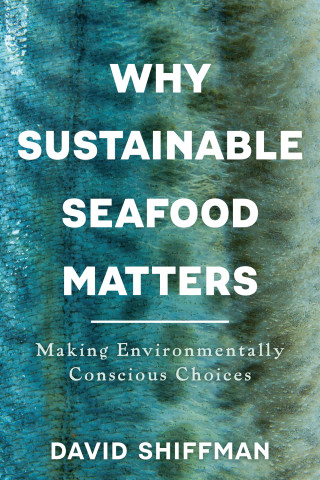
“Why Sustainable Seafood Matters” is now available for preorder! Here’s what it’s about, and why I decided to write it.
June 8, 2026
Here’s how to join my IMCC8 symposium, “Ocean Science Communication: What’s New and What’s Next?”
April 22, 2026
Deep Sea Mining Symposium Announcement
April 21, 2026
Join Me at Upwell: A Wave of Ocean Justice — Our Fourth Year!
March 24, 2026

The Curse of Gold: Dimensions of Injustice in Gold-Mining Communities

Posted on October 11, 2011October 5, 2011 By Bluegrass Blue Crab
Uncategorized

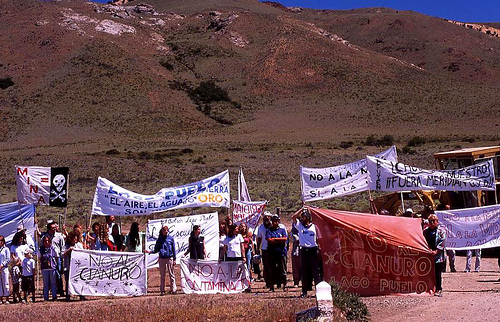
Protests at Esquel, one of the communities examined in the article. Thanks articles.riderdownload.com

Buried within the depths of Andean geology lie small seams of gold tempting worldwide investors. These money-lined pockets aid the development of new extraction methods that dissolve gold from the mountains using cyanide. Cyanide is a metabolic poison, shutting down cellular respiration. In the wake of cyanide leaching stand piles of rubble and contaminated rivers where forested mountains and their people once stood. Surprisingly, Andean residents are willing to entertain the possibility of gold mining by this poisonous method, but oppose current mine development on environmental justice measures. A recent study by Urkidi and Walter in the journal Geoforum documents the emergence of justice narratives from mining conflicts in the Andes and predicts impacts on future development planning.

Read More “The Curse of Gold: Dimensions of Injustice in Gold-Mining Communities” »

Securing the Conservation of Sharks and Rays

Posted on October 10, 2011October 9, 2011 By David Shiffman 5 Comments on Securing the Conservation of Sharks and Rays
Conservation, Science

At the 2nd International Marine Conservation Congress, Dr. Nick Dulvy and the IUCN Shark Specialist Group organized a special symposium called “Securing the Conservation of Sharks and Rays”. This symposium featured leading scientists, international policy experts, the founder of a creative non-profit, a National Geographic conservation photographer… and me. It was, without a doubt, the greatest professional honor of my (admittedly brief so far) career.

Read More “Securing the Conservation of Sharks and Rays” »

Misunderstood Marine Life # 1 – The five biggest myths about Marine Biologists

Posted on October 7, 2011November 10, 2011 By Andrew Thaler 6 Comments on Misunderstood Marine Life # 1 – The five biggest myths about Marine Biologists
Popular Culture, Science

It’s the moment we’ve all been waiting for, the single most misunderstood marine creature that calls our oceans its home: the rare, elusive, often smelly, occasionally employable, Marine Biologist! For something so incredibly popular, articulate, good-looking, and revered, there sure are a lot of misconceptions about who marine biologists are and what they do. Myth … Read More “Misunderstood Marine Life # 1 – The five biggest myths about Marine Biologists” »

The Pacific Divided

Posted on October 7, 2011October 5, 2011 By Bluegrass Blue Crab 2 Comments on The Pacific Divided
Science

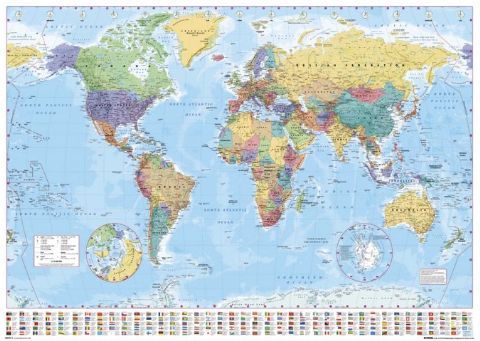
Challenge: find a map of the Pacific Ocean that includes both Japan and California. Or that focuses on any of the island nations in between.

One of the casualties of mapping a three-dimensional planet on two-dimensional paper is the part of the world that is split between the edges of the paper. Usually, this is the Pacific. As Sarah Palin made famous in the 2008 presidential campaign, as an Alaskan, she can see Russia from her house. While I admit that for Palin, this is an exaggeration, but for the residents of St. Lawrence Island, this view is a reality. In fact, they are as likely (if not more) to speak Russian than English and have the capability of kayaking to Russia if so desired. But your average world map makes that distance look infinite.

Read More “The Pacific Divided” »

Misunderstood Marine Life #2 – moray eels

Posted on October 7, 2011October 7, 2011 By David Shiffman
Uncategorized

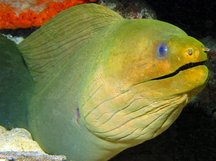
Image courtesy ReefGuide.org

Since they are typically observed hiding in dark crevices while opening and closing their mouths in an apparently menacing gesture, it isn’t surprising that moray eels get a bad reputation. The fact that their sharp teeth face backward (causing severe damage to anyone trying to pull their hand out of a moray’s mouth) doesn’t help this reputation, and neither does the recent discovery that morays have a second set of “Alien”-like jaws that drags prey deep into their mouth and throat. The truth isn’t quite so simple. Most people know very little about these amazing animals.

The green moray (pictured above) is the most famous member of this group, but there are more than 200 species in the family Muraenidae.  Green morays are not even really green (a yellow mucus deposited on a dark body creates the illusion of green skin). Snyder’s morays are less than a foot long when full grown, while giant slender morays can reach lengths of over 10 feet. Morays live in an impressive variety of habitats, including temperate and tropical seas, depths of several hundred meters, and even freshwater.

Read More “Misunderstood Marine Life #2 – moray eels” »

Deep Fried Sea: Here be dragons

Posted on October 7, 2011October 1, 2011 By Andrew Thaler
Uncategorized

Pseudoscience Redux: Greenwashing – Is there really a sustainable Orange Roughy fishery?

Posted on October 6, 2011October 4, 2011 By Andrew Thaler 6 Comments on Pseudoscience Redux: Greenwashing – Is there really a sustainable Orange Roughy fishery?
Uncategorized

This post was originally published on September 6, 2010 as a part of our first Week of Ocean Pseudoscience. Enjoy!


Wandering through the grocery store the other day, I noticed something strange in the fish bin. Now, in general I’m pretty conscious of where my fish comes from, how it was caught, whether the fishery as a whole or the specific population is sustainable. I pay attention to those details and I can usually tell when a company’s branding is legitimate and when it’s just greenwashing.

Imagine my shock when I found a packet of Orange Roughy, sold by the Full Circle brand, and marketed as sustainable.

Read More “Pseudoscience Redux: Greenwashing – Is there really a sustainable Orange Roughy fishery?” »

Misunderstood Marine Life # 3 – Cryptics and Cryptids

Posted on October 6, 2011October 6, 2011 By Andrew Thaler
Science

In my mind, where I imagine people are so interested in what I do that they hang on every carefully chosen word I write, I imagine some unspecified mob of readers looking over my I *heart* cryptozoology post and going “Whoa now, pardner!” (yes, you all sound like cowboys in my mind) “You just said there was a difference between cryptozoology and real zoology, but you deal with cryptic species all the time! What’s up with that?”

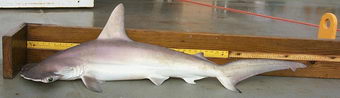
Cryptic hammerhead shark. Photo from http://www.physorg.com/news68994294.html

Read More “Misunderstood Marine Life # 3 – Cryptics and Cryptids” »

10 Myths About Social Science

Posted on October 6, 2011October 13, 2011 By Bluegrass Blue Crab
Uncategorized

Over the last couple of years of doing social science research at a marine laboratory, I’ve heard any number of comments about the social sciences that are rooted in a fundamental misunderstanding of the culture of a different (and relatively new) discipline. In a broader context, the Social Science, Behavior, and Economics (SBE) directorate of NSF was recently under fire and threatened to be cut entirely from NSF for ‘not being a science’. Under the umbrella of Ocean of Pseudoscience Week, I’m going to tackle some of those myths.

10. Social scientists hide the fact that they have nothing to say in impenetrable jargon.

Admittedly, many social science journals are filled with jargon and complicated theory that are impenetrable by anyone outside the discipline. Part of this is due to the fact that most social sciences are still in the young, growing stages – and this means theory-building. We’re creating new words to describe never-before-described phenomena and deciding which of those terms will work for future discussion on the matter. Many pages of our journals are therefore filled with dense social theory terms as people make tiny contributions to big understanding of the way society functions. On the flipside, there are a few journals and other outlets (such as blogs like this one) for a translated version, lots of times for policymakers, that offer easy-to-understand conclusions and empirical examples.

Furthermore, to defend our use of unfamiliar vocabulary, I’d like to point out that I never heard of the discipline ‘geography’ until I arrived in graduate school, even though that’s a field with which I largely identify today. It’s due to my particular educational history, but I’m sure I’m not alone, as geography is disappearing in secondary and higher education. In fact, up until college with its distinct disciplines physically separated on campus, “social studies” – the one class – is meant to cover all the social sciences, history, and many others in one fell swoop. I’d argue that the reason people find social scientists full of jargon is that they haven’t received the basic education they deserve that helps them understand the lingo of other disciplines.

Read More “10 Myths About Social Science” »

Does shark conservation result in more shark attacks?

Posted on October 6, 2011October 5, 2011 By David Shiffman 5 Comments on Does shark conservation result in more shark attacks?
Science

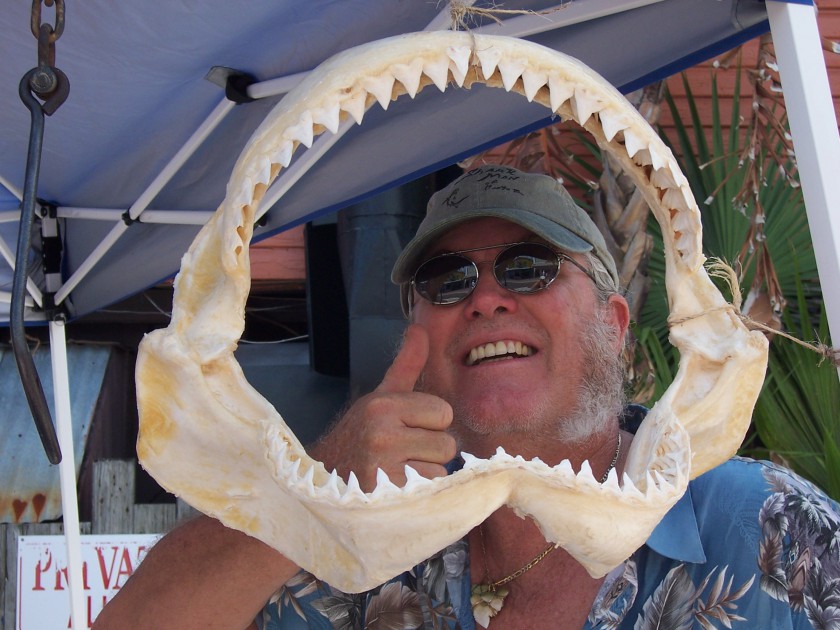
Captain Bill, image from SharkManOfCortez.com

Meet Captain Bill Goldschmitt, an author, blogger, and commercial shark fisherman. Captain Bill is a passionate, opinionated, and influential man in the world of shark conservation and management. Unfortunately, the opinions that he chooses to passionately share are wildly incorrect. Captain Bill is a leading proponent of many ideas that have no basis in reality, including the notion that shark conservation efforts lead to an increased danger for humans from shark attacks.

He repeats this idea often on his blog. In recent months, he has written that the Florida Fish and Wildlife Commission has declared “open season” on Florida bathers by even considering new shark protection efforts, pleaded with Shark Week to focus more on how dangerous sharks are and less on their dwindling numbers and ecological importance, and compared shark conservationists to those who apologize for al-Qaeda terrorists.

Read More “Does shark conservation result in more shark attacks?” »

Posts pagination

Previous 1 … 157 158 159 … 273 Next

Popular Posts

That's not a blobfish: Deep Sea Social Media is Flooded by AI SlopThat's not a blobfish: Deep Sea Social Media is Flooded by AI SlopDecember 19, 2025Andrew Thaler
What Ocean Ramsey does is not shark science or conservation: some brief thoughts on "the Shark Whisperer" documentaryWhat Ocean Ramsey does is not shark science or conservation: some brief thoughts on "the Shark Whisperer" documentaryJuly 2, 2025David Shiffman
Screaming into the void - Why your scientific paper doesn’t matterScreaming into the void - Why your scientific paper doesn’t matterJune 18, 2026Chris Parsons
The story of the pride flag made from NASA imagery: Bluesky's most-liked imageThe story of the pride flag made from NASA imagery: Bluesky's most-liked imageSeptember 27, 2024David Shiffman
I can serve on your graduate thesis committee. Here’s what you can expect of me, and what I expect in return.I can serve on your graduate thesis committee. Here’s what you can expect of me, and what I expect in return.October 16, 2025David Shiffman
Shark of Darkness: Wrath of Submarine is a fake documentaryShark of Darkness: Wrath of Submarine is a fake documentaryAugust 10, 2014Michelle Jewell
What is a Sand Shark?What is a Sand Shark?November 12, 2017Chuck Bangley
The plague-busting, prairie-dog-vaccinating, ferret-saving droneThe plague-busting, prairie-dog-vaccinating, ferret-saving droneNovember 1, 2016Andrew Thaler
Fun facts and FAQs about Megalodon, Maryland's new (and definitely extinct) official state sharkFun facts and FAQs about Megalodon, Maryland's new (and definitely extinct) official state sharkApril 15, 2026David Shiffman
Our favorite sea monsters – Ningen (#4)Our favorite sea monsters – Ningen (#4)September 7, 2010Andrew Thaler

squishy

Subscribe to our RSS Feed for updates whenever new articles are published.

We recommend Feedly for RSS management. It's like Google Reader, except it still exists.

Southern Fried Science

  • Home
  • About SFS
  • Authors
  • Support SFS


If you enjoy Southern Fried Science, consider contributing to our Patreon campaign.

Copyright © 2026 Southern Fried Science.

Theme: Oceanly Premium by ScriptsTown