
At the end of each summer, I generally have a distinctive “z” shaped tan on my feet from wearing Chacos almost every day. I originally got a pair upon the suggestion of a friend on my field crew while working in Olympic National Park and that pair lasted me almost 5 years. They became my best friend as a sandal in which I could walk up fairly large hills and with which I could backpack in the summers. Much like many of my shoes, they also work well around town or while traveling since they look fairly nice as well.
The world’s attention is rightfully focus on the ongoing tragedy unfurling in Japan. Earthquake aftershocks continue to cause damage and the Fukushima nuclear power plant is not yet under control. But the tsunami the struck the Japanese coast continued across the Pacific, and while no place was as hard hit as Japan, there were other casualties, including the Charles Darwin Research Station on the Galapagos island of Santa Cruz.
Read More “Tsunami severely damages Charles Darwin Research Station” »
The Beneath the Waves Film Festival begins tomorrow night. The lineup includes films by students, conservation organizations, and professional filmmakers. Topics include overfishing, biodiversity, marine mammals, sharks, and more. In the coming weeks, we’ll post some of our favorite movies on Southern Fried Science. In the meantime, here is the introductory film.

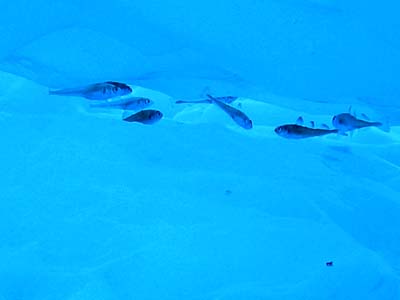
A few years back I attended a mid-field season gathering of researchers working on International Polar Year projects. We were lucky enough to have collected the marine biologists, recently returned from a short cruise out of Barrow, AK with the mission to describe the biota living on the underside of the sea ice that is so critical to terrestrial Arctic ecology. It was absolutely stunning to me to realize that there is a whole ecosystem associated with the bottom of the ice, an ephemeral, threatened resource.
Depending on the time of year, sea ice covers 3-7% of the planet, making this relatively unexplored ecosystem fairly important to global biogeochemical processes. The algae trapped in and under sea ice, for example, accounts for 25% of the Arctic’s and 20% of the Antarctic’s primary productivity. This productivity trickles up the food web to the more well-known ice dwellers, such as polar bears and seals.

Ever stop to think what divides the first from the third world? Why don’t we ever hear about the second and why don’t countries move between categories as they develop? Well, because the categories are historical – the second world is reserved for post-soviet countries attempting to rebuild governance. The first world is reserved for those who shone through as leaders at the end of World War 2. The third world – everybody else. But what does that mean for development research? And what about those places within our own country without running water and electricity?
Looking inward to the researcher’s own countries means questioning the benefit of some institutions that are part of the dominant narrative of success in those countries. Before any differences are made explicit between investigation of the First and Third World, there is the question of outsider/insider position that must be attended to. Identifying and challenging assumptions as an insider may prove much more difficult than analysis of a foreign society as an outsider (Perin 1977). For example, community forestry in Canada was assumed to not exist because Canada is fully embedded in a capitalist economy, but was discovered to be successfully functioning in British Columbia, largely due to a regional difference in values diverging from capitalism (McCarthy 2006).
Perin (1977) suggests analyzing controversies to identify such assumptions that may also inherently be part of the inside researcher’s worldview. First World political ecologists have focused on controversies, largely looking at land use or resource management controversies. In the process, they have identified different processes at work in the First World than the Third World. These differences add a few key concepts to the political ecology toolbox: a need to explicitly recognize heterogeneity in a seemingly unified nation (St. Martin 2001), the role of a strong central state (Walker 2003), the role of larger capitalist economy and culture (Escobar 2004), and the process of rural gentrification (Schroeder 2005).
Read More “State of the Field: First World or Third World?” »
EDITOR’S NOTE: THIS OPPORTUNITY IS FROM 2011, AND IS NO LONGER VALID
Those of you who follow me on twitter know that in addition to being a grad student, I work with the South Carolina Department of Natural Resources coastal shark survey. This summer, we will be catching and tagging sharks, and we need your help! From mid-May through August, we’ll take the boat out 2-4 times a week for single-day surveys. We leave around 6 or 7 in the morning and return mid to late afternoon. There is often room for a volunteer or two, and the help is always appreciated.
Since I started advertising this opportunity last week, I’ve received over 150 e-mails inquiring about it. Many of you are asking the same questions, and while I”m always happy to answer questions about sharks, I’m instead going to answer the most common questions in this post.
Read More “Shark Science Monday: How you can help WhySharksMatter tag sharks!” »
The Nicholas School of the Environment is hosting the Flat Grok Video Contest. We are on an unsustainable course. While world populations and consumption grow, resources diminish and global warming threatens our way of life. In his blog The Green Grok, Dr. Bill Chameides, dean of the Nicholas School of the Environment at Duke University, elucidates … Read More “Grok my Flock” »
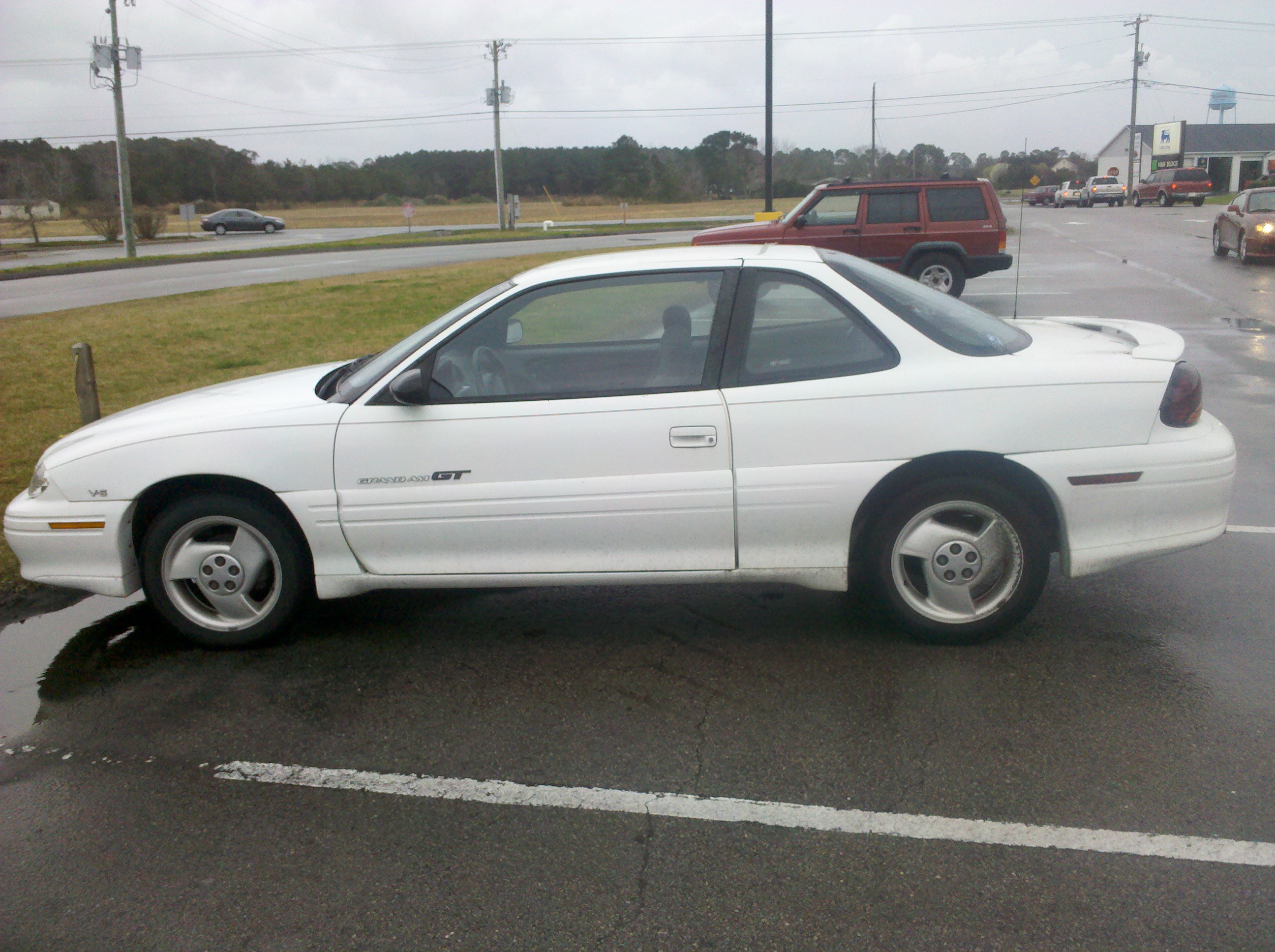
A field vehicle can be just a means of shuttling gear or a home away from home. Most people think of a rough and tumble truck tackling aged logging roads, but depending on your needs and your discipline, something different might play the role. For instance, I work relatively close to home as all of my field sites are less than three hours away by highway and any sample collecting occurs on the water, generally in a borrowed boat (something this series will come to later).
The theme this month is design in nature. Last week we posted a video that discusses how we can use nature to design our cities. This week, Janine Benyus talks about using nature to inspire technology. I don’t have a bigger point to make this week. Biology is cool and we can learn a lot … Read More “Weekly dose of TED – Janine Benyus: Biomimicry in action” »
Last year, we wrote about the bizarre “save the light bulb” movement. The issue hasn’t gone away. Far Right politicians continue to actively resist energy efficiency. This Wednesday’s episode of the Colbert Report covered the light bulb “controversy”.