
Skip to content

Southern Fried Science

Over 15 years of ocean science and conservation online

  • Home
  • About SFS
  • Authors
  • Support SFS

Recent Posts

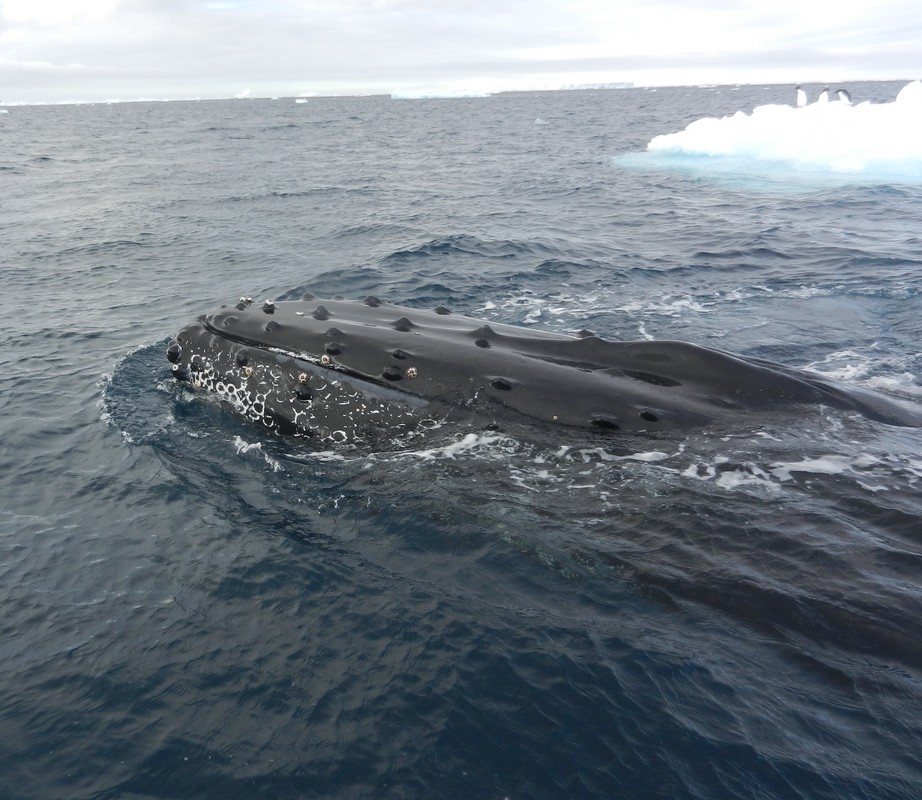
humpback whale in Antarctica
The evolution of the International Whaling Commission – from  whaling quotas to whale conservation
June 10, 2026
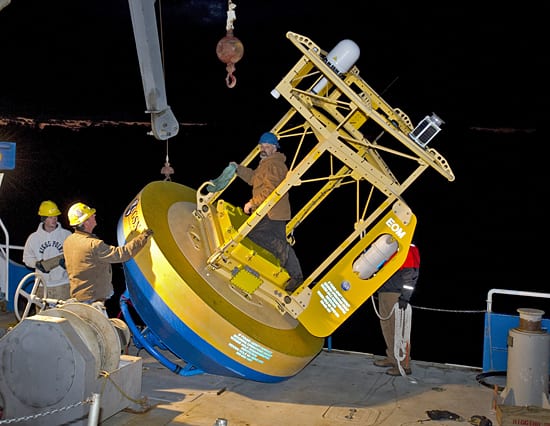
Isn’t ironic, don’t you think: dismantling the Ocean Observatories Initiative on World Oceans Day
June 9, 2026
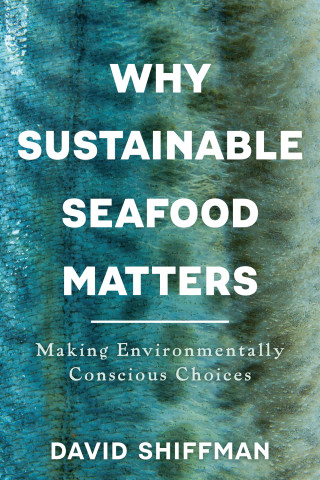
“Why Sustainable Seafood Matters” is now available for preorder! Here’s what it’s about, and why I decided to write it.
June 8, 2026
Here’s how to join my IMCC8 symposium, “Ocean Science Communication: What’s New and What’s Next?”
April 22, 2026
Deep Sea Mining Symposium Announcement
April 21, 2026
Join Me at Upwell: A Wave of Ocean Justice — Our Fourth Year!
March 24, 2026

Great Diagrams of Science: It’s a bird! It’s a plane! It’s… a really bad drawing of a bird.

Posted on January 28, 2011January 28, 2011 By David Shiffman 2 Comments on Great Diagrams of Science: It’s a bird! It’s a plane! It’s… a really bad drawing of a bird.
Uncategorized

The latest edition of my Great Diagrams of Science series comes from a field near and dear to my heart- using stable isotope analysis to map a food web. Japanese scientists Wada, Mizutani, and Minagawa got the opportunity to study the feeding ecology of penguins in Antarctica, and were some of the first researchers to use stable isotopes for food web analysis. To travel so far and use what was at the time (1991) state-of-the-art technology, they must have received an impressively large grant. Their results played a part in revolutionizing how scientists study food web interactions, so the grant money was well spent in that regard.

However, it seems that none of it was spent on graphic design:

Read More “Great Diagrams of Science: It’s a bird! It’s a plane! It’s… a really bad drawing of a bird.” »

One more week to take the Reader Survey!

Posted on January 28, 2011 By Andrew Thaler
Uncategorized

Thank you to everyone who has responded to our survey. There’s still a chance to win some free books or great big piles of swag! To sweeten the deal, we’re going to add one more prize to the list. One lucky winner, randomly drawn from or pile of surveys, will win an autographed copy of … Read More “One more week to take the Reader Survey!” »

Weekly Dose of TED – Ed Burtynsky photographs the landscape of oil

Posted on January 28, 2011January 17, 2011 By Bluegrass Blue Crab
Uncategorized

Ed Burtynsky, perhaps most famous for his movie Manufactured Landscapes, takes a moment to show what he sees as “symbols of how we use the land”. Do you agree that oil is the dominant landscape feature nowadays? Is the use of photography and other art media helpful in gaining new perspective for exactly how humans … Read More “Weekly Dose of TED – Ed Burtynsky photographs the landscape of oil” »

Send testimony to help protect Guam’s sharks!

Posted on January 26, 2011January 26, 2011 By David Shiffman 14 Comments on Send testimony to help protect Guam’s sharks!
Conservation, Science

The sharks of Guam need your help! Bill number 44-31, which would make selling or possessing shark fins illegal in Guam, was just introduced by members of the Senate. The Natural Resources Committee will hold a hearing on the bill next Tuesday night Guam time, which is Monday night our time.

This bill is expected to face strong opposition from the fishing industry, which has a powerful voice.  However, you can help! You send a letter in support of this policy to Shark Defenders, and they will make sure that it gets into the right hands.  Many of the letters will be read out loud as testimony, and receiving a large number of letters in support of the law will be a big help!

Please send these letters to Info AT SharkDefenders DOT com by Monday afternoon U.S. East Coast time (sooner would be better).

Read More “Send testimony to help protect Guam’s sharks!” »

Biodiversity Wednesday: The Sea of Cortes

Posted on January 26, 2011January 25, 2011 By Andrew Thaler 2 Comments on Biodiversity Wednesday: The Sea of Cortes
Uncategorized

The Sea of Cortes (commonly referred to as the Gulf of California) lies between the Baja Peninsula and mainland Mexico. Glorified in Steinbeck’s narrative The Log from the Sea of Cortes, detailing his adventures with Ed Ricketts during a six-week collecting trip, the region is rich in both history and biodiversity. The sea is formed by the separation of the Pacific and North American tectonic plates. The East Pacific Rise runs through the Sea of Cortes and continues north to become the San Andreas Fault. The Colorado River empties into the sea at the Colorado River Delta.

Read More “Biodiversity Wednesday: The Sea of Cortes” »

Shark Science Monday: Christopher Neff discusses shark management policy in the US, Australia, and South Africa

Posted on January 25, 2011January 25, 2011 By David Shiffman
Uncategorized

In this week’s edition of Shark Science Monday, Christopher Neff discusses how shark attacks play a role in shark management policy in three countries- the United States, Australia, and South Africa. If you have a question for Christopher, please leave it in the comments and I’ll make sure it gets to him.

State of the Field: Too big, too small, just right – the Goldilocks Conundrum of Conservation

Posted on January 25, 2011January 28, 2011 By Bluegrass Blue Crab
Science

This post was chosen as an Editor's Selection for ResearchBlogging.org

scale can really change perspective... take this fruit fly eye, for example, at scanning electron microscope scale - it looks like an army of hairs

Scale seems like a simple term with a simple definition, a concept certainly not up for debate. Well, digging just a little deeper we find that the nuances of a term that is used in almost every discipline make it important to make sure everyone’s on the same page. Furthermore, it’s important to make sure that the concept gets some attention, some time on the agenda, and some problem-solving energy.

In the world of conservation, scale mismatches are often a visible failure of policies, leading to recent calls for ecosystem-based management that trace scales of governance according to ecosystem boundaries instead of political boundaries. This has led to the existence of “peace parks” protecting wildlands that cross national borders, watershed management plans, and attention to habitat protection in environmental species conservation, to name a few examples. However, matching governance to ecosystem scale is only one type of scale adjustment that needs to occur.

Read More “State of the Field: Too big, too small, just right – the Goldilocks Conundrum of Conservation” »

Pirate fishing: far less awesome then it sounds

Posted on January 25, 2011January 25, 2011 By David Shiffman 6 Comments on Pirate fishing: far less awesome then it sounds
Conservation, Science

Earlier this month, NOAA provided a list of “pirate fishing” countries to Congress. This report identifies Portugal, Italy, Venezuela, Colombia, Ecuador, and Panama as nations whose vessels engage in “illegal, unreported, unregulated” fishing.

Russell Smith, NOAA deputy assistant secretary for international fisheries, explains why this so-called pirate fishing is such a big deal:

“Illegal fishing must be stopped as it subjects our fishermen to unfair competition and undermines efforts to sustainably manage the valuable fish stocks around the world that so many communities depend on for food and jobs.”

The Pew Charitable trusts reports that an estimated 20% of all fish removed from the oceans are fished illegally. NOAA claims that this results in an annual loss of $23 billion to legal fisheries worldwide. Specifically, the six violator countries listed here are guilty of having:

“fishing vessels that did not comply with measures agreed to under various international fishery management organizations, such as closed fishing seasons, vessel registry lists, and a ban on the use of driftnets. Other violations included illegal gear modifications, fishing without authorization, and possession of undersized bluefin tuna.”

Read More “Pirate fishing: far less awesome then it sounds” »

Conservation and the Concept of Species in a Biodiversity Crisis (Part 1)

Posted on January 24, 2011January 23, 2011 By Andrew Thaler 2 Comments on Conservation and the Concept of Species in a Biodiversity Crisis (Part 1)
Conservation, Science

In The Mass Extinction of Scientists Who Study Species, Dr. Craig McClain argues that we are loosing a fundamental unit of biological science – the Taxonomist. He’s right, of course. Taxonomy is a shrinking field. Entire phyla sit, unstudied, as the expertise necessary to understand them retires and expires. With few to train the next generation of taxonomists, the field could slowly vanish. Molecular tools are supplanting traditional taxonomy (once described to me as “the ability to identify hundreds of species of centimeter-long worms by counting ass-hairs under a microscope”) as the de rigueur method for identifying organisms.

I do not disagree with Craig. Losing skilled taxonomists is tragic for the biological sciences. Unlike many leading the charge in support of taxonomy, I did not benefit from a rigorous taxonomic study in my early career. I fall into the same camp as Dr. Holly Bik, relying primarily on molecules, not morphology, to draw the distinctions between my samples. I never identified species by counting the ass-hairs on a worm, and my education is poorer for it.

Read More “Conservation and the Concept of Species in a Biodiversity Crisis (Part 1)” »

First-night Watch and Midnight, Forecastle (Finding Melville’s Whale Chapters 39 and 40)

Posted on January 23, 2011January 23, 2011 By Andrew Thaler
Uncategorized

After reading some of the reviews from our Readers’ Survey, many people list these among their favorite posts, while many others consider them their least favorite. So, we’ve decided to change the posting schedule for Finding Melville’s Whale. From now on, one or two new entries will appear every Sunday, instead of Tuesdays and Thursdays. We hope you will continue reading along with us as we dive deeper in Melville’s masterpiece.

Read More “First-night Watch and Midnight, Forecastle (Finding Melville’s Whale Chapters 39 and 40)” »

Posts pagination

Previous 1 … 181 182 183 … 273 Next

Popular Posts

That's not a blobfish: Deep Sea Social Media is Flooded by AI SlopThat's not a blobfish: Deep Sea Social Media is Flooded by AI SlopDecember 19, 2025Andrew Thaler
What Ocean Ramsey does is not shark science or conservation: some brief thoughts on "the Shark Whisperer" documentaryWhat Ocean Ramsey does is not shark science or conservation: some brief thoughts on "the Shark Whisperer" documentaryJuly 2, 2025David Shiffman
The story of the pride flag made from NASA imagery: Bluesky's most-liked imageThe story of the pride flag made from NASA imagery: Bluesky's most-liked imageSeptember 27, 2024David Shiffman
The evolution of the International Whaling Commission – from  whaling quotas to whale conservationThe evolution of the International Whaling Commission – from  whaling quotas to whale conservationJune 10, 2026Chris Parsons
Shark of Darkness: Wrath of Submarine is a fake documentaryShark of Darkness: Wrath of Submarine is a fake documentaryAugust 10, 2014Michelle Jewell
Tackling the least important debate in deep-sea mining: the desultory hyphenTackling the least important debate in deep-sea mining: the desultory hyphenJune 8, 2026Andrew Thaler
What is a Sand Shark?What is a Sand Shark?November 12, 2017Chuck Bangley
"Why Sustainable Seafood Matters" is now available for preorder! Here's what it's about, and why I decided to write it."Why Sustainable Seafood Matters" is now available for preorder! Here's what it's about, and why I decided to write it.June 8, 2026David Shiffman
Our favorite sea monsters – Ningen (#4)Our favorite sea monsters – Ningen (#4)September 7, 2010Andrew Thaler
Fun facts and FAQs about Megalodon, Maryland's new (and definitely extinct) official state sharkFun facts and FAQs about Megalodon, Maryland's new (and definitely extinct) official state sharkApril 15, 2026David Shiffman

squishy

Subscribe to our RSS Feed for updates whenever new articles are published.

We recommend Feedly for RSS management. It's like Google Reader, except it still exists.

Southern Fried Science

  • Home
  • About SFS
  • Authors
  • Support SFS


If you enjoy Southern Fried Science, consider contributing to our Patreon campaign.

Copyright © 2026 Southern Fried Science.

Theme: Oceanly Premium by ScriptsTown