
Skip to content

Southern Fried Science

Over 15 years of ocean science and conservation online

  • Home
  • About SFS
  • Authors
  • Support SFS

Recent Posts

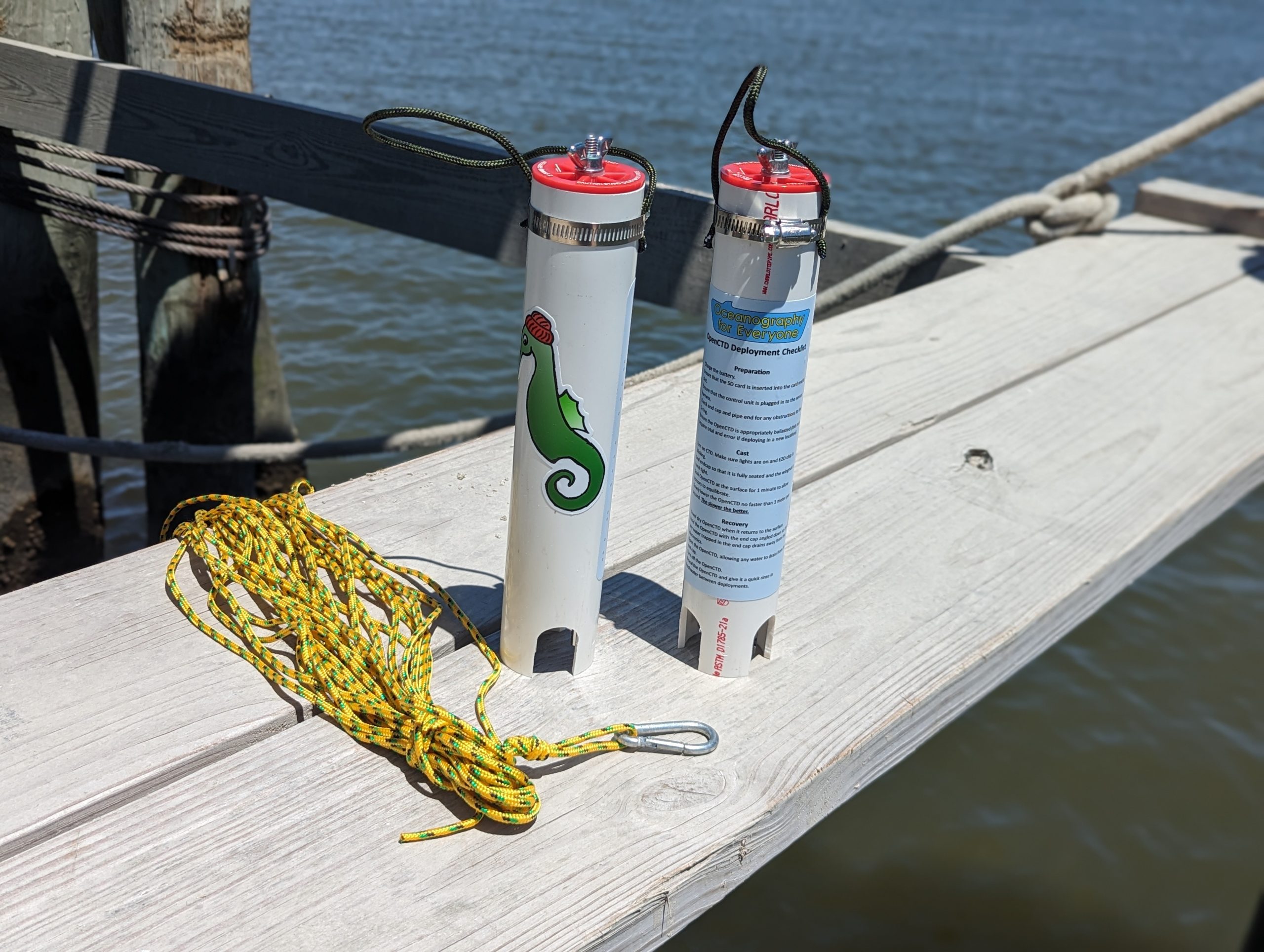
The next OpenCTD is here!
June 22, 2026
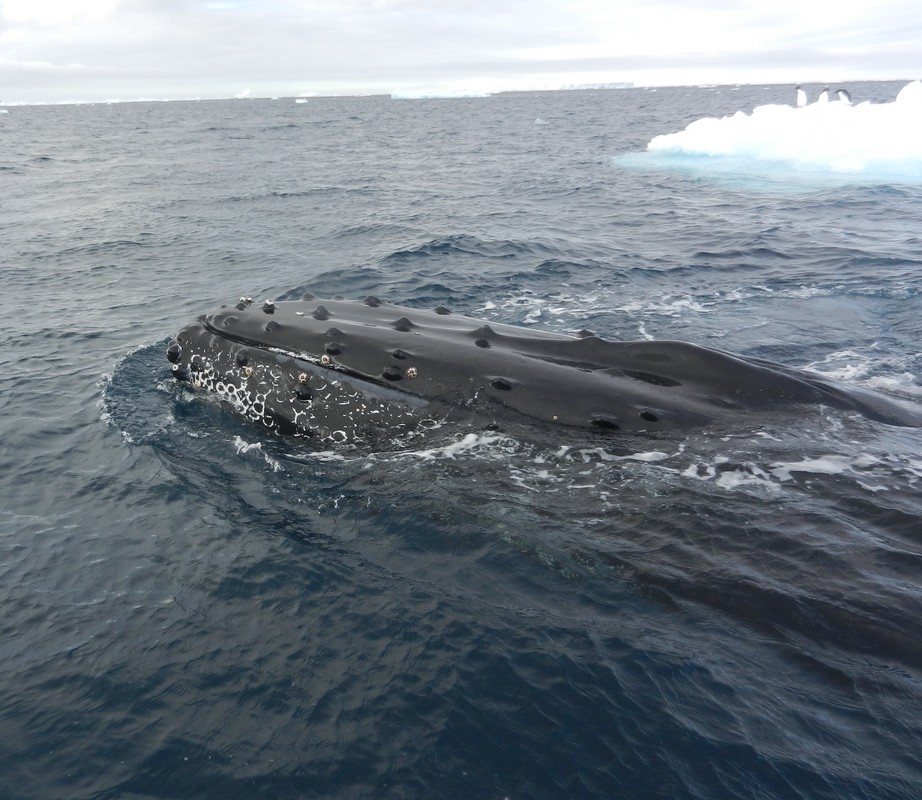
humpback whale in Antarctica
The evolution of the International Whaling Commission – from  whaling quotas to whale conservation
June 10, 2026
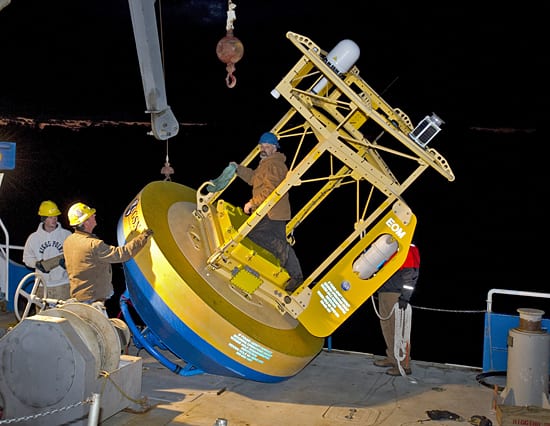
Isn’t ironic, don’t you think: dismantling the Ocean Observatories Initiative on World Oceans Day
June 9, 2026
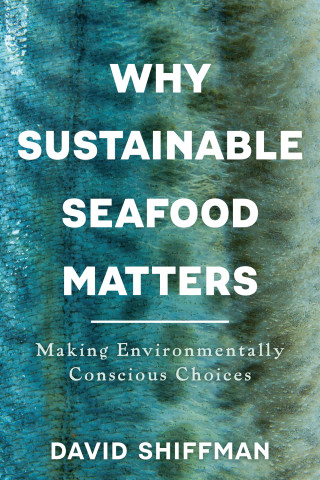
“Why Sustainable Seafood Matters” is now available for preorder! Here’s what it’s about, and why I decided to write it.
June 8, 2026
Here’s how to join my IMCC8 symposium, “Ocean Science Communication: What’s New and What’s Next?”
April 22, 2026
Deep Sea Mining Symposium Announcement
April 21, 2026

State of the Field: Too big, too small, just right – the Goldilocks Conundrum of Conservation

Posted on January 25, 2011January 28, 2011 By Bluegrass Blue Crab
Science

This post was chosen as an Editor's Selection for ResearchBlogging.org

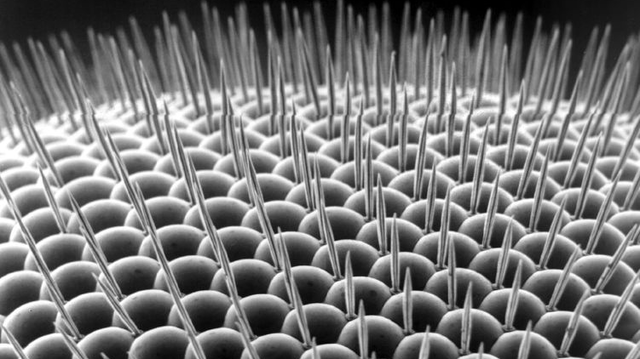
scale can really change perspective... take this fruit fly eye, for example, at scanning electron microscope scale - it looks like an army of hairs

Scale seems like a simple term with a simple definition, a concept certainly not up for debate. Well, digging just a little deeper we find that the nuances of a term that is used in almost every discipline make it important to make sure everyone’s on the same page. Furthermore, it’s important to make sure that the concept gets some attention, some time on the agenda, and some problem-solving energy.

In the world of conservation, scale mismatches are often a visible failure of policies, leading to recent calls for ecosystem-based management that trace scales of governance according to ecosystem boundaries instead of political boundaries. This has led to the existence of “peace parks” protecting wildlands that cross national borders, watershed management plans, and attention to habitat protection in environmental species conservation, to name a few examples. However, matching governance to ecosystem scale is only one type of scale adjustment that needs to occur.

Read More “State of the Field: Too big, too small, just right – the Goldilocks Conundrum of Conservation” »

Pirate fishing: far less awesome then it sounds

Posted on January 25, 2011January 25, 2011 By David Shiffman 6 Comments on Pirate fishing: far less awesome then it sounds
Conservation, Science

Earlier this month, NOAA provided a list of “pirate fishing” countries to Congress. This report identifies Portugal, Italy, Venezuela, Colombia, Ecuador, and Panama as nations whose vessels engage in “illegal, unreported, unregulated” fishing.

Russell Smith, NOAA deputy assistant secretary for international fisheries, explains why this so-called pirate fishing is such a big deal:

“Illegal fishing must be stopped as it subjects our fishermen to unfair competition and undermines efforts to sustainably manage the valuable fish stocks around the world that so many communities depend on for food and jobs.”

The Pew Charitable trusts reports that an estimated 20% of all fish removed from the oceans are fished illegally. NOAA claims that this results in an annual loss of $23 billion to legal fisheries worldwide. Specifically, the six violator countries listed here are guilty of having:

“fishing vessels that did not comply with measures agreed to under various international fishery management organizations, such as closed fishing seasons, vessel registry lists, and a ban on the use of driftnets. Other violations included illegal gear modifications, fishing without authorization, and possession of undersized bluefin tuna.”

Read More “Pirate fishing: far less awesome then it sounds” »

Conservation and the Concept of Species in a Biodiversity Crisis (Part 1)

Posted on January 24, 2011January 23, 2011 By Andrew Thaler 2 Comments on Conservation and the Concept of Species in a Biodiversity Crisis (Part 1)
Conservation, Science

In The Mass Extinction of Scientists Who Study Species, Dr. Craig McClain argues that we are loosing a fundamental unit of biological science – the Taxonomist. He’s right, of course. Taxonomy is a shrinking field. Entire phyla sit, unstudied, as the expertise necessary to understand them retires and expires. With few to train the next generation of taxonomists, the field could slowly vanish. Molecular tools are supplanting traditional taxonomy (once described to me as “the ability to identify hundreds of species of centimeter-long worms by counting ass-hairs under a microscope”) as the de rigueur method for identifying organisms.

I do not disagree with Craig. Losing skilled taxonomists is tragic for the biological sciences. Unlike many leading the charge in support of taxonomy, I did not benefit from a rigorous taxonomic study in my early career. I fall into the same camp as Dr. Holly Bik, relying primarily on molecules, not morphology, to draw the distinctions between my samples. I never identified species by counting the ass-hairs on a worm, and my education is poorer for it.

Read More “Conservation and the Concept of Species in a Biodiversity Crisis (Part 1)” »

First-night Watch and Midnight, Forecastle (Finding Melville’s Whale Chapters 39 and 40)

Posted on January 23, 2011January 23, 2011 By Andrew Thaler
Uncategorized

After reading some of the reviews from our Readers’ Survey, many people list these among their favorite posts, while many others consider them their least favorite. So, we’ve decided to change the posting schedule for Finding Melville’s Whale. From now on, one or two new entries will appear every Sunday, instead of Tuesdays and Thursdays. We hope you will continue reading along with us as we dive deeper in Melville’s masterpiece.

Read More “First-night Watch and Midnight, Forecastle (Finding Melville’s Whale Chapters 39 and 40)” »

Win fantastic prizes in our reader survey!

Posted on January 21, 2011January 21, 2011 By Andrew Thaler
Uncategorized

Check out some of the fantastic swag you could win during the Southern Fried Science Readers’ Survey! All of this is stuffed into the rare and highly coveted Science Online 2010 tote bag. In addition, you could win an exclusive DVD of WhySharksMatter’s Four Things Everyone should know about Sharks documentary and every Shark Science … Read More “Win fantastic prizes in our reader survey!” »

The Snicker’s great white commerical: Harmless humor or dangerous anti-shark stereotypes?

Posted on January 21, 2011January 21, 2011 By David Shiffman 17 Comments on The Snicker’s great white commerical: Harmless humor or dangerous anti-shark stereotypes?
Popular Culture

Last year, I was extremely critical of a Nicorette commercial that featured a man so distracted by thoughts of cigarettes that he didn’t realize a shark was chewing on his arm. This led to a spirited discussion about where sharks fit in to our popular culture, and resulted in more than a few people calling me overly sensitive.  One person called me a member of the “apocalyptic legion of killjoys who battle against fun and innocent symbolism all over the world” (one of my standard comebacks is “I’ve been called worse” but I’m not sure if that’s true in this case).

Snickers recently unveiled a new commercial featuring sharks:

Read More “The Snicker’s great white commerical: Harmless humor or dangerous anti-shark stereotypes?” »

Weekly dose of TED – Peter Tyack: The intriguing sound of marine mammals

Posted on January 21, 2011January 19, 2011 By Andrew Thaler 1 Comment on Weekly dose of TED – Peter Tyack: The intriguing sound of marine mammals
Uncategorized

That marine mammals have a rich sonic life has been well understood for several decades. What we didn’t understand until recently is how much we’ve changed the ocean soundscape, and how much we will continue to change the soundscape. Many of our new alternative energy plans involve maritime structures – offshore wind farms, wave energy … Read More “Weekly dose of TED – Peter Tyack: The intriguing sound of marine mammals” »

Dive into the mushroom reefs of Brazil with Dr. Al Dove

Posted on January 20, 2011 By Andrew Thaler 1 Comment on Dive into the mushroom reefs of Brazil with Dr. Al Dove
Science

Beginning today, Dr. Al Dove of Deep Type Flow will be floating somewhere of the coast of Brazil exploring the Abrolhos reef platform. They will be using the Johnson Sea Link, the tragically mothballed US submersible once described as “a shining legacy of deep sea research“, which has been granted a second life under long-term contract with CEPEMAR Environmental Services. Follow along with the adventure at Deep Type Flow or under the twitter hashtag #Abrolhos2011.

Read More “Dive into the mushroom reefs of Brazil with Dr. Al Dove” »

SFS Gear Reviews: Protecting your eyes without breaking the bank

Posted on January 20, 2011January 20, 2011 By Andrew Thaler 7 Comments on SFS Gear Reviews: Protecting your eyes without breaking the bank
Uncategorized

Sunglasses are a critical piece of gear if you plan on spending prolonged periods of time in the sun. Not only do they protect your eyes, but the right pair can help you spot marine-life swimming below the surface or boost your bird-watching prowess. An enormous, multi-billion dollar industry has formed to produce and market the right sunglasses to the right people.

It’s all bullshit.

Read More “SFS Gear Reviews: Protecting your eyes without breaking the bank” »

Can marine protected areas save the oceans? Under certain circumstances, maybe.

Posted on January 20, 2011December 31, 2011 By David Shiffman 4 Comments on Can marine protected areas save the oceans? Under certain circumstances, maybe.
Conservation, Science

Although marine fish face many threats, one of the greatest is large-scale modern commercial fishing. Technology makes it all too easy for so-called “factory ships” to remove enormous numbers of fish from the oceans, sometimes with devastating effects on the populations of those fish and their habitat.

Marine conservationists have proposed a variety of policies to protect fish populations around the world. Of these, the concept of the marine protected area (MPA) is arguably the most popular. Though technically a marine protected area is any area of the ocean where human activities are restricted in some way, the best known version is an area where fishing is banned with the goal of letting exploited fish stocks recover.

Read More “Can marine protected areas save the oceans? Under certain circumstances, maybe.” »

Posts pagination

Previous 1 … 182 183 184 … 273 Next

Popular Posts

That's not a blobfish: Deep Sea Social Media is Flooded by AI SlopThat's not a blobfish: Deep Sea Social Media is Flooded by AI SlopDecember 19, 2025Andrew Thaler
What Ocean Ramsey does is not shark science or conservation: some brief thoughts on "the Shark Whisperer" documentaryWhat Ocean Ramsey does is not shark science or conservation: some brief thoughts on "the Shark Whisperer" documentaryJuly 2, 2025David Shiffman
Screaming into the void - Why your scientific paper doesn’t matterScreaming into the void - Why your scientific paper doesn’t matterJune 18, 2026Chris Parsons
Ageism in the conservation job marketAgeism in the conservation job marketJune 19, 2026Chris Parsons
I can serve on your graduate thesis committee. Here’s what you can expect of me, and what I expect in return.I can serve on your graduate thesis committee. Here’s what you can expect of me, and what I expect in return.October 16, 2025David Shiffman
The story of the pride flag made from NASA imagery: Bluesky's most-liked imageThe story of the pride flag made from NASA imagery: Bluesky's most-liked imageSeptember 27, 2024David Shiffman
What is a Sand Shark?What is a Sand Shark?November 12, 2017Chuck Bangley
Shark of Darkness: Wrath of Submarine is a fake documentaryShark of Darkness: Wrath of Submarine is a fake documentaryAugust 10, 2014Michelle Jewell
Our favorite sea monsters – Ningen (#4)Our favorite sea monsters – Ningen (#4)September 7, 2010Andrew Thaler
The plague-busting, prairie-dog-vaccinating, ferret-saving droneThe plague-busting, prairie-dog-vaccinating, ferret-saving droneNovember 1, 2016Andrew Thaler

squishy

Subscribe to our RSS Feed for updates whenever new articles are published.

We recommend Feedly for RSS management. It's like Google Reader, except it still exists.

Southern Fried Science

  • Home
  • About SFS
  • Authors
  • Support SFS


If you enjoy Southern Fried Science, consider contributing to our Patreon campaign.

Copyright © 2026 Southern Fried Science.

Theme: Oceanly Premium by ScriptsTown