
Skip to content

Southern Fried Science

Over 15 years of ocean science and conservation online

  • Home
  • About SFS
  • Authors
  • Support SFS

Recent Posts

5 things I learned helping to reassess the global conservation status of every species of tuna and billfish
September 15, 2026
Key takeaways from my Convention on Migratory Species report on fish aggregating devices in the Mediterranean Sea
September 3, 2026
Jabberwocks and Snallygasters: teaching environmental education with monsters, mayhem, and dice.
August 31, 2026
The conservation impacts of recreational fishing
August 25, 2026
How to help protect the deep sea in the Marianas and American Samoa today
August 20, 2026
Trump Administration Advances Mariana Trench Offshore Mineral Leasing Process
August 19, 2026

SFS Gear Reviews: Protecting your eyes without breaking the bank

Posted on January 20, 2011January 20, 2011 By Andrew Thaler 7 Comments on SFS Gear Reviews: Protecting your eyes without breaking the bank
Uncategorized

Sunglasses are a critical piece of gear if you plan on spending prolonged periods of time in the sun. Not only do they protect your eyes, but the right pair can help you spot marine-life swimming below the surface or boost your bird-watching prowess. An enormous, multi-billion dollar industry has formed to produce and market the right sunglasses to the right people.

It’s all bullshit.

Read More “SFS Gear Reviews: Protecting your eyes without breaking the bank” »

Can marine protected areas save the oceans? Under certain circumstances, maybe.

Posted on January 20, 2011December 31, 2011 By David Shiffman 4 Comments on Can marine protected areas save the oceans? Under certain circumstances, maybe.
Conservation, Science

Although marine fish face many threats, one of the greatest is large-scale modern commercial fishing. Technology makes it all too easy for so-called “factory ships” to remove enormous numbers of fish from the oceans, sometimes with devastating effects on the populations of those fish and their habitat.

Marine conservationists have proposed a variety of policies to protect fish populations around the world. Of these, the concept of the marine protected area (MPA) is arguably the most popular. Though technically a marine protected area is any area of the ocean where human activities are restricted in some way, the best known version is an area where fishing is banned with the goal of letting exploited fish stocks recover.

Read More “Can marine protected areas save the oceans? Under certain circumstances, maybe.” »

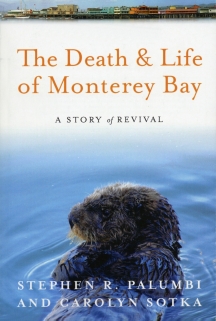
Lessons from the Death and Life of Monterey Bay

Posted on January 19, 2011February 17, 2011 By Andrew Thaler 3 Comments on Lessons from the Death and Life of Monterey Bay
Conservation, Science

A few weeks ago, Mark Powell at Blogfish posted “Where are conservation success stories?” in which he asks if we have a bias against good news in conservation. Late last year we presented a series of conservation success stories from the IUCN. Whether because we choose to focus only on the doom-and-gloom news stories or because the natural world really is in pretty bad shape, success stories in conservation are few and far between. That is why The Death and Life of Monterey Bay, a new book by Stephen Palumbi and Carolyn Sotka, is so important. Palumbi is a working scientist and director of the Hopkins Marine Station in Monterey Bay and his work has been cited on this blog before. Carolyn Sotka is the project coordinator for COMPASS, an organization that connects scientist to policy makers and journalists.

In The Death and Life of Monterey Bay, Palumbi and Sotka present the history of Monterey Bay, from discovery, to exploitation, to collapse, and ultimately to rebirth. They weave the narratives of many important players, exploring the legacy of a dedicated conservationist who existed before the term was coined, the hunters, fishers, and canneries who found fortune and destruction, the writers and scientists who made Monterey Bay a literary icon, and the Bay itself, which survived by equal parts luck, tenacity, and foresight. The events in the book span hundreds of years, but we can still glean lessons from both the collapse and rebirth of Monterey Bay.

Read More “Lessons from the Death and Life of Monterey Bay” »

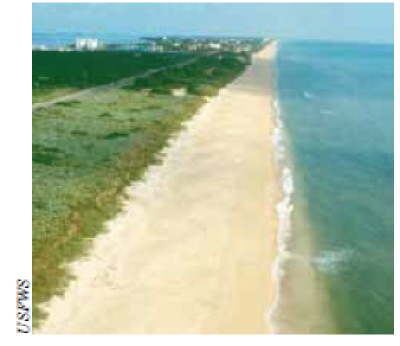
Biodiversity Wednesday – Archie Carr National Wildlife Refuge

Posted on January 19, 2011January 19, 2011 By David Shiffman
Conservation

These beaches are narrow, beautiful, and largely undeveloped

On the east coast of Florida lies a thin, 20 mile long stretch of beach. It looks a great deal like the many other beaches in Florida, but one important difference is immediately clear. It is some of the least developed beachfront real estate in the United States, which is particularly jarring considering that it is close to the city of Melbourne and right off of the major A-1-A highway. Why isn’t this beautiful and accessible stretch of beach covered in hotels and luxury apartments?

An enormous number of signs listing the things you can’t do on this beach also grabs your attention. No ATV’s, horses, dogs, or beach chairs are allowed. Feeding wildlife, including seagulls, is strictly prohibited. Under no circumstances can you build a campfire- not that you’d need to, since the public isn’t allowed on the beach at all after dark.

What is this place?

Read More “Biodiversity Wednesday – Archie Carr National Wildlife Refuge” »

State of the Field: Modergasm – The flaccid finality of modern erections

Posted on January 18, 2011January 18, 2011 By Bluegrass Blue Crab 2 Comments on State of the Field: Modergasm – The flaccid finality of modern erections
Uncategorized

FDR, sometimes credited as a benevolent dictator, brought the US out of the Great Depression through his New Deal

Effective management of any landscape or seascape must attend to context such as unique attributes of the ecosystem, local cultural values and norms, and broader governance constructs. Conservation managers often joke that the best way to incorporate this context is to install a benevolent dictator at the helm. His or her role would be to see the big picture and make decisions based on expected community benefits. Others would call the term benevolent dictator an oxymoron – but there have been some documented cases of such idealistic planning. Sadly, it seems such “high modernism” is not the answer. In his book Seeing Like A State, James Scott documents cases of agricultural land, cityscapes, and whole communities that ended up having unexpected consequences to high modernist rule due to incomplete foresight and incorrect prediction of people’s reactions. He cites these examples as warnings for the modern conservation movement as they choose between philosophies to move forward.

Read More “State of the Field: Modergasm – The flaccid finality of modern erections” »

Take the Southern Fried Science Readers Survey, win fantastic prizes!

Posted on January 17, 2011January 17, 2011 By Andrew Thaler 2 Comments on Take the Southern Fried Science Readers Survey, win fantastic prizes!
Uncategorized

The time has come for Southern Fried Science to get its report card. At the top of the page there is a link to the Reader Survey. We want to here from you, find out what you like, what you don’t like, and how you think this site could improve. Please take the survey, it … Read More “Take the Southern Fried Science Readers Survey, win fantastic prizes!” »

Shark Science Monday: Barry Bruce discusses great white shark behavior

Posted on January 17, 2011January 17, 2011 By David Shiffman
Science

In this week’s edition of Shark Science Monday, Barry Bruce of CSIRO (the Australian government science agency) discusses great white shark behavior. If you have a question for Barry, please post it as a comment below and I’ll make sure that he gets it.

Welcome three new blogs to our network!

Posted on January 14, 2011January 13, 2011 By Andrew Thaler
Uncategorized

As Science Online kicks into high gear, I’d like to give a shout out to the three new blogs that have joined the Gam this week! First up is the long-awaited People, Policy, Planet by Lyndell. The blogs focuses on environmental policy, science research, and ecology. Read her introductory posts Politics and Policy. Next up … Read More “Welcome three new blogs to our network!” »

Weekly dose of TED – Roz Savage: Why I’m rowing across the Pacific

Posted on January 14, 2011January 12, 2011 By Andrew Thaler 1 Comment on Weekly dose of TED – Roz Savage: Why I’m rowing across the Pacific
Uncategorized

I had the pleasure of seeing Roz Savage speak at the Nicholas School of the Environment last year. That talk was a slightly longer version of the one above, with the addition that she had finished her Pacific voyage in Papua New Guinea. The question I pose to our readers is, what effect do these … Read More “Weekly dose of TED – Roz Savage: Why I’m rowing across the Pacific” »

SFS Gear Reviews: Cannon PowerShot SX130 IS

Posted on January 13, 2011January 11, 2011 By Andrew Thaler 2 Comments on SFS Gear Reviews: Cannon PowerShot SX130 IS
Uncategorized

Any good field scientist needs a good camera. At the very least you have to document your sampling sites, record samples, and get good photographs of your methods for the inevitable presentations. A field camera needs to be compact, flexible, easy to use, light on batteries, and durable. Of course, the more advanced photographer may scale up to a robust Digital SLR, but at that point, you already know what you need. For the rest of us, a smaller point-and-shoot will suffice.

I shoot with both a heavy duty DSLR and a light-weight point-and-shoot, depending on the conditions, how much space I have available, and how much gear I have to lug around. When it came time to replace my 6-year-old point-and-shoot with something a little more modern, I wanted something that had more flexibility than the run-of-the-mill pointers while still being small enough to carry around in a pocket. I also put a priority on optical zoom (which is definately not the same as digital zoom). I chose the Cannon Power Shot SX130 IS.

Read More “SFS Gear Reviews: Cannon PowerShot SX130 IS” »

Posts pagination

Previous 1 … 186 187 188 … 276 Next

Popular Posts

Florida angler catches (and likely kills) Endangered great hammerhead sharkFlorida angler catches (and likely kills) Endangered great hammerhead sharkFebruary 13, 2012David Shiffman
At least 74 practicing shark researchers: How a silly thing I said online raised thousands for conservationAt least 74 practicing shark researchers: How a silly thing I said online raised thousands for conservationFebruary 26, 2025David Shiffman
What shark finning means (and doesn't mean): a primer and quizWhat shark finning means (and doesn't mean): a primer and quizJune 18, 2012David Shiffman
Why the new Trump order to shoot wolves is both illegal and a dreadful precedent for endangered speciesWhy the new Trump order to shoot wolves is both illegal and a dreadful precedent for endangered speciesSeptember 5, 2026Ali Gaster
10 misrepresentations about climate change10 misrepresentations about climate changeOctober 3, 2011David Shiffman
That's not a blobfish: Deep Sea Social Media is Flooded by AI SlopThat's not a blobfish: Deep Sea Social Media is Flooded by AI SlopDecember 19, 2025Andrew Thaler
When is a take not a take? Yet another attack on Endangered Species by the Trump AdministrationWhen is a take not a take? Yet another attack on Endangered Species by the Trump AdministrationSeptember 22, 2026Ali Gaster
The Trump Administration’s latest attack on endangered speciesThe Trump Administration’s latest attack on endangered speciesSeptember 17, 2026Ali Gaster
Have we found the city of Atlantis?Have we found the city of Atlantis?September 1, 2026Chris Parsons
I'm a scientist. A social scientist. Please opine on the validity of my discipline.April 4, 2013Bluegrass Blue Crab

squishy

Subscribe to our RSS Feed for updates whenever new articles are published.

We recommend Feedly for RSS management. It's like Google Reader, except it still exists.

Southern Fried Science

  • Home
  • About SFS
  • Authors
  • Support SFS


If you enjoy Southern Fried Science, consider contributing to our Patreon campaign.

Copyright © 2026 Southern Fried Science.

Theme: Oceanly Premium by ScriptsTown